County-run programs
How to Start a NEMT Business in Pennsylvania (2027)
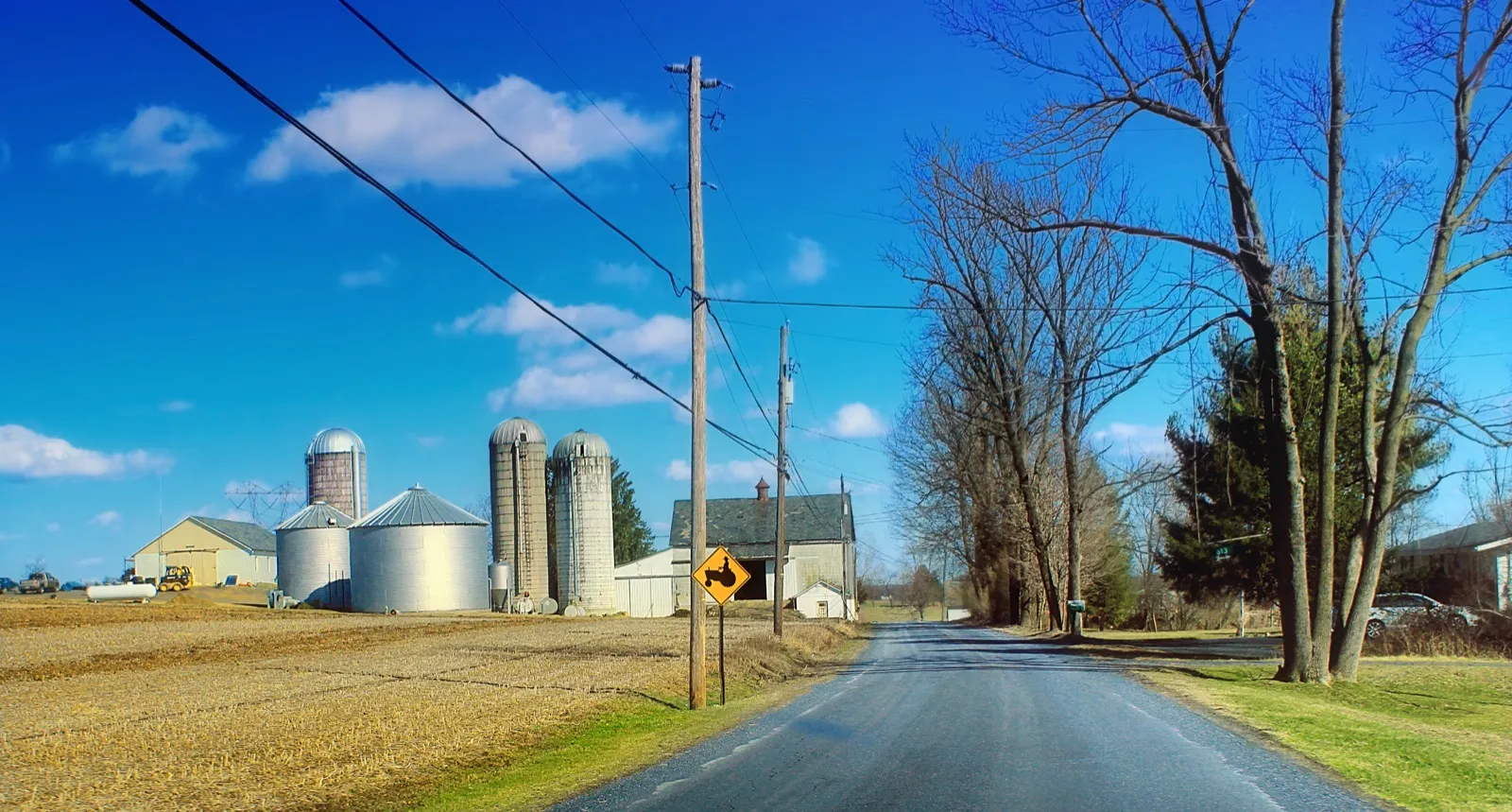
_(16829425187).jpg)
To start a NEMT business in Pennsylvania, form your company with the Department of State, get paratransit authority from the Public Utility Commission, and insure and inspect your vans. Then contract with the Medical Assistance Transportation Program in your county. Counties, their vendors, or transit agencies run it everywhere except Philadelphia, where Modivcare is the broker. A June 25, 2026 state study backed keeping the county model.
- Pennsylvania has no statewide Medicaid ride broker. Outside Philadelphia, you contract with the county MATP office, its vendor, or the transit authority that runs the program.
- Modivcare is the MATP broker in Philadelphia only, and the state's June 25, 2026 study backed keeping the county model everywhere else.
- Get Public Utility Commission paratransit authority before your first paid ride. The PUC says to plan on three months or more, including about five weeks of public notice.
- Counties pay one all-inclusive rate per trip, with no separate pay for no-shows or empty miles, so build those into the rate you offer.
- Every driver needs the child abuse, State Police, and FBI clearances MATP requires, on top of the PUC's age, license, and record checks.
Pennsylvania NEMT at a glance
- Medicaid agency
- Department of Human Services (DHS). It funds MATP by grants to counties and transit authorities and pays the Philadelphia broker a monthly rate per member.
- How rides work
- County-run MATP. The June 2026 study counted 53 county programs, 13 counties under two DHS transit agreements, and a Philadelphia broker. Dauphin joined rabbittransit July 1, 2026.
- Medicaid broker
- Modivcare, for Philadelphia County only, where DHS has used a broker since 2005. The other 66 counties have no broker.
- How to join
- Ask your county's MATP office how it buys rides, then answer its bid or sign its subcontract. In Philadelphia, apply to join Modivcare's network.
- State registration
- Public Utility Commission paratransit authority ($350, one time) for shared, advance reservation rides in vehicles holding 16 or fewer people, driver included
- Insurance
- PUC minimum for 15 or fewer passengers: $15,000 per person and $30,000 per accident for injury, $5,000 property damage, $25,000 medical, and $10,000 wage loss
- Drivers
- At least 21 (18 with an EMS vehicle operator certification), a valid license, yearly driving records, and the child abuse, State Police, and FBI clearances MATP requires
- Vehicle inspections
- A PennDOT safety inspection every year. PUC enforcement officers can stop and inspect vehicles, and each county monitors its providers.
- Pay
- Each county or its contractor negotiates one all-in rate per trip that must cover no-shows, empty miles, and waiting. Your contract sets when you get paid.
- EVV
- NEMT is not on the list. Pennsylvania's EVV covers Medicaid personal care services and home health care services.
Pennsylvania pays for Medicaid rides through the Medical Assistance Transportation Program (MATP), which counties and transit agencies run everywhere except Philadelphia, where Modivcare is the broker. You need Public Utility Commission authority, insurance, and a contract with your county’s program. The rules below follow the MATP Standards and Guidelines (revision 11/2016), the February 13, 2026 covered services list, and the state’s June 25, 2026 broker study.
How Medicaid rides work in Pennsylvania
The Department of Human Services (DHS) runs Medical Assistance, Pennsylvania’s name for Medicaid, and oversees MATP in all 67 counties. Outside Philadelphia, DHS funds MATP through grants to counties and transit authorities, not through a broker or a fee schedule. In Philadelphia, it pays a broker a fixed capitation rate per member each month.
The June 25, 2026 study counts five ways MATP is run:
| Model | Counties | Who runs it |
|---|---|---|
| County as sole provider | 8 | County staff arrange and give the rides |
| County vendor | 38 | A vendor, usually a transit agency, runs it for the county |
| County hybrid | 7 | County staff share the work with a vendor |
| DHS direct agreement | 13 | A transit authority under a DHS grant |
| DHS broker | 1 | Modivcare, in Philadelphia |
The two direct agreements are with rabbittransit and the South Central Transit Authority. Dauphin County, counted as hybrid in the study, moved to rabbittransit on July 1, 2026, and the study lists it as joining a direct agreement. See Dauphin County’s switch and our rabbittransit guide. These agencies run MATP for more than one county, per the study and the DHS contact list updated June 18, 2026:
| Agency | Counties |
|---|---|
| rabbittransit | Adams, Columbia, Cumberland, Dauphin, Franklin, Indiana, Montour, Northumberland, Perry, Snyder, Union, York |
| South Central Transit Authority | Berks, Lancaster |
| LANTA | Carbon, Lehigh, Northampton |
| BeST Transit | Bradford, Sullivan, Tioga |
| Area Transportation Authority | Cameron, Elk, McKean |
| STEP | Clinton, Lycoming |
| Call A Ride Service | Juniata, Mifflin |
| TREHAB | Susquehanna, Wyoming |
Philadelphia and the broker question
Philadelphia has used a broker since 2005, and Modivcare holds the contract now. Two rebids, RFA 35-21 and RFA 01-23, were cancelled after bid protests, and a third, RFA 06-24, was on hold during litigation in June 2026. The study, required by Act 46 of 2025, concluded that the evidence supports keeping the county model rather than a statewide broker. See the study’s findings.
Who qualifies and how rides are booked
A member qualifies when they have Medical Assistance and no other way to reach a covered service. They fill out a one-time MATP application with their county. Members 65 and older are referred to the Senior Shared-Ride Program, which pays 85% of the fare, and MATP pays the other 15%. Paratransit rides are booked one to 14 days ahead. Counties also cover same-day, after-hours, and weekend urgent care rides, and a hospital discharge counts as urgent care. For other urgent requests made during business hours, the county must secure a ride within three hours.
Counties pick the least costly mode that fits the rider: bus passes, mileage paid to the rider ($0.25 a mile as of September 2026), paratransit (which includes taxis), or volunteers in some counties. Trips under a quarter mile are not funded, and pharmacy trips go only to one of the two pharmacies closest to home or to the prescriber.
The February 13, 2026 covered services list excludes stretcher, door-through-door, non-emergency ambulance, and adult day care trips. MATP refers stretcher and ambulance requests to the rider’s HealthChoices plan, or to the County Assistance Office for members without one. DHS estimates about 4.1 million MATP trips in state fiscal year 2025.
How to join your county’s program
You do not enroll with Medical Assistance to give MATP rides. Under 55 Pa. Code 2070.4, an MATP provider is designated by the county or prime contractor, and the term “is not the same as a provider of medical assistance services.” You work under a written subcontract with whoever runs MATP in your county.
- Find your county’s MATP office. DHS posts every county’s contact on its MATP site, linked from the DHS Medicaid page. Ask for whoever handles transportation contracts, not the booking line.
- Ask how it buys rides. DHS tells counties to bid competitively whenever possible, under the County Code. Ask when the next bid opens, which service levels are short, and whether its vendor subcontracts. Transit authorities post their own solicitations, as rabbittransit does on its requests for proposals page.
- Get your PUC authority. See the licensing section below.
- Send your disclosures. Every subcontract carries the federal terms: identifying details for each person with 5% or more ownership or control, any conviction tied to Medicare, Medicaid, or Title XX of an owner, agent, or managing employee, and, when asked, your deals over $25,000 with subcontractors.
- Sign the subcontract. DHS requires it to state the length, the rate, how often you invoice, how and when you are paid, what records you keep, and how either side can end it.
The state’s own screening
The county or prime contractor, not DHS, checks you against the HHS OIG exclusion list at least monthly. Since December 27, 2021, DHS has also required the federal minimums of the Consolidated Appropriations Act of 2021: no excluded provider or driver, a valid license for each driver, a process for drug law violations, and a process for reporting each driver’s driving history to Medicaid.
Joining Modivcare in Philadelphia
In Philadelphia, apply through the form on Modivcare’s “Become a Transportation Provider” page. It asks for PASS wheelchair training, first aid and CPR, defensive driving, a drug screen, a motor vehicle report, and a background check for drivers, and current registration, inspection, and insurance for vehicles. From 2023 to 2025, 40% of Philadelphia MATP trips went by paratransit and 59% by public transit, per the study. See our Modivcare guide.
Licenses and registrations
Your company
Form an LLC by filing a Certificate of Organization (DSCB:15-8821) with a docketing statement (DSCB:15-134A) through the Department of State’s Business Filing Services. It costs $125 as of September 2026, the same as a corporation. A trade name that hides who owns the company needs a $70 fictitious name registration.
Since 2025, LLCs and corporations file a $7 annual report: LLCs between January 1 and September 30, corporations between January 1 and June 30. Starting with reports due in 2027, a company that misses its report faces administrative dissolution six months after the due date.
Get your employer identification number (EIN) from the IRS for free, and ask your municipality whether it needs a local license. Philadelphia requires a free Commercial Activity License from any business working in the city, after you open a Business Income and Receipts Tax account.
Pennsylvania Public Utility Commission
The Public Utility Commission (PUC) licenses passenger carriers. Any paid trip that starts and ends in Pennsylvania needs PUC authority, a USDOT number does not replace it, and the fine for operating without it is $1,000 per violation. The medical exemption covers only ambulance-type vehicles with life support, oxygen, and a medical attendant. In Philadelphia, the Parking Authority licenses taxis and limousines, but paratransit authority still comes from the PUC.
| If you | Authority | Fee |
|---|---|---|
| Give shared, advance reservation rides in vehicles holding 16 or fewer, driver included | Paratransit | $350 |
| Carry riders only under service contracts you file with the PUC | Contract carrier | $350 |
| Arrange rides that other carriers drive | Broker, with a bond of $10,000 or more | $350 |
These are one-time fees as of September 2026, though the PUC bills an annual assessment on your intrastate revenue. Its paratransit form names wheelchair and stretcher vans, and paratransit trips cannot start or end at an airport.
The paratransit application needs:
- The application, a signed Verified Statement, and the $350 fee.
- Your Department of State entity number and your members or officers.
- Your service area, by county. “From points in (county) to points in Pennsylvania, and return” is the broadest wording, and changing it later takes a new application and fee.
- Your plans for dispatch, records, driver hiring and checks, training, drug and alcohol rules, and maintenance, plus a list of your vehicles.
- Any misdemeanor or felony conviction of an owner or officer, and a balance sheet less than 6 months old.
Per the PUC’s January 2024 timeline, logging and staff review take 3 to 10 days each, and the Pennsylvania Bulletin notice pauses the application for about five weeks. After tentative approval, you have 60 days for your insurer to file Form E and for you to file a tariff with your rates, or the application is dismissed. The PUC estimates three months or longer, and you cannot run or advertise trips before the certificate arrives. See NEMT license requirements.
Vehicle rules
PUC rules for vehicles seating 15 or fewer, driver included, require the yearly PennDOT safety inspection (52 Pa. Code 29.405) and PennDOT’s equipment standards in 67 Pa. Code Chapter 175 at all times. PUC enforcement officers may stop a vehicle or come to your premises to inspect it. A failed vehicle gets an out-of-service sticker until it is repaired, and you keep the form for one year. Counties also monitor their providers.
The PUC rules (52 Pa. Code 29.402, 29.403, 29.71, and 29.356) require:
- Working doors, hinges, and latches, and working hardware on folding or removable seats.
- A clean, sanitary vehicle with secure seats and no springs or padding poking through.
- A working factory-type heater and working air conditioning.
- Snow tires or all-weather tires on the drive wheels from October 1 to April 1.
- No outside dents or gouges wider than 4 inches, nothing sticking out, and four matching wheel covers or the equivalent.
- Your name and “Pa.P.U.C. No. A-” number on each side, in letters at least 2 inches tall.
- The PUC complaint decal inside the vehicle, or the PUC complaint notice on your receipts.
Paratransit vehicles seat no more than 15 passengers plus the driver, and vehicles for riders with disabilities must carry the equipment their safety and comfort need (52 Pa. Code 29.354). MATP’s standard service is curb-to-curb: the driver opens doors, helps the rider in and out, and folds, stores, or secures the wheelchair, but does not lift the rider. Door-to-door service needs a medical provider’s verification. County subcontracts include Americans with Disabilities Act terms, so ask for each county’s equipment rules. See wheelchair securement and our vehicle inspection checklist.
Driver rules and training
PUC rules (52 Pa. Code 29.501 to 29.508), MATP, and federal law keep a driver off the road who:
- Is under 21, unless aged 18 to 20 and a certified emergency medical services vehicle operator registered with the Department of Health. You keep that proof for 4 years and tell the PUC within 3 calendar days of any accident or driving violation by that driver.
- Has no current, valid driver’s license.
- Has a felony or misdemeanor conviction that bears on providing the service safely and legally.
- Is excluded from federal health care programs.
- Lacks any of the three clearances MATP requires at hire: the Pennsylvania Child Abuse History Clearance, a Pennsylvania State Police criminal record check, and an FBI criminal background check.
- Has any alcohol or controlled substance in their system while driving.
- Drives a vehicle for 9 to 15 people, driver included, without meeting the federal physical and hours of service rules (49 CFR 391.41 to 391.49 and 395).
Before a driver’s first trip, get a driving history from every state that licensed them in the last 3 years, and a criminal history from the State Police and any other state they lived in during the last 12 months. Repeat the driving history every 12 months and the State Police check every 2 years, and keep them for 2 and 3 years. Under the Child Protective Services Law, employees who have contact with children renew these clearances every 60 months. A vehicle built for 16 or more people, driver included, needs a commercial license.
The PUC application asks you to describe your driver training program. Counties complete the MATP incident report within 48 hours of an incident, so tell the county right away. See NEMT driver training and our driver file checklist.
Trip rules and how you get paid
The MATP Standards and Guidelines set these standards, and the pickup and one-hour rules must appear in every transportation agreement:
- Pickup window. Arrive within 15 minutes either side of the scheduled pickup. If you arrive before the window opens, wait until the scheduled time. If you arrive on time or up to 15 minutes late, you need not wait for a rider who is not ready.
- One-hour rule. Drop riders off no more than an hour before the appointment and pick them up no more than an hour after it ends, or 2.5 hours for long grouped trips.
- Waivers. DHS can waive a rule for a county. Since July 26, 2025, rabbittransit’s waiver lets it arrive any time in the window and wait at least five minutes.
- Escorts. One escort rides free when the rider needs one.
- No-shows. The county cannot bill the rider for a no-show, but it may warn and then restrict riders who keep missing trips.
The county keeps proof of each paratransit trip, with the medical provider’s name, location, and appointment date and time. It checks 5% of trips a year against the appointment and reports each one-way trip to DHS monthly. Log every leg on a trip log.
Who sets the rate
Pennsylvania has no MATP fee schedule. Each county or prime contractor negotiates your rate, within DHS limits:
- One rate per trip. The rate covers no-shows, unloaded miles, and wait time. Since 2014, subcontracts may not pay no-shows or deadhead miles separately.
- Only going forward. Rates change prospectively, never retroactively.
- Payment terms by contract. Your subcontract sets the invoice schedule and payment method, and the county negotiates a claim cut-off date with you, so invoice on time.
- Hold harmless. You agree not to seek payment from the Commonwealth or the rider if the county does not pay you.
In Philadelphia, your rate comes from your agreement with Modivcare. DHS’s contract terms make you keep books and records for five years after the contract ends, and when you stop, the county can ask for its riders’ records (55 Pa. Code 2070.24). Electronic visit verification does not apply: Pennsylvania’s EVV covers Medicaid personal care and home health care services only.
Insurance requirements
The PUC sets minimum limits by vehicle size. Your insurance company, not your agent, files Form E with the PUC as proof, and a lapse gets your authority suspended. As of September 2026:
| Vehicle size | PUC minimum |
|---|---|
| 15 passengers or fewer | $15,000 injury per person, $30,000 per accident, $5,000 property damage, plus $25,000 medical and $10,000 wage loss |
| 16 to 28 passengers | $1,000,000 combined single limit per vehicle |
| 29 or more | $5,000,000 combined single limit per vehicle |
Those are floors. Each county contract and Modivcare’s agreement can set its own limits, and every MATP subcontract makes you indemnify the Commonwealth for injuries and losses your company causes. Modivcare asks for general liability, sexual abuse and molestation cover, auto liability, and workers’ compensation, with limits that vary by state. Get each limit in writing before you buy a policy, and see NEMT insurance requirements.
Pennsylvania requires workers’ compensation once you employ even one person, part-time workers and family members included. Sole proprietors and general partners are excluded, and some corporate officers who own part of the company can apply to be excluded on forms LIBC-509 and LIBC-513. Buy a policy from the State Workers’ Insurance Fund (570-963-4635) or a licensed insurer. Going without it risks criminal prosecution and fines for each day. See workers’ comp for NEMT.
What it costs and how long it takes
These are the fees Pennsylvania sets as of September 2026. For vehicles, equipment, and insurance, see what it costs to start a NEMT business.
| Item | Cost | Paid to |
|---|---|---|
| EIN | Free | IRS |
| LLC or corporation filing | $125 | Department of State |
| Fictitious name, only for a trade name | $70 | Department of State |
| Annual report | $7 a year | Department of State |
| PUC paratransit application | $350, one time | Commonwealth of Pennsylvania |
| Philadelphia Commercial Activity License | Free | City of Philadelphia |
A workable order, from first call to first trip:
- Call your county’s MATP office. Ask whether it contracts with private carriers and when it next buys rides. In Philadelphia, contact Modivcare.
- Form your company and get your EIN and any local license.
- Get insurance quotes. The PUC application asks about them.
- File your PUC paratransit application. Plan on three months or longer.
- Buy the policy and file your tariff within 60 days of tentative approval.
- Equip, inspect, and mark your vehicles with your PUC number.
- Hire drivers and run the PUC checks and the three MATP clearances.
- Sign the county subcontract, or finish Modivcare’s credentialing in Philadelphia.
For the same steps in any state, see how to start a NEMT business.
Work beyond Medicaid
Your PUC paratransit authority also covers other paid, advance reservation rides from your territory, so these are worth a call:
- Shared-ride programs. PennDOT’s Senior Shared-Ride Program pays 85% of the fare for riders 65 and older, and its Persons with Disabilities program does the same for riders 18 to 64, through local shared-ride providers. Ask your county’s transit agency whether it subcontracts. See ADA paratransit contracts and Area Agency on Aging contracts.
- Nursing homes. MATP pays only for admission to and discharge from a nursing facility. The facility is responsible for its residents’ other non-emergency rides as part of its Medical Assistance daily rate. See how to get NEMT facility contracts.
- Health plans. Community HealthChoices plans arrange non-medical rides for members whose service plans include them. Modivcare’s Pennsylvania member page also lists PA Health & Wellness, HealthSpring Medicare Advantage, and Aetna Better Health Kids, so ask Modivcare which of that work is open to providers near you.
- Veterans. The VA pays for special mode transportation when a VA provider decides a veteran needs a specially equipped vehicle and the trip is approved in advance. See VA transportation work.
- Private pay. Rides for people who pay for themselves need the same PUC authority, charged at the rates in your filed tariff. See private pay NEMT, and for rural counties with long trips, rural NEMT.
Frequently asked questions
Do I need a license to run a NEMT business in Pennsylvania?
Yes. Any paid trip that starts and ends in Pennsylvania needs authority from the Public Utility Commission, and the fine for operating without it is $1,000 per violation. The PUC's paratransit authority fits NEMT: a $350 one-time filing for shared, advance reservation rides in vehicles holding 16 or fewer people, and its application names wheelchair and stretcher vans. The exemption for medical vehicles applies only to ambulance-type vehicles with life support, oxygen, and a medical attendant.
Who is the Medicaid NEMT broker in Pennsylvania?
Only Philadelphia County has one: Modivcare, which runs the Medical Assistance Transportation Program there under a DHS contract. DHS has used a broker in Philadelphia since 2005 and has tried to rebid it several times. In the other 66 counties, the county, its vendor, or a transit authority under a DHS agreement runs the program. The state's June 25, 2026 study concluded against a statewide or regional broker.
Do I enroll with Pennsylvania Medical Assistance to give MATP rides?
No. MATP pays the county or prime contractor, which designates its own transportation providers. Pennsylvania's MATP regulation says an MATP provider is not the same as a provider of Medical Assistance services. You sign a written subcontract instead, and the county screens you: it searches the federal exclusion list monthly and collects your ownership, control, and conviction disclosures.
How much does MATP pay per trip in Pennsylvania?
There is no state fee schedule. Each county or prime contractor negotiates a rate with you, and DHS rules make it one all-inclusive rate per trip that covers no-shows, empty miles, and waiting. Rates only change going forward, never back. For scale, DHS estimates statewide MATP transportation spending of $133.5 million for 4.1 million trips in state fiscal year 2025 (July 2024 to June 2025). That is an average of $32.65 across all MATP trips, not a paratransit rate.
How long does it take to start a NEMT business in Pennsylvania?
The Public Utility Commission sets the pace. It estimates three months or longer for a paratransit application: about 1 to 3 weeks of intake and review, about five weeks of public notice in the Pennsylvania Bulletin, then up to 60 days for your insurer to file Form E and for you to file your tariff. County contracts follow each county's own buying schedule, so call your county's MATP office early.
Does MATP pay for wheelchair and stretcher trips in Pennsylvania?
Wheelchair trips, yes, as paratransit. Stretcher trips, no. The February 13, 2026 covered services list excludes stretcher service, door-through-door service, and non-emergency ambulance rides. MATP refers stretcher and ambulance requests to the rider's HealthChoices health plan, or to the County Assistance Office for members without a plan.
Can a driver under 21 drive for a Pennsylvania paratransit company?
Only in narrow cases. PUC rules set 21 as the minimum age, but a paratransit carrier may use a driver aged 18 to 20 who is a certified emergency medical services vehicle operator registered with the Department of Health. The driver carries that registration on board, you keep proof for 4 years, and you tell the PUC within 3 calendar days of any accident or driving violation.
Official resources
- Pennsylvania DHS: Medicaid, with the link to the MATP program site
- Pennsylvania DHS: MATP Broker Study (June 25, 2026)
- Pennsylvania PUC: Motor carrier forms and applications
- Pennsylvania PUC: Paratransit service application
- Pennsylvania PUC: Motor carrier insurance
- Pennsylvania Code: 52 Pa. Code Chapter 29, Motor carriers of passengers
- Modivcare: Become a transportation provider
- Pennsylvania Department of State: Annual reports
- Pennsylvania Department of Labor and Industry: Workers' compensation compliance
- IRS: Get an employer identification number