Starting a business
How to Start a NEMT Business in 2027: The Complete Guide
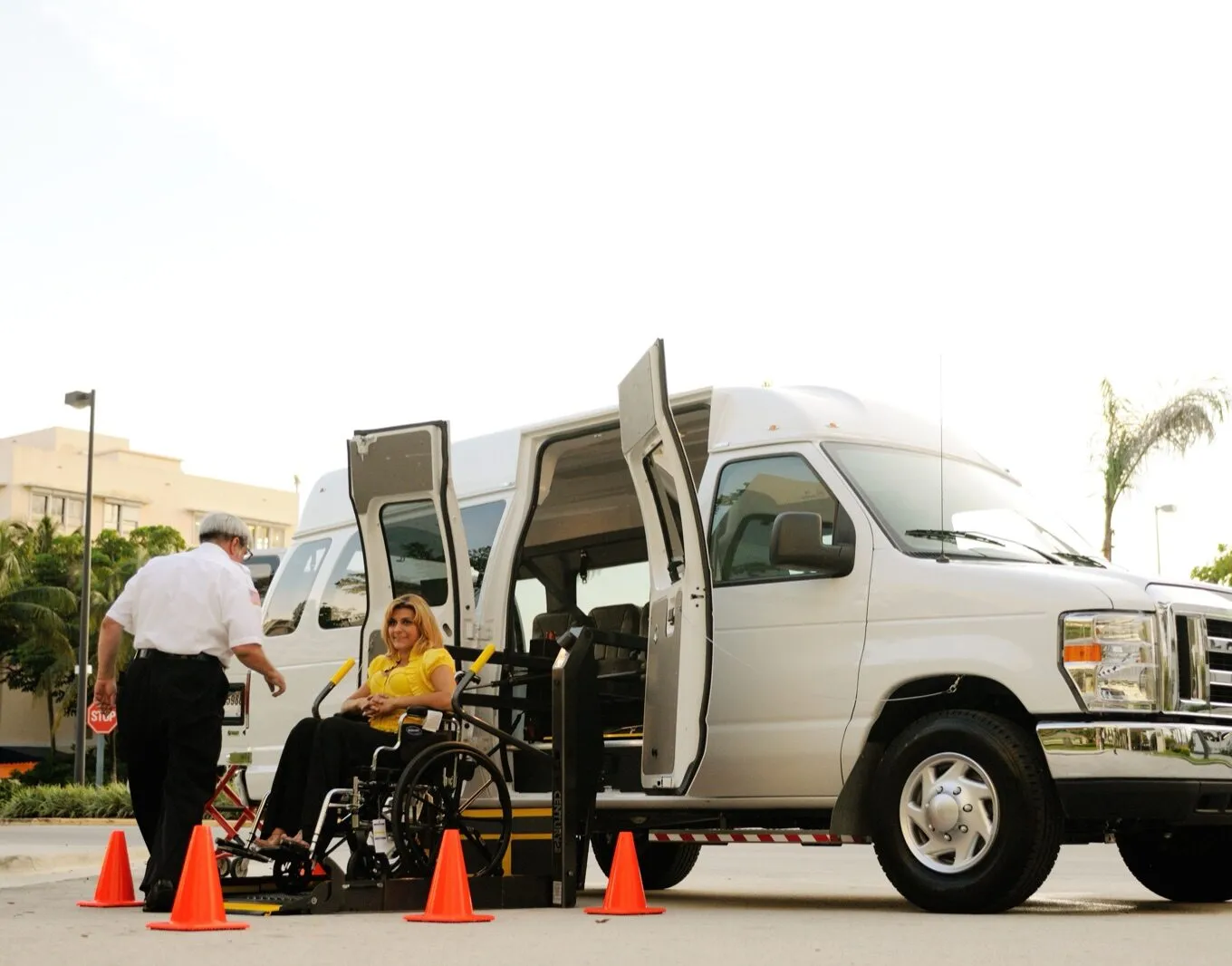
To start a NEMT business, first confirm your state and its brokers are adding providers. Then form an LLC, get a free EIN and NPI, and get any state license. Insure and equip a compliant van, screen your drivers, and enroll with Medicaid, where the 2026 application fee is $750. Last, get credentialed by each broker. Only then run and bill your first trip.
- Check for enrollment freezes and broker openings before you buy a van. Minnesota is not enrolling new NEMT providers in its seven-county metro area until January 27, 2027.
- Federal fees are small. The EIN and NPI are free, and the Medicaid application fee is $750 for applications submitted in 2026.
- Order matters. A state license can require insurance and a vehicle first, and a Medicaid health plan can keep you in its network for only 120 days without your state Medicaid enrollment.
- The waits add up. Texas says enrollment can take up to 60 days once it has everything, and MediTrans says broker onboarding takes 2 to 4 weeks.
- Never run a Medicaid trip before every approval is in place. MTM Health's standard agreement pays nothing for uncredentialed drivers or vehicles.
A NEMT company is a chain of approvals. Your state license can require insurance and a vehicle first. Medicaid enrollment can require the license. A Medicaid health plan or its broker can keep you in its network for only 120 days without your state Medicaid enrollment. This guide walks the chain in order, with the fees and waits agencies and brokers publish as of September 2026.
How a NEMT business gets paid
NEMT is a Medicaid benefit. Every state plan must say the Medicaid agency will ensure necessary transportation to and from providers (42 CFR 431.53). Federal rule 42 CFR 440.170 covers that transportation, and it lets a state hire a broker, chosen through competitive bidding, to arrange the rides. CMS says states can also hand parts of the work to health plans and vendors, but the state Medicaid agency stays responsible either way.
So before you do anything else, find out who arranges rides where you want to drive:
| Who arranges the ride | Who approves you | Who pays you |
|---|---|---|
| The state Medicaid program (fee-for-service) | The state Medicaid agency | The state, on a claim with NEMT billing codes |
| A broker hired by the state | The state, where it requires enrollment, then the broker’s credentialing | The broker, at the rate in your contract |
| A Medicaid health plan or its broker | The state enrolls you, and the plan or its broker contracts with you | The plan or its broker |
| A hospital, nursing home, or dialysis center | The facility’s contract | The facility |
| The rider or family (private pay) | No one beyond your licenses | The rider |
Many companies work several of these at once. See NEMT brokers by state for who runs rides where, and who pays for NEMT for every payer you can bill.
How to start a NEMT business: the steps at a glance
Most steps wait on the one before, so the order matters. The fee column shows government fees where they apply. Vehicles, insurance, and payroll are your largest costs, and the startup budget guide covers them line by line.
| Step | Where | Fee | Wait, where published |
|---|---|---|---|
| 1. Check your market and enrollment freezes | State Medicaid notices, broker provider pages | $0 | Before you spend money |
| 2. Choose your services and write a plan | SBA guides and counselors | $0 | Your pace |
| 3. Form the company and get an EIN | Your Secretary of State, then the IRS online | North Carolina: $125 for an LLC. EIN: $0 | EIN issued right away online |
| 4. Get an NPI | NPPES | $0 | Online is fastest |
| 5. Get state and local licenses | Your state’s licensing agency and city | New Jersey: $1,500 plus $100 per vehicle | New Jersey: 6 months to book your first audit once the application is complete |
| 6. Insure the company | Your insurance agent | Premiums | Before licensing in New Jersey |
| 7. Buy and equip vehicles | Dealer, upfitter, DMV | Vehicle cost | Varies |
| 8. Hire and screen drivers | You and your screening vendors | Check fees | MediTrans: 5 to 7 business days for background checks |
| 9. Enroll with Medicaid | Your state’s provider portal | $750 in 2026 | Texas: up to 60 days after it has everything |
| 10. Join brokers and health plans | Each broker’s provider page | Varies by broker | MediTrans: 2 to 4 weeks |
| 11. Run and bill your first trip | Broker portal or state billing system | None | MTM Health: uncontested claims paid within 30 days of electronic submission |
The printable NEMT startup checklist breaks each step into tasks, with a column for the date you finish each one.
Step 1: Check your market before you spend money
A van you cannot use for Medicaid trips still has a monthly payment. Three checks come first.
Is your state enrolling new NEMT companies? Federal rule 42 CFR 455.470 lets a state pause enrollment of a provider type at high risk of fraud, once the Secretary of Health and Human Services agrees. A pause lasts 6 months at first and can be extended 6 months at a time. Minnesota is not enrolling new NEMT providers in its seven-county metro area (Anoka, Carver, Dakota, Hennepin, Ramsey, Scott, and Washington counties). The pause began January 27, 2026, and the state extended it to January 27, 2027. Providers in other Minnesota counties can enroll. See the Minnesota enrollment freeze.
After a pause lifts, timing still matters. A company kept out by it that applies within 6 months is screened as high risk, which adds a criminal background check, fingerprints, and site visits (42 CFR 455.450(e)).
Does a broker need you? A broker can turn you down when it already has enough vehicles of your type in your area. MediTrans, which arranges rides for Louisiana Medicaid health plans, says acceptance depends on regional saturation and fleet type needs, and it keeps turned-down applicants on file. New York’s broker gives trips to the company the rider or medical office picks, or to a preferred provider, and otherwise picks at random among qualified companies. Ask each broker in your area which vehicle types it needs in which counties.
Who will ride? Count the dialysis centers, nursing homes, hospitals, and clinics within your service area, and ask what they use now. The NEMT market research guide walks through a county-level demand check.
Check your name before you file, too. Minnesota bars “medical,” “emergency,” “life support,” and “ambulance” in a special transportation service name unless the company is a licensed ambulance service, though “Non-Emergency Medical Transportation” or “NEMT” is allowed. New Jersey will not process an application whose trade name duplicates or closely resembles a licensed service’s name.
Step 2: Choose your services and write a plan
Decide which riders you will carry. Ambulatory riders walk on their own, wheelchair riders stay in their chairs on a lift or ramp, and stretcher riders ride lying down or reclined. Each level needs different vehicles, equipment, and driver training, and each pays a different rate. Start with the level your brokers and facilities are short of. The guides to starting a wheelchair transportation business and an ambulatory transportation business cover each one.
Then write a business plan. The Small Business Administration describes a traditional plan with nine common sections, such as an executive summary, a market analysis, and financial projections for the next five years, and says lenders and investors commonly ask for this type. For the first year, SBA suggests quarterly or even monthly projections. A lean plan is typically one page, though some lenders may ask for more. SBA resource partners, such as Small Business Development Centers and SCORE mentors, offer free or low-cost counseling.
Your plan needs three NEMT numbers: the rate each payer pays for your level of service, your cost per mile, and the months of cash you need before claims pay. Use the NEMT business plan template, the startup cost calculator, and the line-by-line startup budget. If you are starting small, read how to start with one van.
Step 3: Form the company and get your EIN
Most owners form an LLC or corporation with their Secretary of State. SBA says an LLC or corporation needs a registered agent in the state before it files. North Carolina, for example, charges $125 for LLC articles of organization, as of September 2026. See LLC for a NEMT business and how to pick a NEMT business name.
Get your employer identification number (EIN) after the state approves your filing. The IRS says to form the entity first, or the EIN application may be delayed. The online application is free and issues the EIN right away if approved, and the IRS warns that you never have to pay a fee for one. It allows one EIN per responsible party per day.
You do not need to file a beneficial ownership report. FinCEN’s final rule of August 11, 2026, effective August 14, 2026, made U.S. companies exempt. Only certain companies formed in another country and registered to do business in a U.S. state still report.
Use one exact legal name and address everywhere: the IRS letter, your NPI record, insurance, bank account, and Medicaid application. New York, for one, asks for the IRS letter that assigned your EIN and does not accept a W-9 in its place.
Step 4: Get your NPI
CMS says Medicare, Medicaid, and private health plans require a National Provider Identifier (NPI) in their billing and payment transactions. A company applies for a Type 2 (organization) NPI through NPPES, the CMS system that issues them. CMS says the online application is the fastest route. The NPI rule of January 23, 2004 says providers are not charged a fee to get an NPI or to update it.
The taxonomy code for NEMT vans is 343900000X, Non-emergency Medical Transport (VAN), the code North Carolina’s enrollment matrix lists for NEMT van companies. Report any change to your NPI record within 30 days. CMS also says an NPI does not license or credential you, enroll you in any plan, or guarantee payment. The steps and common mistakes are in how to get an NPI number for NEMT.
Step 5: Get your state and local licenses
No federal agency issues a NEMT license. Federal rules instead make your state Medicaid agency confirm that any license its rules require is current and has no limits (42 CFR 455.412). What you need depends on your state:
| State | What you need before trips | Fees and deadlines |
|---|---|---|
| New Jersey | A Department of Health license for mobility assistance vehicle service before any ride that starts in the state. The application needs every owner’s name and home address, a real street address (not a post office box), a standard operating procedures manual, and at least one licensable vehicle in each class of service. | $1,500 plus $100 per vehicle, or $1,250 plus $50 per vehicle in the second year of the two-year license cycle, by cashier’s check or money order. Renewal: $500 plus $100 per vehicle. Once the application is complete, you have 6 months to request your first audit and vehicle inspections (N.J.A.C. 8:40-2.1 and 2.5, as of September 2026). |
| Minnesota | A MnDOT special transportation service certificate of compliance: a USDOT number, the MnDOT packets, Form E insurance, Department of Human Services background studies, Medicaid enrollment, and a vehicle inspection | The intrastate USDOT number has no fee. Finish MnDOT’s online provider course within 90 calendar days of your certificate, or it is canceled (MnDOT, September 2026). |
| North Carolina | No license, certification, or accreditation to enroll as a NEMT van provider, but a site visit, the application fee, and a NEMT Driver Attestation form signed by your office administrator | NCTracks matrix of August 16, 2026 |
| New York | A letter of support from Medical Answering Services, the state’s broker, before you apply to Medicaid. New applications submitted after April 15, 2024 without it are rejected. | $750 application fee (eMedNY, May 2026) |
Federal motor carrier rules reach a NEMT van only when it crosses state lines and meets a size or seating test. A commercial motor vehicle in interstate commerce is one rated 10,001 pounds or more, or designed or used to carry more than 8 passengers, including the driver, for pay (49 CFR 390.5). Drivers need a CDL for a vehicle designed for 16 or more passengers, including the driver, or rated 26,001 pounds or more (49 CFR 383.5). See do you need a DOT number for NEMT.
Cities and counties add business licenses and for-hire permits. The NEMT license requirements guide shows every layer, and each state guide lists that state’s agency and forms.
Step 6: Insure the company
Insurance often comes before a license or a broker contract, because both ask for proof. New Jersey wants certificates of insurance before it licenses you, with the Department of Health as certificate holder. A New Jersey company must stop all service at once if any required coverage lapses.
Here are three published minimums:
| Who sets it | Auto liability | General liability | Other |
|---|---|---|---|
| New Jersey (N.J.A.C. 8:40) | $500,000 per occurrence for each vehicle | $300,000 premises and operations | Department of Health named as certificate holder |
| MTM Health (standard agreement, January 1, 2023 version) | $500,000 combined single limit | $500,000 per occurrence and $500,000 aggregate | MTM named as additional insured |
| MediTrans, Louisiana (September 2026) | $1,000,000 per occurrence | Required | Workers’ compensation or an approved waiver. MediTrans listed as certificate holder. |
New Jersey also wants each vehicle’s VIN on the certificate when vehicles are insured as scheduled autos. Brokers and states set their own limits, so price your policy at the highest limit among the payers you plan to join. See NEMT insurance requirements.
Step 7: Buy and equip your vehicles
Title, register, and equip each vehicle to the standard of every payer you plan to work with. MTM Health’s Virginia handbook, approved August 10, 2026, shows what a broker checks: vehicles titled and licensed in Virginia, an inspection before a vehicle carries members, and another inspection twice a year after that. Vehicles out of compliance can be pulled from service.
Before you buy, read NEMT vehicle requirements, how to choose a wheelchair van, and what a wheelchair van costs.
Step 8: Hire and screen drivers
Federal law sets a floor for every NEMT company and driver. Under section 1902(a)(87) of the Social Security Act, as CMS explains in its transportation coverage guide, your state must make sure that:
- Your company and each driver are not excluded from federal health care programs or listed on the HHS Inspector General’s exclusion list.
- Each driver has a valid driver’s license.
- Your company has a process to address any violation of a state drug law.
- Your company has a process to tell the state Medicaid program each driver’s driving history, including traffic violations.
CMS also says transportation companies must screen their employees for exclusions. Search each hire on the OIG exclusion list and on SAM.gov before they drive. Brokers may check both: Verida, for one, runs OIG and SAM checks when it credentials companies and drivers.
Brokers add more. MTM Health’s Virginia handbook requires drivers who are at least 21 with two years of driving experience, no more than two chargeable accidents or moving violations in three years, and a background check before they carry members. MediTrans asks you to allow 5 to 7 business days for its background checks.
Two employer deadlines apply to every hire. Complete section 2 of Form I-9 within three business days of the hire (8 CFR 274a.2). Report the hire to your state’s new hire directory within 20 days, or sooner if your state says so. See NEMT driver requirements, how to hire NEMT drivers, and the driver file checklist.
Step 9: Enroll with Medicaid
Your state screens every provider it enrolls (42 CFR 455.410). The checks depend on the risk level your state gives NEMT. CMS says “limited” is the minimum, and states may raise NEMT to moderate or high.
| Risk level | What the state does (42 CFR 455.450) |
|---|---|
| Limited | Confirms you meet federal and state rules, verifies licenses, and checks federal databases before and after enrollment |
| Moderate | All of that, plus site visits before and after enrollment |
| High | All of that, plus a criminal background check and fingerprints from each person who owns 5 percent or more |
North Carolina rates NEMT van companies moderate risk, so expect a site visit there. The state can also make unannounced visits to any location after you enroll (42 CFR 455.432). See Medicaid provider risk levels and the Medicaid site visit.
The application asks for the name, address, date of birth, and Social Security number of each person with an ownership or control interest, and of your managing employees (42 CFR 455.104). The federal application fee is $750 for applications submitted from January 1 through December 31, 2026. CMS sets a new amount each calendar year, so check the fee again if you apply in 2027. You do not pay it again if you already paid it to Medicare or another state. North Carolina adds $100 under its state law.
Published processing times show how long to plan for:
| State | What it says, as of September 2026 |
|---|---|
| Texas | Up to 60 days once TMHP has everything it needs. You get 30 business days to fix an incomplete application, or the process ends. |
| Indiana | Allow at least 15 business days before checking status. A rejected online application must be corrected within 21 business days, or it expires. |
| New York | The broker’s letter of support comes first. After that, the broker says an enrollment decision can take 90 days or longer. |
Once enrolled, your state must revalidate you at least every 5 years (42 CFR 455.414). The full walk-through is in how to become a Medicaid transportation provider, and what to do if your application is denied covers the common stalls.
Step 10: Get broker and health plan contracts
Where a broker or health plan arranges rides, its contract decides whether you get trips. Federal rules make the state screen and enroll every network provider of a Medicaid health plan. A plan may sign you while your state enrollment is pending, but only for up to 120 days (42 CFR 438.602).
MediTrans’s published onboarding in Louisiana shows the usual sequence, as of September 2026:
- Send a letter of intent. Its team replies within 3 to 5 business days.
- Run driver background checks through its vendor, allowing 5 to 7 business days.
- Send insurance certificates with MediTrans as certificate holder.
- Upload driver and vehicle documents to its document system.
- Finish training on its handbook, policies, and portal.
- Get activated with a provider ID and portal logins. Trip offers begin within 24 to 48 hours.
MediTrans says the whole process typically takes 2 to 4 weeks. Other brokers use their own steps, and the broker credentialing guide and credentialing checklist list what most ask for.
Read the contract before you sign. MTM Health’s standard agreement, in the January 1, 2023 version Pennsylvania posts, guarantees no minimum number of trips and lets either side end it for convenience on 30 days’ written notice. See how to get NEMT broker contracts and our broker directory. Facility and private pay work spread your risk: see NEMT facility contracts and private pay NEMT.
Step 11: Run your first trip and get paid
Run only trips assigned to you, with approved drivers and vehicles. MTM Health’s standard agreement says it pays nothing for trips by uncredentialed drivers or vehicles.
Record each trip leg as it happens. MTM Health’s Virginia handbook shows what a broker expects: an electronic trip log with the trip ID, scheduled and actual pickup times, departure and arrival times, and the member’s signature, or the claim is denied. See NEMT trip documentation requirements and the trip log template.
Then bill on time. Deadlines and payment cycles differ by payer:
| Payer | Filing deadline | Payment terms |
|---|---|---|
| MTM Health, standard agreement (January 1, 2023) | 90 days from the date of service, unless the state or plan sets another limit | Uncontested claims within 30 days of electronic submission |
| MTM Health, Virginia (handbook approved August 10, 2026) | 6 months from the date of service | At MTM’s Schedule A rates for Virginia, based on miles, mode, and shared rides |
| MediTrans, Louisiana (September 2026) | 365 days from the trip, with trip documentation within 24 hours | Clean claims processed in 7 to 14 business days, paid every other Friday |
Payroll, fuel, and insurance come due before the first payment arrives. Plan your cash for that gap with the cash reserve calculator, and learn the billing side in how to bill NEMT brokers and how to bill Medicaid for NEMT.
Mistakes that stall a new NEMT company
- Buying a van first. Check for enrollment freezes and ask brokers what they need before you sign a loan.
- Names that do not match. Use the same legal name and address on the IRS letter, NPI, insurance, license, and Medicaid application.
- Leaving an application incomplete. Texas ends the process after 30 business days, and Indiana lets a rejected online application expire after 21 business days.
- A post office box as your business address. New Jersey rejects it.
- Driving before approval. Uncredentialed drivers and vehicles earn nothing under MTM Health’s agreement, and unlicensed rides break state rules.
- A lapse in insurance. In New Jersey, service must stop the moment required coverage lapses.
- Missing the deadlines after approval. Minnesota cancels a certificate if the provider course is not done within 90 days. Keep your NPI current within 30 days of a change, and watch for revalidation at least every 5 years.
- One broker for every trip. A broker contract can end on 30 days’ notice, so add facility or private pay work early.
The NEMT startup mistakes guide covers each one in depth.
Frequently asked questions
How much does it cost to start a NEMT business?
The government fees are small. The EIN and NPI are free, and the federal Medicaid application fee is $750 for applications submitted in 2026, with North Carolina adding $100 of its own. State licenses vary: New Jersey charges a new mobility assistance vehicle service $1,500 plus $100 per vehicle, or $1,250 plus $50 per vehicle in the second year of its two-year license cycle. The large costs are the vehicle, insurance, and cash to cover payroll and fuel until your first claims pay.
How long does it take to start a NEMT business?
Plan in weeks and months, because most approvals wait on the one before. An EIN is issued right away online. Texas says Medicaid enrollment can take up to 60 days after it has everything it needs. In New York, the broker says an enrollment decision can take 90 days or longer. MediTrans in Louisiana says broker onboarding takes 2 to 4 weeks, as of September 2026.
Do I need a license to start a NEMT business?
It depends on your state. There is no federal NEMT license, but your state Medicaid agency must confirm any license its rules require (42 CFR 455.412). New Jersey licenses mobility assistance vehicle services, and Minnesota certifies special transportation service providers. North Carolina requires no license, certification, or accreditation to enroll as a NEMT van provider, as of its August 16, 2026 enrollment matrix.
Do I need Medicaid enrollment if I only work for a broker or health plan?
Usually, yes. Federal rules make states screen and enroll every network provider of a Medicaid health plan, and a plan may contract with you for up to 120 days while your enrollment is pending (42 CFR 438.602). New York requires a letter of support from its broker before you apply for Medicaid enrollment. Check your state guide and each broker's provider page.
Can I start a NEMT business with one van?
Yes, where your state and brokers allow it. New Jersey, for example, asks for at least one licensable vehicle in each class of service you apply for. Brokers decide how many providers they need in each area, so ask whether they need your type of vehicle before you buy it. MediTrans says acceptance depends on regional saturation and fleet type needs.
Can I run trips while my applications are pending?
No. MTM Health's standard agreement pays nothing for trips by drivers or vehicles it has not credentialed. New Jersey requires a license before any mobility assistance ride that starts in the state. MnDOT says a Minnesota company cannot legally provide special transportation service until it receives its certificate of compliance.
Does a NEMT company need a USDOT number?
Only in some cases. Federal registration covers commercial motor vehicles in interstate commerce: vehicles rated 10,001 pounds or more, or designed or used to carry more than 8 passengers, driver included, for pay (49 CFR 390.5). Some state programs require one for in-state work too. Minnesota requires a USDOT number for special transportation service, and the intrastate number has no fee.
Official resources
- IRS: Apply for an EIN online (free)
- CMS: NPPES, apply for an NPI
- SBA: Write your business plan
- SBA: Free and low-cost local business counseling
- eCFR: 42 CFR 455 subpart E, Medicaid provider screening and enrollment
- HHS OIG: Search the exclusion list
- USCIS: Form I-9
- CMS: Medicaid Transportation Coverage Guide (SMD 23-006)