Growth
How to Become an ADA Paratransit Contractor in 2027: Rules, Testing, and Bids
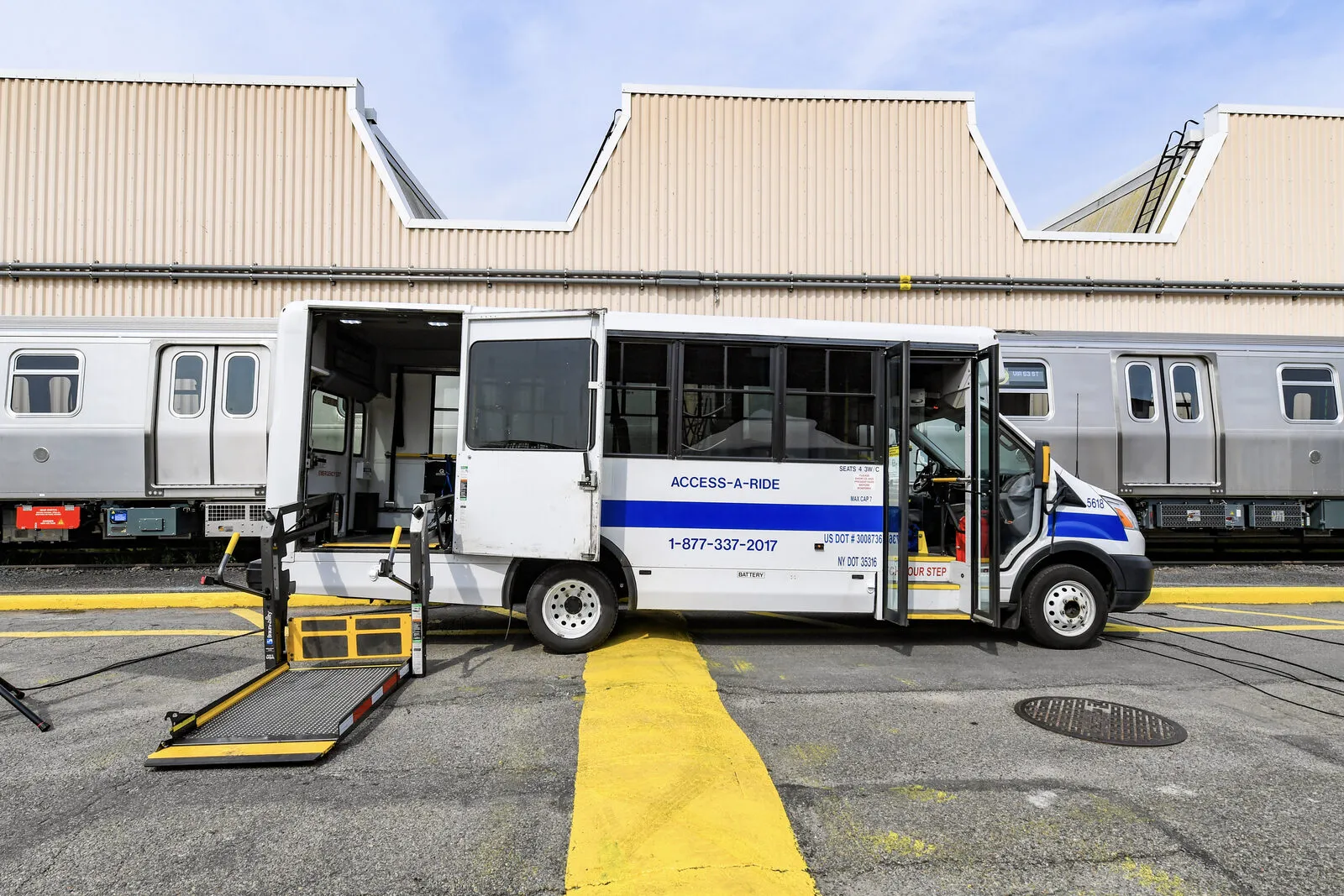
.jpg)
An ADA paratransit contractor is a private company that runs some or all of a transit agency's paratransit trips. You follow the same ADA service rules the agency would, run an FTA drug and alcohol testing program when the agency takes 5307, 5309, or 5311 transit grants, and win the work through the agency's public bids, as a main operator, an overflow provider, or a subcontractor.
- Most ADA paratransit is run by contractors: about 80 percent of 2024 ADA trips at agencies that file full National Transit Database reports.
- As a contractor you stand in the agency's shoes, so its ADA rules become yours for every contracted trip.
- When the agency takes 5307, 5309, or 5311 transit grants, your drivers, dispatchers, and most mechanics need FTA testing, at 2026 random rates of 50 percent for drugs and 10 percent for alcohol.
- Contracts above $350,000, the federal threshold as of September 2026, are bought by sealed bid or proposal with public notice, so watch agency procurement pages and get on their vendor lists.
- Overflow, taxi-style, and subcontract work are realistic first steps for a small company.
Every public transit agency that runs fixed route buses or trains, other than commuter bus, commuter rail, and intercity rail, must also run paratransit for riders whose disability keeps them off those routes (49 CFR 37.121). Most of those trips are not driven by agency staff. Agencies hire private companies, and a NEMT company with accessible vans, trained drivers, and a dispatcher already has most of what the work needs.
How transit agencies contract out paratransit
The National Transit Database, where agencies report their service to the Federal Transit Administration (FTA), shows how much of this work contractors do. These are the ADA paratransit trips for 2024 from agencies that file full reports:
| Who ran the trips (2024) | ADA paratransit trips | Share |
|---|---|---|
| The agency’s own staff | 12.2 million | 20% |
| Contractors with dedicated vehicles | 45.0 million | 72% |
| Taxi companies under contract | 4.6 million | 7% |
| Rideshare companies under contract | 0.7 million | 1% |
| Total | 62.5 million | 100% |
Contracting reaches small and rural systems too. Of the 1,925 agencies that reported demand response service for 2024, 513 bought at least some of it from contractors, taxi companies, or rideshare companies, including 129 rural reporters.
The shapes the work takes
| Kind of contract | What you do | Example from 2024 data |
|---|---|---|
| Main operating contract | Run drivers, vehicles, and often dispatch for all or part of the service | Access Services in Los Angeles County reported 2.8 million contractor-run ADA trips |
| Overflow or taxi-style trips | Carry trips next to the main operator, in your own vehicles, alongside your other work | Taxi providers carried 184,208 of the Kansas City Area Transportation Authority’s ADA trips, more than its dedicated contractor’s 82,131 |
| Subcontract under the main operator | Cover a zone, a shift, or wheelchair trips for the prime contractor | The ADA rules that apply to the prime apply to you (49 CFR 37.23(d)) |
| Rural or small city service | Run dial-a-ride or paratransit for a county or small transit system | 129 rural reporters bought demand response service from contractors or taxi companies |
Some large agencies use several kinds at once. These five did in 2024:
| Agency (2024) | ADA trips by contractors | ADA trips by taxi providers |
|---|---|---|
| Access Services, Los Angeles County | 2,804,375 | 1,363,089 |
| Pace, suburban Chicago | 2,556,900 | 405,105 |
| Maryland Transit Administration | 1,986,906 | 939,692 |
| Orange County Transportation Authority, California | 851,757 | 285,986 |
| King County Metro, Seattle area | 718,648 | 111,550 |
Pace also reported 253,050 ADA trips by rideshare companies.
Why agencies keep backup capacity
The ADA bars an agency from rationing paratransit. It may not cap trips, keep waiting lists, or show a pattern of substantial numbers of late pickups, trip denials, missed trips, or very long rides (49 CFR 37.131(f)). When the main operator runs short of drivers or vans, the agency still owes every eligible rider a trip. That is the opening for overflow providers.
The ADA rules you take on as a contractor
A private company that runs demand responsive service for a public agency must meet the ADA rules that would apply to the agency itself (49 CFR 37.23). DOT’s official interpretation calls this standing in the agency’s shoes. It reaches only the vehicles and service under the contract, so your Medicaid and private pay work keeps its own rules (Appendix D to part 37).
| Rule | What it means for your drivers and dispatch | Citation |
|---|---|---|
| Origin to destination | The ride goes from where the rider starts to where they are going, not stop to stop | 37.129(a) |
| Next-day service | The agency must take requests the day before and may book up to 14 days ahead | 37.131(b) |
| Pickup time | The agency may move the pickup, but not more than one hour from the time the rider asked for | 37.131(b)(2) |
| No trip purpose limits | Work, shopping, church, and medical trips all count the same | 37.131(d) |
| Fares | No more than twice the full bus fare, and a personal care attendant rides free | 37.131(c) |
| Companions | One companion rides along, plus the attendant. More ride when space allows. | 37.123(f) |
| Lifts | A lift that fails in service is reported right away, and the van comes out of service before its next service day until it is fixed, with short exceptions when no spare exists | 37.161, 37.163 |
| Training | Staff are trained to proficiency to run the equipment safely and treat riders with respect | 37.173 |
| No-shows | Trips missed because of operator error never count against the rider | 37.125(h)(1) |
The lift rule is a good example of the shoes rule at work. The detailed lift checks in 37.163 are written for public agencies, but DOT’s interpretation says public agency service rules such as that one apply to a contractor for the contracted service. When there is no spare vehicle, the lift van may stay in service for no more than three days in areas over 50,000 people, or five days in smaller ones.
Your no-show records protect your riders and your contract. The agency may suspend a rider for a pattern of missed trips, but only after written notice and a chance to be heard, and it cannot count a trip your driver missed. Log arrival times, door knocks, and dispatch calls for every no-show. See how to reduce no-shows for the habits that help.
Requests your drivers will get
Agencies must handle rider requests to change a policy for a disability, called reasonable modifications (49 CFR 37.169). DOT’s Appendix E to part 37 gives examples of how to answer them:
| Generally grant, unless it creates a direct threat | May be denied |
|---|---|
| Opening the building’s exterior door, if the van is not left unattended or out of sight for long | Help past the door and inside the building |
| Taking the rider’s arm over snow or ice, or helping a wheelchair up a steep driveway | Lifting the rider out of the wheelchair, except in an emergency |
| Picking up at the entrance the rider names, such as a hospital side door | Staying with a rider who cannot be left alone, which is attendant work |
| Help to the door on the way home when a dialysis rider is weak, even if they walked out alone | A ride with no other passengers, or a sedan instead of a van |
| A call 5 minutes before arrival | A specific driver |
| Letting a rider with diabetes eat or drink, or take medicine | Waiting outside a pharmacy on the way home, which the agency may offer but need not |
Train drivers on the agency’s process. Pass any request they cannot settle on the spot to dispatch, and let the agency decide. For securement, service animals, oxygen, and refusals, see the ADA requirements guide and the wheelchair securement guide.
FTA drug and alcohol testing for contractors
FTA’s testing rule, 49 CFR part 655, covers agencies that receive federal grants under 49 U.S.C. 5307 (urbanized areas), 5309, or 5311 (rural areas), and any contractor of theirs (49 CFR 655.3). A contractor includes an informal, ongoing arrangement, not only a signed contract. Section 5310 grants, for seniors and people with disabilities, are not on that list. If your only transit work is for a 5310 program, ask the agency what testing its agreement requires. For how FTA testing fits beside broker and FMCSA testing, see NEMT driver drug testing.
Who is covered
| Role | Covered by FTA testing? | Why (49 CFR 655.4) |
|---|---|---|
| Drivers of vans and sedans on contracted trips | Yes, even when driving empty | Operating a revenue service vehicle. A vehicle includes a van or automobile. |
| Dispatchers who control where vehicles go | Yes | Controlling dispatch or movement of a revenue service vehicle |
| Mechanics who work on those vehicles | Yes, with one exception | Maintenance contracted out by rural 5311 agencies, or by 5307 or 5309 agencies in areas under 200,000 people, is excluded |
| Reservation, billing, and office staff | No, unless they also drive or dispatch | Not on the list of safety-sensitive duties |
| Volunteer drivers | Only if they need a CDL or are paid more than their expenses | Covered employee definition |
What your program needs
- A policy statement. Your company’s governing board adopts it, and it lists what 49 CFR 655.15 requires: who answers questions, who is covered, what is prohibited, when tests happen, and the consequences. Give written notice to every covered employee (655.16). The drug and alcohol policy template has an FTA version.
- Training. Every covered employee gets at least 60 minutes on the effects of drug use. Supervisors who make reasonable suspicion calls get 60 minutes on drugs and 60 on alcohol (655.14).
- A negative test before the first trip. A driver may not perform covered work until a pre-employment drug test comes back verified negative. Retest anyone who has been off covered duty and out of the random pool for 90 days in a row (655.41).
- Every required test. Pre-employment, post-accident, reasonable suspicion, random, return to duty, and follow-up, for marijuana, cocaine, opioids, amphetamines, and PCP (655.21).
- Random tests at the current rate. For 2026, at least 50 percent of covered employees for drugs and 10 percent for alcohol, under FTA’s notice of January 15, 2026. Picks must be unannounced, spread through the year, and made at all hours your service runs. A consortium may pool you with other employers (655.45).
- Records. Keep positive results, refusals, and referrals for 5 years, collection and training records for 2 years, and negative results for 1 year, in a secure place with controlled access (655.71).
- Annual numbers. The agency files a yearly Management Information System report with FTA by March 15 when FTA asks, and it answers for the accuracy of your data. A company official must certify the report even when a third party administrator prepares it (655.72).
Two more rules catch new contractors. Covered employees may not use marijuana or the other tested drugs at any time (655.21(c)), and FTA’s rule overrides state and local laws that conflict with it (655.6), so a state marijuana law does not excuse a positive test. And if some drivers also fall under FMCSA testing, keep separate random pools or test everyone at the higher rate (655.45(k)). Keep broker-only drivers in their own non-DOT program.
The agency checks your program. It must ensure its contractors comply (655.81), and it certifies compliance to FTA every year. An agency or state that passes grant funds on to others can suspend a noncompliant contractor from federal transit funds (655.83).
How transit agencies buy paratransit service
Transit agencies that take federal grants must buy services through full and open competition (49 U.S.C. 5325). DOT applies the federal grant rules in 2 CFR part 200 to them (2 CFR 1201.1), and those rules set the buying method by contract size:
| Contract size (September 2026) | How the agency buys | What you do |
|---|---|---|
| Up to $15,000, the federal micro-purchase threshold | May buy without quotes if the price is reasonable. An agency may self-certify a threshold up to $50,000. | Make sure the agency knows you exist |
| Up to $350,000, the simplified acquisition threshold, or the agency’s lower limit | Price or rate quotes from an adequate number of qualified sources | Get on the vendor list and answer every request for quotes |
| Above that threshold | Sealed bids (an invitation for bids) or proposals (a request for proposals), with public notice | Read the evaluation factors and their weights, then write to them |
The thresholds come from 48 CFR 2.101 and 2 CFR 200.320. A state agency that runs transit, such as a state DOT, follows its own state’s purchasing rules instead, plus a few of these federal ones (2 CFR 200.317). In a request for proposals, the agency must list every evaluation factor and its relative importance, and it awards to the proposal most advantageous considering price and other factors.
A 2026 example: Access Services
Access Services runs ADA paratransit for Los Angeles County through regional contractors. It uses invitations for bids when requirements are clear, and requests for proposals when they are functional or unclear. In its April 27, 2026 board presentation, it set out how it would score proposals for its Northern region, where the current contract ends July 31, 2027:
| What Access Services scores | Points |
|---|---|
| Cost proposal | 20 |
| Employee pay and benefits | 20 |
| Technical approach | 15 |
| Proposed staff | 10 |
| Paratransit operating experience | 10 |
| State-mandated bidding preference | 10 |
| Safety approach | 5 |
| Operating facility | 5 |
| Financial qualifications | 5 |
| Total | 100 |
Price was only a fifth of the score, and driver pay counted as much. The timeline ran long: the schedule set proposals due August 25, 2026, a board decision in December 2026, and full service from August 1, 2027. The agency also listed limited competition and a shortage of operating yards as challenges, and said proposers would need subcontracting partnerships to meet demand. That is the kind of opening a small company can use.
Before any award, the agency must find you a responsible contractor. Federal transit law names four things it weighs: your integrity, your compliance with public policy, your past performance, and your financial and technical resources (49 U.S.C. 5325(j)). Build your proposal around those four.
Federal terms in the contract
| Term | When it applies | What to check |
|---|---|---|
| Debarment and suspension | Contracts of $25,000 or more (2 CFR 180.220) | Your company and owners are not on the SAM.gov exclusions list. See SAM exclusions. |
| Anti-lobbying certification | Bids over $100,000 | You certify that no federal money paid anyone to influence the award |
| Termination for cause and convenience | Contracts over $10,000 | How the agency can end the contract early, and how you are paid if it does |
| Breach remedies | Contracts over the simplified acquisition threshold | Penalties and sanctions for breaking the contract terms |
| Covered telecommunications | Contracts paid with grant funds | The agency cannot use grant money to obtain covered equipment or services, such as Huawei or ZTE telecom gear, or Hytera, Hikvision, or Dahua equipment used for security. Check your radios and cameras. |
These come from Appendix II to 2 CFR part 200, 2 CFR 180.220, and 2 CFR 200.216.
Small business and DBE programs
Grant rules tell agencies to put small, minority-owned, women-owned, and veteran-owned businesses on solicitation lists when possible, and to split large jobs where that lets them compete (2 CFR 200.321). Ask each agency to add you.
DOT’s Disadvantaged Business Enterprise (DBE) program also sets goals for work by certified small firms. Since October 3, 2025, and under a final rule effective September 25, 2026, no owner is presumed disadvantaged because of race or sex. Each owner shows disadvantage with a personal narrative and a personal net worth statement (49 CFR 26.67). You apply through your state’s Unified Certification Program (26.81). A certified firm can be attractive to a prime contractor with a DBE goal.
Workers on a contract you win from another company
Federal transit grants carry employee protections under 49 U.S.C. 5333(b). When one private transit bus service contractor replaces another through competitive bidding, the Department of Labor bases any decision on job assurances on its decision of September 21, 1994. Ask the agency what protective terms cover the current contractor’s workers before you price labor.
What agencies pay for contracted paratransit
The National Transit Database also reports cost. These are the medians for demand response service in agencies’ full 2024 reports, where ADA paratransit made up about 69 percent of trips. Cost here means the agency’s total operating expense for the service, divided by revenue hours or by trips. It is the agency’s whole cost, not the rate its contractor was paid.
| Who ran the service (2024) | Agencies | Median cost per revenue hour | Median cost per trip |
|---|---|---|---|
| Contractors with dedicated vehicles | 236 | $105.19 | $52.41 |
| Taxi companies | 51 | $93.49 | $35.45 |
| Rideshare companies | 18 | $118.79 | $25.55 |
| The agency’s own staff | 219 | $116.02 | $55.79 |
One contract’s pay and performance terms
Access Services’ April 27, 2026 board presentation also showed the proposed pay for the final option period of its Santa Clarita region contract, held by the City of Santa Clarita:
| Pay item | July 1, 2026 to June 30, 2027 |
|---|---|
| Fixed monthly payment | $54,673.98 |
| Payment per trip | $55.80 |
| Fuel payment per revenue hour, gasoline vehicles only | $13.78 |
Access Services also listed a fully loaded rate for each of its six regional providers for fiscal year 2026, from $51.77 in the Southern region to $91.06 in Antelope Valley. Santa Clarita’s was $67.04 that year, when its variable rate was $50.27 per trip. The pay comes with performance standards, which the board sees on a report card:
| Measure | Standard |
|---|---|
| On-time performance | 91 percent or better |
| Excessively late trips | 0.10 percent or fewer |
| Excessively long trips | 5 percent or fewer |
| Missed trips | 0.75 percent or fewer |
| Trip denials | None |
| Average hold time for reservations | 120 seconds or less |
| Complaints | 4.0 or fewer per 1,000 trips |
| Preventable collisions | 0.85 or fewer per 100,000 miles |
| Miles between major mechanical failures | 50,000 or more |
If you have never tracked your own numbers this way, start now. See improving on-time performance.
Pricing your bid
Use the national figures as a check on your price, not as the price. Each solicitation sets the pricing unit, such as a rate per revenue hour or per trip, and defines it. NTD counts revenue hours as time in service and reports deadhead time separately, so time driving to the first pickup and back to the garage may not be paid. Build it into your rate.
Then add every cost the contract creates:
- Drivers. Wages, benefits, and overtime, and any wage floor the contract or labor terms set. See NEMT driver pay.
- Vehicles. Payments, fuel, and maintenance if you supply the vans. None of this if the agency supplies them.
- Insurance. The limits in the solicitation. See NEMT insurance requirements.
- Testing program. Lab fees, a consortium or third party administrator, and supervisor training.
- Dispatch and reporting. Staff and the systems the agency requires for trip data.
- Deadhead. Empty miles and hours between trips. See deadhead miles.
How to become an ADA paratransit contractor, step by step
- Find the agencies within reach. Search the National Transit Database for agencies near you that report demand response service, and note which ones use contractors, taxis, or rideshare.
- Register as a vendor. Sign up on each agency’s procurement page or bid portal, and ask to be added to the lists for paratransit, dial-a-ride, and supplemental service.
- Ask about overflow and subcontract work. Call the agency’s paratransit manager and the current prime contractor. Ask whether they add supplemental providers between contract terms.
- Read the whole solicitation. Note who supplies vehicles, the dispatch and data systems, the on-time window, reporting, insurance, labor terms, and the evaluation weights. Acknowledge every addendum.
- Build your FTA testing program before the start date. Every covered driver, dispatcher, and mechanic needs a verified negative pre-employment test before the first contracted trip.
- Train to proficiency. Cover lifts, securement, reasonable modification requests, and rider respect, and log it. The driver training log keeps the record. See NEMT driver training.
- Price from your costs. Use the table above as a check.
- Write to the four responsibility factors. Show integrity, compliance, past performance from broker and facility work, and your finances and fleet.
- Sign the federal certifications. Check SAM.gov exclusions for your company and every owner first.
- Run the contract by the numbers. Report trips, hours, and miles the way the agency asks, because it reports them to the National Transit Database. Expect audits of your trip records and testing files.
For other public buyers of rides, see government NEMT contracts. For federal transit grants that pay for vans and rides, see NEMT grants.
Running paratransit next to your Medicaid trips
The two programs overlap in riders, not in rules. One person can qualify for ADA paratransit and for Medicaid rides, as the paratransit vs NEMT guide explains. Bill each trip only to the program that ordered it, and keep separate trip records, on-time reports, and testing pools for each.
Contract work can also change your fleet plans. Buying a van a short time before the contract starts and then using it on the contract is a sign it was bought in contemplation of the contract, so it must meet the agency’s accessibility rule (Appendix D to part 37). DOT’s interpretation also says a contractor running part of a demand response system does not always have to buy accessible vehicles, when the system as a whole already gives riders with disabilities equivalent service. Ask the agency in writing which rule applies before you buy.
Frequently asked questions
Can a small NEMT company become an ADA paratransit contractor?
Yes. Agencies buy paratransit in several shapes, not only one large operating contract. Some buy trips from taxi-style companies next to a main contractor: in 2024, the Kansas City Area Transportation Authority reported more ADA trips by taxi providers than by its dedicated contractor. You can also subcontract under the main operator, or start with a rural agency. Federal grant rules tell agencies to put small businesses on their solicitation lists when possible (2 CFR 200.321).
Do FTA drug testing rules apply to my sedan and van drivers?
Yes, when the trips are service for a transit agency that receives federal grants under 49 U.S.C. 5307, 5309, or 5311. FTA's rule covers anyone who operates a revenue service vehicle, and its definition of vehicle includes vans and automobiles (49 CFR 655.4). Dispatchers who control vehicle movement and most mechanics are covered too. A driver who needs no CDL is still covered.
What are the FTA random testing rates for 2026?
FTA's notice of January 15, 2026 kept the minimum random rates at 50 percent of covered employees for drugs and 10 percent for alcohol, starting January 1, 2026. FTA sets the rate each year from the industry's reported results, so check its Federal Register notice for calendar year 2027. Tests must be unannounced and spread across the year and across all hours of service (49 CFR 655.45).
Do I have to buy wheelchair accessible vans for a paratransit contract?
Vans you buy or lease for the contract, or in contemplation of it, must be accessible whenever the agency itself would have to buy accessible ones (49 CFR 37.23(b)). DOT's interpretation adds that the rule reaches only the contracted service, not your other work. Some agencies supply the vehicles: Access Services in Los Angeles County says it generally provides most of the vehicles its transportation contractors use.
How far ahead are paratransit trips booked?
The agency must take trip requests the day before, and it may accept reservations up to 14 days ahead. It may negotiate the pickup time with the rider, but not by more than one hour before or after the time the rider asked for (49 CFR 37.131(b)). Your contract then sets the on-time window you are measured against for each pickup.
Can I charge a paratransit rider more than the agency fare?
No. The ADA fare may be no more than twice the full fixed route fare for a similar trip, and a personal care attendant rides free (49 CFR 37.131(c)). The agency sets the fare, and your contract says whether you collect it. The agency may charge a social service agency more for trips guaranteed to that agency.
Where do transit agencies post paratransit bids?
On their own procurement pages and bid portals. Above the simplified acquisition threshold, $350,000 as of September 2026 unless the agency sets a lower one, federal grant rules require sealed bids or proposals with public notice (2 CFR 200.320). Below it, agencies may ask a few qualified sources for price quotes, which is why being on their vendor list matters.
Official resources
- eCFR: 49 CFR part 37, the ADA transportation rules
- eCFR: 49 CFR part 655, FTA drug and alcohol testing
- FTA: Drug and Alcohol Program publications and MIS results
- National Transit Database: service by agency, mode, and type of service
- eCFR: 2 CFR 200.320, how grant-funded agencies must buy services
- SAM.gov: Search exclusions