Growth
Private Pay NEMT in 2027: Who Pays Out of Pocket, What to Charge, and How to Get Paid
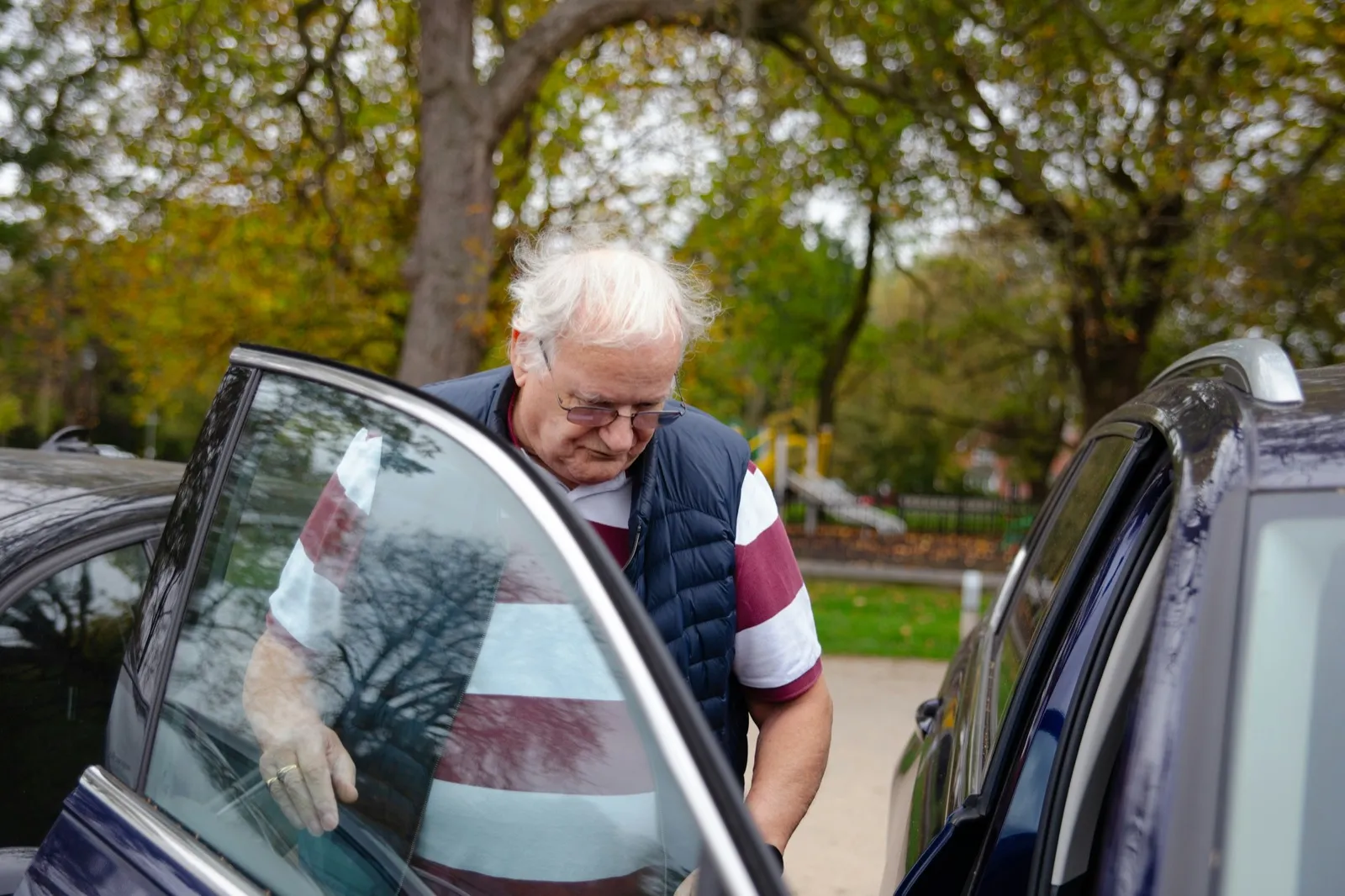
Private pay NEMT means rides paid by the rider, a family, or a facility instead of Medicaid or a broker. Original Medicare pays only for ambulance rides, so seniors without Medicaid, their families, hospitals, and senior living communities are the main buyers. Price each ride from your costs, quote the total before booking, take a card or send an invoice, and never charge a Medicaid member for a covered ride.
- Original Medicare pays only for ambulance rides, so riders with no other coverage who can travel by car or wheelchair van often pay themselves.
- Price private rides from your own costs, quote the full total before the ride, and hand over an itemized receipt.
- Never charge a Medicaid member for a covered ride or a no-show. Private pay is for riders and payers outside the program.
- Charge private riders the prices you list. Texas Medicaid bars charges higher than your private-pay fees, and New York denies claims when a listed fee is never collected.
- A paid ride across a state line can require federal operating authority and at least $1.5 million in insurance.
Private pay is the part of NEMT where you set the price and the rider, a family, or a facility pays you directly. There is no prior authorization, no claim form, and no wait for a remittance. It also has its own rules, and some of them reach back into your Medicaid billing.
Who pays for NEMT out of pocket
Private riders are usually people with no program that pays for their kind of ride. Original Medicare’s only ride benefit is ambulance service (Social Security Act section 1861(s)(7)), and Part B covers it when traveling in any other vehicle could endanger the rider’s health. Medicare’s dialysis booklet (CMS Product No. 10128, November 2025) says Original Medicare covers only ambulance rides to the nearest dialysis facility, and only when other transportation could endanger the patient’s health. It tells patients who need help with any other ride to talk to the social worker at their dialysis facility.
Medicare Advantage plans are not required to cover rides to covered care. CMS’s Medicare Managed Care Manual (Chapter 4, revised April 22, 2016) says a plan may offer them as a supplemental benefit. So a senior who can ride in a car or wheelchair van, and has no Medicaid, often pays for the ride or has family pay.
| Who pays | Typical rides | How they usually pay | Where to reach them |
|---|---|---|---|
| Seniors on Original Medicare with no Medicaid | Doctor visits, therapy, dialysis, outpatient care | Card at booking or on file | Senior centers, clinics, the Area Agency on Aging |
| Adult children paying for a parent | Standing weekly rides, rides on days they cannot drive | Card on file, weekly or monthly statement | Your website, your local listing, referrals |
| Riders with a Medicare Advantage plan that has no ride benefit | Same as above | Card at booking | The same places as other seniors |
| Hospitals and clinics | Rides home after discharge, rides for patients with no covered ride | Monthly invoice | Case management or discharge planning office |
| Dialysis centers | Rides for patients with no covered ride | Monthly invoice | Social worker, facility administrator |
| Assisted living communities and nursing homes | Outside appointments, dental visits | Monthly invoice, or the family pays | Administrator, transportation or activities coordinator |
Nursing homes have a reason to call you. Federal rules require them to help residents arrange transportation to and from dental visits when a resident needs or asks for it (42 CFR 483.55). Hospitals and dialysis centers are covered in hospital discharge transportation and dialysis transportation.
Health plans and programs that pay you under a contract are not private pay. See Medicare Advantage transportation, PACE transportation contracts, and VA transportation work.
Who you cannot charge
Medicaid members are the main exception. Under 42 CFR 447.15, a state Medicaid program may only use providers who accept its payment, plus any cost sharing the state plan sets, as payment in full. CMS adds that states and providers may not charge a member for a no-show (SMD 23-006, September 28, 2023).
Broker agreements go further. MTM Health’s standard agreement, in the January 1, 2023 version Pennsylvania posts, says a provider may never bill, charge, or seek payment from a member it carried, even if MTM does not pay, unless MTM or its client authorizes a copay or other fee (section 6.C). It also bars drivers from charging for general help into or out of the vehicle, such as opening doors or holding a bag (section 2.HH). New York’s Medicaid transportation manual (effective August 25, 2023) says drivers and providers never request payment directly from a member.
When a Medicaid member wants to pay privately
Some states allow it, with proof. Texas Medicaid’s general provider rules let a provider bill a Medicaid client as a private pay patient only if the provider told the client so at the time of service. The Texas Health and Human Services Commission strongly encourages a signed notice, and without written, signed proof the provider cannot collect (Texas Medicaid Provider Procedures Manual, section 1.7.12.1, September 2026). Texas also bars requiring a down payment before Medicaid-allowable services (section 1.7.12). Rides you run for a Texas Medicaid health plan also follow that plan’s transportation contract.
Before you take money from any Medicaid member, read your state provider manual and every broker agreement you hold. When in doubt, do not charge.
How to price a private ride
A private price has three parts, each built from your own costs:
| Part | What it covers | How you set it |
|---|---|---|
| Base fee | The drive to the pickup, loading, securing, unloading | Average minutes and empty miles per trip, times your cost |
| Mile rate | Each mile with the rider on board | Vehicle running cost plus driver time per mile |
| Wait rate | Time the van and driver wait for the rider | Your cost per van hour, charged by the quarter hour |
Then add your margin: price = cost ÷ (1 minus margin). For example, a trip that costs you $52.66 prices at $65.83 with a 20 percent margin, before rounding. The full method, with a worked 12-mile wheelchair ride, is in how much to charge for NEMT, and the trip price calculator does the math for one trip.
Three habits make private pricing work:
- Quote the total before you book. Give the family one number for the planned trip and say what can change it, such as a longer wait.
- Check local prices. SBA’s market research guide asks what customers already pay for the alternatives. Ask two or three local companies for a quote on the same trip.
- Use the IRS rate only as a check. The IRS business standard mileage rate is 76 cents a mile for July 1 through December 31, 2026. It is a tax deduction rate and leaves out driver pay.
A caution on wheelchair pricing
Federal ADA rules say a transportation company may not impose special charges on riders with disabilities, including wheelchair users, for services the rules require or that are otherwise needed to accommodate them (49 CFR 37.5(d)). How that applies to a company whose service is specialized van transport is a legal question. Before you publish a wheelchair price above your ambulatory price, ask a transportation attorney, and see ADA requirements for NEMT.
How facility-paid rides are priced
When a hospital, clinic, or dialysis center pays for a patient’s ride, the free ride is something of value to the patient. The facility will want it to fit the federal local transportation safe harbor (42 CFR 1001.952(bb)). Its main conditions, as of September 2026:
| Condition | What it means for you |
|---|---|
| A set policy the facility applies uniformly and consistently | The facility decides who qualifies, not you |
| Not tied to the volume or value of Medicare or Medicaid business | Who gets a ride cannot depend on how much program business the patient brings |
| Not air, luxury, or ambulance-level transportation | Car, van, and wheelchair van rides fit |
| The facility does not publicly market the rides | Your drivers never promote health care services, during the ride or at any other time |
| Drivers and arrangers are not paid per patient carried | Price by distance or at a fixed rate |
| Established patients, within 25 miles, or 75 miles for rural patients | No mileage limit for a ride home after an inpatient stay, or after 24 hours or more in observation |
| The facility pays the cost | It cannot pass your charge on to Medicare, Medicaid, other payers, or the patient |
The pay rule shapes your price. When OIG created the safe harbor, it said a facility hiring a transport company cannot pay it per patient carried, but may pay based on the total distance the vehicle travels (81 FR 88387, December 7, 2016). It also agreed with a commenter that pay on a mileage or other fixed-rate basis works. Price facility runs by the mile or at a fixed rate, ask the facility’s compliance office to approve the terms, and put the terms in writing with the facility transportation agreement template.
Watch for one more trap. OIG’s compliance guidance for ambulance suppliers (68 FR 14245, March 24, 2003) warns about selling to facilities that pay for some rides and refer others billable to Medicare or Medicaid. Any link between the price for rides the facility pays for and its referrals of program business implicates the federal anti-kickback statute. Never discount facility-paid rides to win its Medicaid trips. See NEMT facility contracts and anti-kickback rules for NEMT.
Keep private prices and Medicaid billing in line
Your private price list can affect your Medicaid claims. Three rules show how:
- Texas. Every claim filed with Texas Medicaid certifies that billed charges are usual and customary and not higher than the fees charged to private-pay patients. Any reduced or free fee advertised to the public must also be offered to Medicaid clients (Texas Medicaid Provider Procedures Manual, section 1.7.11, September 2026).
- New York. Medicaid does not pay, and may recoup, when a fee is listed but no effort is made to collect it from riders outside Medicaid, or when the same ride is available to others in the community for free (transportation manual, effective August 25, 2023).
- Federal. OIG may exclude a provider that bills Medicare or Medicaid substantially more than its usual charges, unless there is good cause (42 CFR 1001.701).
In practice, charge private riders the prices you publish, and write down any discount and why you gave it. If you want to run free or reduced-price community rides, ask your state Medicaid agency first how that affects your claims.
How to take payment
Make paying as easy as booking. SBA’s marketing guide notes that every payment option needs a business bank account and that card payments carry per-transaction fees.
| Payer | How to collect | What to keep |
|---|---|---|
| Rider or family, one ride | Card at booking or at pickup | Receipt with date, trip, and charges |
| Regular rider | Card on file, charged after each ride or weekly | A signed payment authorization form |
| Long trip | Deposit at booking, balance after the ride | Written quote and deposit terms |
| Hospital, clinic, or senior living community | Monthly invoice listing every trip | Signed facility agreement and an invoice for each month |
| Check or cash | A written check policy and a receipt for cash | SBA notes the IRS requires a report when you receive more than $10,000 in cash from one buyer |
Banks, and companies that process card payments for them, fall outside HIPAA for that payment work. Section 1179 of the Social Security Act (42 U.S.C. 1320d-8) keeps HIPAA’s administrative simplification rules from applying to authorizing, processing, and settling payments for health care. Keep diagnoses and the reason for the visit out of payment notes anyway. See HIPAA for NEMT providers and taking payment for private-pay rides.
Receipts that help the family
A good receipt lists the date, the pickup and drop-off, each charge, and the amount paid, with no health details. Families can use it two ways:
- Tax deduction. IRS Publication 502 (2025) counts amounts paid for transportation primarily for and essential to medical care, including taxi and ambulance fares, as medical expenses above 7.5 percent of adjusted gross income.
- HSA or FSA. HSA funds pay for medical care as defined in Internal Revenue Code section 213(d), which includes that same kind of transportation (IRS Publication 969, 2025). A health FSA pays what its plan allows.
Rules that change when the rider pays
State and city for-hire permits
Your Medicaid enrollment and broker credentials do not by themselves permit you to carry the public for pay. Pennsylvania shows how this works. Its Public Utility Commission says a paid trip that starts and ends in Pennsylvania needs a PUC number, and a federal USDOT number does not cover in-state work. Most passenger applications cost $350 and take about 3 months or longer (PUC FAQ, December 2024). The PUC keeps a list of exemptions, so check it before you apply. Ask your own state’s utility commission or transportation department, and your city, before you advertise private rides. See NEMT license requirements.
Trips that cross a state line
A paid ride across a state line brings in federal rules, whoever pays for it. FMCSA’s guidance of November 15, 2022 says a for-hire carrier taking passengers between states needs operating authority registration no matter how small the vehicle, unless an exemption applies. The minimum insurance is $1.5 million for vehicles seating 15 or fewer, including the driver, and $5 million for 16 or more (49 CFR 387.33T).
Private pay matters most for 9 to 15 passenger vans. FMCSA defines direct compensation as payment by the passengers, or someone acting for them, for the ride (49 CFR 390.5T). Those vans are exempt from most federal safety rules only when they do not carry passengers for direct compensation (49 CFR 390.3T). A family paying you for a ride across a state line in one of them can bring in the full federal safety rules. The same section also sets aside the transportation of sick and injured persons, so ask FMCSA how these exceptions apply to your trips before you rely on either one. Long private trips are covered in long-distance medical transport, and driver hours in rural NEMT.
Insurance
Ask your insurer in writing whether your commercial auto policy covers rides the public pays you for, not only broker trips. Brokers set their own limits, but a private rider is covered only by what your policy says. See NEMT insurance requirements.
Where private riders come from
Reach private riders through the people who help them plan care:
- Hospital case managers and discharge planners, for rides home and follow-up visits.
- Dialysis social workers. Medicare’s dialysis booklet tells patients to ask them about rides.
- Assisted living and nursing home staff, for outside appointments.
- Your Area Agency on Aging. The Older Americans Act funds transportation for older adults, including services these agencies provide with local transportation companies (42 U.S.C. 3030d(a)(2)). Find yours through the Eldercare Locator at 1-800-677-1116.
- Families who already ride with you, once they know you take private bookings.
Never use broker trip lists to find private riders. MTM’s agreement says information about its members is used only to perform the agreement (section 21.F). The full plan for reaching referral sources, including the rules on gifts and referral fees, is in NEMT marketing.
How to add private pay in 30 days
- Check your permits and insurance. Confirm with your state, your city, and your insurer that you may carry private riders for pay.
- Build your prices. Work out your base fee, mile rate, and wait rate for each level of service, and put them on a rate sheet.
- Write your policies. Cover cancellations, no-shows, waiting, companions, and service area. Start from the no-show policy template.
- Set up payment. Open card payments on your business bank account, and make a receipt and a monthly invoice.
- Make a facility packet. One page on your service, your rate sheet, your certificate of insurance, and a sample agreement.
- Visit ten referral sources. Start with the hospitals, dialysis centers, and senior living communities nearest your garage.
- Track private revenue every month. Watch what share of your income comes from private riders and facilities. See NEMT payer mix.
Frequently asked questions
Does Medicare pay for non-emergency rides to the doctor?
Original Medicare's only ride benefit is ambulance service, which Part B covers when traveling in any other vehicle could endanger the rider's health. Medicare's dialysis booklet (November 2025) says Original Medicare only covers ambulance rides to dialysis, and sends patients who need other rides to their facility's social worker. A Medicare Advantage plan may offer rides as a supplemental benefit, but CMS does not require it, so check the rider's plan before quoting a private price.
Can I charge a Medicaid member for a ride?
Not for a ride Medicaid covers. Under 42 CFR 447.15, providers accept the Medicaid payment as payment in full, and CMS says providers may not charge members for no-shows. Some states let a member choose to pay privately with proof. Texas Medicaid's provider manual requires you to tell the member at the time of service that they are a private pay patient, and without a signed notice you cannot collect. Broker agreements often ban billing members at all.
Can families pay for rides with an HSA or FSA?
Often, yes. IRS Publication 969 (2025) defines qualified HSA expenses as medical care under Internal Revenue Code section 213(d), which includes transportation primarily for and essential to medical care. A health FSA pays the expenses its plan lists that would generally qualify for the medical expense deduction. Each plan sets its own rules, so give an itemized receipt and let the family file the claim.
Are private NEMT rides tax deductible for the rider?
They can be. IRS Publication 502 (2025) counts amounts paid for transportation primarily for and essential to medical care, including taxi and ambulance fares, as medical expenses. Only the part of total medical expenses above 7.5 percent of adjusted gross income is deductible, on Schedule A. Give the rider a receipt showing the date, the trip, and the amount, and leave the tax advice to their preparer.
Should I charge private riders a no-show or late cancellation fee?
You may, if the rider agreed to it in writing before booking. A van held for a rider who does not show cannot earn anything else. Never charge a Medicaid member, because CMS says states and providers may not charge members for no-shows (SMD 23-006, September 28, 2023). Start from the free no-show policy template and keep one copy signed by each regular rider.
Do I need a different license for private-pay rides?
Possibly. Medicaid enrollment and broker credentialing do not by themselves allow you to carry the public for pay. In Pennsylvania, a paid trip that starts and ends in the state needs a Public Utility Commission number unless an exemption applies, with a $350 application for most classes and an estimated 3 months or longer to process (PUC FAQ, December 2024). Check your state and city for-hire rules before you advertise.
Official resources
- Medicare.gov: Ambulance services coverage
- IRS: Publication 502, Medical and Dental Expenses
- IRS: Publication 969, Health Savings Accounts and Other Tax-Favored Health Plans
- IRS: Standard mileage rates
- eCFR: 42 CFR 1001.952(bb), Local transportation safe harbor
- SBA: Marketing and sales
- ACL: Eldercare Locator (find your Area Agency on Aging)
- Federal Register: FMCSA guidance on registration and insurance for motor carriers of passengers (November 15, 2022)