Growth
Area Agency on Aging Transportation Contracts in 2027: How Senior Ride Work Is Bought and Paid
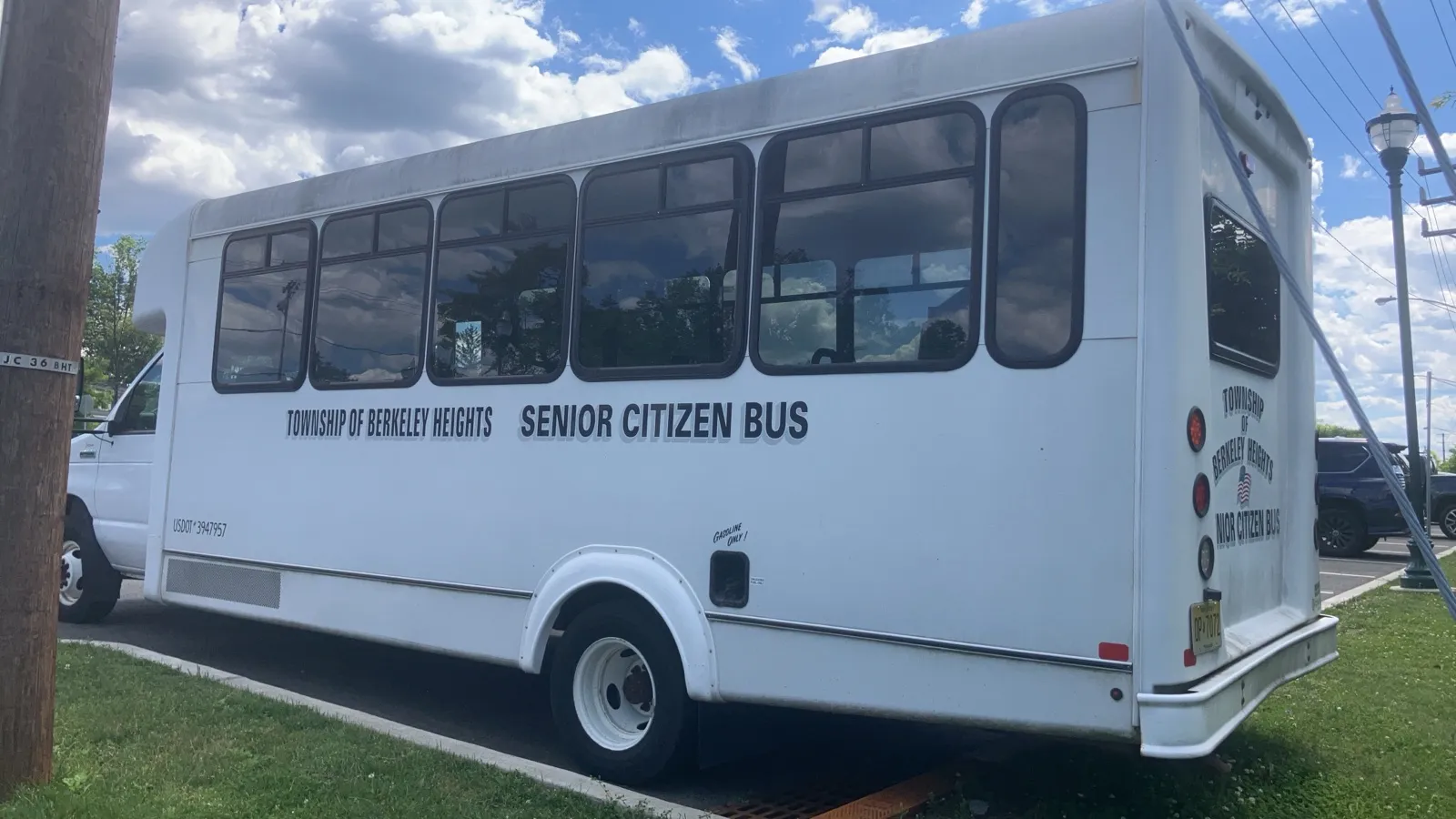

Area agency on aging transportation is the ride service a local aging agency pays for so people 60 and older can reach meals, senior centers, stores, and appointments. Federal rules make the agency buy most rides from providers, often through a request for proposals that pays a set rate for each trip. Providers log every trip, invite riders to donate, and report to the agency.
- Older Americans Act rides serve people 60 and older, with priority for those in the greatest economic and social need.
- An area agency may not run most services itself, so it buys rides from providers through public requests for proposals.
- Ohio's rules and the Southern Mississippi contract pay a fixed price per unit of service, and some agencies make the provider bring part of the cost as match.
- Riders are invited to donate but never turned away for not paying, and donations must be spent on more rides.
- Some area agencies also broker or run Medicaid rides, as in Washington, Arkansas, and Pennsylvania.
An area agency on aging is the local office that plans and pays for services for people 60 and older in its city, county, or district. Rides are one of the services it buys. For a NEMT company, that makes the agency a buyer of scheduled trips that sit outside Medicaid.
What area agency on aging transportation covers
The Older Americans Act pays for supportive services for people 60 and older, and transportation is one of them. Title III, Part B lists rides that help older people reach supportive and nutrition services, plus rides an area agency arranges with local transportation providers, transit agencies, and local governments to add senior trips (42 U.S.C. 3030d(a)(2)). A rider must be 60 or older at the time of service (45 CFR 1321.81).
Each area agency on aging serves one planning and service area: a city, a single county, or a district of several counties. It writes an area plan listing the services it will fund, the units it expects to buy, and what they will cost, and it sends that plan to the state unit on aging for approval (45 CFR 1321.65).
Agencies often buy one or both of two ride services. California’s service dictionary, effective July 2026, defines them this way:
| Service | What the provider does | Unit | What gets reported |
|---|---|---|---|
| Transportation | Takes a person from one place to another, with no other activity. Can include transit passes and vouchers. | One-way trip | Trips and an estimated count of riders |
| Assisted transportation | Gives an escort or other help to a person who has physical or cognitive trouble using a regular vehicle | One-way trip | Trips and each registered rider, counted once |
Who gets a ride first
Federal rules tell agencies to serve people in the greatest economic need, meaning income at or below the federal poverty line, and in the greatest social need. Social need covers disability, language barriers, isolation, rural location, lack of transportation, and more (45 CFR 1321.3 and 1321.83).
Agencies may limit service by area, by the number of people or trips, or by staff available (45 CFR 1321.81(b)). They may not let a contractor use a means test (45 CFR 1321.61(c)). In practice you may keep a waiting list sorted by priority, as the Southern Mississippi agency requires, but you never use a rider’s income, assets, or savings to deny or limit a ride.
Where the money comes from
Older Americans Act money moves down a chain. The Administration for Community Living funds each state unit on aging. The state splits it among its area agencies by a funding formula, and the area agencies award it to providers by grant or contract (45 CFR 1321.71).
In fiscal year 2024, ACL allocated $406,941,089 in Title III-B supportive services funds to the states and territories. That one pot pays for rides and every other supportive service, from legal help to home repairs. Each area plan must promise that an adequate share goes to access services, a group that includes transportation, outreach, and case management (42 U.S.C. 3026(a)(2)).
Area agencies also buy rides with other money, so one agency can hold several ride contracts:
| Money | Real example | Terms |
|---|---|---|
| Older Americans Act Title III-B | Metropolitan Area Agency on Aging, Twin Cities, as of September 2026 | 15 percent match on Title III-B awards |
| Social Services Block Grant (Title XX) | Southern Mississippi agency, Hancock and Stone counties, October 2025 to September 2026 | $46,000 federal, $15,334 match from the provider, $613 in donations |
| State funds | Dauphin County, Pennsylvania, 2025-26 senior ride agreements | Eight local senior transportation groups, $1,086 to $20,154 each, all state funded |
What match means for your price
Federal money may cover no more than 85 percent of what a state spends on supportive services, so each state needs a 15 percent match. The state and the area agency decide how much match a provider must bring (45 CFR 1321.9(c)(2)(ii)). Match can be cash from non-federal sources or in-kind value, such as volunteer time or donated space.
Read that part of the request for proposals twice. The Southern Mississippi contract uses Social Services Block Grant money, which carries a 25 percent match: the agency pays up to $46,000 and the provider brings $15,334, a quarter of the $61,334 the two add up to. That RFP lets the provider meet match with city or county funds, money the provider earns, or in-kind value. Either way, the contract will not pay your full cost.
How area agencies choose ride providers
An area agency may not provide supportive services itself unless the state finds that it is needed for an adequate supply, directly tied to the agency’s administration, or cheaper at comparable quality (42 U.S.C. 3027(a)(8)). That approval lasts one area plan period at most. To renew it, the agency must show it tried to find providers (45 CFR 1321.65(b)(7)). If your local agency runs its own vans, tell it in writing that you can run the trips.
When it contracts for rides, the agency follows federal grant procurement rules, as Ohio’s rule for its area agencies spells out (OAC 173-3-05). Above the simplified acquisition threshold it must use a formal method with public notice. A request for proposals must list every evaluation factor and how much each one counts (2 CFR 200.320). A company that helped write the specifications may not compete (2 CFR 200.319(b)), which is why the Southern Mississippi RFP requires a signed statement of non-involvement.
A real request for proposals, start to finish
The Southern Mississippi Planning and Development District’s transportation RFP for fiscal year 2026 shows the rhythm:
| Step | Date |
|---|---|
| Notice of intent to submit due | April 21, 2025 |
| Proposals due by 5:00 p.m. | May 9, 2025 |
| Proposals opened | May 12, 2025 |
| Evaluation finished | May 30, 2025 |
| Notice of award sent | June 6, 2025 |
| Contracts signed | By September 30, 2025 |
| Service runs | October 1, 2025 to September 30, 2026 |
| Closeout package due | October 31, 2026 |
The contract runs one year, and the agency expects to renew it for the next three years based on compliance, quality, and price. A price increase request is due by August 15 and may not exceed the change in the Consumer Price Index over the prior 12 months.
Scoring shows what matters. Each criterion is rated 0 to 10, then multiplied by its category’s weight:
| Category | Weight | Points possible |
|---|---|---|
| Required documents (six yes or no items) | 5 points each | 30 |
| Response to the introduction | 1 | 20 |
| Statement of work | 5 | 200 |
| Organizational capability | 3 | 120 |
| Budget and cost | 10 | 200 |
A proposal needs 264 of the 570 points to be considered. Cost and the plan for doing the work carry the most weight, so a clear unit cost and a concrete operating plan earn the most points.
Rules on renewals and unearned money
Ohio’s rules, effective October 1, 2025, add protections for both sides. An RFP for a renewable or multi-year agreement must say how any rate increase will be set, or say there will be none. The agency may end a multi-year agreement for poor performance, lack of funds, or an unforeseen change (OAC 173-3-05).
If you are not earning your award on time and your agreement allows it, an Ohio agency may move part of it to other providers, and you may appeal (OAC 173-3-04(G)). Agencies there may pay only for services given under a valid agreement signed before the first trip.
What an area agency ride contract requires
Ohio’s transportation rule, OAC 173-3-06.6 (effective February 1, 2025), is one of the most detailed:
| Area | What Ohio requires |
|---|---|
| Backup | A written plan for moving or notifying riders when a driver or vehicle is unavailable |
| Communication | A two-way radio or cell phone for drivers while transporting riders |
| Maintenance | Each vehicle, and any wheelchair lift, kept on the manufacturer’s schedule |
| Annual inspection | On a state form, by an ASE-certified mechanic or one the agency approves, within the last 12 months |
| Daily wheelchair check | Before the first trip, check fasteners, belts, and the ramp or lift, and keep a record |
| Drivers | A license held at least two years, first aid and CPR from a state-approved trainer, a drug test from a CLIA-certified lab, and a background check |
| Passenger assistance | An approved passenger assistance course within six months of hire |
| Assisted rides | The agreement lists when drivers must help riders in and out of the vehicle |
A vehicle with a current Ohio ambulette license meets the maintenance and inspection rules, and an ambulette driver meets the driver rules. If you already run licensed ambulettes, most of this is done.
Contracts add business paperwork too. The Southern Mississippi RFP asks for:
- Insurance. Commercial general liability of at least $500,000, plus workers’ compensation.
- A fidelity bond. At least 25 percent of the contract amount, covering staff who handle program money.
- An audit. Your most recent audit, and a new one within six months after your fiscal year ends.
- Complaints. Written notice to the agency of every rider complaint.
- Assignment. No assigning the contract without written consent. Ohio also requires the agency’s approval before you subcontract any duties (OAC 173-3-06).
Every provider must also report an older person in imminent danger to adult protective services, with consent or as local rules allow (45 CFR 1321.79). Ohio requires an immediate report whenever there is reasonable cause to suspect abuse, neglect, or exploitation. For insurance limits that brokers and plans ask for, see NEMT insurance requirements.
How area agency rides are priced and paid
The Ohio rules and the Southern Mississippi contract both pay a fixed price per unit of service. In Ohio, as in California’s dictionary, one one-way trip is one unit. Ohio says the unit rate must reflect your fully allocated costs, including administration and training. The Southern Mississippi RFP asks for a line-item budget and a unit cost equal to the total cost of the service divided by the units of service you project.
Unit cost = total yearly cost of the service ÷ one-way trips you expect to run
For example, with made-up numbers: a contract you expect to cost $54,000 a year in driver pay, fuel, insurance, van costs, dispatch, and office time, spread over 2,000 one-way trips, gives a unit cost of $27.00. Run the same math with your real numbers in NEMT cost per trip.
Donations, not fares
You may not set your own fare. Each provider must give riders a chance to contribute, protect the privacy of what each person gives, and never deny service to someone who does not give (45 CFR 1321.9(c)(2)(x)). Donations count as program income and must be used to expand the service they were given for (42 U.S.C. 3030c-2(b)). The Southern Mississippi RFP requires a budget with at least 1 percent in program income, spent before federal funds.
A state may choose to allow cost sharing for transportation. It must use a sliding scale based only on the rider’s income and the cost of the service, accept each rider’s own statement of income without proof, and exempt everyone at or below the poverty line (42 U.S.C. 3030c-2). Pennsylvania’s Huntingdon-Bedford-Fulton agency shows a different model in its CART shared ride program, which PennDOT administers and the state lottery funds: riders 65 and older pay $3.00 to $4.00 a trip, and rides to senior centers for people 60 and older are free (fares effective January 1, 2025).
Private pay on the side
You can also sell private pay rides to seniors. Federal rules let providers run private pay programs, but Title III money may not support them. Anyone who hears about your private pay service and qualifies for Title III rides must also be told about the donation-based option, even if it has a waiting list (45 CFR 1321.9(c)(2)(xiii)). See private pay NEMT.
Reports and records you will keep
Ohio lists the items every trip record must hold under OAC 173-3-06.6:
- The rider’s name.
- The type of trip: transportation or assisted transportation.
- The date.
- The pickup location and pickup time.
- The destination and drop-off time.
- The driver’s name.
- A unique identifier from the rider or caregiver confirming the ride.
The free trip log template has columns for most of these. Beyond trip logs, expect:
- Monthly reports. Southern Mississippi wants a financial report and a client service log by the 5th of each month for the month before.
- Rider data. Assisted transportation riders are registered one by one, while plain transportation is reported as trips and estimated riders, as California’s dictionary shows.
- Records kept three years. Ohio requires service records for three years after payment, or until any monitoring or audit is settled. Southern Mississippi requires three years after the contract ends.
- Monitoring. Ohio agreements require you to cooperate with announced or unannounced visits and open your records for each unit billed. The Southern Mississippi contract allows on-site monitoring without notice.
- Privacy. Ohio agreements apply the HIPAA rules, and records must sit in password-protected files or locked storage.
- Notice before you stop. In Ohio, you give the agency and a case-managed rider 30 days’ written notice before you stop serving that rider, with some exceptions.
Where area agency rides meet Medicaid and transit
Older Americans Act rides are not Medicaid rides. Providers must coordinate with other services and avoid unnecessary duplication, and they must help riders use benefits from other programs (45 CFR 1321.79). Ohio’s rule leaves out any trip Medicaid or another source already pays for. When a rider has Medicaid, help them book the covered ride through the state program. See who pays for NEMT.
Some area agencies sit much closer to Medicaid and medical rides:
- Washington. As of September 2026, the Health Care Authority uses Northwest Regional Council, the area agency on aging, to arrange Medicaid rides in Island, San Juan, Skagit, and Whatcom counties. The council says it manages contracts funded by the Older Americans Act and by non-emergency medical transportation. See Northwest Regional Council.
- Arkansas. As of September 2026, the Department of Human Services lists the Area Agency on Aging of Southeast Arkansas among its NET brokers. See Area Agency on Aging of Southeast Arkansas.
- Pennsylvania. The Huntingdon-Bedford-Fulton agency runs the CART shared ride program in all three counties, and Medical Assistance Transportation Program riders pay nothing with a voucher. In Dauphin County, the area agency paid a transit authority to cover the one-way co-pay for riders 65 and older going to doctor, dentist, and physical therapy visits, raising that agreement from $56,252 to $86,252 in June 2025.
- Ohio. Area agencies carry out administrative duties for the Ohio Department of Aging under its provider certification rules and its PASSPORT waiver (OAC 173-39-01), and those rules cover non-medical transportation providers (OAC 173-39-02.18). See waiver transportation providers.
Transit money runs alongside. A Section 5310 project must come from a coordinated transit and human services plan developed with seniors, people with disabilities, and public, private, and nonprofit transportation and human services providers (49 U.S.C. 5310(e)). Join that planning process too. See Section 5310 grants. If your contract is with a public entity for demand response rides, the ADA rules that bind that entity bind you as well (49 CFR 37.23).
How to win area agency on aging transportation work, step by step
- Find your agency. Call the Eldercare Locator at 1-800-677-1116 or search eldercare.acl.gov.
- Read its area plan. Look for the transportation units it plans to buy, the providers it funds now, and when the plan period ends.
- Ask for the procurement calendar. The Southern Mississippi contracts follow the federal fiscal year, October 1 to September 30, with proposals due in May. Ask your agency for its own dates, join its notice list, and send any required notice of intent on time.
- Register first. Complete a free SAM.gov registration, which the Southern Mississippi contract requires, and make sure no owner or manager shows up in SAM exclusions. See government NEMT contracts for the steps.
- Build your unit cost. Price every cost into one one-way trip, and decide how you will meet any match.
- Line up the paperwork. Get insurance certificates, a fidelity bond quote, workers’ compensation proof, and your latest audit or CPA statements ready before the RFP opens.
- Answer every scored item. Follow the RFP’s order, write a real operating plan with dates, and take any proposer training the agency offers. Southern Mississippi offers private sessions.
- Set up the reporting before day one. Build the trip record, the donation process, and the waiting list the contract requires.
- Earn your award. Run the trips you promised. Unearned money can move to another provider, and a strong first year is what gets you renewed.
Senior rides pair well with other daytime work. See adult day care transportation and starting a senior transportation business.
Frequently asked questions
Can a for-profit NEMT company get an area agency on aging contract?
Usually. Federal rules call any entity awarded funds by grant, contract, or subcontract a service provider (45 CFR 1321.3), and the Older Americans Act reserves case management, not rides, for public and nonprofit agencies. States can add a step. In the Twin Cities, the Metropolitan Area Agency on Aging accepts for-profit applicants as of September 2026, but must get a waiver from the Minnesota Board on Aging before funding one.
Can I charge seniors for area agency on aging rides?
Not a fare of your own. Every provider must give riders a chance to contribute, keep each gift confidential, and never deny a ride because someone did not give (45 CFR 1321.9 and 1321.79). A state may allow cost sharing for transportation on a sliding scale based only on the rider's income and the cost of the service, but never for people at or below the federal poverty line (42 U.S.C. 3030c-2). Donations and cost shares must be spent on more of the same service.
Do area agency on aging rides cover doctor visits?
Often, but they are not Medicaid rides. The Southern Mississippi Area Agency on Aging lists medical and dental treatment first among trip purposes in its transportation RFP for October 2025 to September 2026. Agencies must avoid unnecessary duplication of rides other programs provide, and Ohio's rule leaves out any trip Medicaid or another source pays for. Medicaid members still book covered medical rides through the state's NEMT program.
How do area agency on aging transportation contracts pay?
Commonly as a fixed rate per unit of service, and the unit is a one-way trip in the Ohio and California rules. Ohio requires purchase-of-service agreements that pay a set unit rate only for trips actually provided, and the rate must reflect your fully allocated costs, including administration and training. The Southern Mississippi agency pays monthly after it receives your monthly reporting worksheet.
How do I find my area agency on aging?
Call the Eldercare Locator at 1-800-677-1116, or search eldercare.acl.gov by ZIP code. Each agency serves a planning and service area, which can be a city, one county, or a district of several counties. Ask for its area plan, the date of its next transportation request for proposals, and how to join its notice list.
Do I need a SAM.gov registration for an area agency contract?
Often. The Southern Mississippi agency asks for your Unique Entity ID on the title page of a proposal, and its contract requires a SAM.gov registration with no active exclusions. Ohio agencies may not sign with a provider that SAM.gov lists as excluded from federally funded agreements. A Unique Entity ID and a SAM.gov registration are free.
Official resources
- Eldercare Locator: find your area agency on aging
- ACL: Area Agencies on Aging
- eCFR: 45 CFR part 1321, the Older Americans Act rules for states and area agencies
- U.S. Code: 42 U.S.C. 3030d, supportive services including transportation
- Ohio Administrative Code 173-3-06.6, Older Americans Act transportation
- SAM.gov: Get a Unique Entity ID and register your business