Drivers and vehicles
NEMT Vehicle Requirements in 2027: Federal, State, and Broker Rules in One Checklist
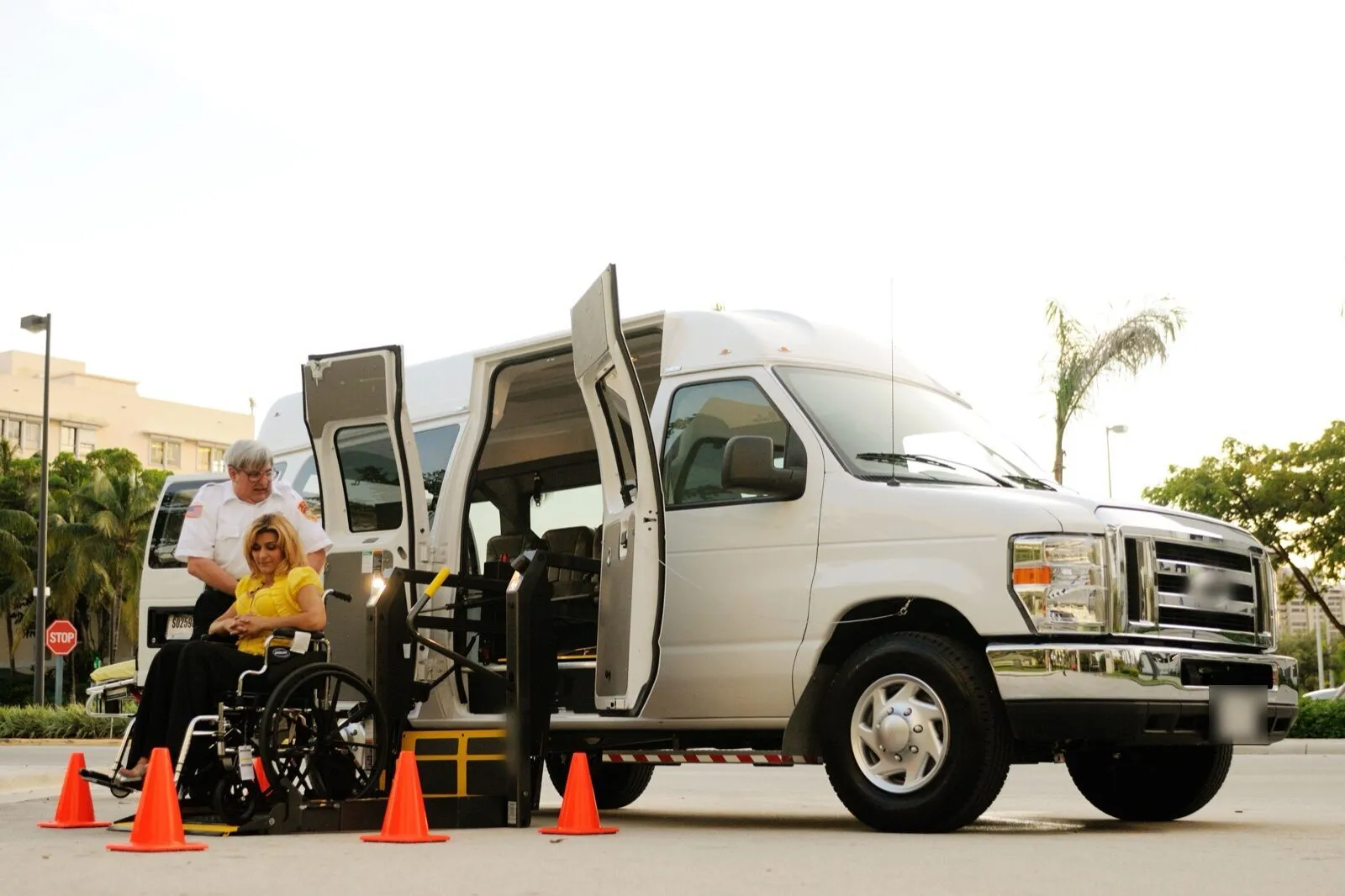
NEMT vehicle requirements come in three layers. Federal ADA rules set the specs for wheelchair lifts, ramps, and securement. Your state sets registration, inspection, equipment, and insurance rules, and each broker adds its own inspection, signs, and gear. Nearly every program wants a seat belt for each rider, a fire extinguisher, a first aid kit, working heat and air, and your company name on the vehicle.
- Federal Medicaid law sets no vehicle standards of its own, so your state rules and your broker contracts decide most of the list.
- A wheelchair van must meet the federal ADA specs in 49 CFR part 38, such as a lift built for 600 pounds, an interlock, a backup, and a lap and shoulder belt at each station.
- Brokers inspect each vehicle before its first trip, then every 6 months in Virginia and Georgia and every year in Louisiana.
- Auto liability minimums run from $25,000 per person under Louisiana rules to $1.5 million under Rhode Island law.
- Some programs cap age or mileage. Rhode Island takes new vehicles only up to four model years old and 150,000 miles.
No single rulebook covers a NEMT vehicle. CMS says in its Medicaid Transportation Coverage Guide (SMD 23-006, September 28, 2023) that beyond four basic driver rules, federal Medicaid law sets no driver or vehicle standards, and that state agencies generally set them. So the list for your van comes from three places: federal accessibility and safety rules, your state, and every broker or health plan you drive for. This page puts the common rules in one checklist, with the source for each line.
Who sets NEMT vehicle requirements
Each layer adds its own rules, and you must meet all of them at once.
| Layer | Who sets it | What it covers |
|---|---|---|
| Federal accessibility | U.S. Department of Transportation, ADA rules in 49 CFR parts 37 and 38 | Lifts, ramps, securement, door and ceiling height, lighting, and keeping all of it working |
| Federal vehicle safety | NHTSA, safety standards 403 and 404 in 49 CFR part 571 | How lifts are built, certified, and installed |
| Federal motor carrier | FMCSA, 49 CFR parts 365, 387, and 390 to 396 | Operating authority, insurance, and inspections for commercial vans on interstate trips |
| State Medicaid program | Your state Medicaid agency’s NEMT manual | Equipment, inspection schedules, signs, and insurance for Medicaid trips |
| State and local regulators | Examples: MnDOT, New Jersey’s Department of Health, New York’s DOT and DMV, Rhode Island’s Division of Public Utilities and Carriers, city for-hire offices | Operating permits, vehicle licensing, and inspections |
| Brokers and health plans | Each broker agreement and provider manual | Their own inspections, extra gear, GPS tracking, and higher insurance limits |
Brokers enforce the state layer too. In a state that runs NEMT through a broker under 42 CFR 440.170(a)(4), the broker must have oversight procedures that make sure transport personnel are licensed, qualified, competent, and courteous. Virginia’s rules for its fee-for-service broker (updated May 26, 2026) require it to field monitor provider vehicles, and they let it add more vehicle rules with the state’s approval. When two rules differ, meet the stricter one.
The NEMT vehicle requirements checklist
These tables merge the rules that come up most, using states and brokers with clear written rules as of September 2026. Compare them with your own state manual and every broker agreement you hold, and add anything else they ask for.
Paperwork, permits, and inspections
| Requirement | What to have | Where it is required |
|---|---|---|
| Title and registration | Titled and registered, in the company’s name where required | Louisiana (owned or leased, registered to the company); Virginia (titled and licensed by Virginia DMV); Texas health plans (state registration on file); Modivcare (current registration) |
| License plates | A for-hire, public, or public handicapped plate | Louisiana |
| Operating permits | State or local authority to carry passengers for pay | New Jersey (Department of Health license for each mobility assistance vehicle); New York ambulettes (NYSDOT operating authority); Rhode Island (NEMT certificate from the Division of Public Utilities and Carriers, renewed by December 31 each year); Portland, Oregon (city vehicle certification) |
| State safety inspection | A current inspection sticker where your state has one | Louisiana; New Jersey; Virginia; Rhode Island (yearly DMV inspection); MTM Health’s standard agreement; Modivcare (if your state requires one) |
| Broker inspection | Passed before the first trip, then on the broker’s schedule | Virginia; Georgia; Louisiana; Verida; MediTrans (inspection report and photos) |
| Insurance | Commercial auto liability at the highest limit any contract sets, with each vehicle listed | Every program. See the insurance table below. |
| Vehicle information packet | Registration, insurance card, and accident procedures and forms kept in the vehicle | Virginia (plus the lease if leased); Georgia; Texas health plans (plus inspection proof and a service area map) |
| Vehicle roster | Make, model, year, VIN, plate, capacity, equipment, and insurance for each vehicle | Wisconsin; Texas health plans (plus inspection and maintenance history) |
Equipment on board
| Requirement | What to have | Where it is required |
|---|---|---|
| Seat belts | A working belt for every seat, stored off the floor | Virginia; Georgia; Texas health plans; Minnesota; Louisiana |
| Seat belt extenders | At least one, and two in some programs | Virginia (one in newer vehicles, two in older ones); MTM Health in Virginia (two); Georgia (two); MTM Health’s standard agreement; Minnesota (when needed) |
| Seat belt cutter | Within the driver’s reach | Virginia; Louisiana; Georgia (mounted above the driver’s door); Minnesota (no exposed sharp edge) |
| Fire extinguisher | Charged and mounted within the driver’s reach | Virginia (Class A, B, C); Georgia (at least 5 pounds total, current tag); Minnesota (dry chemical, at least 5B:C, with a gauge); Louisiana (gauge in range); Texas health plans; Wisconsin |
| First aid kit | Stocked and unexpired | Virginia (13 listed items, from bandages to sterile eyewash); Minnesota; Georgia; Texas health plans; Wisconsin; Oregon |
| Spill kit | Absorbent, gloves, waste bags, a scrub brush, disinfectant, and deodorizer | Virginia; Georgia; Minnesota (body fluids cleanup kit); Texas health plans (as part of the first aid kit) |
| Warning devices | Three reflective triangles, and no flares | Georgia; Texas health plans; Minnesota; Oregon (roadside reflective or warning devices) |
| Flashlight | Working | Minnesota; Wisconsin; Oregon |
| Two-way communication | A radio or phone that links the vehicle to your office | MTM Health’s standard agreement (pagers do not count); Georgia (vehicle out of service if it fails); Minnesota (hands-free if a phone) |
| GPS or maps | Current navigation for the service area | Virginia (GPS or maps updated within the current year); Georgia (a state-approved map); Texas health plans (voice navigation allowed) |
| Location tracking | Live vehicle location, trip events, and rider signatures sent to the broker | MTM Health’s standard agreement; MTM Health in Virginia (tracking on for the full ride) |
| Heat and air conditioning | Working, and able to reach set temperatures | Virginia (about 68 degrees cooling and 74 degrees heating, measured at the rear); Louisiana (vent reading no warmer than 52 degrees on cooling and no cooler than 100 degrees on heat); New Jersey (68 to 72 degrees within set times); Georgia; Minnesota; Texas health plans |
| Mirrors | Two outside mirrors and an inside mirror to watch riders | Virginia; Georgia; Texas health plans; Oregon |
| Speedometer and odometer | Both accurate and working | Virginia; Georgia; Texas health plans |
| Boarding step | A retractable step or an approved step stool, never a milk crate | Georgia; Texas health plans |
| Child safety seats | A seat that fits the child’s age and weight | Virginia (through age 7, supplied by the parent or guardian); Georgia (under age 5); Minnesota (under age 8 and shorter than 4 feet 9 inches); MTM Health’s standard agreement (no seat, no ride) |
| Winter gear | Blanket, ice scraper, or traction devices | Minnesota (blanket always, ice scraper October 1 to April 30); Oregon (traction devices when appropriate) |
| Condition | Clean inside and out, no torn seats, broken glass, sharp edges, or loose items | Virginia; Georgia; Texas health plans; Oregon; MediTrans (unannounced spot checks) |
Check each van against the free vehicle inspection checklist before its first ride of the day. Signs, insurance, and inspection schedules have their own sections below.
Wheelchair van requirements: lifts, ramps, and securement
A vehicle counts as accessible under federal ADA rules only if it meets the specifications in 49 CFR part 38 (49 CFR 37.7). That applies to new, used, and remanufactured vans alike (49 CFR 38.21). The rules also reach what you buy. A private company in the business of carrying people that buys or leases a new vehicle other than a car for demand response rides must get an accessible one, unless its service as a whole already gives wheelchair users equal service in areas such as response time, fares, service area, hours, and booking (49 CFR 37.103 and 37.105). Rides under contract for a public agency, such as a state Medicaid program, can bring in that agency’s own rules. A contractor, and a contractor’s subcontractor, must buy accessible vehicles wherever the agency itself would have to (49 CFR 37.23).
The federal specs
| Part | What 49 CFR part 38 requires |
|---|---|
| Securement stations | At least one on vehicles 22 feet long or less, at least two on longer vehicles |
| Lift strength | Designed for at least 600 pounds |
| Interlock | The vehicle cannot move unless the lift is stowed |
| Power failure | A backup way to lower an occupied lift to the ground and to raise and stow the empty lift |
| Lift platform | Clear space at least 30 inches wide and 48 inches long, measured from 2 inches above the platform |
| Lift barriers | Side barriers at least 1 1/2 inches high, and an outer barrier that stays up whenever an occupied platform is more than 3 inches off the ground |
| Lift handrails | On both sides, moving with the platform, 30 to 38 inches above it |
| Ramps | Rated for 600 pounds if 30 inches or longer, 30 inches of clear width, side barriers at least 2 inches high, no steeper than 1:4 when deployed to the ground, and firmly attached while in use |
| Securement strength | On vehicles rated under 30,000 pounds, 2,500 pounds per securement leg and 5,000 pounds per wheelchair |
| Securement space | A clear floor area of 30 by 48 inches for each station |
| Wheelchair movement | No more than 2 inches in any direction once secured |
| Occupant belts | A lap belt and shoulder harness for each station |
| Door and ceiling height | At least 56 inches over the raised lift and along the path to the station on vehicles 22 feet or shorter (49 CFR 38.25 and 38.29) |
| Surfaces and edges | Slip-resistant floors and a contrasting color band on the boarding edge of the lift or ramp (49 CFR 38.25) |
| Lighting | Light on the lift or ramp at floor level, and an outside light on the ground at the door (49 CFR 38.31) |
| Signs | A sign at each securement location and a priority seating sign (49 CFR 38.27) |
Lift certification
Two federal vehicle safety standards cover the lift itself. Lifts built on or after April 1, 2005 must meet FMVSS 403, and vehicles built on or after July 1, 2005 with a lift must meet FMVSS 404. A vehicle over 10,000 pounds gross vehicle weight rating needs a lift certified as a public use lift. Lighter vehicles may carry either a public use or a private use lift.
The test loads differ. A public use lift is tested at 600 pounds, the same design load the ADA sets. A private use lift is tested at its maker’s rated load or 400 pounds, whichever is greater. For NEMT work, buy a public use lift so the lift matches that 600-pound design load, and keep its certification and installation papers. The operating steps, including the backup steps, must be posted permanently next to the lift controls (FMVSS 404).
Keeping it working
Every transportation company, public or private, must keep lifts and securement devices working and repair them promptly (49 CFR 37.161). While one is out of order, you must take reasonable steps to serve the riders who need it. You must carry a wheelchair and rider if the lift and vehicle can hold them, and you may not refuse a ride because the chair cannot be secured to your satisfaction (49 CFR 37.165).
What states and brokers add
| Program | Wheelchair van rules beyond the federal specs |
|---|---|
| Virginia (DMAS and MTM Health, 2026) | Four working securements at each station, a working interlock, and a lap and shoulder belt mounted to the vehicle and made for wheelchair riders. Vans that take hospital discharges carry a spare wheelchair with a seat at least 20 inches wide. The broker records each lift’s age, maker, model, and rated capacity to match riders to lifts. |
| Georgia (July 1, 2026) | At least 56 inches from floor to ceiling, and an interlock that requires park and the emergency brake. Full-size vans use a powered lift, and lowered-floor minivans with fold-out ramps must meet ADA rules. |
| New Jersey mobility assistance vehicles | A ramp or fully automatic lift rated for at least 500 pounds, with a manual backup that raises or lowers in five minutes. A four-point forward-facing restraint that holds the chair within 1 inch. At least 58 inches of height. A roll cage or rollover protection on vehicles first licensed after February 17, 1998. No stretchers. |
| Minnesota | Lifts and ramps built to 49 CFR 38.23. A front entrance door in addition to the lift door. Vans must meet the federal roof crush or rollover standard (FMVSS 216 or 220), with a certificate from the maker or the company that rebuilt the roof. |
| Louisiana | Restraints, tie-downs, lifts, and ramps that meet ADA rules. The broker’s inspection photographs a secured wheelchair and the rider’s lap and shoulder belt. |
| Arizona fee-for-service | Doors wide enough for a wheelchair, a lift designed to load and unload safely, and restraints that hold the chair in transit |
| CareOregon | A yearly certification of ADA compliance for each wheelchair accessible vehicle |
The Minnesota rollover rule matters most for raised-roof conversions, so ask the converter for that certificate before you buy. For buying advice, see how to choose a wheelchair van for NEMT and wheelchair securement. For the rest of the federal disability rules, see does the ADA apply to NEMT companies.
Rules for sedans and minivans
Ambulatory vehicles face the general checklist above, plus a few limits worth knowing before you buy.
- Louisiana bars two-door vehicles, pickup trucks, and salvage title vehicles from its NEMT program. Providers may not share vehicles, even between companies with the same owner.
- Virginia requires vehicles with taxi plates to follow state and local taxi rules and to hold a local taxi license where one exists.
- Minnesota lets a passenger car keep its fire extinguisher in the trunk if a dashboard notice says so. Its rollover and door height rules apply to vans and buses, not to cars.
- Texas health plans require a step or step stool when a vehicle has no running board.
Stretcher van requirements
Stretcher rules are the strictest, and some programs do not allow stretcher vans at all. Louisiana lists stretcher vans among the vehicle types its NEMT program does not allow, and New Jersey bars stretchers in mobility assistance vehicles. In Illinois, providers that bill for stretcher service must meet the state health department’s licensing rules.
Virginia’s rules (updated May 26, 2026) show what a stretcher van needs where one is allowed:
- A two-person crew. A driver and an assistant, both trained in first aid, bloodborne pathogens, and stretcher transfers, with the assistant riding in the back.
- One stretcher rider at a time, loaded headfirst, and never a rider who needs medical monitoring or has an IV or other invasive device in place.
- An approved stretcher meeting federal specification KKK-A-1822E, with a mattress at least 3 inches thick, chest, hip, and knee straps, and shoulder restraints.
- A crash-tested mount that passes a 2,200-pound pull test, and oxygen secured to an industry retention standard.
- No ambulance look. No Star of Life, sirens, or flashing lights unless the company is a licensed EMS agency.
Minnesota requires stretcher securement to meet its ambulance standards. For the full list, see stretcher van requirements.
NEMT vehicle inspections: who inspects and how often
Expect at least two kinds of inspection: your state’s regular safety inspection, and your broker’s own check before the first trip.
| Program | Who inspects | How often | What to know |
|---|---|---|---|
| Virginia (DMAS and MTM Health) | The broker, in person | Before the first trip, then every 6 months | A sticker goes on the outside of the passenger side rear window, lower right corner, showing plate and VIN, with different stickers for pass, provisional, and fail |
| Georgia | The broker | No earlier than 60 days before service starts, then every 6 months | A vehicle removed from service stays out until the state certifies in writing that it may return |
| Louisiana | The broker | Before the first trip, then every year | An electronic record with photos, including temperature gun readings at the vents and the lift’s backup systems |
| Minnesota | The provider daily, and MnDOT at least yearly | Every day, plus once a year | The daily check covers 11 items and records the date and mileage |
| Wisconsin | An assigned driver or mechanic | At least every 7 days | Written down, with every defect fixed before the next rider and records kept 12 months |
| Rhode Island | The state DMV, under the 2024 NEMT law | Every year from the first inspection | Mileage is recorded at each inspection to enforce the state’s mileage caps |
| CareOregon | An ASE-certified mechanic | Within the last year | After any damage, an ASE-certified mechanic checks the vehicle before it returns to service |
| Portland, Oregon | A certified safety test | Every year | Required for city NEMT vehicle certification |
| New York ambulettes | NYSDOT | At least every 6 months | Ambulettes need a NYSDOT certificate or permit to enroll in Medicaid, and vehicles run under one must pass NYSDOT inspection |
Complaints can trigger a check between inspections. Georgia requires an inspection when a vehicle gets two or more rider complaints about cleanliness, heat, or air conditioning within 5 days. Texas health plans may not use a vehicle with two substantiated complaints about cleanliness or temperature within 10 days until the problem is fixed and documented. For daily checks and repairs, see NEMT vehicle maintenance.
Vehicle age and mileage limits
No federal rule caps a NEMT vehicle’s age, so the limits come from states, cities, and broker contracts.
| Program | Limit |
|---|---|
| Rhode Island, vehicles added after July 31, 2024 | No more than four model years old and 150,000 miles at the first inspection, then eligible up to 250,000 miles |
| Rhode Island, vehicles in the fleet before July 31, 2024 | Eligible up to 300,000 miles |
| Portland, Oregon | No NEMT vehicle more than 15 years past its manufacture date, with an age exemption process for wheelchair vans |
Rhode Island’s policy also requires a fleet used only for NEMT members and a state sign on each side. A 2024 state law makes EOHHS responsible for setting these age and mileage standards. Before you buy, ask each broker in writing whether its contract sets an age or mileage limit. For timing a replacement, see when to replace a NEMT vehicle.
Insurance minimums for NEMT vehicles
Carry the highest limit any of your contracts or your state requires, and make sure the policy covers carrying passengers for pay.
| Program | Auto liability minimum | Other requirements |
|---|---|---|
| Louisiana (state rule) | $25,000 per person, $50,000 per accident, and $25,000 property damage | The state health department named as an additional insured, a certificate that says the coverage is for a NEMT vehicle, 30 days’ cancellation notice to the broker, and workers’ compensation as state law requires |
| Wisconsin (state rule) | $250,000 per person, $500,000 per occurrence, and $10,000 property damage | For each specialized medical vehicle |
| Rhode Island (state law, August 1, 2024) | $1.5 million for personal injury and $100,000 for property damage | Proof filed with the Division of Public Utilities and Carriers and refiled each year with the NEMT certificate |
| Virginia (state rule) | The amount Virginia DMV requires for wheelchair and stretcher vans | Taxis and multi-passenger vans carry the higher of the DMV amount or the local taxi ordinance |
| MTM Health’s standard agreement (January 1, 2023) | $500,000 combined single limit | $500,000 general liability per occurrence and aggregate, MTM as additional insured, and workers’ compensation at statutory limits |
| SafeRide Health | $500,000 | $1 million general liability per occurrence and $2 million aggregate, with SafeRide as additional insured |
| MediTrans (Louisiana) | $1 million per occurrence | General liability, and workers’ compensation or an approved waiver |
| Modivcare | Your state’s minimum liability limits | General liability, sexual abuse and molestation coverage, and workers’ compensation where required |
| FMCSA, for-hire interstate passenger carriers | $1.5 million for vehicles seating 15 or fewer, including the driver | $5 million for vehicles seating 16 or more (49 CFR 387.33T) |
Louisiana may recoup every payment for trips run while coverage was below the minimum. MTM Health’s agreement ends immediately if insurance lapses, and a policy that lists vehicles must list each one, with every addition and deletion reported to MTM right away. See NEMT insurance requirements for coverage types, and certificate of insurance for what brokers check.
Signs and markings
Most programs want your company name on the outside of every vehicle, and several also set letter sizes and ban certain words.
| Program | Outside the vehicle | Inside the vehicle |
|---|---|---|
| Virginia | Business name and phone number on both sides, permanent lettering at least 3 inches high in a contrasting color. No “Medicaid” or “FAMIS” on the vehicle or in the business name. | Vehicle license number, the broker’s toll-free and TTY numbers, complaint steps, a no smoking sign, and “All passengers will use seat belts” |
| Minnesota | Business name and USDOT number on both sides, readable from 50 feet in daylight | A no smoking sign |
| Texas health plans | Provider name and vehicle number in letters at least 6 inches high, and a “How is my driving?” sticker with a phone number | No smoking, eating, or drinking; seat belts required; weapons prohibited |
| Louisiana | Name, phone number, and vehicle number on both sides and, for vans, the rear, never on windows where they block the driver’s view. Orleans Parish vehicles use their parish permit number as the vehicle number. | Not set in this manual |
| Georgia | Name and other identification as Georgia’s Department of Public Safety requires | Provider name, vehicle number, and the broker’s phone number; no smoking, eating, or drinking; seat belts required |
| New Jersey mobility assistance vehicles | Trade name at least 4 inches high on both sides, vehicle number at least 3 inches on both sides and the rear, and the wheelchair access symbol at least 8 inches high on both sides and the rear. No Star of Life, emergency words, or emergency lights. | Not set in this rule |
| Rhode Island | The state’s NEMT sign with your NEMT number, black on white, in the middle of the door on each side, with no company name or logo on it | Not set in this policy |
| Arizona fee-for-service | A sign or logo with the company name | Not set in this manual |
Virginia bans the word “Medicaid” to comply with HIPAA, and following that rule everywhere costs nothing. For details and wording, see NEMT vehicle signage.
Trips across state lines
FMCSA’s safety rules reach a vehicle only when it is used in interstate commerce and is rated at 10,001 pounds or more, or is designed or used to carry more than 8 people, driver included, for pay (49 CFR 390.5T). Most sedans and small wheelchair vans on in-state trips fall outside them. The same rules set aside the transportation of sick and injured persons (49 CFR 390.3T), so ask FMCSA how that applies to your trips before you rely on it. Brokers still ask about it. Virginia requires providers that take out-of-state trips to hold motor carrier operating authority from FMCSA, and MTM Health’s Virginia handbook asks for USDOT or FMCSA interstate authority when it is required.
If you run for-hire trips across state lines, FMCSA’s insurance minimum for vehicles seating 15 or fewer is $1.5 million (49 CFR 387.33T). For the full test and the inspection rules that follow, see do FMCSA inspection rules apply to NEMT vans and rural NEMT.
How to get a NEMT vehicle approved, step by step
- Get every vehicle list in writing. Ask your state Medicaid agency for its NEMT manual and each broker for its credential list. MTM Health’s standard agreement points to its Appendix B.
- Title, register, and plate the vehicle in the company’s name, with the plate type your state requires.
- Insure it at the highest required limit. List the vehicle on the policy, name each broker as additional insured if the contract says so, and get a certificate for each one.
- Pass your state safety inspection, where your state has one, and keep the sticker current.
- Equip it from the checklist above. Buy the strictest version of each item, such as two belt extenders and a Class A, B, C extinguisher.
- Gather the wheelchair van papers. Keep the lift’s certification label, maker, model, year, and rated capacity, any ADA compliance documents, and, in Minnesota, the rollover certificate.
- Letter the vehicle to the strictest sign rule you face, without the word “Medicaid.”
- Submit the file to each broker. Send registration, insurance, inspection reports, and photos where asked. MediTrans asks for interior and exterior photos and ADA documents.
- Pass the broker inspection and put the sticker exactly where the broker says.
- Wait for approval before the first trip. MTM Health does not pay for trips in uncredentialed vehicles and may add liquidated damages.
- Keep it compliant. Run daily checks, renew every sticker and policy before it expires, and tell each broker before you add or remove a vehicle. Louisiana’s broker must see the updated policy before a new vehicle carries anyone.
For the rest of the approval process, see NEMT broker credentialing, and check your state guide for local rules.
Frequently asked questions
Do all NEMT vehicles have to be wheelchair accessible?
No. Sedans and minivans carry riders who can walk, and brokers match each trip to the level of service it needs. Federal ADA rules do reach new purchases. A company in the business of carrying people that buys or leases a new vehicle other than a car for demand response rides must get an accessible one, unless its service as a whole already gives wheelchair users equal service (49 CFR 37.103 and 37.105). Work under contract for a public agency brings in that agency's own rules (49 CFR 37.23). Any van you use for wheelchair trips must meet 49 CFR part 38.
How old can a NEMT vehicle be?
No federal rule sets an age limit, so your state, city, and broker decide. Rhode Island's NEMT policy, effective October 31, 2024, accepts vehicles added after July 31, 2024 only if they are no more than four model years old with no more than 150,000 miles, and retires them at 250,000 miles. Portland, Oregon bars NEMT vehicles more than 15 years past their manufacture date, with an exemption process for wheelchair vans. Ask each broker for its limit in writing.
How often are NEMT vehicles inspected?
Before the first trip, then on a schedule your state or broker sets. As of September 2026, the Virginia and Georgia programs inspect every 6 months, and Louisiana's broker inspects every year, with photos. Minnesota requires a daily safety check by the provider plus a state inspection at least once a year. Wisconsin requires a written inspection at least every 7 days. Keep your state safety inspection current as well.
What insurance does a NEMT vehicle need?
Commercial auto liability that covers carrying passengers for pay, at the higher of your state minimum and your broker minimum. Louisiana requires at least $25,000 per person, $50,000 per accident, and $25,000 for property damage, with the state health department named as an additional insured. Rhode Island law requires $1.5 million for personal injury and $100,000 for property damage. MTM Health's standard agreement asks for $500,000 combined single limit, and MediTrans in Louisiana asks for $1 million per occurrence. Most brokers also want general liability and workers' compensation.
Can I use my personal car or van for NEMT?
Usually not for Medicaid trips unless it is set up as a business vehicle. Louisiana requires every NEMT vehicle to be owned or leased by the company, registered in its name, and plated for hire, public, or public handicapped. Virginia lets volunteer drivers use a personal vehicle for occasional trips, but only with full insurance that does not exclude carrying passengers. Check your state rules, your broker contract, and your insurer first.
Do NEMT vans need a USDOT number?
Sometimes. Minnesota requires every special transportation vehicle to show the provider's name and USDOT number on both sides, readable from 50 feet. For trips that cross a state line, Virginia requires motor carrier operating authority from FMCSA. For trips that stay in one state, the answer depends on your state's motor carrier and Medicaid rules, so check both before you letter your vans.
Official resources
- eCFR: 49 CFR 38.23 (federal specs for lifts, ramps, and securement)
- eCFR: 49 CFR 571.404 (lift installation standard for vans)
- Virginia DMAS: NEMT driver, attendant, and vehicle requirements
- Georgia DCH: NEMT policies and procedures (vehicle rules in sections 908 to 913)
- Louisiana Medicaid: Medical transportation manual (vehicle rules in section 10.3)
- Minnesota Rules 8840.5925 (required vehicle equipment)
- Wisconsin DHS 105.39 (specialized medical vehicle rules)
- MTM Health: Virginia NEMT Transportation Provider Handbook