Starting a business
How to Start a NEMT Business with One Van in 2027: The Owner-Operator Plan
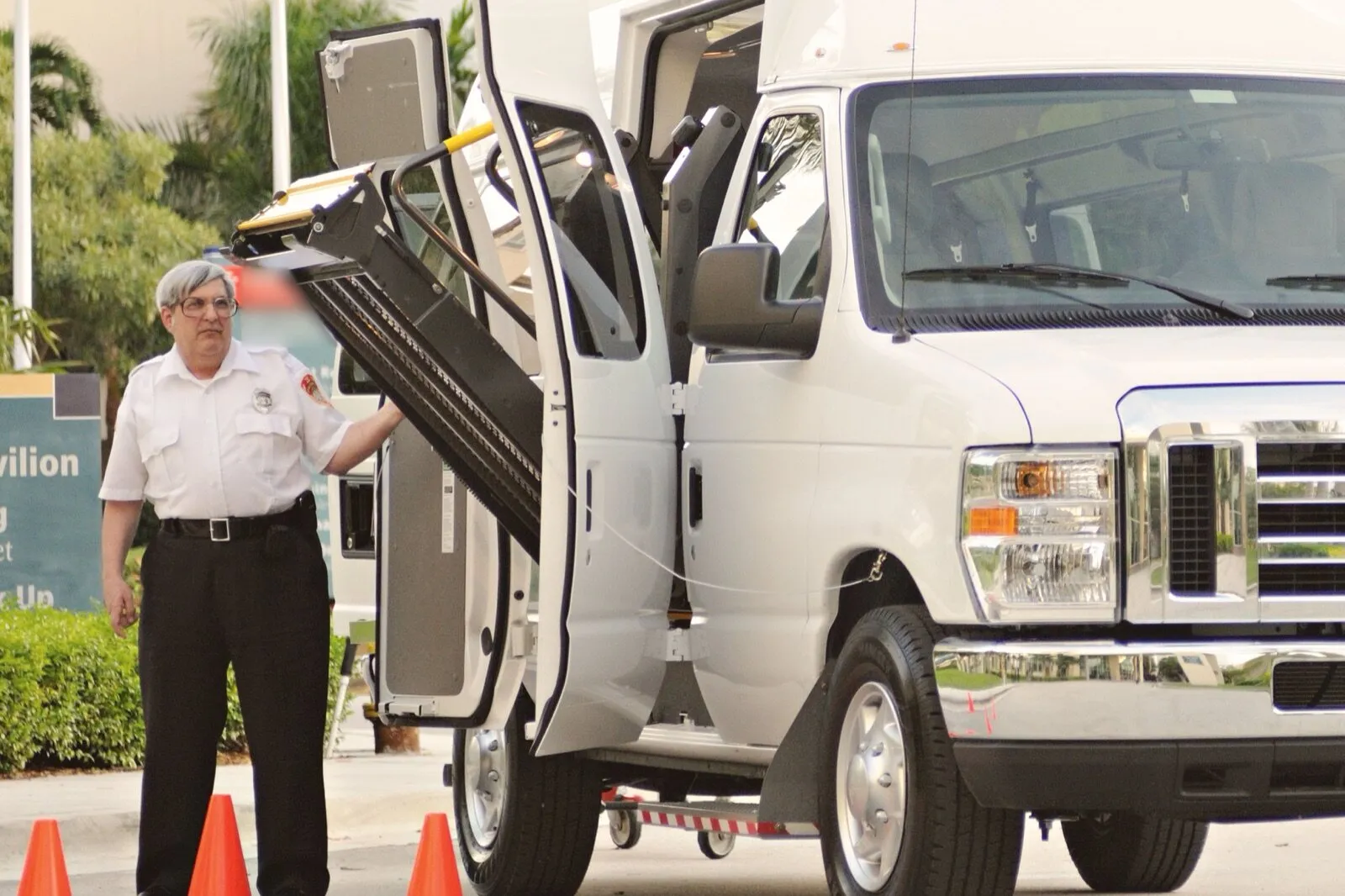
You can start a NEMT business with one van if you form a company, insure it, and pass the same checks as any driver. Fill the van with standing orders such as dialysis first. Set your real hours in each broker's system, turn trips back at least 24 hours ahead, keep a credentialed backup driver, and add a second van when turned-away trips would cover it.
- Brokers contract with owner-operators, but they still want a company in good standing, full insurance, and a backup plan for every trip.
- Standing orders fill one van best. One dialysis rider on a three-day schedule is six one-way trips a week.
- Enter your real days and hours in each broker's system, and turn trips back at least 24 hours before pickup.
- Credential a backup driver before you need one, and never hand a trip to another company without the broker's written consent.
- A second van pays for itself when the trips you turn away would cover a driver and the van's monthly costs.
One van can work, but it changes the job. You are the driver, the dispatcher, and the billing office, and there is no one to take your trips when you are sick. This plan covers what brokers require from a one-van company, which trips keep that van full, how to cover the days it cannot run, and how to tell when a second van will pay for itself.
Can you start a NEMT business with one van?
Yes, in many programs. New Jersey’s licensing rule asks a new mobility assistance vehicle service to show at least one licensable vehicle in each class of service it applies for (N.J.A.C. 8:40-2.1, readopted in 2023 and in effect until September 25, 2030). MTM Health’s standard provider agreement, in the January 1, 2023 version Pennsylvania posts, names owner-operators alongside transportation companies in its definition of a provider (section 1.H).
A one-van company still has to be a real company. The same agreement requires a business that is incorporated or organized and in good standing in its state (section 2.B). It also requires enough trained, licensed, and credentialed drivers to perform the work (section 2.L), and a specific backup plan for every trip you accept (section 2.P).
The harder question is whether a broker needs you. MTM’s agreement says it picks providers for trips on factors such as quality, service availability, and competitive pricing (section 2.A), and it guarantees no minimum number of trips (section 2.K). MediTrans, which arranges rides for Louisiana Medicaid health plans, says acceptance depends on regional saturation and fleet type needs. In Rhode Island, MTM says it adds providers only as needed and estimates an 8 to 12 month wait, as of September 2026.
So ask each broker in your area which vehicle types it is short of, and in which counties, before you buy a van. The full order of approvals is in how to start a NEMT business, and how to choose a wheelchair van covers the vehicle itself.
What a one-van company needs before its first trip
A one-person company meets the same rules as a fleet. These examples show what brokers and states check, as of September 2026. The Virginia rules come from MTM Health’s handbook approved August 10, 2026, for the state’s fee-for-service Medicaid rides, which move to MTM for trips scheduled on or after October 1, 2026.
| What you need | What it means with one van | Example rule |
|---|---|---|
| A company in good standing | Form an LLC or corporation before you apply | MTM’s standard agreement, section 2.B |
| You, credentialed as the driver | The owner passes every check and course a hired driver would | MTM Virginia: at least 21, two years of driving experience, no more than two chargeable accidents or moving violations in three years, background checks, and PASS, HIPAA, defensive driving, and first aid training before the first ride, plus wheelchair securement training for wheelchair trips |
| Insurance at the broker’s limits | Commercial auto and general liability, in force every day | $500,000 each under MTM’s standard agreement. $1,000,000 of auto liability per occurrence for MediTrans in Louisiana. $1,500,000 each for MTM in Rhode Island. |
| Workers’ compensation or a waiver | The rule usually turns on whether you have employees | MediTrans offers a waiver form for owner-operators without employees. Modivcare says coverage is required in most states if you have employees. |
| A van that passes inspection | Inspected before it carries riders | MTM Virginia inspects every vehicle before it carries members and again twice a year. Your business name and phone go on both sides in letters at least 3 inches high. |
| Someone who answers the phone | Your office must respond while you drive | MTM’s standard agreement requires a dispatch office available for immediate response during regular business hours (section 2.D) |
The insurance must never lapse. MTM’s agreement ends immediately if required coverage is not kept in force (section 9.C). See NEMT insurance requirements and NEMT driver requirements for the full lists.
Some trips need two people. In New Jersey, a second crew member must help load or unload a wheelchair rider who goes up or down five or more steps, or a rider in a wheelchair who weighs 200 pounds or more and goes up or down two or more steps (N.J.A.C. 8:40-5.3). A one-person company has to decline those trips or bring a helper.
Your own pay and taxes
If you own a single-member LLC that has not chosen to be taxed as a corporation, the IRS taxes its profit on your own return, like a sole proprietorship (IRS, updated July 27, 2026). You owe self-employment tax on those net earnings: 15.3 percent, made up of 12.4 percent for Social Security and 2.9 percent for Medicare (IRS, updated June 27, 2026). Set that share aside from every payment. The guide to an LLC for a NEMT business covers the choice of structure.
Which trips to take first with one van
A van earns only while a rider is on board. CMS says miles with no Medicaid member in the vehicle generally cannot be paid, though states may build their cost into rates (SMD 23-006, September 28, 2023). So your first trips should keep the van loaded and close to home.
| Trip type | Why it suits one van | What to watch |
|---|---|---|
| Standing orders, such as dialysis and day programs | The same riders on the same days, booked in advance. In Virginia, recurring trips set up with a designated provider are assigned to that provider automatically. | MTM Virginia expects the same driver for standing orders whenever feasible, and MTM can reassign any trip, recurring ones included (standard agreement, section 2.Q). |
| Scheduled appointments near your base | Short empty drives between trips | A far pickup means a long unpaid drive to reach it |
| Trips that match your vehicle type | Rates differ by vehicle type. MTM’s posted Rhode Island base rates are $28.50 for wheelchair and $17.75 for ambulatory (Schedule A, effective July 1, 2023). | MTM Virginia may deny payment when a driver changes the authorized mode or substitutes a vehicle without approval |
| Private pay and facility trips | They fill gaps between broker trips on your schedule | Put the terms in writing before the first ride |
| Will-call returns and hospital discharges | Take them when the van has nothing else booked | MTM Virginia wants the van within 45 minutes of a will-call and within 3 hours of a discharge call, with liquidated damages when a discharge pickup takes longer |
Dialysis is the clearest fit. NIDDK says in-center hemodialysis usually runs three times a week, Monday, Wednesday, and Friday or Tuesday, Thursday, and Saturday, for about four hours each visit. One rider is six one-way trips a week, and the four-hour treatment leaves your van free for nearby appointments between drop-off and pickup. See dialysis transportation for how to win and run that work.
Be careful with trips that have no set return time. A will-call trip or a hospital discharge can land on top of your next scheduled pickup, and with one van there is no one else to send. Urgent short-notice trips are the same: MTM Virginia assigns them only with your prior authorization, so leave them for later unless your day is open.
How riders and facilities choose you
Brokers give some trips to the provider a rider or facility asks for. MTM Virginia assigns trips automatically to a member’s required provider on file, and to the designated provider of a facility with a sole source arrangement. New York’s broker uses a random rotation only when the rider or medical provider has not chosen a company (MAS network manual, October 1, 2023).
So reliability is your marketing. MTM Virginia counts a pickup as on time from 15 minutes before to 15 minutes after the scheduled time, expects on-time performance above 95 percent, and pays a quarterly bonus from a pool of collected liquidated damages to providers at 95 percent or better. Tell dialysis centers, day programs, and discharge planners you run on time, and then do it. NEMT facility contracts and private pay NEMT cover work paid outside the broker.
Never pay for referrals. MTM’s agreement requires you to follow the federal Anti-Kickback Statute (section 2.U), and bars money or gifts to MTM staff in exchange for trips (section 2.G).
Set your hours so you only get trips you can run
Brokers assign trips from the capacity and hours in your provider profile. With one van, your capacity is one vehicle and your hours are the hours you can drive. Enter both honestly, and change them before the trips are sent. MTM Virginia’s trip timeline shows why:
| When | What happens in MTM Virginia’s process |
|---|---|
| 7 days before the appointment | Trips go to eligible providers based on capacity, hours of operation, trip distance, and credentialing status |
| 5 days before | The marketplace shows open trips in your service area |
| 4 to 5 days before | Dispatchers call providers to confirm trips |
| 24 hours before pickup | Last chance to turn back a trip you cannot run |
New York’s broker makes the same point from the other side. Its network manual says your profile must reflect when you are really available. Trips refused within 48 hours of pickup are ten times more likely to draw a complaint, and the broker may change your profile itself if it sees a pattern of refusals.
How to cover days off, sick days, and breakdowns
With one van, every missed day is a set of trips someone else must cover. Brokers measure how often you hand trips back.
| Broker program | Turnback deadline | How it is scored |
|---|---|---|
| MTM Virginia (handbook approved August 10, 2026) | At least 24 hours before pickup | Trip re-routes, meaning trips turned back or returned, under 0.5 percent |
| MTM Rhode Island (handbook updated July 1, 2026) | At least 24 hours before the appointment. No same-day turnbacks, and none for trips taken from the marketplace. | Green under 3.99 percent, red at 7 percent or more |
| Medical Answering Services, New York (manual of October 1, 2023) | Refuse early. Refusals within 48 hours of pickup are ten times more likely to draw a complaint. | The broker may adjust your profile to stop a pattern of refusals |
Plan days off a week out
Block vacation days and appointments in each broker’s system before trips are assigned, which in Virginia is seven days ahead. Keep your standing-order riders in mind: a turnback on a dialysis day leaves the broker to find a ride for a rider who cannot skip treatment.
Keep a backup driver ready
The backup must be your own driver. MTM’s agreement defines a driver as someone directly retained or employed by the provider (section 1.E). The backup also has to be fully credentialed before the first trip. MTM Virginia adds 3 points for using a driver or vehicle that was never credentialed. At 3 points you lose marketplace access, at 5 you get a five-day suspension, at 8 a ten-day suspension and the loss of your recurring trips, and at 10 you are out of the network. Points last a year.
Two more rules apply. In New York, a driver may work for only one transportation provider at a time. And MTM Virginia flags overlapping claims, where one driver shows up in two vehicles or two drivers in one vehicle at the same time. Log who drove every leg. How you pay a backup driver raises the employee or contractor question, which NEMT drivers: 1099 or W-2 answers.
Have a plan for the van
MTM’s agreement requires a specific contingency or backup plan for every trip you accept (section 2.P). A rental or borrowed vehicle is not a quick fix. Using a vehicle before it is approved can mean no payment (section 4.D), and MTM Virginia inspects each vehicle before it carries members. Giving the trip to another company is subcontracting, which needs MTM’s express written consent (section 12.A).
If something goes wrong on the day, call the broker at once. MTM’s agreement requires immediate notice of delays that will make a rider late, and alternate plans when the appointment can still be kept (section 2.DD).
Renew credentials early
With one driver and one van, a lapsed license, inspection, or insurance certificate stops every trip. MTM Rhode Island wants renewals uploaded at least 10 business days before a credential expires, and trips may be pulled from your manifest if a renewal is not in at least 5 days before. Set reminders a month ahead.
Running the office from the driver’s seat
The office work does not stop while you drive, so give each task a time and an owner.
- Calls. MTM’s agreement bars cell phone use while driving and headphones or earpieces unless they are part of your two-way communication system (sections 3.M and 3.N). Pull over to call back, and have a family member, office helper, or answering service take calls while you are on a trip.
- Trip records. MTM Virginia requires vehicle location tracking on every trip, and it offers a free driver app that meets the rule. Record each leg as it happens. See NEMT trip documentation and the trip log template.
- Billing. MTM’s agreement pays uncontested invoices within 30 days after electronic submission and does not pay claims sent more than 90 days after the date of service (section 6.A). MediTrans wants trip documentation within 24 hours and pays every other Friday. Bill every week, not when you find time. See how to bill NEMT brokers.
- Coverage for the office. New Jersey requires every service to name at least one alternate for its administrator, and the owner, the administrator, or the alternate must be reachable by the state during normal business hours (N.J.A.C. 8:40-3.1). That is a good rule to follow anywhere.
When a second van pays for itself
A second van is really a second driver plus a second set of fixed costs. It pays for itself when the trips it can run cover both. Watch for these signs first:
- You turn trips back or decline them most weeks. Count them for a full month.
- The marketplace shows trips you cannot take. In Virginia, it opens five days before each appointment, so you can see unclaimed demand at your level of service.
- Standing orders you are offered overlap with ones you already run.
- The office work is slipping. Billing, renewals, and calls wait until after dark.
- Your backup driver wants more hours. A credentialed driver ready to go removes the slowest step.
Then run the numbers. The SBA’s break-even formula is fixed costs divided by what each sale leaves after its variable costs. For a second van, the fixed costs are the driver’s pay (if full-time) plus the van’s loan, insurance, and registration. The table uses MTM’s Rhode Island rate for a 10-mile wheelchair trip. The running cost, driver wage, and van costs are example numbers, so put in your own.
| Line | Example | Basis |
|---|---|---|
| Pay for one 10-mile wheelchair trip | $41.00 | $28.50 for the first 5 miles, plus 5 × $2.50 (Rhode Island Schedule A, business hours, pickups within 40 miles of your garage) |
| Running cost, 15 miles driven at $0.60 a mile | $9.00 | Example cost, empty miles included |
| Left from each trip | $32.00 | $41.00 minus $9.00 |
| Full-time driver, 40 hours a week at $18 an hour | $3,358.68 a month | 173.3 hours a month, plus the employer’s 7.65 percent Social Security and Medicare tax (IRS Topic 751, September 2026). Unemployment tax and workers’ compensation come on top. |
| Van loan, insurance, and registration | $2,000 a month | Example total. Use your own quotes. |
| Trips a month to break even | 168 | ($3,358.68 + $2,000) ÷ $32.00 |
| Trips each working day, 22 days a month | 7.6 | 168 ÷ 22 |
Each extra $1,000 a month of van costs adds about 31 trips a month at these numbers. Hours over 40 in a week generally cost time and a half under federal law (29 CFR 778.107), so a second driver who covers your days off can push the driver line up. A part-time driver paid only for scheduled runs turns the driver line into a cost per trip instead. The break-even calculator runs both versions, and the profit per vehicle calculator shows what each van keeps.
A spare van is a different decision. It earns nothing on its own. It pays for itself by saving the standing orders and broker scores you would lose on repair days, so weigh it against those trips, not against new ones.
Hiring the first driver changes your paperwork too. The MediTrans workers’ compensation waiver is for owner-operators without employees, and Modivcare expects coverage in most states once you have employees. The fleet size calculator sizes the next step, and the guide to growing a NEMT business covers the path from one van to ten. If money is the main limit on your start, read starting a NEMT business with no money.
Frequently asked questions
Can you start a NEMT business with one van?
Yes, in many programs. New Jersey asks a new mobility assistance vehicle service for at least one licensable vehicle in each class of service it applies for (N.J.A.C. 8:40-2.1). MTM Health's standard provider agreement, in the January 1, 2023 version Pennsylvania posts, names owner-operators among the providers it contracts with. Brokers still decide whether they need your vehicle type in your area, so ask before you buy.
Can the owner be the only driver?
Yes, if you pass every driver check yourself. In Virginia, MTM Health's handbook approved August 10, 2026 requires drivers who are at least 21 with two years of driving experience, a clean record, background checks, and PASS, HIPAA, defensive driving, and first aid training before the first ride, plus wheelchair securement training for wheelchair trips. Someone must still answer the office phone during business hours, and you need a backup driver for days you cannot drive.
What trips should a one-van NEMT company take first?
Standing orders near your base. In-center dialysis usually runs three times a week, so one rider is six one-way trips a week on a fixed schedule. In Virginia, recurring trips set up with a designated provider are assigned to that provider automatically. Add scheduled appointments close to home next, and take will-call returns and hospital discharges only when the van is free.
What happens if my only van breaks down?
Call the broker right away and help arrange another ride. MTM Health's standard agreement requires a specific backup plan for every trip you accept, may not pay for trips in a vehicle it has not approved, and bars handing trips to another company without its written consent. Line up a backup vehicle and get it credentialed before you need it.
How do I take a day off with one van?
Block the day in each broker's system before trips are assigned. MTM Health sends Virginia trips to providers seven days before the appointment, based on the capacity and hours in your profile. Trips you already hold must be turned back at least 24 hours before pickup in Virginia, and at least 24 hours before the appointment in Rhode Island, where same-day turnbacks are not allowed.
Do I need workers' compensation if I am the only driver?
It depends on your state and your broker. MediTrans in Louisiana offers a waiver form for owner-operators without employees. MTM Health's standard agreement accepts no policy only with a government document showing you are exempt under state law, and MTM can require coverage anyway (section 9.F). Modivcare says coverage is required in most states if you have employees. Once you hire a driver, plan on buying a policy.
When should I buy a second van?
When the trips you turn away, plus the marketplace trips you cannot take, would cover a driver's pay and the van's monthly costs. Count declined and turned-back trips for a month. In the example on this page, a second wheelchair van with a full-time driver needs about 168 paid trips a month, or 7.6 each working day, to break even.
Official resources
- MTM Health: Virginia NEMT Transportation Provider Handbook
- MTM Health: Rhode Island Transportation Provider Handbook
- MTM Health: Standard Transportation Provider Services Agreement, as posted by Pennsylvania DHS
- MediTrans: Become a transportation provider in Louisiana
- Medical Answering Services: Transportation Provider Network Manual (New York)
- IRS: Self-employment tax
- SBA: Break-even analysis