Starting a business
How to Start a Stretcher Transportation Business in 2027: Rules, Crews, and Rates
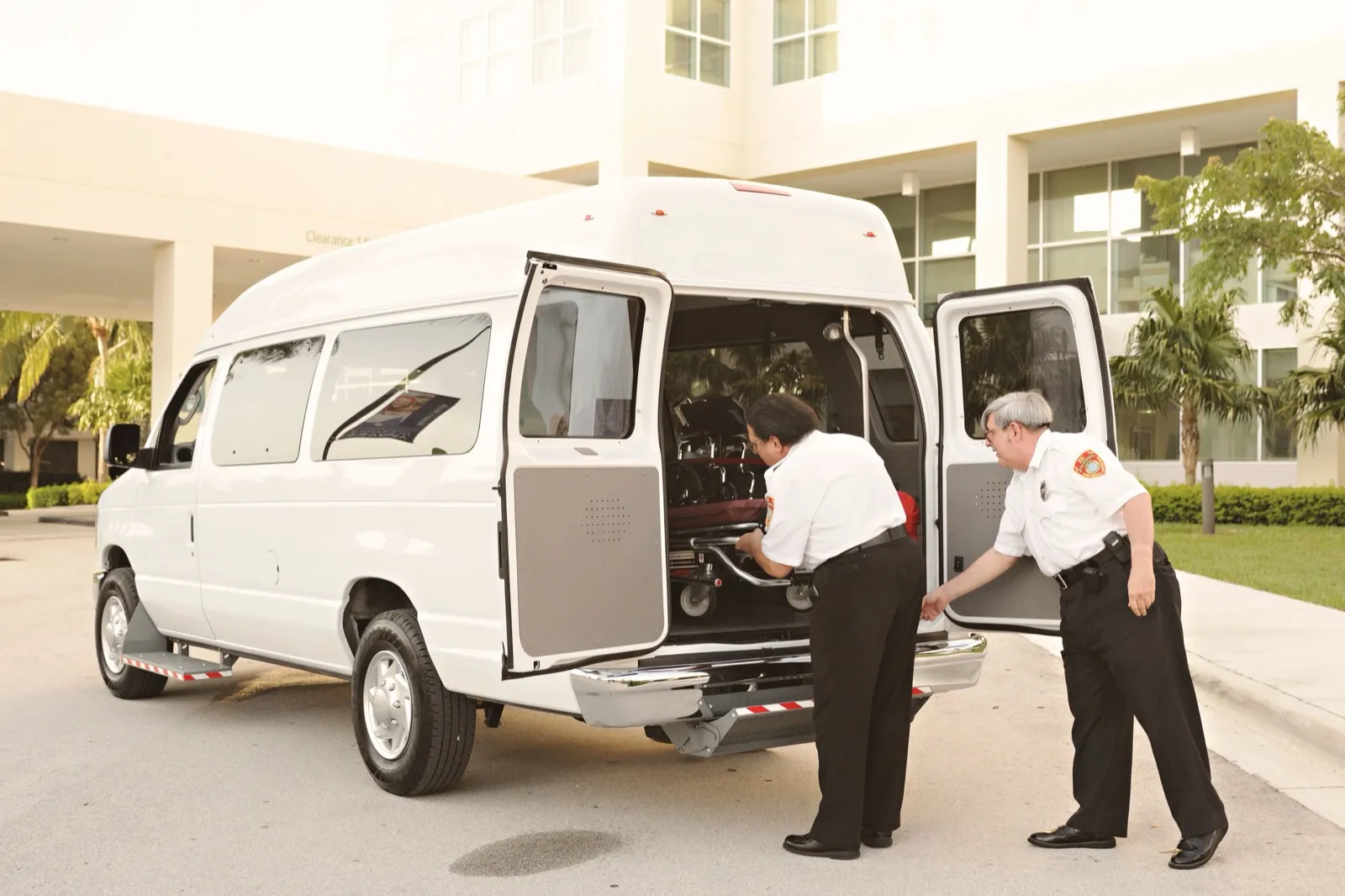
To start a stretcher transportation business, first check that your state pays for stretcher vans. Indiana's fee-for-service program and New Jersey send stretcher riders by ambulance, and Louisiana does not allow stretcher vans in NEMT. Where vans are allowed, get any license required, as in Illinois, buy a crash-tested stretcher and mount, plan on two trained people per trip, and enroll with Medicaid and brokers.
- Some states have no stretcher van service: Indiana and New Jersey send those riders by ambulance, and Louisiana bars stretcher vans from NEMT.
- Illinois, New York, and California put two people on every stretcher trip, so budget for a second paid crew member on each van.
- On a 10-mile trip, the stretcher rate beats the wheelchair rate by $5.99 in Medi-Cal fee-for-service and by $79.32 in North Dakota.
- A second crew member at the May 2025 median wage costs about $18.34 an hour with social security and Medicare taxes, so a small stretcher premium can lose money.
- Medicare does not pay for stretcher vans, so hospitals, nursing homes, and families pay for many of these rides.
A stretcher van carries a rider who must lie down but is stable and needs no medical care on the way. It sits between a wheelchair van and an ambulance, and it pays more than a wheelchair trip in every program in the rate table below. It also costs more to run, because several states put two people on every trip, and the rules below require a stretcher and a secure mount.
This guide covers where the service is allowed, what the staff and equipment rules require, and how to check whether the higher rate pays for the extra person. For the startup steps every NEMT company shares, see how to start a NEMT business.
Where stretcher van service is allowed
Check this before you spend anything. Some Medicaid programs pay for stretcher vans, some treat any stretcher ride as an ambulance ride, and a few bar the vans from NEMT outright.
| State or program | Stretcher vans in NEMT? | What to know |
|---|---|---|
| Arizona (AHCCCS fee-for-service) | Yes | Stretcher vans are a listed NEMT vehicle. T2005 pays $49.09 in the Phoenix and Tucson areas and $86.70 elsewhere (October 1, 2026). |
| Illinois | Yes, as a stretcher in a medicar | The Illinois Department of Public Health (IDPH) licenses stretcher van providers at $25 per vehicle. The license runs four years with a yearly inspection (rule amended November 1, 2024). |
| New York | Yes, as a stretcher ambulette | Category of service 0602. Ambulettes are licensed by NYSDOT, and their vehicles are inspected twice a year (policy manual effective August 25, 2023). |
| California (Medi-Cal fee-for-service) | Yes, as a litter van | Trips need an approved treatment authorization request (TAR) with a prescription, except a transfer from an acute care hospital to a long term care facility. |
| North Dakota | Yes | Trips must be approved in advance on form SFN 1507 from the human services zone or tribal office (manual updated January 2026). |
| South Dakota | Yes | T2005 pays $109.66, plus $54.83 for each additional rider (July 1, 2026). |
| Virginia (MTM Health, fee-for-service) | Yes | Stretcher vans are inspected twice a year and cannot look like ambulances (handbook approved August 10, 2026). |
| Indiana (fee-for-service) | No | T2005 and T2049 are not covered. Since July 1, 2023, stretcher trips are scheduled directly with enrolled ambulance providers. |
| Louisiana | No | The NEMT manual lists stretcher vans among vehicles that are not allowed (section issued July 14, 2025). |
| New Jersey | No | A licensed mobility assistance vehicle may not carry a stretcher or a rider who must travel lying down. That rider goes by BLS ambulance. |
| Maryland | Only as an ambulance | The commercial ambulance definition exempts only lift vans used just for wheelchair riders (COMAR 30.09.01.02). |
Health plans and brokers set their own rules on top of the state’s. A broker may not contract stretcher service in your area even where the state pays for it, so ask each broker’s provider relations team before you buy the van. Our state guides cover each state’s license and broker setup.
Who can ride in a stretcher van
These programs describe much the same rider: someone who cannot sit up for the length of the trip, is medically stable, and needs no care on the way. Medi-Cal’s manual gives four examples: a rider in a spica cast, a bed-bound rider, a stable rider after surgery who cannot sit upright for the trip, and a rider with a chronic condition who uses oxygen but needs no monitoring.
The rules also say who does not belong in a stretcher van. Illinois bars riders who are going to a hospital for emergency treatment or who need active medical monitoring, including isolation precautions, oxygen that is not self-administered, continuous airway management, suctioning, or IV fluids (77 Ill. Adm. Code 515.845). It also lists riders whose condition keeps them from cooperating with the crew, such as some riders with dementia or a risk of wandering off. New York bars riders who are medically sedated or need any medical treatment. Those riders need an ambulance, and the NEMT vs ambulance guide explains where the line falls.
Medicaid pays only for the level the rider needs. CMS requires states to use the least costly mode that fits the rider’s physical and emotional condition (SMD 23-006, September 28, 2023). A rider who can sit in a wheelchair is billed as a wheelchair trip, so every stretcher trip needs the stretcher level on its authorization or broker trip record.
Medicare does not pay for stretcher vans
The October 2026 CMS HCPCS file gives T2005 and T2049 coverage code I, which means not payable by Medicare. Medicare covers a non-emergency ambulance for a bed-confined patient, meaning one who cannot get up from bed without help, cannot walk, and cannot sit in a chair or wheelchair, when other transportation is unsafe (42 CFR 410.40). A Medicare-only patient who goes home from the hospital by stretcher van is usually paid for by the hospital, a nursing home, or the family. For that private-pay and facility work, see hospital discharge rides and NEMT facility contracts.
The extra staff rules
This is the cost that separates a stretcher business from a wheelchair business. Several programs put two people on every trip.
| State or program | Who must be on board | Training and checks |
|---|---|---|
| Illinois | At least two trained attendants. One stays with the passenger. | Both are CPR certified and trained to operate stretchers (77 Ill. Adm. Code 515.845). |
| New York | At least two employees: a driver and one assistant seated in the passenger compartment | The assistant tells the driver right away about any change in the rider’s condition. |
| California (Medi-Cal) | A certified driver and an attendant | Each has a current first aid certificate, a physical exam in the last two years with DMV form DL-51, and a driver’s license or ambulance driver certificate (22 CCR 51231.1). |
| Virginia (MTM Health) | Trained staff, with an attendant when needed | Drivers other than stretcher van or ambulance staff should not enter a residence. |
| New Jersey | Stretcher riders go by BLS ambulance | Each BLS ambulance runs with at least two EMT-Basics (N.J.A.C. 8:40-6.3). |
New York also expects the crew to move the stretcher over curbs, doorways, and steps when no elevator or ramp is available, with the people or equipment needed to do it. Plan your crew for the hardest pickup, not the easiest. The NEMT stretcher training guide covers what crews learn, and the driver requirements guide covers license, background, and drug testing rules that apply to both crew members.
Vehicle and equipment rules
A stretcher van needs more than a stretcher in the back. Three sets of rules show what regulators and brokers inspect.
Illinois (77 Ill. Adm. Code 515.840).
- The van cannot be a sedan, limousine, or recreational vehicle, and it needs room for two attendants.
- A wheeled litter at least 75 inches long and 22 inches wide, held by a crash-stable quick-release three-point fastener, with three sets of straps and over-shoulder straps.
- A crash-stable bracket for each oxygen cylinder, and no red or blue emergency lights or warning devices.
- Voice contact with dispatch, a loading light, a working 5-pound ABC fire extinguisher, and a flashlight.
- Two pillows, sheets, and blankets, a CPR mask, biohazard bags, and gloves, all secured.
- One stretcher passenger at a time.
Virginia (MTM Health handbook, approved August 10, 2026).
- A stretcher meeting GSA KKK-A-1822E, with a non-porous mattress at least three inches thick and chest, hip, knee, and upper torso restraints with quick-release buckles.
- A crash-tested mount secured to the vehicle, with riders loaded headfirst.
- Self-administered oxygen secured to AMD Standard 003, and a scoop, Reeves, or stair chair stretcher when a rider needs one.
- The business name on both sides, and no ambulance wording, Star of Life, or emergency lights unless the company holds a Virginia Office of Emergency Medical Services license.
New York (Medicaid Transportation Policy Manual, effective August 25, 2023).
- A wheeled cot used as its maker instructs, with the maker’s restraint straps.
- A cot retention device attached to the vehicle and made by the same company as the cot.
- Oxygen tanks secured, but no oxygen or oxygen delivery supplies carried by the van.
- No Star of Life logo, which New York reserves for emergency vehicles.
If you plan to work in more than one program, buy to the strictest list. The stretcher van requirements guide compares more states, and the NEMT vehicle requirements guide covers the rules every van must meet.
What stretcher trips pay compared with wheelchair trips
The rate gap between a stretcher trip and a wheelchair trip decides whether the extra person pays for itself. Here is the same trip, 10 loaded miles, under six fee schedules.
| Program | Wheelchair trip | Stretcher trip | Difference | Rates effective |
|---|---|---|---|---|
| Arizona, Phoenix and Tucson areas | $11.15 + 10 × $1.54 = $26.55 | $49.09 + 10 × $1.54 = $64.49 | $37.94 | October 1, 2026 |
| Arizona, rest of the state (TN) | $12.21 + 10 × $1.66 = $28.81 | $86.70 + 10 × $1.66 = $103.30 | $74.49 | October 1, 2026 |
| North Dakota | $18.05 + 10 × $2.57 = $43.75 | $97.37 + 10 × $2.57 = $123.07 | $79.32 | July 1, 2026 |
| South Dakota, all 10 miles outside city limits | $43.39 + 10 × $2.61 = $69.49 | $109.66 + 10 × $2.61 = $135.76 | $66.27 | July 1, 2026 |
| Medi-Cal fee-for-service | $20.30 + 10 × $1.50 = $35.30 | $26.29 + 10 × $1.50 = $41.29 | $5.99 | Rate page updated September 2023 |
| Illinois, Cook and collar counties | $30.00 + 10 × $1.03 = $40.30 | $40.30 + $9.31 for the stretcher = $49.61 | $9.31 | January 1, 2026 |
| New York City | $52.90 + 10 × $3.60 = $88.90 | $230.00, with no stretcher mileage code listed | $141.10 | May 2024 (wheelchair mileage April 1, 2022) |
Read the codes behind each row. Arizona and North Dakota bill T2005 plus T2049 mileage at the same per-mile rate as a wheelchair van. South Dakota calls its wheelchair-level trip (A0130) a secure van and pays mileage only from the point a trip leaves city limits, so a trip inside town pays $43.39 against $109.66. Medi-Cal bills litter van miles on A0380. Illinois pays the medicar trip and adds T2005 for the stretcher at $9.31 in Cook, DuPage, Kane, Lake, McHenry, and Will counties and $11.64 elsewhere. On New York’s April 2026 schedule, New York City pays wheelchair mileage on S0209 but lists no stretcher mileage code, and upstate counties such as Albany, Erie, and Monroe pay $101.00 for T2005 and $3.00 a mile on T2049. See the T2005 billing code page for modifiers and claim examples.
These are fee-for-service schedules. Broker and health plan contracts set their own rates, so ask each one for its stretcher rate in writing, and use the state schedule as a benchmark. Our reimbursement rates guide lists more states.
How the higher rate changes the math
Start with the second crew member, because that is the cost a wheelchair trip does not carry. The Bureau of Labor Statistics put the median wage for ambulance drivers and attendants, other than EMTs, at $17.04 an hour in May 2025. Add the employer’s 6.2 percent social security tax and 1.45 percent Medicare tax for 2026 (IRS Publication 15), and the hour costs about $18.34 before workers’ compensation and other costs.
Then compare that cost with the stretcher premium:
What is left = stretcher premium per trip minus (second person’s hourly cost × hours per trip)
Say a stretcher trip, with loading, the ride, and unloading, keeps the second crew member on the clock for 1.5 hours. That is an example number; time your own trips. At $18.34 an hour, the second person costs about $27.51 a trip.
| Program (10-mile trip) | Stretcher premium | Second person, 1.5 hours | Left for the stretcher, van, and profit |
|---|---|---|---|
| Arizona, Phoenix and Tucson areas | $37.94 | $27.51 | $10.43 |
| Arizona, rest of the state | $74.49 | $27.51 | $46.98 |
| North Dakota | $79.32 | $27.51 | $51.81 |
| South Dakota | $66.27 | $27.51 | $38.76 |
| Medi-Cal fee-for-service | $5.99 | $27.51 | Loses $21.52 |
| Illinois, Cook and collar counties | $9.31 | $27.51 | Loses $18.20 |
| New York City | $141.10 | $27.51 | $113.59 |
Three things follow from the table.
- A small premium does not cover the crew. In Medi-Cal fee-for-service and in the Chicago area, Medicaid stretcher trips at these rates lose money on the second person alone. Illinois does pay an employee attendant on a medicar trip ($20.00 on T2001 on the January 1, 2026 schedule), but only with prior approval, case by case, when the rider needs one (HFS handbook, March 11, 2024). Do not count on it for every trip.
- One stretcher rider at a time. Illinois allows one stretcher passenger per trip. South Dakota pays $54.83 for each additional rider, where a second rider fits. You cannot fill a stretcher van the way you fill a wheelchair van.
- Private pay and facility work often decide it. Medicare does not pay these rides, so hospitals, nursing homes, and families pay your price. Price them on your full cost, both crew members included. See how much to charge for NEMT and stretcher transport cost.
Run the same numbers for the stretcher, its mount, the extra insurance, and the van. One way to lower the risk is to add stretcher service to a working wheelchair fleet, so the stretcher van can take wheelchair work on days with few stretcher trips. Check that your state and brokers allow one van to do both before you plan on it.
How to start a stretcher transportation business, step by step
- Confirm the service exists in your state. Find T2005 on your state’s NEMT fee schedule, read the vehicle section of the provider manual, and ask each broker whether it contracts stretcher service where you are.
- Find out who licenses stretcher vans. It may be the health department, as in Illinois, the state transportation department, as in New York, or the ambulance regulator, as in Maryland. Cities and counties can add their own permits, so ask your city too. See NEMT license requirements.
- Form the company and get your numbers. The EIN from the IRS is free, and so is the NPI. The NUCC code set, version 26.1, lists taxonomy 343900000X, Non-emergency Medical Transport (VAN). Ask your state which taxonomy it expects for stretcher service. See how to get an NPI number for NEMT.
- Buy the van and stretcher to the strictest rule you will work under. Check the stretcher standard, the mount, the oxygen bracket, the room for two crew members, and the markings before you pay.
- Hire and train a two-person crew. Cover CPR, first aid, stretcher operation, stairs and curbs, and securement. Keep each certificate in the driver file.
- Insure the company before the first ride. Brokers set minimum limits, and stretcher work can change your premium. See NEMT insurance requirements.
- Enroll with Medicaid for the stretcher level. The federal application fee is $750 for 2026 where your state charges it. Learn the approval step for each trip, such as Medi-Cal’s TAR or North Dakota’s SFN 1507. See how to become a Medicaid transportation provider.
- Get broker contracts and pass the vehicle inspection. MTM Health in Virginia inspects stretcher vans before their first member and twice a year after. See how to get NEMT broker contracts.
- Line up hospital and nursing home work. Case managers need stretcher rides for Medicare-only patients that Medicaid will not pay for, so meet them with a clear price list and your hours.
Frequently asked questions
How much does it cost to start a stretcher transportation business?
The van, the stretcher and its crash-tested mount, insurance, and a second paid crew member are the big costs, so get quotes for each. Government fees are small. The EIN and NPI are free, the federal Medicaid application fee is $750 for 2026 where your state charges it, and Illinois charges $25 per vehicle for a stretcher van provider license that runs four years with a yearly inspection.
Do I need two people on a stretcher van?
In many states, yes. Illinois requires at least two trained attendants, and one must stay with the passenger. New York requires at least two employees, with the assistant seated in the passenger compartment. Medi-Cal requires a certified driver and an attendant for each litter van. MTM Health's Virginia handbook says stretcher vans may include an attendant when needed.
Does Medicare pay for stretcher van rides?
No. The October 2026 CMS HCPCS file gives T2005 and T2049 coverage code I, not payable by Medicare. Medicare pays for a non-emergency ambulance when a bed-confined patient cannot safely travel another way, under 42 CFR 410.40. A stretcher van ride for a Medicare-only patient is usually paid by the hospital, a nursing home, or the family.
Can a stretcher van carry a rider on oxygen?
Only oxygen the rider manages alone. Illinois bars stretcher vans from riders who need supplemental oxygen that is not self-administered, and requires a crash-stable bracket for each cylinder. New York lets a rider bring and manage their own oxygen, but the van may not carry oxygen supplies and staff may not help. MTM Health in Virginia requires the tank secured to AMD Standard 003.
Can I use my wheelchair van for stretcher trips?
Only if the van also meets your state's stretcher rules. In New York, stretcher trips are normally done in a retrofitted ambulette. In Illinois, the van needs room for two attendants, a litter at least 75 by 22 inches on a crash-stable fastener, and an IDPH stretcher van license. In Maryland, only wheelchair lift vans are exempt from the commercial ambulance definition, so ask the state EMS agency, MIEMSS, before you equip a van for stretchers.
What billing codes does a stretcher van use?
Many programs bill T2005 for the trip and T2049 for each loaded mile. Arizona, North Dakota, South Dakota, and upstate New York list both. Medi-Cal pays litter van miles on A0380 instead. Illinois pays a wheelchair van (medicar) trip on A0130 with A0425 miles and adds T2005 for the stretcher. Your fee schedule or broker contract decides.
Can a stretcher van take a patient who needs monitoring?
No. A stretcher van is for riders who must lie down but are stable. Illinois bars riders who are going to a hospital for emergency care or need active medical monitoring, isolation precautions, airway care, suctioning, or IV fluids on the way. New York bars riders who are medically sedated or need any medical treatment. Those riders need an ambulance.
Official resources
- CMS: HCPCS quarterly update files
- Illinois: 77 Ill. Adm. Code 515.845, Operation of stretcher vans
- eMedNY: Medicaid Transportation Policy Manual (stretcher ambulette rules)
- MTM Health: Virginia NEMT Transportation Provider Handbook (stretcher van standards)
- AHCCCS: Ground transportation fee schedules
- Medi-Cal: Ground medical transportation billing codes and rates
- CMS: NPPES, apply for an NPI