Starting a business
NEMT vs Ambulance in 2027: Which Rides Belong in a Van and Who Pays
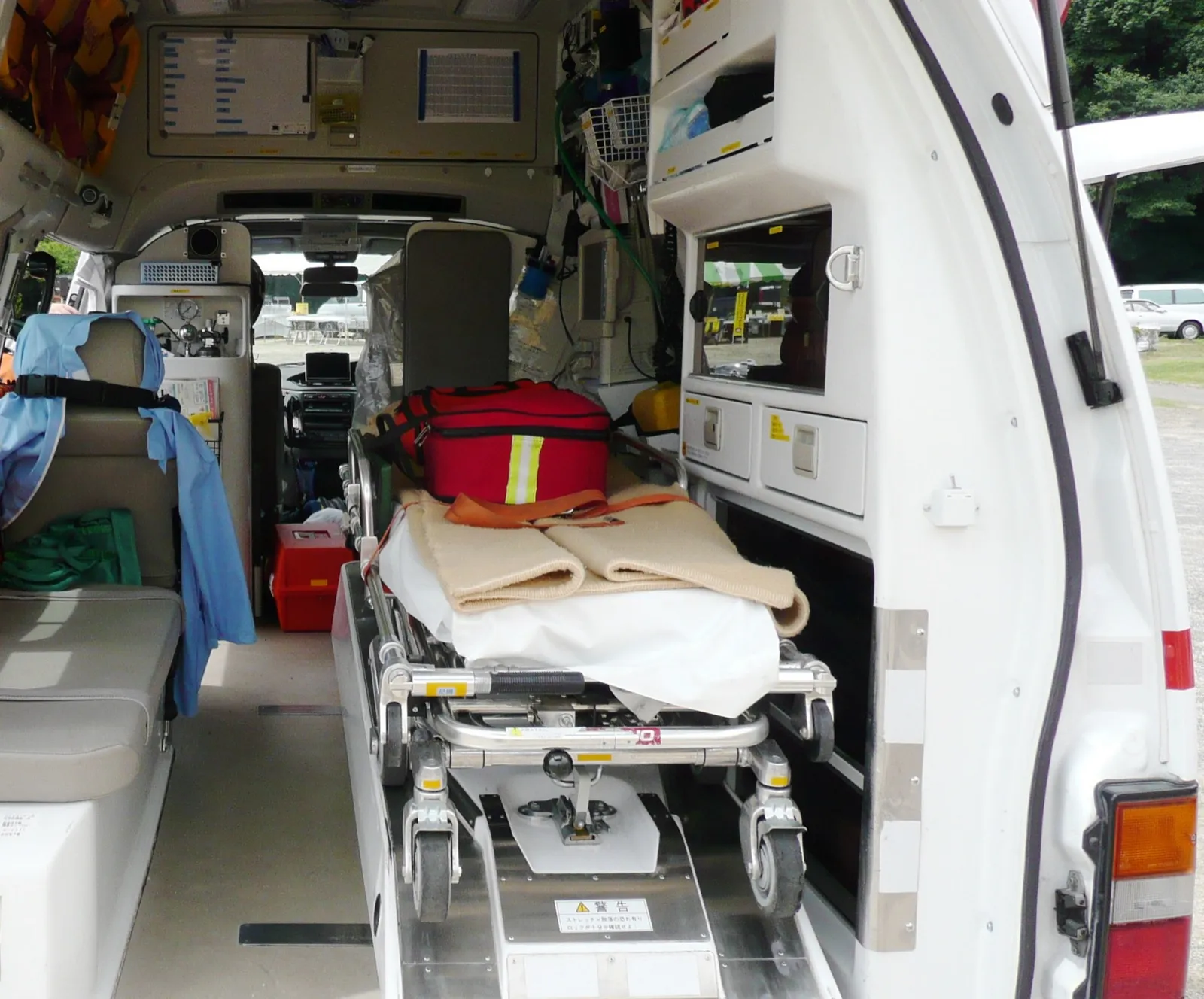

NEMT carries stable riders who need no medical care on the way, in sedans, wheelchair vans, and stretcher vans where the state allows them. A non-emergency ambulance carries riders who need monitoring or treatment, or who cannot safely ride any other way, with an EMT crew and a state EMS license. Medicaid pays for both. Original Medicare pays only for the ambulance.
- A van ride fits a stable rider who needs no care on the way. Monitoring, treatment, or restraints mean an ambulance.
- Original Medicare pays for no van or stretcher van ride. Its only ride benefit is the ambulance, and only when other transport is unsafe.
- Pay follows the level of service the rider needs, not the vehicle that showed up.
- At South Dakota's July 1, 2026 rates, a 10-mile non-emergency basic life support trip pays about 2.7 times the same trip by stretcher van.
- Screen every request before you accept it, and never change the assigned mode without the broker's approval.
A van company and an ambulance company can pull up to the same hospital door for the same kind of patient. What separates them is the rider’s medical need on the way, and that need decides who may carry the rider and who will pay. Take a trip that belongs in an ambulance and you risk the rider’s safety and a claim you cannot collect.
The difference between NEMT and a non-emergency ambulance
Both are non-emergency rides to medical care. The line is what the rider needs during the trip.
| NEMT: sedan, wheelchair van, stretcher van | Non-emergency ambulance | |
|---|---|---|
| The rider | Stable, and needs no medical care on the way | Needs monitoring or treatment, or cannot safely ride any other way |
| Crew | A trained driver, with an attendant on some stretcher trips | At least two people, one certified at least as an EMT-Basic (42 CFR 410.41) |
| Vehicle | Car, van, wheelchair van, or stretcher van | Built for emergencies or acute care, with a stretcher, oxygen, emergency supplies, and the lights and siren state law requires |
| License | Medicaid or broker enrollment, plus any state or local transport license | A state EMS license |
| Provider taxonomy code | 343900000X, Non-emergency Medical Transport (VAN) | 3416L0300X, Land Ambulance |
| Base codes | A0100, A0120, A0130, T2003, T2005 | A0428 for basic life support, A0426 for advanced |
| Original Medicare | Never pays | Pays only when any other vehicle could endanger the patient’s health |
| Medicaid | Pays for the least costly mode that fits the rider | Pays when medically necessary, and some states, such as Louisiana, want a signed certification for every trip |
Basic life support is the ambulance ride itself with a crew of at least two, one of them at least an EMT-Basic. Advanced life support adds an assessment by advanced personnel, such as paramedics, or at least one procedure that state law allows only those personnel to perform (42 CFR 414.605). Specialty care transport goes further, with nurses or other specialists on board for critically ill patients moving between facilities. None of that is NEMT work.
The national provider taxonomy, which you pick when you apply for an NPI, keeps the two apart too. Version 26.1 of the code set (July 1, 2026) lists van transport and land ambulance under separate codes. See how to get an NPI number for NEMT.
How Medicaid and Medicare draw the line
Medicaid pays for both, and picks the least costly mode
Every state Medicaid plan must ensure necessary transportation to and from providers (42 CFR 431.53). Federal rule 42 CFR 440.170 lists the cost of transportation “by ambulance, taxicab, common carrier, or other appropriate means.” CMS’s Medicaid Transportation Coverage Guide (SMD 23-006, September 28, 2023) says this assurance covers emergency and non-emergency transport, and that states must use the least costly mode appropriate for the rider’s physical and emotional condition.
So in Medicaid, a non-emergency ambulance is one more NEMT mode, and a minor one. CMS’s expanded report to Congress on Medicaid NEMT (June 20, 2023) found that in 2021, taxis carried the largest share of ride days in large and medium metro areas, 28 to 43 percent, and vans the largest share outside metro areas, 30 to 32 percent. Non-emergency ambulances carried 12 percent of ride days in the suburban counties of large metro areas and 9 percent or less everywhere else.
States route that ambulance work differently:
- Virginia fee-for-service. MTM Health’s handbook (approved August 10, 2026) lets the broker use a non-emergency ambulance only when medically authorized and only when a lower-level mode cannot safely meet the member’s needs.
- Indiana fee-for-service. For dates of service on or after July 1, 2023, a member who needs basic or advanced life support, or a stretcher, is scheduled directly with an enrolled ambulance provider, not through the NEMT broker (provider module version 6.1, August 19, 2025).
- Georgia. Emergency ambulance transportation is not covered under the NEMT program, and a member in an emergency should call 911 (NEMT manual, July 1, 2026).
Original Medicare pays only for the ambulance
Original Medicare has no van benefit. It covers an ambulance only when “other means of transportation are contraindicated,” and the patient’s condition must call for both the ambulance and the level of care billed (42 CFR 410.40). CMS’s Medicare Benefit Policy Manual (chapter 10, revised November 26, 2025) adds the rule that matters most to van owners. If some other vehicle could carry the patient without endangering their health, Medicare pays nothing for the ambulance, whether or not that vehicle was actually available.
Bed confinement is one factor, not the whole test. A patient counts as bed-confined only if they cannot get up from bed without help, cannot walk, and cannot sit in a chair or wheelchair. Medicare contractors presume an ambulance was needed when the record shows the patient:
- was in an emergency, such as an accident, injury, or sudden illness
- had to be restrained to prevent injury to themselves or others
- was unconscious or in shock
- needed oxygen or other emergency treatment on the way
- had signs of breathing or heart distress, such as shortness of breath or chest pain
- had signs of a possible stroke
- had to stay still because of a fracture not yet set, or a possible fracture
- was bleeding severely
- could be moved only by stretcher
- was bed-confined before and after the trip
The same manual tells contractors to ask for more proof when the ambulance was used only because no other transport was available, or when the patient only needed help getting from a room or home to a vehicle. Those two are van trips. For what Medicare riders can and cannot get, see does Medicare cover NEMT.
Medicare Advantage plans must cover the same ambulance benefit, because they cover everything Parts A and B cover apart from a few exceptions such as hospice. They may also add benefits Original Medicare does not have (42 CFR 422.100). CMS’s Medicare Managed Care Manual (chapter 4, revised April 22, 2016) says a plan does not have to cover non-emergency rides but may offer them as one of those extras. That is where a van company can find Medicare work. See Medicare Advantage transportation.
Which rides belong in a van and which need an ambulance
State rules draw the line in similar places, and a few spell it out rider by rider. New Jersey’s rules for mobility assistance vehicles (N.J.A.C. 8:40, readopted effective September 25, 2023) and Medi-Cal’s ground transportation manual (sections updated August 2020 and June 2023) are two of the clearest.
| The rider | Where the trip belongs | Where the rule comes from |
|---|---|---|
| Walks and needs no help | Sedan, taxi, bus, or rideshare where the program allows it | CMS least costly rule |
| Uses a wheelchair, sits upright, is stable | Wheelchair van | Medi-Cal, Arizona AHCCCS |
| Must lie flat, is stable, needs no monitoring | Stretcher van where allowed, or an ambulance where it is not | Medi-Cal litter van rule, N.J.A.C. 8:40-5.6 |
| Uses oxygen they manage alone | Wheelchair van or stretcher van | Medi-Cal, N.J.A.C. 8:40-5.2(c) |
| Was recently placed on oxygen, or the oxygen must be monitored | Ambulance | Medi-Cal |
| Needs IV fluids or medication watched, suctioning, or a ventilator the crew must manage | Ambulance | N.J.A.C. 8:40-5.2(b), Medi-Cal |
| Needs constant attendance because of a medical or mental condition | Basic life support ambulance | N.J.A.C. 8:40-5.2(b) and 8:40-6.2 |
| Must ride in physical restraints | Ambulance | N.J.A.C. 8:40-6.2 |
| Is going to labor and delivery or intensive care, or to the emergency department for anything but a set appointment or routine follow-up | Ambulance | N.J.A.C. 8:40-5.2(b) |
| Has chest pain, trouble breathing, stroke signs, heavy bleeding, or a possible broken bone | An emergency: call 911 | Medicare presumption list, South Dakota emergent criteria |
Georgia’s manual (July 1, 2026) states the equipment limit plainly. NEMT vehicles and drivers, including stretcher vans, are not equipped to supply or administer oxygen or to care for a member who depends on a ventilator or other life-sustaining equipment. Such members may use NEMT only with portable, fully charged, battery-powered equipment and an escort trained to manage it.
Stretcher van or ambulance: the gray zone
A rider who must lie down but needs no care fits a stretcher van in many programs, including Georgia, Virginia, Arizona, South Dakota, and Medi-Cal, which calls it a litter van. Some states leave that rider to ambulances:
- New Jersey. Stretchers may not be carried in a mobility assistance vehicle at all, and a basic life support ambulance carries riders who must travel lying down (N.J.A.C. 8:40-5.6 and 6.2).
- Indiana fee-for-service. Stretcher trips go directly to enrolled ambulance providers.
Where both exist, programs make the ambulance prove it was needed. South Dakota pays for a non-emergency ambulance only when the rider is bed-confined and a physician or other licensed practitioner documents that other transportation, including a stretcher van, is contraindicated, or when the rider’s condition otherwise requires an ambulance. It also limits non-emergency ambulance trips to 12 one-way trips a state fiscal year (ground ambulance manual, July 2026). Louisiana requires a Certification of Ambulance Transportation form for every non-emergency ambulance trip, signed by a physician, registered nurse, nurse practitioner, physician assistant, or clinical nurse specialist (state plan amendment LA-25-0017, effective November 20, 2025).
Medicare-only riders flip the math. Medicare presumes an ambulance was needed when the patient could be moved only by stretcher, as long as the trip is one Medicare covers, such as to a hospital or skilled nursing facility, home from one, or to dialysis. A stretcher van ride for the same rider has no Original Medicare benefit, so it is usually private pay or facility pay. Quote it that way, and tell the facility the ambulance may be covered. See private pay NEMT and how to start a stretcher transportation business.
NEMT codes vs ambulance codes
The codes show the split. In the CMS HCPCS file for October 2026, every non-emergency transportation code carries coverage code I, not payable by Medicare. The ambulance codes carry code C, meaning the Medicare contractor decides each claim.
| Code | What it covers (CMS, October 2026) | Medicare coverage code |
|---|---|---|
| A0100 | Taxi | I, not payable |
| A0120 | Mini-bus, mountain area transports, or other transportation systems | I |
| A0130 | Wheelchair van | I |
| S0209 | Wheelchair van mileage, per mile | I |
| T2003 | Encounter or trip | I |
| T2005 | Stretcher van | I |
| T2049 | Stretcher van mileage, per mile | I |
| A0428 | Ambulance, basic life support, non-emergency | C, contractor decides |
| A0426 | Ambulance, advanced life support level 1, non-emergency | C |
| A0425 | Ground ambulance mileage, per statute mile | C |
| A0429 and A0427 | Ambulance, basic and advanced life support, emergency | C |
Pay follows the level of service the rider needs, not the vehicle. Medicare pays for the level of medically necessary services actually given, even if a local government sends an advanced crew to every call. Indiana applies the same idea to vans: an ambulance that carries a walking member who needs no life support bills the ambulatory rate, and a walking member carried in a wheelchair van bills the ambulatory rate too. South Dakota’s ground ambulance manual (July 2026) lets an ambulance provider enroll as a secure medical transportation provider and bill the van codes for trips that do not meet its ambulance criteria. For the full code list, see NEMT billing codes.
What each ride pays
South Dakota’s Medicaid fee schedule, effective July 1, 2026, prices every mode in one place. Its wheelchair van code, A0130, is called secure van. Van mileage is paid only for miles driven outside city limits, while ambulance mileage covers every loaded mile. Here is a trip with 10 loaded miles, all outside city limits, at those rates:
| Mode | Base | Mileage, 10 miles | Total |
|---|---|---|---|
| Wheelchair van (A0130, S0209) | $43.39 | 10 × $2.61 = $26.10 | $69.49 |
| Stretcher van (T2005, T2049) | $109.66 | 10 × $2.61 = $26.10 | $135.76 |
| Basic life support ambulance, non-emergency (A0428, A0425) | $280.09 | 10 × $9.00 = $90.00 | $370.09 |
| Advanced life support ambulance, non-emergency (A0426, A0425) | $336.11 | 10 × $9.00 = $90.00 | $426.11 |
Medicare pays ambulances on its own schedule. CMS’s 2026 file puts the non-emergency basic life support base (A0428) at $261.60 to $380.05 for urban pickups, depending on the locality, with urban ground mileage of $9.33 a mile. Those amounts include temporary add-ons that Congress extended through December 31, 2027. Since October 1, 2018, Medicare has paid 23 percent less, on both base and mileage, for non-emergency basic life support trips to dialysis (42 CFR 414.610).
The higher rate covers an EMS crew and emergency equipment, and programs guard it with paperwork. Medicare needs a physician certification statement dated no more than 60 days before a scheduled repeat trip. Its prior authorization model for repeated trips has covered every state since August 1, 2022. For a van owner, the lesson runs both ways. A rider who needs an ambulance does not belong in your stretcher van, and a rider your stretcher van can carry safely will not qualify for an ambulance.
What it takes to run ambulances instead of vans
Some van owners look at those rates and think about adding ambulances. It is a different business with its own regulator:
- A state EMS license. South Dakota’s Department of Health licenses ground ambulances under ARSD chapter 44:05:04. Virginia requires licensing by its Office of EMS. In Arizona, an ambulance company needs a Certificate of Necessity from the Department of Health Services before AHCCCS will register it as an ambulance provider (provider type 06). New Jersey licenses basic life support ambulances under N.J.A.C. 8:40.
- A medical crew. Medicare requires at least two crew members, one certified at least as an EMT-Basic and legally allowed to run the life-saving equipment on board. New Jersey requires two EMT-Basics on every basic life support ambulance in service.
- An emergency vehicle. It must be designed for emergencies or acute care and carry a stretcher, linens, emergency medical supplies, oxygen, and the lights, siren, and radio or phone that state law requires (42 CFR 410.41).
- Medicare enrollment, if you want Medicare riders. Ambulance suppliers enroll on Form CMS-855B, complete its Attachment 1, and submit a copy of every ambulance’s license.
Until then, keep your vans clearly non-emergency. MTM Health’s Virginia handbook bars stretcher vans from ambulance or EMS wording, the Star of Life, and emergency lights, sirens, or horns unless the provider holds an Office of EMS license, and from carrying anyone who needs basic or advanced life support. See NEMT license requirements.
How to screen a trip request before you accept it
The safest place to catch a wrong-mode trip is at intake, whether the request comes from a hospital discharge planner or a broker trip offer. Run every new rider through these steps:
- Read the authorized level of service. A broker trip carries a mode, such as ambulatory, wheelchair, or stretcher. MTM Health’s Virginia handbook says drivers must use only the authorized mode, and an unapproved mode can mean non-payment or corrective action. See level of service.
- Ask how the rider travels. Can they sit up for the whole trip? Can they bear weight to transfer? Do they need two people to move them?
- Ask about equipment. Who manages the oxygen, and was it just started? Is there an IV, a feeding pump, or a ventilator, and will anyone on your crew have to touch it?
- Ask about behavior and safety. Does the rider need restraints or constant watching? New Jersey sends those riders by basic life support ambulance, and CMS encourages states to cover transport built for riders with behavioral health needs.
- Ask where the rider is going. In New Jersey, a trip for treatment in or admission to labor and delivery or intensive care is never a van trip.
- Stop if the answers do not fit. Tell the broker or facility the trip needs an ambulance, and do not try to make it work in a van.
- Recheck at pickup. If the rider cannot sit, is in distress, or has equipment you were not told about, do not load. Call the broker for a new mode.
- Write it down. Record what you were told, who told you, and what you did, on the trip record.
When a rider’s condition changes on the way
A stable rider can become an emergency. When that happens, the driver pulls over safely and calls 911, then calls dispatch. NEMT crews are not there to treat: Arizona’s manual (revised July 31, 2026) says non-ambulance providers may not provide emergency transportation because they cannot assure adequate life support.
Train every driver on that handoff. South Dakota requires secure medical transportation drivers and attendants to be trained in procedures for a medical emergency or an accident, including first aid, before they carry riders (manual, August 2026). MTM Health’s Virginia network requires training in assisting passengers with disabilities and responding to emergencies. Afterward, report the incident to the broker the way its manual requires, and keep the driver’s notes with the trip record.
Frequently asked questions
Can a NEMT company transport a rider who uses oxygen?
Usually, if the rider manages the oxygen alone. Medi-Cal sends riders with chronic conditions who use oxygen but need no monitoring by wheelchair van or litter van. New Jersey lets a mobility assistance vehicle carry a rider on their own portable oxygen when the crew never has to monitor, regulate, or control it. A rider newly placed on oxygen, or whose oxygen must be monitored, goes by ambulance in Medi-Cal.
Does Medicare pay for a non-emergency ambulance?
Yes, but only when the patient's condition makes any other transport unsafe, and only to covered places such as a hospital, skilled nursing facility, home, or dialysis facility (42 CFR 410.40). If a van could carry the patient safely, Medicare pays nothing for the ambulance, even if no van was available. Scheduled repeat trips need a physician certification dated no more than 60 days before the trip.
Is a stretcher van the same as a non-emergency ambulance?
No. A stretcher van carries a stable rider lying down who needs no care on the way, bills T2005, and is never paid by Medicare. A non-emergency ambulance carries an EMT crew and emergency equipment and bills A0428 or A0426. Some states, such as New Jersey, bar stretchers from mobility assistance vehicles, so riders who must lie down go by basic life support ambulance there.
Can my van have emergency lights or say ambulance on the side?
Not unless you hold an ambulance license. MTM Health's Virginia handbook (approved August 10, 2026) bars stretcher vans from showing ambulance or EMS wording, the Star of Life, or emergency lights, sirens, or horns unless the provider is licensed by the Virginia Office of EMS, except for any warning devices the DMV requires. Check your state vehicle code before you add any lights at all.
What should my driver do if a rider has an emergency during a trip?
Call 911, then call dispatch and the broker. NEMT is not emergency transportation. Georgia's NEMT manual (July 1, 2026) says emergency ambulance transportation is not covered under NEMT and the member should call 911, and Arizona says non-ambulance providers may not provide emergency transportation because they cannot assure life support. Write down what happened on the trip record.
How much more does an ambulance trip pay than a van trip?
Several times more. In South Dakota Medicaid, effective July 1, 2026, a trip with 10 loaded miles outside city limits pays $69.49 by wheelchair van, $135.76 by stretcher van, and $370.09 by basic life support ambulance. Medicare's 2026 base rate for a non-emergency basic life support trip runs $261.60 to $380.05 at urban pickups, before mileage of $9.33 a mile.
Can a NEMT company add ambulances?
Yes, but it becomes a different business. You need a state EMS license for each ambulance, a crew of at least two with one certified at least as an EMT-Basic, and vehicles built and equipped for emergencies (42 CFR 410.41). To bill Medicare, you enroll as an ambulance supplier on Form CMS-855B and attach a copy of every ambulance license.
Official resources
- CMS: Medicare Benefit Policy Manual, Chapter 10, Ambulance Services
- eCFR: 42 CFR 410.40, Coverage of ambulance services
- CMS: Medicaid Transportation Coverage Guide (SMD 23-006)
- CMS: Ambulance Fee Schedule Public Use Files
- CMS: HCPCS quarterly update files
- CMS: Prior authorization for repetitive, scheduled non-emergent ambulance transport
- CMS: Form CMS-855B, Medicare enrollment for ambulance suppliers