Drivers and vehicles
NEMT Stretcher Training in 2027: What Crews Must Learn and Who Requires It
Overview
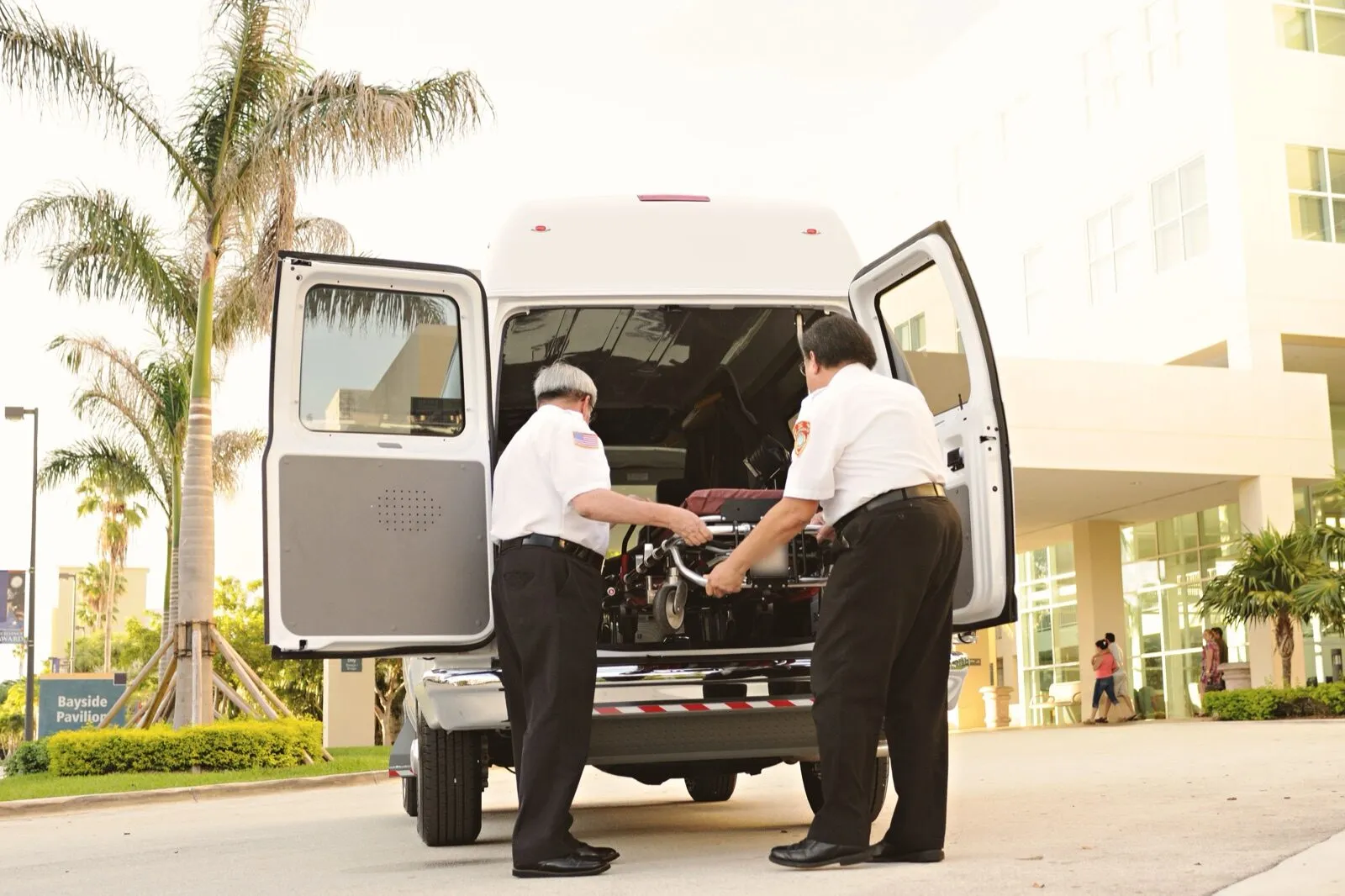
NEMT stretcher training teaches a two-person crew to move a rider onto the cot without lifting, load the cot headfirst, lock it into its mount, fasten every strap, get it over curbs and stairs, and respect each piece of equipment's weight limit. No federal rule sets the course. Virginia, Minnesota, Illinois, California, and Oklahoma write their own, and each adds CPR or first aid.
- No federal rule sets stretcher crew training. Virginia, Minnesota, Illinois, California, New York, and Oklahoma write their own, and brokers add more.
- Virginia, Illinois, New York, California, and Oklahoma put at least two people on every stretcher trip, so train both of them.
- Train on the cot and mount you own, from the maker's manual. New York requires both to be used strictly as the maker instructs, and one maker's cots need two operators once a rider is on.
- OSHA's bloodborne pathogens standard covers crews who may touch blood or body fluids: training at assignment and every year, on the clock, at no cost.
- Know the rated weight of every cot, stair chair, and transfer device, and add crew and bariatric equipment for heavier riders.
A stretcher rider cannot help with the move. Every transfer, every curb, and every stop in traffic depends on two crew members who know their equipment and work as one. This guide covers what the training must teach, which states and brokers write it down, and how to run it for a small company.
For the vehicle, the cot, the mount, and which states allow stretcher vans at all, see stretcher van requirements. This page is about the people.
Who sets stretcher training rules
No federal rule does. CMS’s Medicaid Transportation Coverage Guide (SMD 23-006, September 28, 2023) says that beyond a short list of provider and driver checks, federal Medicaid law sets no basic driver standards, and that states generally set them.
So the rules come from states and brokers, and they differ in what they cover:
- States that name stretcher training. Virginia, Minnesota, Illinois, California, New York, and Oklahoma each say what a stretcher crew must know. Wisconsin covers it through its rules for restraint devices. The next section sets out each one.
- Brokers. In Virginia, MTM Health runs its own Stretcher Training for fee-for-service drivers. Verida’s provider training list includes stretcher operation and safety beside wheelchair securement, as of October 2026.
- States where a stretcher ride is not van work. New Jersey bars its mobility assistance vehicles from carrying a stretcher or a rider who must travel lying down (N.J.A.C. 8:40-5.2 and 5.6), and Louisiana lists stretcher vans among vehicle types it does not allow (Medicaid manual section 10.3, issued July 14, 2025). In those states, plan on ambulance licensing and the state’s EMS crew rules for any rider who must lie down. See NEMT vs ambulance.
What each state requires of a stretcher crew
These rules set the floor. A broker can add to them, so read the provider manual for each broker you serve.
- Virginia (DMAS requirements, updated May 26, 2026). A stretcher van runs with a driver and an assistant who have completed DMAS-approved training in first aid, handling bloodborne pathogens, and transferring, loading, and unloading stretcher passengers. Both confirm every strap is fastened and the stretcher, fastener, and anchorages are secured before moving. See the Virginia state guide.
- MTM Health, Virginia fee-for-service. Its training page says drivers of stretcher vehicles take Stretcher Training after finishing its 6-hour Driver Training. Crews bring the van they will work in and its equipment, such as stretchers or sideboards. Missing 30 minutes or more of a session means repeating it, and the handbook (approved August 10, 2026) says the training MTM mandates comes at no cost to the provider.
- Minnesota (Rules 8840.5910). Within 45 days of starting, each driver and attendant who carries stretcher riders completes at least 2 hours of stretcher training on top of 8 hours of passenger assistance training. Each also takes 4 hours of first aid, unless they hold a current certificate from a state-approved first aid course or a state emergency medical responder certificate. Every course includes a proficiency test and is taught in person unless the state preapproves another format. Passenger assistance must be taught by a physician, nurse, physical or occupational therapist, or a person with work experience serving people with disabilities (Rules 8840.6200).
- Illinois. Every stretcher van attendant holds CPR certification and has been trained to operate stretchers, and one attendant stays with the rider (77 Ill. Adm. Code 515.845, amended November 1, 2024). A medicar company that bills HFS for a stretcher must meet the state health department’s stretcher van licensing rules (HFS transportation handbook, March 11, 2024). Its drivers and employee attendants also complete an HFS-approved safety program every 3 years, covering safe loading and unloading, lock-down devices, emergency equipment, and bloodborne pathogen precautions and cleanup (89 Ill. Adm. Code 140.490, amended March 20, 2025).
- California (22 CCR 51231.1, last amended in 2016). The certified driver and the attendant each hold at least an American Red Cross Standard First Aid certificate or an equal one. The rider stays belted to the gurney while being loaded, unloaded, and carried.
- New York (Medicaid transportation manual, effective August 25, 2023). A stretcher service uses at least two employees and must supply the people needed to lift and carry a rider safely. The cot and its straps are used strictly as the maker instructs, and the assistant rides in the passenger compartment.
- Oklahoma (OAC 310:641-17-8, amended effective September 11, 2020). A licensed stretcher van service runs with at least two people. The attendant is a certified Emergency Medical Responder with current BLS. The driver holds current BLS and has finished the service’s own defensive driving course in a vehicle like a stretcher van. The service keeps records showing each person’s competence in emergency procedures, passenger handling, and vehicle operation before they touch a rider or drive.
- Wisconsin (DHS 105.39). Before driving or attending, each driver gets first aid and CPR training, instruction on caring for a rider having a seizure, and specific instruction on every ramp, lift, and restraint device the company uses.
For crew size, vehicle, and equipment rules state by state, see stretcher van requirements.
The skills a stretcher crew must practice
The rules above share one idea: train on your own equipment, with your own partner, until every step is automatic. Build the course around these skills.
Check the cot, the mount, and the straps
New York requires the cot, its straps, and its retention device to be used strictly as the maker instructs, and the retention device must come from the cot’s maker. Teach from the operator manual for the exact cot you carry. Before each shift, the crew checks the wheels, the height locks, every strap and buckle, and the mount in the van. Verida’s wheelchair and stretcher training also starts with a pre-trip assessment.
Move the rider onto the cot without lifting
NIOSH’s safe patient handling curriculum (Publication 2009-127) treats any rider who would make a caregiver lift more than 35 pounds as fully dependent. For a bed to stretcher move, its lateral transfer method is to slide the rider, not lift:
- Set the heights. The surface the rider moves to sits about half an inch lower than the one they leave.
- Under 200 pounds, for a rider who cannot fully help, use a friction-reducing sheet or a lateral transfer board.
- Over 200 pounds, for a rider who cannot fully help, use a mechanical or air-assisted transfer device and 3 caregivers.
Lock the wheels on the bed and the cot first, and count out loud so both crew members pull at the same moment.
For more transfer methods, see safe passenger transfers.
Load, lock, and strap
Load headfirst, as Virginia and MTM Health’s Virginia handbook require. Keep both crew members on the cot’s handles whenever it is raised, lowered, or rolled with a rider on it. One maker’s spec sheets for its standard and bariatric cots list a minimum of two operators for an occupied cot and one for an empty one. Then lock the cot into its mount and fasten the chest, hip, and knee straps and the shoulder straps at the head end. Virginia also wants any self-administered oxygen secured to Standard 003 of the Ambulance Manufacturers Division of the National Truck Equipment Association.
Stairs, curbs, and doorways
New York expects a stretcher crew to move the cot over curbs and doorways, and up and down steps where there is no elevator or ramp, with the people or equipment it takes. Virginia requires the provider to supply a scoop, Reeves, or stair chair stretcher when a rider needs one. Practice on real stairs, going down as well as up, before the first stair trip. Every device has its own limit: one maker’s manual stair chair is rated for 500 pounds, counting the rider, equipment, and accessories together.
Ride in back and watch the rider
Virginia and New York seat the assistant in the passenger compartment while the van moves, watching for any sudden change in the rider’s condition and telling the driver at once. Virginia also says a stretcher rider is never left alone, and Illinois keeps one attendant with the rider at all times. The driver’s part is smooth driving. Minnesota’s passenger assistance course teaches that riders may not be able to brace for sudden stops or sharp turns. See NEMT defensive driving.
When the rider’s condition changes
Drill Virginia’s order until both crew members can recite it: call 911 first, then your own dispatcher, and give the first aid you are trained to give until EMS takes over or you reach the hospital. Teach the assistant to note the times and what they saw, because the broker must report each diversion to an emergency department, and each EMS intercept, to the state within two business days.
Know which riders to turn away
The crew is the last to see the rider before the trip starts. Teach it the riders a stretcher van may not carry, such as a rider who needs oxygen given by someone else, an IV, suctioning, or monitoring, or who cannot cooperate with the crew (Illinois 515.845). If the rider in front of you fits, stop and call dispatch. Each state’s list is in stretcher van requirements.
Bariatric riders and weight limits
Training has to cover the numbers. Check the rated capacity on the label of every cot, stair chair, and transfer device, and count the rider, the mattress, and anything carried on the cot.
As an example, one maker’s spec sheets list 700 pounds for a standard manual cot and 850 pounds for its bariatric transport cot, which is 29 inches wide. NIOSH’s curriculum switches to its bariatric methods when a rider’s body mass index is over 50, and its bariatric bed to stretcher transfer uses a mechanical lateral transfer device or air-assisted device with at least 3 caregivers.
Plan heavier trips before the crew arrives. Virginia requires bariatric transport to meet the guidelines of the state’s Office of Emergency Medical Services, and its fee-for-service broker must describe the bariatric providers and equipment it has. For weight ratings across lifts, ramps, and vans, and the programs that pay more for these trips, see bariatric transportation.
What OSHA requires of stretcher crews
OSHA has no ergonomics standard for lifting or moving patients. Its nursing home guidelines (OSHA 3182-3R, 2009) say they are not a new standard, that an employer’s duty to address ergonomic hazards is governed by the General Duty Clause, and that manual lifting should be minimized in all cases and eliminated when feasible. The General Duty Clause itself requires a workplace free from recognized hazards likely to cause death or serious harm (OSH Act section 5(a)(1)).
The risk is real. NIOSH’s injury data for EMS workers treated in emergency departments, 2016 to 2020, found sprains and strains the most common diagnosis every year, and overexertion and bodily reaction the largest share of injuries. In 2016 and 2017, about 40 percent of those overexertion injuries happened while lifting. Back injuries are also a workers’ comp cost, covered in workers’ comp for NEMT.
The bloodborne pathogens standard is the federal rule that does apply. It covers employees who can reasonably be expected to contact blood or other potentially infectious materials on the job, such as a crew member who gives first aid or cleans up body fluids (29 CFR 1910.1030).
- Train at assignment and every year after, within one year of the last session, at no cost to the employee and during working hours.
- Offer the hepatitis B vaccine within 10 working days of assignment, after the training.
- Keep training records for 3 years: the dates, a summary of the content, the trainers’ names and qualifications, and the names and job titles of everyone who attended.
Virginia’s stretcher van rules add the cleaning routine: waterless hand wash on the van, every contaminated surface cleaned and disinfected by a CDC-recommended method before the next rider, red or orange bags for regulated waste, and fresh linen for each rider.
How to build a stretcher training program
- Find every rule that applies. Check your state’s rule and each broker’s manual, and note who must take what and by when. Minnesota gives 45 days, Virginia wants the training before the first trip, and Oklahoma wants proof of competence before a rider is touched.
- Train both crew members. Virginia, Minnesota, Illinois, California, and Oklahoma set training for both people on the trip, not only the driver.
- Book the certified courses first. Schedule first aid and CPR or BLS with a certified instructor before the start date. See CPR requirements for NEMT drivers.
- Teach hands-on on your own van. Use your own cot, mount, stair chair, and transfer sheets, with the maker’s manual open. Run every skill above: pre-trip check, bed to cot slide, loading, strapping, stairs, and an emergency drill.
- Test and sign off. Minnesota requires a proficiency test in every course. Have an experienced crew watch each new person on real trips before they work without them, using the ride-along checklist.
- Write it down. Log each session with the date, the topics, the trainer, the hours, and each person’s signature on the driver training log. For bloodborne pathogens sessions, add the trainer’s qualifications and each attendee’s job title, which OSHA’s record rule asks for.
- Refresh on schedule. Bloodborne pathogens training comes every year. Minnesota requires refreshers every 3 years, including 2 hours of securement for the modes the crew works. Illinois renews its medicar safety program every 3 years.
- Retrain after any complaint. In MTM Health’s Virginia program, a substantiated complaint about a stretcher securement issue costs 2 points per instance and brings required driver retraining, an immediate vehicle reinspection, and possible loss of payment for the trips.
For the full first-week plan that the stretcher course sits inside, see NEMT driver training, and for the business side of running stretcher vans, see how to start a stretcher transportation business.
Frequently asked questions
How long is stretcher training for NEMT crews?
Of the state rules in this guide, only Minnesota sets hours. Each driver and attendant who carries stretcher riders takes at least 2 hours of stretcher training on top of 8 hours of passenger assistance training, within 45 days of starting (Minnesota Rules 8840.5910). In Virginia, MTM Health's Stretcher Training comes after its 6-hour Driver Training. Other programs set the topics but not the hours.
Do both stretcher crew members need training?
Yes, wherever the rule is written down. Virginia requires the driver and the assistant to complete state-approved training in first aid, bloodborne pathogens, and stretcher transfers and loading. Illinois requires every stretcher van attendant to hold CPR and stretcher training. California requires a first aid certificate for both the driver and the attendant. Oklahoma requires BLS for both.
Can stretcher training be done online?
The hands-on part cannot. Minnesota requires its courses to be taught in person unless the state preapproves another format, and every course includes a proficiency test. MTM Health's Virginia Stretcher Training is in person, and drivers bring their stretcher van and its equipment. For bloodborne pathogens, OSHA requires a chance to ask questions of the person giving the training, so a recorded video alone falls short.
Does OSHA require stretcher training?
Not by name. OSHA has no standard for lifting or moving patients, and its nursing home guidelines (OSHA 3182-3R, 2009) say the General Duty Clause governs an employer's duty to address ergonomic hazards. The bloodborne pathogens standard does apply to crew members who can be expected to contact blood or body fluids, with training at assignment and every year.
How much weight can a two-person stretcher crew handle?
NIOSH sets a low line. It treats any rider who would make a caregiver lift more than 35 pounds as fully dependent, so the crew slides the rider with a device instead of lifting. For a rider over 200 pounds who cannot fully help, NIOSH calls for a mechanical or air-assisted transfer device and 3 caregivers, one more than a two-person crew. The cot and stair chair have their own weight ratings too.
Do stretcher van crews need CPR?
In several states, yes. Illinois requires CPR certification for every stretcher van attendant. Oklahoma requires current BLS for both the driver and the attendant, and the attendant must also be a certified Emergency Medical Responder. Wisconsin requires first aid and CPR training for every driver, and Virginia and California ask for first aid. See CPR requirements for NEMT drivers for course types and renewals.
Official resources
- Virginia DMAS: NEMT Driver, Attendant, and Vehicle Requirements (stretcher van section)
- MTM Health: Virginia Driver Training and Stretcher Training registration
- Minnesota Rules 8840.5910, Driver and attendant training requirements
- Illinois 77 Ill. Adm. Code 515.845, Operation of stretcher vans
- eCFR: 29 CFR 1910.1030, OSHA bloodborne pathogens standard
- NIOSH: Safe patient handling training curriculum, with transfer algorithms