Billing
Stretcher Transport Cost in 2027: Why It Costs More and How to Price It
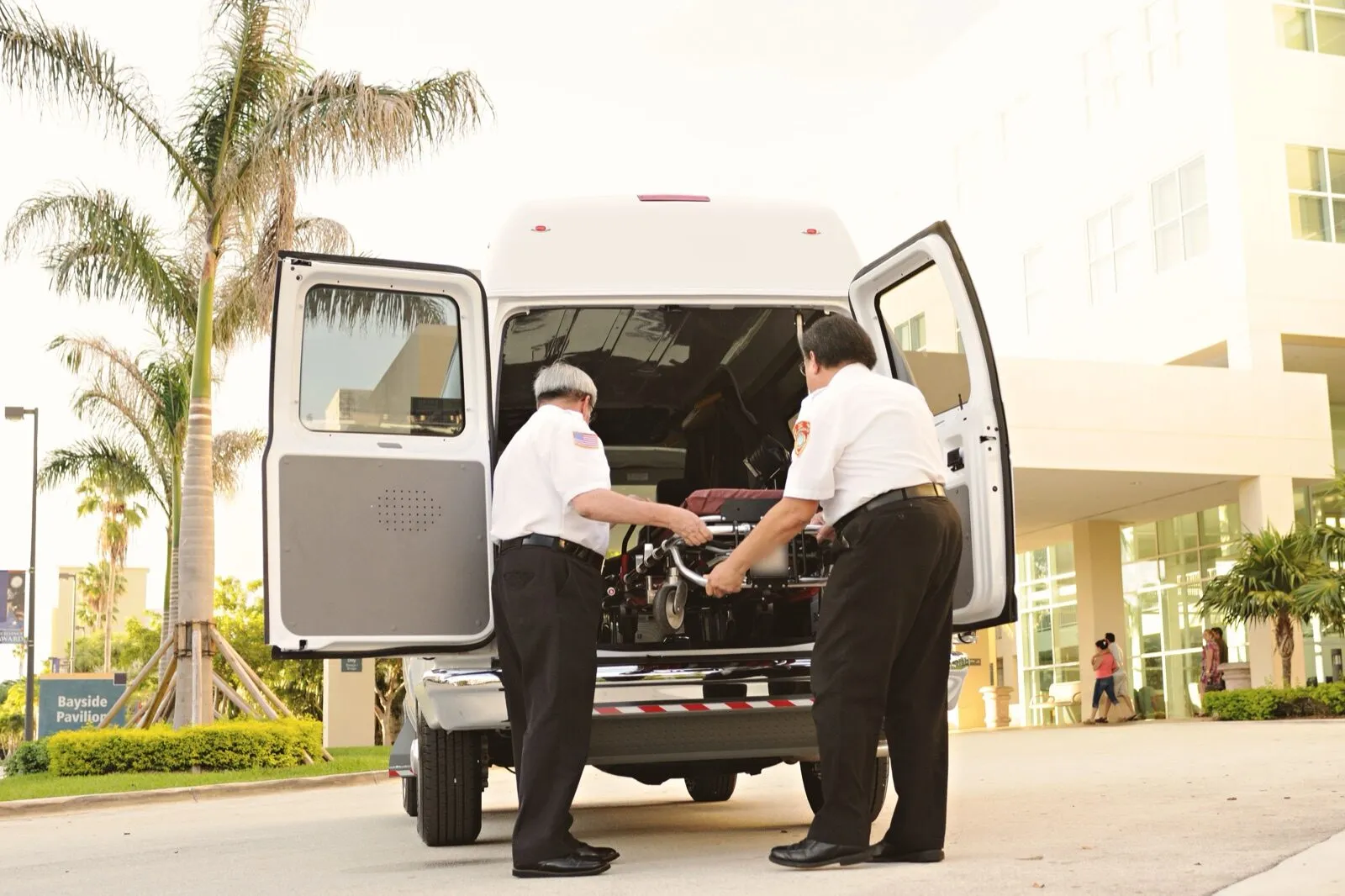
Stretcher transport costs more than a wheelchair ride because states such as Illinois and New York require two crew members and a secured stretcher. As of September 2026, Medicaid pays $48.79 for a 15-mile stretcher van trip in Medi-Cal and $230 in New York City. Original Medicare pays only for an ambulance, approving $401.55 to $520.00 for a 15-mile urban trip in 2026.
- A second crew member, a crash-stable stretcher mount, and a bigger van are costs a wheelchair trip does not carry.
- For a 15-mile trip, the Medicaid stretcher van rates compared here run from $48.79 in Medi-Cal to $230 in New York City.
- Original Medicare pays for a stretcher ride only by ambulance, and only when other transport is unsafe, so many stretcher van rides are private pay.
- Medicare approves $401.55 to $520.00 in 2026 for a 15-mile BLS non-emergency ambulance trip from an urban pickup, depending on the area.
- Price private stretcher trips on an hour of the whole crew, and quote stairs, waiting, and heavy riders as separate lines.
A stretcher ride takes more people, more equipment, and more time than a wheelchair ride, and it is harder to price. Who pays for it depends on the rider: Medicaid pays for stretcher vans in some states, Medicare pays only for ambulances, and hospitals, nursing homes, and families pay for many of the rest. This page shows where the extra cost comes from, what published payers pay, and how to price a private stretcher trip so it covers the whole crew.
Why a stretcher ride costs more than a wheelchair ride
A stretcher van carries a rider who must lie down but is stable and needs no medical care on the way. The rules that make that safe are also what make it expensive.
| Cost | What the rules require | Where |
|---|---|---|
| A second crew member | No stretcher van may run with fewer than two trained attendants, and one stays with the passenger. Both are CPR certified and trained on stretchers. | Illinois, 77 Ill. Adm. Code 515.845 |
| A second crew member | At least two employees per stretcher trip: a driver and an assistant seated in the passenger compartment | New York Medicaid manual |
| Stairs and doorways | The crew moves the stretcher over curbs, doorways, and steps where no elevator or ramp exists, with the people or equipment needed | New York Medicaid manual |
| The stretcher and mount | A wheeled litter at least 75 by 22 inches on a crash-stable quick-release fastener, with three sets of straps and shoulder straps | Illinois, 515.840 |
| The stretcher and mount | A wheeled cot with the maker’s restraint straps, held by a retention device from the same maker | New York Medicaid manual |
| A bigger van | Room for two attendants and direct observation of the rider. No sedans, limousines, or recreational vehicles. | Illinois, 515.840 |
| One rider at a time | No more than one stretcher passenger at any one time | Illinois, 515.840 |
| A license | $25 per vehicle for an IDPH stretcher van license, valid four years with a yearly inspection | Illinois, 515.835 |
Put together, a stretcher trip ties up two paid people and a specialized van, and in Illinois that van cannot take a second stretcher rider. Moving a rider from a bed to the stretcher also adds time at both ends of the trip. The stretcher van requirements guide compares the equipment rules state by state.
The second person is the cost to check first. The Bureau of Labor Statistics put the median wage for ambulance drivers and attendants, other than EMTs, at $17.04 an hour in May 2025. The employer adds 6.2 percent social security tax and 1.45 percent Medicare tax for 2026 (IRS Publication 15), which brings the hour to about $18.34 before workers’ compensation and paid time off.
What Medicaid pays for a stretcher van trip
Where Medicaid covers stretcher vans, it often pays a base rate on T2005 and loaded miles on T2049. Here is one 15-mile, one-way daytime trip under each fee-for-service schedule.
| Program | Stretcher base | Loaded mile | 15-mile trip pays | In effect |
|---|---|---|---|---|
| Medi-Cal | $26.29, or $32.42 at night | $1.50 on A0380 | $48.79 | Rate page updated September 2023 |
| Illinois, most counties | $30.00 medicar base plus $11.64 for the stretcher | $0.80 on A0425 | $53.64 | January 1, 2026 |
| Illinois, Cook and collar counties | $30.00 medicar base plus $9.31 for the stretcher | $1.03 on A0425 | $54.76 | January 1, 2026 |
| Arizona, Phoenix and Tucson areas | $49.09 | $1.54 | $72.19 | October 1, 2026 |
| Arizona, rest of the state (TN) | $86.70 | $1.66 | $111.60 | October 1, 2026 |
| North Dakota | $97.37 | $2.57 | $135.92 | July 1, 2026 |
| New York, Albany County | $101.00 | $3.00 | $146.00 | Schedule dated April 5, 2026 |
| South Dakota, all miles outside city limits | $109.66 | $2.61, outside city limits only | $148.81 | July 1, 2026 |
| New York City | $230.00 | No stretcher mileage code listed | $230.00 | Schedule dated April 5, 2026 |
15-mile trip pays = stretcher base + (15 × loaded mile rate)
New York sets stretcher rates county by county. On the April 2026 schedule, T2005 runs from $101.00 in counties such as Albany, Erie, and Monroe to $280.00 in Onondaga County, and only some counties list T2049 mileage.
In Illinois, a stretcher rider travels in a medicar, the state’s term for a wheelchair van. The trip bills the medicar base and miles, plus T2005 for the stretcher, and the provider must hold the IDPH stretcher van license. Madison and St. Clair counties pay $1.61 a mile, so the same 15-mile trip there pays $65.79.
Some programs have no stretcher van rate at all:
- Indiana. Since July 1, 2023, a fee-for-service member who needs a stretcher is scheduled directly with an enrolled ambulance provider, not through the broker.
- Louisiana. The NEMT manual lists stretcher vans among vehicles that are not allowed (section 10.3, issued July 14, 2025).
- Ohio. The fee-for-service transportation rules pay for wheelchair van and ambulance services, and the rate appendix lists no stretcher van code.
These are fee-for-service rates. Broker and health plan trips pay the rate in your contract, so ask each one for its stretcher rate in writing. The T2005 billing code page covers modifiers and claim examples.
Stretcher van or ambulance: what each one costs
A rider who must lie down can travel by stretcher van or by ambulance. The payer’s rules decide which one it will pay for, and the rates are far apart.
| Payer and vehicle | Rate | 15-mile trip | In effect |
|---|---|---|---|
| Medicare, BLS non-emergency ambulance, urban pickup | $261.60 to $380.05 by area, plus $9.33 a mile | $401.55 to $520.00 | 2026 |
| Medicare, stretcher van | Not covered | Not paid | 2026 |
| Ohio Medicaid, BLS non-emergency ambulance | $203.75 plus $5.05 a mile | $279.50 | January 1, 2024 |
| New York City Medicaid, BLS non-emergency ambulance | $192.99 plus $2.81 a mile | $235.14 | April 1, 2022 |
| New York City Medicaid, stretcher van | $230.00 | $230.00 | May 20, 2024 |
| Connecticut statewide maximum charge, BLS ambulance | $980.00 plus $23.81 a mile | $1,337.15 | 2026 statewide schedule |
Medicare. The Medicare amounts come from the CY 2026 Ambulance Fee Schedule public use file, and include the 2 percent add-on for urban pickups. CMS says Congress extended the temporary ground ambulance add-ons through December 31, 2027, and without new legislation they expire on January 1, 2028. Rural pickups are paid more, especially for the first 17 miles.
Medicare pays for a non-emergency ambulance only when one of two things is true (42 CFR 410.40). The patient is bed-confined and other transport would be unsafe, or the patient’s condition requires an ambulance whether or not they are bed-confined. Bed-confined means all three of these: the patient cannot get up from bed without help, cannot walk, and cannot sit in a chair or wheelchair. For scheduled, repeated trips, a physician certification dated no earlier than 60 days before the trip is required.
The patient pays 20 percent of the Medicare-approved amount after the Part B deductible, which is $283 for 2026. On the 15-mile urban trip above, that is $80.31 to $104.00. Medicare.gov adds that an ambulance company must give an Advance Beneficiary Notice before a non-emergency trip it thinks Medicare may not pay for. Where Medicare’s prior authorization program for scheduled, repeated trips applies, the company may ask for approval before the fourth round trip in 30 days. If approval is denied and the trips continue, Medicare denies the claims and the company may bill the patient for all of it.
Why this matters to you. A Medicare patient who needs to lie down but does not meet the ambulance rules has no Original Medicare benefit for the ride. That rider, the family, or the discharging facility pays a stretcher van privately. The example private price later on this page, $146.50 for 15 miles, is well under Medicare’s ambulance amounts for the same trip. See NEMT vs ambulance for where the medical line falls.
Who pays for a stretcher ride
| Rider | Who usually pays | What to confirm before the ride |
|---|---|---|
| Medicaid member where stretcher vans are covered | Medicaid, the broker, or the health plan | The trip authorization shows the stretcher level |
| Medicaid member in Indiana fee-for-service | Medicaid, by an enrolled ambulance provider | The trip is scheduled with the ambulance provider directly, not the broker |
| Medicare patient who meets the ambulance rules | Medicare, by ambulance | Physician certification and the ambulance company’s own rules |
| Medicare patient who does not | The patient, the family, or the facility | Who is paying, in writing, before you dispatch |
| Veteran with approved special mode travel | VA | The VA approval for the trip |
| Hospital or nursing home patient going to another facility | The facility, when it books the ride under a contract with you | Your contract rate and billing contact |
Hospital case managers are one source of this work: a patient who cannot sit up and does not meet Medicare’s ambulance rules still needs a way home. The hospital discharge transportation guide covers how to get on their call list, and NEMT facility contracts covers the agreement itself.
For veterans, 38 CFR 70.2 defines special modes to include ambulances, ambulettes, wheelchair vans, and other modes specially designed to carry disabled persons, and VA pays the actual cost of a special mode (38 CFR 70.30). See VA transportation contracts.
How to price a private stretcher trip
Use the same bottom-up method as any private ride, described in how much to charge for NEMT, with two changes. Your hourly cost must include both crew members, and your time per trip must include the longer loading and unloading.
Crew hour cost = driver cost per hour + second crew member cost per hour + van fixed cost per hour
Here is an example. The driver line and the method match the wheelchair example in the pricing guide. The second crew member starts from the May 2025 BLS median. Every other number is an example to replace with your own.
| Line | Example math | Example result |
|---|---|---|
| Driver cost per hour | Wage, payroll taxes, and benefits | $22.00 |
| Second crew member | $17.04 median + 7.65% payroll taxes = $18.34, plus an example $2.66 for workers’ comp, unemployment tax, and paid time off | $21.00 |
| Van fixed cost per hour | Loan, insurance, stretcher, and mount, divided by paid service hours | $36.00 |
| Crew hour cost | $22.00 + $21.00 + $36.00 | $79.00 |
| Cost per minute | $79.00 ÷ 60 | $1.317 |
| Cost per mile | Fuel, tires, and repairs for a high-roof van | $0.55 |
Now split the costs the way a stretcher trip uses them. In the example, the crew takes 15 minutes and 6 empty miles to reach the pickup, 20 minutes to move the rider from bed to stretcher and load, and 15 minutes to unload and settle the rider. The van averages 2 minutes per loaded mile.
| Part | Example cost | Price at a 20% margin (cost ÷ 0.8) |
|---|---|---|
| Base fee | 50 minutes × $1.317 + 6 miles × $0.55 = $69.15 | $86.50 |
| Loaded mile | 2 minutes × $1.317 + $0.55 = $3.18 | $4.00 |
| Waiting, per 15 minutes | $79.00 ÷ 4 = $19.75 | $24.75 |
At those example prices, a 15-mile one-way stretcher trip is $86.50 plus 15 × $4.00, or $146.50. It costs $69.15 plus 15 × $3.18, or $116.85, to run, which leaves a 20.2 percent margin. The same trip under the wheelchair example in the pricing guide, $32.50 plus $2.80 a mile, is $74.50. In the example, the gap comes from the second person, the longer loading time, and the costlier van. The trip price calculator runs the margin math on any trip.
Price these as separate lines so the quote stays honest:
- Stairs with no elevator. If a third person is needed, add their hourly cost for the whole trip. If the crew takes longer, add the minutes at your crew rate.
- Heavier riders. A bariatric stretcher, and sometimes more crew, changes the cost. See bariatric transportation.
- Waiting. The crew is paid while it waits, because federal wage rules count on-duty waiting as work time (29 CFR 785.15). With two crew members, every hour of waiting carries two wages.
- Long distance. Long trips add crew hours, meals, and sometimes a hotel. See long-distance medical transport.
What to ask before you quote a stretcher trip
- Can the rider sit up for the whole trip? If yes, it is a wheelchair trip. New York’s manual says the stretcher mode is not appropriate when the rider can safely ride in a wheelchair, and CMS requires states to use the least costly mode that fits the rider’s physical and emotional condition (SMD 23-006, September 28, 2023).
- Does the rider need any care on the way? Illinois bars stretcher vans from riders who need active medical monitoring, isolation precautions, oxygen that is not self-administered, airway care, suctioning, or IV fluids during transport. New York bars riders who are medically sedated. Those riders need an ambulance.
- Is there oxygen? Only oxygen the rider manages alone, in a tank secured in the van.
- What are the pickup and drop-off like? Ask about stairs, elevators, narrow doors, and the room or floor number.
- How much do the rider and any equipment weigh? Check it against your stretcher’s rating.
- Who is paying, and is it in writing? For a Medicaid member, get the trip authorization. For a Medicare-only patient, confirm the family or facility is paying before you dispatch.
- Is there a return trip or a wait? Quote both legs and the waiting rate up front.
Then quote the total in writing, with what can change it, and bill the facility or give the family an itemized receipt. The rate sheet template has room for a separate stretcher price list, and how to start a stretcher transportation business covers the licenses and equipment behind these costs.
Frequently asked questions
How much does stretcher transport cost?
It depends on who pays. Medicaid stretcher van rates for a 15-mile trip range from $48.79 in Medi-Cal fee-for-service to $230 in New York City among the programs in the table on this page, and one New York county pays $280. For the same trip by BLS ambulance from an urban pickup, Medicare approves $401.55 to $520.00 in 2026, and it does not pay for stretcher vans. Private stretcher van prices are set by each company, so build yours from your full crew cost.
Does Medicare pay for a stretcher van?
No. The October 2026 CMS HCPCS file gives T2005 and T2049, the stretcher van codes, coverage code I, which means Medicare does not pay them. Medicare pays for a non-emergency ambulance when the patient is bed-confined and other transport is not safe, or when the patient's condition otherwise requires an ambulance (42 CFR 410.40).
Why does a stretcher ride cost more than a wheelchair ride?
Mostly because of the second person. Illinois requires at least two trained attendants on every stretcher van, and New York requires at least a driver and an assistant. The van also needs a wheeled stretcher, a crash-stable mount, and room for both crew members, and Illinois allows only one stretcher rider at a time. Moving a rider from a bed to the stretcher also adds time at both ends.
Is a stretcher van cheaper than an ambulance?
Not always. In Ohio, Medicaid pays $203.75 plus $5.05 a mile for a BLS non-emergency ambulance and has no stretcher van rate. In New York City, Medicaid pays $230 for a stretcher van trip and $192.99 plus $2.81 a mile for a BLS non-emergency ambulance, so a trip of 13 miles or less pays less by ambulance. Check both rates in your state.
What does a Medicare patient pay for a non-emergency ambulance?
After the Part B deductible, which is $283 for 2026, the patient pays 20 percent of the Medicare-approved amount. On a 15-mile urban BLS trip approved at $401.55 to $520.00, that is $80.31 to $104.00. If the ambulance company thinks Medicare may not pay for a non-emergency trip, it must give the patient an Advance Beneficiary Notice first.
Can a stretcher van carry a rider on oxygen?
Only oxygen the rider manages alone. Illinois bars stretcher vans from riders who need supplemental oxygen that is not self-administered, and requires a crash-stable bracket for each cylinder. New York lets a rider bring and manage their own oxygen, but staff may not help with it and the van may not carry oxygen supplies. A rider who needs oxygen given by someone else needs an ambulance.
Does the VA pay for stretcher transport?
For eligible veterans, VA beneficiary travel covers special modes of transportation, which 38 CFR 70.2 defines to include ambulances, ambulettes, wheelchair vans, and other modes specially designed to carry disabled persons. VA pays the actual cost of a special mode under 38 CFR 70.30. A rule that would change how VA pays, when it has no contract with the vendor, is delayed until February 16, 2029.
Official resources
- Medicare.gov: Ambulance services coverage
- CMS: Ambulance Fee Schedule public use files
- CMS: HCPCS quarterly update files
- AHCCCS: Ground transportation fee schedules
- eMedNY: Transportation provider manual and fee schedule
- Illinois: 77 Ill. Adm. Code 515.845, Operation of stretcher vans
- IRS: Publication 15, Employer's Tax Guide