Growth
Dialysis Transportation in 2027: How to Win Standing Orders and Run Them Well
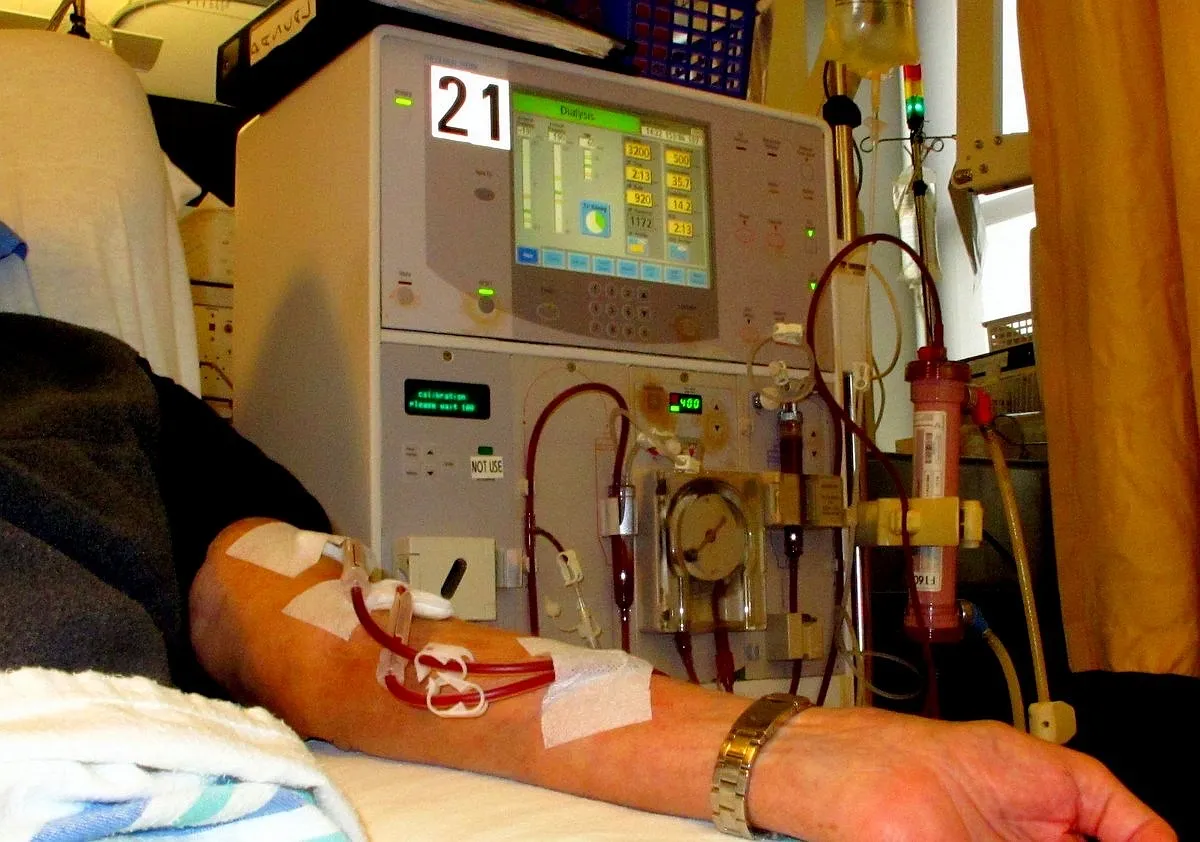

Dialysis transportation is the ride to and from in-center hemodialysis, usually three times a week for about four hours each visit. For a NEMT company it is some of the steadiest Medicaid work there is: one rider means about 312 one-way trips a year. You win it by getting credentialed with the broker, earning each center's trust, and never missing a chair time.
- One dialysis rider on a three-day schedule means about 312 one-way trips a year.
- Original Medicare pays only for ambulance rides to dialysis, so van rides come from Medicaid, health plans, centers, or families.
- Whether a center can pick your company depends on the program, from New York partnerships to Delaware requests.
- Plan every return before the day starts, and train drivers for riders who feel weak after treatment.
- Never pay for referrals. It is a federal felony when Medicaid or Medicare pays for the ride.
Most dialysis riders go to the same center, at the same time, on the same three days, week after week. That makes dialysis some of the most predictable work a small NEMT company can get. It also leaves no room for a late van, because a missed pickup can mean a missed treatment.
Why dialysis is the steadiest NEMT work
Most people on dialysis get it at a dialysis center. The National Institute of Diabetes and Digestive and Kidney Diseases (NIDDK) says center patients get a fixed time slot, usually three times a week: Monday, Wednesday, and Friday, or Tuesday, Thursday, and Saturday. Each session lasts about 4 hours. Some centers also offer overnight treatment three nights a week. Medicare covers three hemodialysis treatments a week, and may cover more for medical reasons.
Medicaid data show the same pattern. In CMS’s report to Congress on Medicaid NEMT from 2018 to 2020, members with end-stage renal disease (kidney failure) used NEMT at the highest rate of any condition studied. Slightly more than half of them, 161,297 people, used it in 2019. Dialysis accounted for 7 to 10 percent of all NEMT ride days, and riders going to dialysis averaged 4.5 ride days a month in 2019, the most of any service type.
For your schedule, one rider on a three-day plan means this:
| One dialysis rider | One-way trips |
|---|---|
| Each treatment day | 2 |
| Each week | 6 |
| Each year (52 weeks) | About 312 |
What those trips pay depends on your broker or health plan contract. Arizona’s fee-for-service schedule is one public benchmark. Effective October 1, 2026, it pays $11.15 per wheelchair van trip (A0130) plus $1.54 per loaded mile (S0209) for trips that start in the Phoenix or Tucson metro areas. Rural trips, billed with the TN modifier, pay $12.21 plus $1.66 a mile. Here is a hypothetical rider who lives 8 miles from the center:
| Example rider, 8 loaded miles each way | Metro Arizona | Rural Arizona (TN) |
|---|---|---|
| Pay per one-way trip | $23.47 | $25.49 |
| Pay per week (6 trips) | $140.82 | $152.94 |
| Pay per year (52 weeks) | $7,322.64 | $7,952.88 |
Put your own contract rates into the same math. Rates differ widely by state and payer, as the NEMT reimbursement rates guide shows.
Steady does not mean permanent. A rider can switch to home dialysis, get a transplant, move to another center, or lose Medicaid. A switch to home hemodialysis can bring a short burst of extra trips first, because the rider trains before going home. NIDDK says training can take 4.5 to 6 hours a day, 5 days a week, for 3 to 8 weeks. Brokers can also take recurring trips away. MTM Health takes over Virginia’s fee-for-service rides from Modivcare on October 1, 2026. Under its Virginia handbook (approved August 10, 2026), a provider that reaches 8 infraction points gets a 10-day suspension and loses all its assigned recurring trips.
Who pays for rides to dialysis
| Payer | What it pays for | What to know |
|---|---|---|
| Medicaid | Car, van, and wheelchair van rides, and stretcher van rides where your state pays for them | Every state plan must ensure necessary transportation to and from providers (42 CFR 431.53). A broker, health plan, or the state arranges the trips. |
| Original Medicare | Ambulance only, when any other vehicle would be unsafe for the patient | No car, van, or wheelchair van rides. Repeat ambulance trips need a physician certification dated no more than 60 days before the ride (42 CFR 410.40). |
| Medicare Advantage | Rides only if the plan offers them as an extra benefit | The plan must arrange or provide the rides itself (Medicare Managed Care Manual, chapter 4). |
| The dialysis center | Rides it chooses to pay for | The federal local transportation safe harbor sets the conditions (see below). |
| The rider or family | Private pay rides | You set the price. See private pay NEMT. |
Two Medicare rules matter if you run ambulances. Under a Medicare model that has covered every state since August 1, 2022, an ambulance company can ask for prior authorization before the fourth round trip in 30 days when a patient rides 3 or more round trips in 10 days, or at least once a week for 3 weeks. If it skips the request, those claims go through prepayment medical review. Since January 9, 2025, CMS reviews requests within 7 calendar days. And since October 1, 2018, Medicare pays 23 percent less for non-emergency basic life support ambulance trips to dialysis (42 CFR 414.610(c)(8)). For the wider picture, see does Medicare cover NEMT and Medicare Advantage transportation.
Nursing home residents are a special case. In Texas Medicaid managed care, NEMT does not cover trips to or from a nursing facility, except trips to or from dialysis and discharges home (Uniform Managed Care Manual 16.4, August 1, 2021). Check your state’s rule before you turn down a nursing home call.
How centers and brokers decide who drives
Start with the center’s staff. Every center must have a qualified social worker on its care team (42 CFR 494.140(d)). The social worker evaluates each patient’s psychosocial needs, and the care team makes referrals for other social services (42 CFR 494.80 and 494.90). In Delaware, Modivcare accepts standing order forms from a patient’s nurse, social worker, caseworker, or case manager. Those are the people to know.
Then learn your program’s rule on choice, because it decides how much a center’s trust is worth:
| Program | Can the center or rider pick your company? |
|---|---|
| New York (Medical Answering Services) | Yes, in a set order. MAS assigns trips first to Preferred Provider Opportunity (PPO) partners, then to the member’s choice, then to the medical provider’s choice when it booked the trip. Otherwise it picks at random among qualified companies with open availability. |
| Virginia fee-for-service (MTM Health, starting October 1, 2026) | Yes. Standing orders preset with a designated provider go to that provider automatically, and so do trips from a facility with a sole source provider relationship (handbook approved August 10, 2026). |
| Delaware (Modivcare) | A request only. Facilities and members can ask for a provider, and Modivcare notes it, but it may use a different one (as of September 2026). |
| Illinois fee-for-service | Yes. Members may choose any enrolled provider with the right level of transport. Transdev, which approves the rides, uses random selection only when a member asks for help (as of September 2026). |
Standing orders are the other half. They set a rider’s trips once instead of trip by trip:
| Program | What counts as a standing order | How it is requested |
|---|---|---|
| Illinois fee-for-service (HFS handbook, March 11, 2024) | Trips to the same medical source more than three times a month | By fax or Transdev’s online portal, never by phone, at least 7 business days before services start, with medical documentation. Transdev may confirm the transportation provider’s name and number. |
| Delaware, Modivcare (as of September 2026) | Trips at least three days a week for three months or more, such as dialysis | A Standing Order Form from a health professional involved in the patient’s care, received at least 3 days ahead |
| New York (policy manual, August 25, 2023) | Regular trips for extended treatment such as dialysis, to the same location with the same provider | A standing prior approval for an extended period. Any change of location or day needs approval before the trip. |
For the forms and the renewal routine, see NEMT standing orders and the standing order form.
How to win dialysis work, step by step
- Get credentialed first. A center cannot steer Medicaid riders to a company that is not enrolled or credentialed with the program that pays for the rides. Credential with every broker and plan in your area. See NEMT broker credentialing.
- List every center near you. CMS’s dialysis facility list (updated June 2026) has 7,490 Medicare-registered facilities with addresses and phone numbers. Of those, 6,977 offer in-center hemodialysis. Half of those centers have 17 or fewer dialysis stations, and 1,143 run a shift that starts at 5:00 p.m. or later. Sort the list by distance from your garage, and note each center’s stations and late shift.
- Visit with questions, not a sales pitch. Ask the social worker and the clinic manager which shifts are hardest to cover, how many riders use wheelchairs, and how they want to hear about a late van.
- Fill a gap. Ask about early first shifts, late shifts, Saturdays, and wheelchair riders. Offer the one you can staff every week.
- Ask to be named where the rules allow it. That means a PPO in New York, the designated provider on standing orders in MTM Health’s Virginia program, or the rider’s choice in Illinois.
- Start small and prove it. Take a few riders on one shift, record every arrival time, and share the results each month. MAS lists on-time pickups among the ways to get more trips, and says driver service and clean, safe vehicles directly affect repeat assignments.
- Get into the center’s emergency plan. Every center must plan for emergencies, with arrangements for other dialysis facilities to take its patients when it cannot operate and a contact list that includes other sources of help (42 CFR 494.62). Ask to be on that list.
- Never pay for referrals. Knowingly and willfully paying anyone, in cash or in kind, to refer riders whose trips Medicaid or Medicare pays for is a federal felony, with fines up to $100,000 and up to 10 years in prison (42 U.S.C. 1320a-7b(b)). MAS says offering anything of value to a member or a medical office to steer trips is illegal, and it reports those cases to the state. See NEMT fraud.
When the center pays you directly
A center may pay you to carry patients who have no covered ride. A free ride from a center is something of value to the patient, so the center will want it to fit the federal local transportation safe harbor (42 CFR 1001.952(bb)). Its main conditions:
- A written policy the center applies the same way to every patient, not tied to how much business the patient brings
- Rides only for the center’s established patients, to get medically necessary care
- No air, luxury, or ambulance-level rides
- The center does not advertise the rides, and nobody markets health services during a ride
- Drivers and anyone arranging the rides are not paid per patient carried
- Rides within 25 miles of the center, or 75 miles for patients who live in rural areas (since January 19, 2021)
- The center pays the cost and does not shift it to Medicare, Medicaid, other payers, or the patient
That pay rule shapes your price. When OIG created the safe harbor in 2016, it said a provider hiring a transport company cannot pay it per patient carried, but may pay based on the total distance the vehicle travels (81 FR 88387). It also agreed with a commenter that pay on a mileage or other fixed-rate basis works. Price center-paid runs by distance or at a fixed rate, and ask the center’s compliance team to approve it. Put the terms in writing with the facility transportation agreement template, and see NEMT facility contracts.
How to run three-day-a-week standing orders
Build routes around chair times
Chair times are the clock for the whole day. Group riders by center and shift, not by home town. Riders on the Monday, Wednesday, Friday plan and riders on the Tuesday, Thursday, Saturday plan can share one van and one driver, which gives that van six days of dialysis work.
Each program sets its own timing rules:
| Program | Drop-off | Return pickup |
|---|---|---|
| Texas Medicaid managed care (UMCM 16.4, August 1, 2021) | At least 15 minutes but no more than 1 hour before the appointment. For a provider’s first appointment of the day, no more than 15 minutes before it opens. | Within 1 hour of the request. For the last appointment of the day, no more than 15 minutes after closing. |
| MTM Health, Virginia (handbook approved August 10, 2026) | Pickup no more than 15 minutes before or after the scheduled time, and drop-off no later than the appointment time | Will-call returns within 45 minutes of notice that the rider is ready |
| Medical Answering Services, New York (manual of October 1, 2023, and FAQ) | No more than 60 minutes early, and never before the facility opens for ambulette riders | Within 1 hour when no return time is set |
Late shifts need late drivers. A shift that starts at 5:00 p.m. and runs about 4 hours ends around 9:00 p.m.
Plan every return before the day starts
CMS’s Medicaid Transportation Coverage Guide (SMD 23-006, September 28, 2023) names dialysis as a service that takes hours. It says states generally may not pay long waits as a separate service, and that sending a second driver for the return may be more economical than waiting. So drop the rider off, run other trips, and come back. Ask each center to call when a rider is off the machine, and put every return on a van before the day starts. See will-call trips and managing will-call trips.
Share rides the way your program pays
When riders on the same shift live near each other, one van can carry them together. Check the pay rule first:
- New York pays the base rate for each rider but mileage only once, from the first pickup to the last drop-off (policy manual, August 25, 2023).
- Texas managed care keeps a shared ride to no more than 1 hour longer than the rider’s direct trip.
- MTM Health’s Virginia handbook keeps it to 45 minutes longer than the average direct trip, unless authorized.
The NEMT multiloading guide covers the billing in more states.
Help riders after treatment
NIDDK says standard hemodialysis can leave people tired or washed out for several hours. A drop in blood pressure can make a rider weak or dizzy, and more likely to faint or fall. Train every driver to:
- Let the rider sit and steady themselves before walking to the van.
- Offer an arm, a transfer, or a wheelchair all the way to the door.
- Never leave a rider at a closed or locked door. MAS says a rider who cannot safely get into a closed facility should go back to the pickup location.
- Call 911 if a rider seems faint, confused, or short of breath, then call the center.
The same driver helps too. MTM Health asks providers to use the same driver for standing order trips when they can, for rider comfort and safety. See door-through-door service for the levels of help.
Keep the paperwork clean
- Bill every trip on its own date. Arizona’s fee-for-service manual (revised July 31, 2026) bars date-span or bulk billing of dialysis trips. Each date of service is billed with actual loaded miles, backed by odometer readings.
- Use the right location letters where your state requires them: J for a freestanding dialysis center and G for one inside a hospital. See origin and destination modifiers.
- Log every leg with times, miles, and signatures on a trip log.
- Renew approvals on time. In Illinois fee-for-service, one Certificate of Transportation Services (HFS 2271) covers repeat wheelchair van and service car trips for up to 180 days. A change in the rider’s level of transport needs a new form.
- Get approval before any change. In New York, a change of location or day must be approved before the trip. MAS also tells providers never to change a trip because a member or clinic asks. The change has to go through MAS.
Protect your standing orders
MTM Health’s Virginia handbook sets an on-time standard above 95 percent and keeps turned-back trips below 0.5 percent. A trip you cannot cover goes back at least 24 hours before pickup. Treat those numbers as the floor anywhere you drive.
Centers change too. A center must give a patient 30 days’ written notice before an involuntary discharge, except for an immediate threat to others (42 CFR 494.70(b)). Every center must also plan to send patients to other facilities when it cannot operate (42 CFR 494.62). Ask each center for its holiday and bad-weather plans, and tell your broker right away when a rider’s center, days, or shift changes.
Frequently asked questions
Does Medicaid pay for transportation to dialysis?
Yes. Every state Medicaid plan must ensure necessary transportation to and from providers (42 CFR 431.53), and in 2019 members with kidney failure used NEMT at a higher rate than members with any other condition CMS studied. A broker, a health plan, or the state arranges the trips, usually as a standing order that repeats on the rider's treatment days. Your broker or plan contract sets what you are paid.
Does Medicare pay for rides to dialysis?
Original Medicare pays only for ambulance rides, and only when any other vehicle would be unsafe for the patient. It pays nothing for a car, van, or wheelchair van ride. Repeat ambulance trips need a physician certification dated no more than 60 days before the ride, and the ambulance company can ask for prior authorization before the fourth round trip in 30 days. Some Medicare Advantage plans offer rides as an extra benefit.
How do I get a dialysis center to use my company?
Get credentialed with the brokers and plans in your area first. Then meet the center's social worker and clinic manager, and offer to cover a shift they struggle to fill. How far a center can steer trips depends on the program: New York sends trips to partner companies and to the company a medical office picks, while Modivcare in Delaware treats a center's pick as a request only. Never pay or give gifts for referrals.
How many trips does one dialysis rider bring?
About 312 one-way trips a year. Most center patients go three times a week, and each treatment day is a trip there and a trip back, so one rider means six trips a week. At Arizona's metro fee-for-service wheelchair van rates effective October 1, 2026, a rider who lives 8 miles from the center brings about $7,323 a year.
Should my driver wait during a dialysis treatment?
Usually not. A standard session lasts about 4 hours. CMS says states generally may not pay long waits as a separate service, and that a second trip for the return may cost less than waiting. Drop the rider off, run other trips, and come back at the set return time or when the center calls.
Can a dialysis center pay me to drive its patients?
Yes, under a written agreement. To fit the federal local transportation safe harbor, the center needs a policy applied the same way to every patient, rides within 25 miles (75 in rural areas), no advertising of the rides, and no pay per patient carried. When OIG created the safe harbor in 2016, it said a center may pay a transport company based on the distance its vehicles travel.
Official resources
- Medicare Care Compare: find dialysis facilities near you
- CMS Provider Data Catalog: Dialysis Facility, Listing by Facility (download)
- NIDDK: Hemodialysis (treatment schedules and side effects)
- CMS: Medicaid Transportation Coverage Guide (SMD 23-006)
- eCFR: 42 CFR 1001.952(bb), Local transportation safe harbor
- Medicare.gov: Ambulance services coverage