Growth
How to Start a Senior Transportation Business Alongside NEMT in 2027
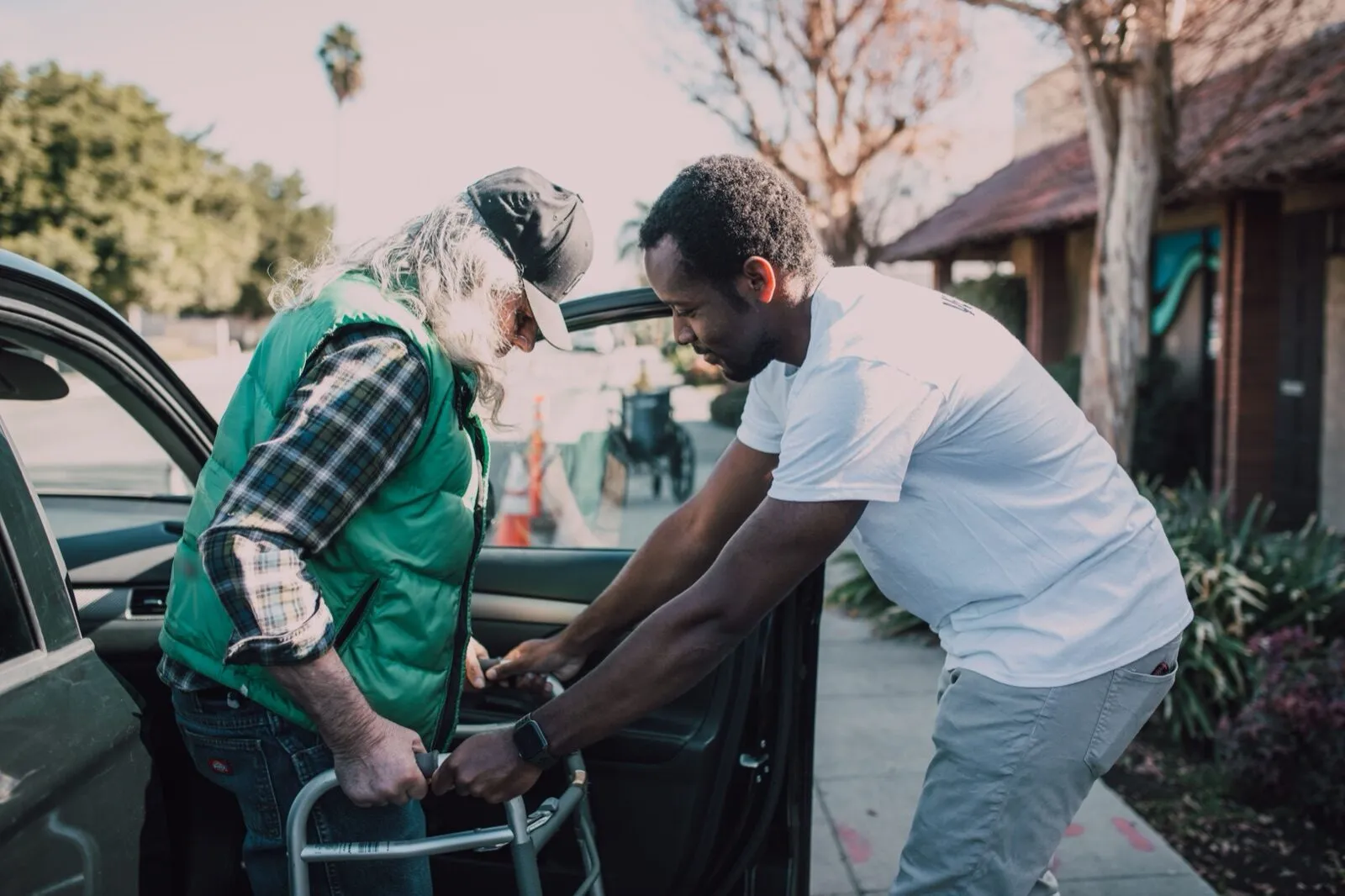
A senior transportation business drives older adults to places Medicaid rides do not cover, such as the grocery store, church, the bank, and family visits. The rider, a family, or a program pays. A NEMT company can run it with the same vans and drivers in the hours between medical trips, once its operating authority and insurance cover private, non-medical rides.
- Senior rides fill the hours your vans sit idle between medical trips, such as the roughly four hours a dialysis rider spends in the chair.
- Check your operating authority first. Virginia's NEMT carrier certificate covers only Medicaid trips paid by Medicaid.
- Personal auto policies usually exclude driving for hire, and your commercial policy must cover private rides before the first one.
- Price from your own costs, file your rates where your state requires a tariff, and never add special charges for riders with disabilities.
- Area agencies on aging, Medicaid waivers, and some Medicare Advantage plans also pay for non-medical senior rides.
Older adults who stop driving still need groceries, church, haircuts, the bank, and time with family. Medicaid rides only reach medical care, so those trips fall to family, friends, or a paid service. A NEMT company already has what a senior ride service needs: accessible vans, trained drivers, and a dispatcher. This guide covers who pays, the permits and insurance to check first, how to price the rides, and how to fit them around your medical trips.
What a senior transportation business does and who pays
A senior transportation business gives scheduled rides to older adults for everyday errands and outings. Many riders use a walker or wheelchair, so the service often includes help at the door or into the building.
The money comes from five places:
| Who pays | What it covers | What to know |
|---|---|---|
| The rider or family | Any trip they book: shopping, worship, salon, social visits, family events | You set the price, subject to any tariff your state requires |
| Area agencies on aging | Rides for people 60 and older, under Older Americans Act supportive services | The agency contracts with local providers. Riders may give voluntarily, but no one is turned away for not giving. |
| Medicaid home and community-based waivers | Non-medical transportation to goals in a participant’s service plan | Separate enrollment, and rides must be authorized in the participant’s service plan. Pennsylvania’s Community HealthChoices waiver bills it per one-way trip (service definitions, January 28, 2026). |
| Medicare Advantage plans | Transportation for non-medical needs, such as grocery shopping and banking, as a special supplemental benefit for chronically ill members | CMS listed it as an allowed benefit in April 2019. The plan decides which members qualify and how rides are booked. |
| Senior living communities and adult day centers | Resident outings and daily routes | A contract with the community, not with each rider |
The Older Americans Act defines an older individual as someone 60 or older (42 U.S.C. 3002(40)). Its supportive services include transportation to reach supportive and nutrition services, and rides an area agency provides with local transportation providers to increase transportation for older people (42 U.S.C. 3030d(a)(2)). See area agency on aging transportation for how those contracts work, and non-medical transportation waiver providers for waiver enrollment.
Private-pay medical rides for seniors are a related but different line of work, covered in private pay NEMT.
Why senior rides fit next to NEMT
The case for adding senior rides is idle time. Medical trips cluster around appointment times, and vans often wait between them.
- Dialysis leaves long gaps. In-center hemodialysis runs on a fixed schedule, usually three times a week (Monday, Wednesday, and Friday, or Tuesday, Thursday, and Saturday), and each session lasts about four hours (NIDDK). A van that drops off a rider has hours before the return.
- Your fixed costs are already paid. Van payments, insurance, and a driver on shift cost the same whether the van moves or not. A ride in a gap earns money against costs you carry anyway.
- The skills match. Your drivers already know transfers, walkers, wheelchair securement, and patience with riders who move slowly. See door-through-door service for the kind of help seniors often need.
Medical trips still come first. Broker work has firm windows. MTM Health’s Virginia handbook (approved August 10, 2026) wants the van at a will-call return within 45 minutes of the call, and on shared rides no member may ride more than 45 minutes longer than the direct travel time. Book senior rides only where they cannot collide with those windows, and keep one van free for will-call returns. Managing will-call trips shows how to plan for them.
Keep private riders off Medicaid runs unless your broker agreement allows it in writing. And never charge a Medicaid member for a ride Medicaid covers: federal rules require providers to accept Medicaid’s payment as payment in full (42 CFR 447.15). A grocery trip is not NEMT, so a Medicaid member can pay for it privately like anyone else.
Check your operating authority before the first paid ride
Many states license companies that carry passengers for pay, and a NEMT permit may not cover private riders. Three examples show how much the rules differ.
Virginia: the NEMT certificate is Medicaid only
Virginia DMV issues a Non-Emergency Medical Transportation Carrier certificate for companies that carry Medicaid members on trips arranged through DMAS, its broker, or a managed care plan’s broker. Its operating rules say the carrier may transport only those members and may be paid only through Medicaid. Private-pay senior rides therefore need a different authority, unless DMV lists the operation as exempt, as it does for trips that start and end inside the same Virginia city or town.
DMV’s Common Carrier, Irregular Routes certificate is for carrying the general public for individual fees within set service areas. As of September 2026 it requires:
| Requirement | Common Carrier, Irregular Routes (Virginia DMV) |
|---|---|
| Rates | A filed tariff with all rates and rider rules, such as your refund policy. You may not charge more than the rates on file. |
| Rate changes | New rates open for public inspection and sent to DMV at least 30 days ahead, and DMV approval |
| Bond | A $25,000 surety bond or letter of credit kept on file for three years |
| Fees | $50 filing fee and a $3 operating authority registration fee per vehicle |
| Insurance | $350,000 for vehicles carrying 1 to 6 people including the driver, $1,500,000 for 7 to 15 |
| Vehicles | Designed to carry 15 or fewer people, including the driver |
| Plates | For-hire plates and for-hire registration |
| Service | No refusing service without good cause, and the certificate number in every advertisement |
Ask DMV’s Motor Carrier Services which authority fits your plan before you apply.
Pennsylvania: a PUC paratransit certificate and a tariff
Pennsylvania’s Public Utility Commission issues certificates for carrying passengers for pay within the state. Its paratransit carrier class (authority types revised September 2022) covers vehicles holding 16 or fewer people including the driver, individual charges, advance reservations, and shared rides. The filing fee is $350. A paratransit carrier cannot start or end a trip at an airport, which takes a separate airport transfer authority. The PUC says applications take about three months on average, it needs an acceptable tariff, and proof of insurance is due within 60 days of approval.
Florida: staying with the rider can be a companion service
Florida defines a companion as someone who spends time with or cares for an elderly, handicapped, or convalescent person and goes with them on trips and outings (2026 Florida Statutes, 400.462(8)). Anyone providing companion services must register with the Agency for Health Care Administration, for $50 every two years (400.509). The definition is about spending time with the person, so if your driver stays with a rider through a shopping trip or outing, ask AHCA whether you need to register.
Check your own state’s motor carrier office, public utility commission, and city taxi rules. The NEMT license requirements guide covers each layer, and operating authority explains the term.
Insurance for private senior rides
Carrying seniors for pay needs commercial coverage, and the policy you bought for broker work may cover only that work.
- Personal auto policies do not work. Most standard personal policies exclude livery, meaning driving for hire, according to the California Department of Insurance. Texas’s insurance department says most personal policies do not cover driving for business (auto guide, updated December 11, 2025).
- Tell your agent before you start. Ask in writing whether your commercial auto policy covers private, non-medical passengers on every listed vehicle, and whether any exclusion limits you to broker trips.
- Carry general liability and abuse and molestation coverage. Modivcare calls sexual abuse and molestation coverage critical for work with vulnerable people. A senior ride service carries the same riders. See abuse and molestation coverage.
- Cover drivers who use their own cars. If any driver takes riders in a personal car, you need hired and non-owned auto coverage, because the driver’s personal policy may exclude the trip.
- Keep workers’ compensation current. Modivcare notes it is required in most states once you have employees, and senior rides add lifting and walking help.
State operating authority can set its own insurance floor, like Virginia’s $350,000 minimum for small vehicles. Your broker contracts may require more. See NEMT insurance requirements.
How to price senior rides
Build every price from your own costs. The method in how much to charge for NEMT works for errands too: an hourly cost for van and driver, a cost per mile, and a margin. Errand rides differ in one way: the driver often waits while the rider shops, so the wait is part of the price.
Pricing options
| Option | How it works | Best for |
|---|---|---|
| Per trip | A base fee plus a rate per mile, each way | Church, salon, and family visits with no wait |
| Hourly block | A set price per hour of van and driver time, with a minimum | Grocery and errand runs where the driver waits |
| Zone round trip | One price for a round trip inside a set area | Regular riders going to the same few places |
| Ride packages | A prepaid set of rides at a fixed price each | Weekly shoppers and standing appointments |
| Group outing | One price for the van, split among riders | Senior center or community trips |
A worked example
These numbers are examples, the same example costs the pricing guide uses: $52 an hour for van and driver and 50 cents a mile to run the van. A rider books a weekly grocery trip. The driver spends 30 minutes driving, waits 60 minutes, and covers 14 miles.
| Part | Example cost |
|---|---|
| Van and driver, 90 minutes at $52 an hour | $78.00 |
| Mileage, 14 miles at $0.50 | $7.00 |
| Total cost | $85.00 |
| Price at a 20% margin (cost ÷ 0.8) | $106.25 |
If the trip fills a gap where you already pay the driver, such as a dialysis session, the only new cost is about $7 in mileage. Most of the $106.25 then covers costs you were carrying anyway. That is the whole reason to add senior rides, but price at full cost so the service still pays when it is not filling a gap.
The IRS business standard mileage rate, 76 cents a mile from July 1, 2026, is one outside check on your cost per mile, but price from your own van’s real costs. Try the NEMT trip price calculator with your numbers.
Rules that shape your prices
- File your rates where the state requires it. Virginia’s irregular route carriers charge no more than their filed tariff, and Pennsylvania paratransit carriers file one with the PUC.
- Do not add special charges for disability. Federal rules bar special charges on riders with disabilities for services the rules require or that are needed to accommodate them (49 CFR 37.5(d)). Before you publish a wheelchair price above your walking-rider price, have a transportation attorney review your price list.
- Split medical and non-medical rides on receipts. IRS Publication 502 lets riders count transportation primarily for and essential to medical care as a medical expense. A grocery trip does not qualify, so list each ride’s date and purpose separately on the invoice.
- Put cancellation and wait rules in writing, and give them to every rider before the first ride.
ADA duties when you serve the public
A company whose business is carrying people must follow the ADA transportation rules for private entities. For a senior service, these matter most:
- No attendant requirement. You cannot require a rider with a disability to bring an attendant (49 CFR 37.5(e)).
- No refusals because of your insurer. You cannot turn a rider with a disability away because your insurance company ties coverage or rates to not carrying such riders (49 CFR 37.5(g)).
- Service animals and oxygen ride along. You must allow service animals and cannot bar a rider from carrying a respirator or portable oxygen, within DOT hazardous materials rules (49 CFR 37.167). See service animals in NEMT.
- Give enough time for riders to board and get off (49 CFR 37.167(i)).
- New vans must be accessible. If you buy or lease a new van for a demand-response service, it must be wheelchair accessible unless your service as a whole already gives equivalent service to riders with disabilities (49 CFR 37.103).
The ADA requirements for NEMT guide covers refusals, securement, and equivalent service in more detail.
Working with aging agencies and other programs
Private pay is the fastest start, but program contracts bring steady volume.
- Area agencies on aging. Use the Eldercare Locator (1-800-677-1116) to find the agency for your county, and ask how it buys transportation. Under federal rules, riders on an Older Americans Act service may be asked for voluntary contributions based on the service’s cost, with no pressure and no denial for not giving (45 CFR 1321.9(c)(2)(x)). A state may also set a sliding-scale cost share for some services, but never for riders at or below the federal poverty level, and no one can be denied a ride for not paying it (45 CFR 1321.9(c)(2)(xi)).
- Running private pay and an aging contract together. Title III money for direct services cannot support a private pay program. Anyone who asks about your private rides and qualifies for the Title III service must be told about that option too, even if it has a waiting list (45 CFR 1321.9(c)(2)(xiii)). Keep the two programs’ books and trip records apart.
- Medicaid waivers. Non-medical transportation is tied to a goal in the participant’s service plan. In Pennsylvania’s Community HealthChoices waiver, it is authorized only after free options such as family, neighbors, and community agencies are used up.
- Medicare Advantage. Under CMS guidance of April 24, 2019, plans may arrange, pay for, or provide transportation for non-medical needs as a special supplemental benefit for chronically ill members who qualify under 42 CFR 422.102(f). See Medicare Advantage transportation for joining plan ride networks.
- Senior living and adult day centers. Outings and daily routes are contract work. See adult day care transportation.
How to add senior rides to your NEMT company
- Find your idle hours. Pull a month of trips and mark every stretch of an hour or more when a van sat between rides.
- Confirm your operating authority covers private, non-medical riders, and apply for what is missing.
- Call your insurance agent and get written confirmation that private rides are covered.
- Write your service rules: service areas, curb-to-curb or door-through-door help, wait limits, cancellation fees, and what drivers may carry.
- Set your prices from your own costs, and file a tariff if your state requires one.
- Set up payment. Take a card at booking or bill monthly, and send receipts that list each ride’s purpose.
- Brief your drivers. Private rides have no broker manifest, so they need your own trip record and the same safety rules.
- Book around medical trips, and keep one van free for will-call returns.
- Tell the people seniors ask: the area agency on aging, senior centers, places of worship, and senior living staff.
- Track senior rides separately in your books, and review after 90 days whether they fill your gaps and pay their way.
Frequently asked questions
Do I need a separate license to drive seniors to non-medical places?
In some states, yes. Virginia's NEMT carrier certificate lets you carry only Medicaid members on trips arranged through DMAS or a broker, paid only by Medicaid, so private rides need another operating authority from Virginia DMV. Pennsylvania's PUC issues paratransit certificates for rides with individual charges by advance reservation. Ask your state's motor carrier office before you take a paying rider.
Will my NEMT insurance cover private-pay senior rides?
Only if your policy covers that use. Personal auto policies usually exclude carrying people for hire, and California's insurance department quotes a typical exclusion for a vehicle used "as a public or livery conveyance." Ask your agent in writing whether your commercial auto, general liability, and abuse and molestation coverage extend to private, non-medical rides, and get the answer before the first ride.
How much should I charge for senior errand rides?
Build the price from your own cost for an hour of van and driver time and a mile of driving, then add your margin. Errand trips often include waiting while the rider shops, so price the wait too. With example costs of $52 an hour and 50 cents a mile, a 90-minute, 14-mile grocery trip prices at $106.25 with a 20% margin.
Can I carry a private-pay senior on a van with Medicaid riders?
Check your broker agreement first. Brokers set ride-time limits, such as MTM Health's Virginia rule of direct travel time plus 45 minutes, and their manifests list who rides. The simple way is to keep private rides in their own time blocks. Never charge a Medicaid member for a ride Medicaid covers: federal rules require Medicaid providers to accept Medicaid's payment as payment in full.
Can an area agency on aging pay my company for senior rides?
Yes, if it contracts with you. Older Americans Act supportive services include transportation for people 60 and older, and area agencies buy it from local providers. Riders may be asked for voluntary contributions, but no one can be denied a ride for not giving. Find your agency through the Eldercare Locator at 1-800-677-1116.
Do ADA rules apply to a private senior ride service?
Yes. A private company whose business is carrying people cannot require a rider with a disability to bring an attendant, add special charges for services the rules require, or refuse a service animal or portable oxygen. If you buy or lease a new van for a demand-response service, it must be wheelchair accessible unless your service as a whole already gives equivalent service.