Compliance
Service Animals in NEMT in 2027: What Drivers May Ask and When an Animal Can Be Refused
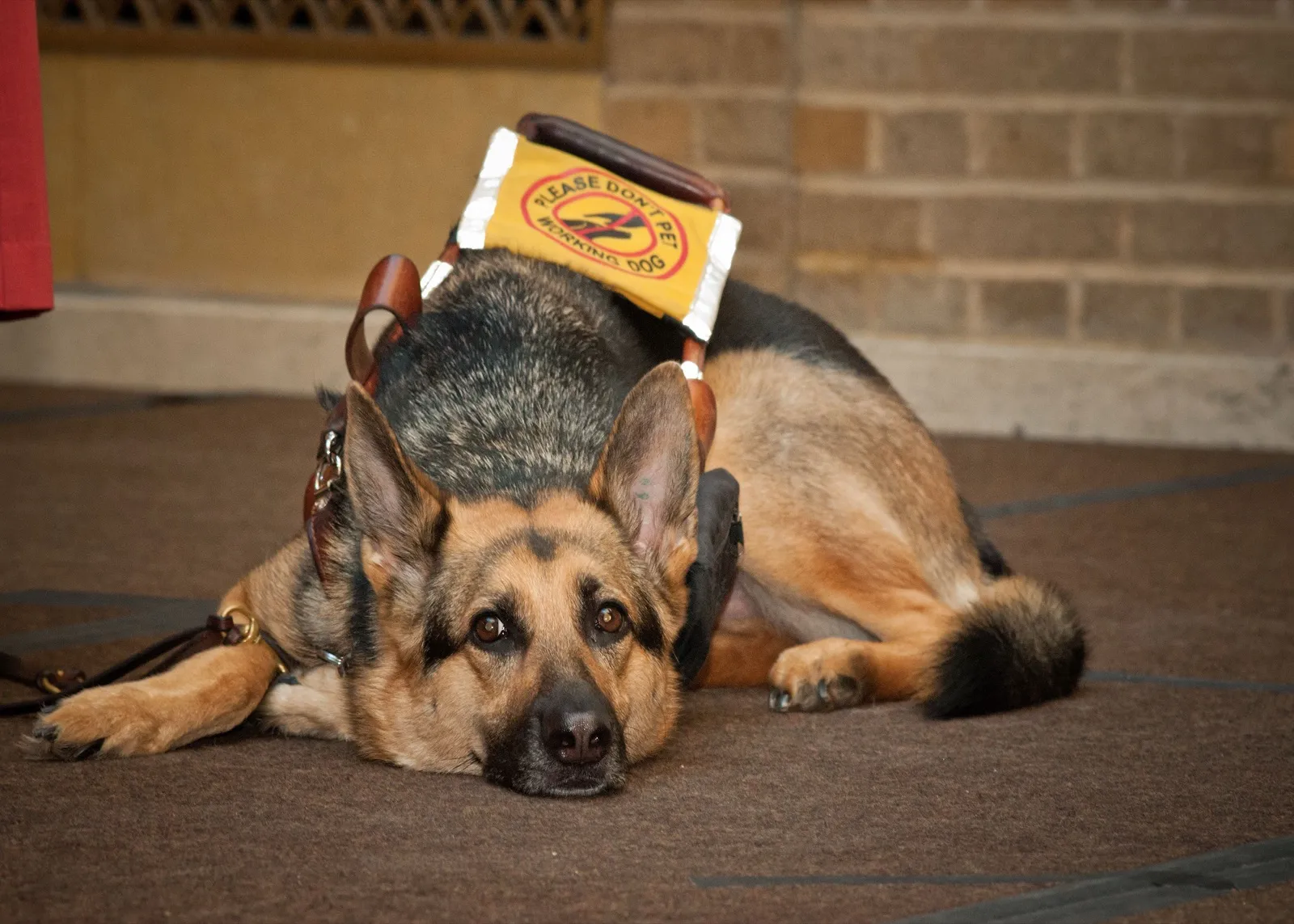

On a NEMT ride, a service animal is any animal individually trained to do work or perform tasks for a rider with a disability, and federal rules require letting it ride. When its job is not obvious, a driver may ask only two questions. You may refuse it only if it is out of control, not housebroken, or a direct threat, never for allergies or missing papers.
- Federal transportation rules cover any animal individually trained to do work or perform tasks for a person with a disability, not only dogs.
- Drivers may ask two questions only: is the animal required because of a disability, and what work or task has it been trained to perform.
- You may not ask for an ID, vest, certificate, or proof of training, and you may not charge extra for the animal.
- An animal can be refused only when it is out of control, not housebroken, or a direct threat. Allergies and fear are never reasons.
- Emotional support animals are not service animals under federal rules. Whether you carry one is your policy and your broker's.
A rider walks out with a guide dog, a seizure alert dog, or a dog that steadies them when they stand. Your driver needs to know in seconds what to say and what not to say. The rules come from the U.S. Department of Transportation’s ADA regulations, not from Medicaid, so they apply to every ride you give, whoever pays for it.
What counts as a service animal on a NEMT ride
The Department of Transportation (DOT) defines a service animal as “any guide dog, signal dog, or other animal individually trained to work or perform tasks for an individual with a disability” (49 CFR 37.3). Its examples include guiding a person with impaired vision, alerting a person with impaired hearing, pulling a wheelchair, and fetching dropped items. Every transportation company, public or private, must let service animals ride with their users (49 CFR 37.167(d)).
DOT’s interpretation says service animals “shall always be permitted to accompany their users in any private or public transportation vehicle or facility.” It says most are dogs, and that other animals, such as monkeys, are sometimes used too.
Three points trip up drivers:
- Training, not a certificate, makes a service animal. The Federal Transit Administration’s ADA circular (C 4710.1, November 4, 2015) says the training can come from an organization or from the rider.
- Hidden disabilities count. An animal trained to warn of a seizure, or to remind a person with depression to take medication, is a service animal.
- Comfort alone does not count. FTA says an animal whose only job is emotional support or comfort does not meet DOT’s training-based definition.
You will hear different rules elsewhere, because three federal definitions apply in three places:
| Rule | Where it applies | Which animals count |
|---|---|---|
| DOT ground transportation, 49 CFR 37.3 | Your vans, cars, and any transportation company | Any animal individually trained to do work or perform tasks for a person with a disability |
| Justice Department, 28 CFR 36.104 and 36.302(c)(9) | Clinics, stores, and other businesses open to the public | Dogs only, plus trained miniature horses where reasonable |
| DOT air travel, 14 CFR 382.3 | Airlines | Dogs only since January 11, 2021. Emotional support animals and animals in training do not count. |
FTA notes that the Justice Department narrowed its definition in 2010 but DOT’s did not change. So an animal your van must carry may not count as a service animal inside the building you drop the rider at. For how the ADA reaches NEMT companies in general, see ADA requirements for NEMT.
What drivers may ask, and what they may not
Private transportation companies follow the Justice Department’s service animal rules through 49 CFR 37.5(f). Under 28 CFR 36.302(c)(6), staff may ask two questions, and only when the animal’s job is not obvious:
- Is the animal required because of a disability?
- What work or task has the animal been trained to perform?
If the answers are yes and a task, the animal rides. FTA gives transit drivers the same two questions.
| A driver may | A driver may not |
|---|---|
| Ask the two questions when the animal’s job is not obvious | Ask about the rider’s disability or diagnosis |
| Ask the rider to keep the animal leashed and under control | Ask for an ID card, vest, certificate, license, or proof of training |
| Ask that the animal ride on the floor, out of the aisle | Ask the animal to show its task |
| Ask the two questions about each animal if there are two | Ask anything when the job is obvious, such as a dog guiding a rider who is blind |
The Justice Department’s FAQ (last updated February 28, 2020) adds that service animals do not have to wear a vest, tag, or special harness. Certificates and registrations sold online “do not convey any rights under the ADA.” A rider with no paperwork is not a reason to question the animal.
A short script helps drivers stay inside the rules: “Is your dog a service animal you need because of a disability? What task is it trained to do? Thank you, please have it settle at your feet.” Teach it in NEMT driver training.
When a service animal can be refused
The list of valid reasons is short. Under 28 CFR 36.302(c)(2), you may ask to remove a service animal only if it is out of control and the handler does not take effective action to control it, or if it is not housebroken. FTA adds that an animal that poses a direct threat to the health or safety of the driver or other riders may be refused. A dog that bites is one example.
| Valid reasons to refuse the animal | Not valid reasons |
|---|---|
| It is out of control and the handler does not act to control it | The driver or another rider has allergies |
| It is not housebroken | The driver is afraid of dogs, or objects for religious reasons |
| It poses a direct threat, such as biting or lunging | Its breed, or assumptions about how that breed behaves |
| It has no vest, ID, or certificate | |
| It barked once, or barked because someone provoked it | |
| Your company has a no-pets rule |
FTA guidance, the Justice Department, and Modivcare’s service animal policy all rule out allergies. The Justice Department and Modivcare also rule out fear, and Modivcare rules out religious objections. The Justice Department’s FAQ rules out breed and a single bark.
If you properly exclude an animal, you must still offer the rider the service without it (28 CFR 36.302(c)(3)). In practice, ask the rider how they want to go ahead, call the broker before you leave, and never leave the rider stranded. Write down what the animal did, who decided, and when you told the broker on the incident report form. A rider’s own conduct is a separate question, covered in difficult or unsafe riders.
Where the animal rides and who looks after it
The handler keeps control. The animal must have a harness, leash, or other tether, unless the rider’s disability prevents using one or it would get in the way of the animal’s work. Then the rider controls it by voice, signals, or other effective means (28 CFR 36.302(c)(4)).
- On the floor, out of the way. In complaint 15-0117 (March 31, 2015), FTA found that a transit agency’s rule that service animals stay in a sit or down position, out of the aisle and off the seats, did not conflict with DOT’s rules. The Justice Department’s FAQ says the dog generally stays on the floor or is carried.
- Clear of the lift and tie-downs. For a wheelchair rider, keep the animal out of the lift path and securement area while you load, then let it settle beside the chair.
- Care is the rider’s job. DOT’s own example says a passenger’s request that the driver take charge of a service animal may be denied. Caring for it is the job of the passenger or a personal care attendant (Appendix E to part 37, example 15). A company is not responsible for a service animal’s care or supervision (28 CFR 36.302(c)(5)).
- More than one animal is allowed. FTA says 37.167(d) sets no limit, and different animals may do different tasks.
- Shared rides. Another rider’s allergy does not remove the right to ride. Seat the two riders as far apart as the vehicle allows, or plan separate rides at booking.
Stretcher rides need planning, because floor space is tight. The Justice Department’s FAQ says a service animal should generally be allowed to ride in an ambulance with its handler. If the ambulance is crowded and the dog would interfere with treatment, staff should arrange other transportation for the dog. Settle the plan with the broker when the ride is booked.
Booking, fees, and who pays
Ask at booking. FTA says demand-response services may ask riders to tell them ahead of time that they will ride with a service animal, so there is room for it. Georgia’s NEMT manual (version date July 1, 2026) has members tell the broker about special needs, such as a service animal, when they request a trip. Add the question to your trip request form and copy the answer onto the driver’s manifest. Asking ahead is for planning. It is never a reason to turn away an animal that shows up unannounced.
Never charge for the animal. You may not impose special charges on riders with disabilities for services the rules require (49 CFR 37.5(d)). DOT’s interpretation says charging extra to carry a service animal is inconsistent with the rule. The Justice Department’s rule bars any surcharge, even if you charge pets a fee. You may bill for real damage only if you normally charge every rider for damage they cause (28 CFR 36.302(c)(8)). Modivcare’s policy lists improper cleaning fees among the complaints riders can file.
Who pays for the space. On broker and Medicaid trips, the payer sets your rate. Texas is one example of paying for the animal’s space. Its NEMT Services Handbook (UMCM 16.4, version 2.0.1, effective August 1, 2021) says:
| Texas Medicaid health plan rule | What it means for you |
|---|---|
| NEMT providers must let a service animal accompany the member | The animal rides, as under federal rules |
| An approved service animal’s space is paid at the area’s adult attendant rate, if applicable | You are paid for the seat it fills |
| The animal counts as an attendant when trips are reported | Report it the way your plan’s guide says |
| No meals or lodging for a service animal | Meals and lodging go only to human attendants |
| If a documented, medically necessary animal is not available, the trip is canceled | The member does not have a support they need |
| The provider does not monitor or care for the animal during the visit | The rider or attendant keeps it |
See the Texas state guide for the rest of the Texas rules, and escorts and caregivers on NEMT trips for how attendants are handled.
Emotional support animals, pets, and animals in training
Emotional support animals are not service animals under DOT’s rules or the Justice Department’s. The Justice Department’s FAQ explains the line: a dog trained to sense an anxiety attack and take a specific action to help is a service animal, but a dog whose presence alone brings comfort is not.
That does not mean you must turn every other animal away. FTA says nothing in DOT’s rules stops a transit provider from choosing to accommodate pets and comfort animals, and that the choice is a local one. For NEMT, decide your own policy and write it down, but check your broker contract and state law before you carry a pet on a broker trip. The Justice Department notes that some state and local laws allow emotional support animals in public places.
Animals in training are not service animals under the ADA, because the dog must already be trained (ADA FAQ, question 6). Some states protect them anyway. Florida gives a trainer working with a service animal the same access rights as a person with a disability who uses one.
State laws and broker rules that add to the ADA
State law and your broker contracts can add duties and penalties on top of the federal rules. Examples from the rules in force in September 2026:
| Where | What it adds |
|---|---|
| Florida, section 413.08 (2026 Florida Statutes) | Treats motor vehicles and other public transportation as public accommodations, and limits access rights to dogs and miniature horses. Allergies and fear are not valid reasons to refuse. Denying or interfering with a rider’s access is a second-degree misdemeanor with 30 hours of community service, and so is knowingly and willfully misrepresenting yourself as using a service animal. |
| New Jersey, N.J.A.C. 8:40-4.12 | Licensed mobility assistance vehicles and BLS ambulances must permit guide, service, hearing, and companion dogs trained to assist a rider, where their presence is needed for their duties |
| New York Medicaid transportation manual (effective August 25, 2023) | Defines service animals as dogs trained for tasks and says dogs whose only job is comfort do not qualify |
| Modivcare service animal policy | A provider that knowingly refuses a rider because of a service animal is permanently suspended from the network. Complaints that plausibly allege more than one refusal or act of mistreatment lead to the driver’s permanent removal. |
| MTM Health transportation provider agreement (January 1, 2023 version posted by Pennsylvania) | Section 3.H requires drivers to allow service animals as the ADA requires |
New Jersey’s rule speaks of dogs trained by a recognized agency or school, and Florida’s access rights cover dogs and miniature horses. DOT’s rule for vehicles is broader: it covers any trained animal, including one the rider trained, and it requires no proof of training. Train drivers to the federal rule, and see the New Jersey and Florida state guides for each state’s other requirements.
How to train drivers and handle complaints
DOT requires every transportation company to train staff to proficiency, so they treat riders with disabilities in a respectful and courteous way (49 CFR 37.173). It also requires you to name at least one person to coordinate ADA compliance, and to publish a complaint process with that person’s name, address, phone number, and email (49 CFR 37.17).
Refusing a service animal carries real costs. A rider can file a complaint with the Justice Department or sue in federal court. In a Justice Department case, a court can assess civil penalties of up to $118,225 for a first violation and $236,451 for a later one, the amounts for penalties assessed after July 3, 2025 (28 CFR 85.5). A broker can also drop you from its network.
- Write the policy. Put the definition, the two questions, the valid refusal reasons, and the no-fee rule in your policies and procedures.
- Train every driver and dispatcher. Practice the two-question script and the refusal table. Record it on the driver training log.
- Ask at booking. Note the animal on the trip request and the manifest, so dispatch sends a vehicle with room.
- Plan around driver allergies. Handle a driver’s allergy by assigning another driver ahead of time, never by refusing the ride.
- Carry a towel or mat. A clean floor spot helps the animal settle. Cleaning up hair afterward is a normal cost of the ride, not a fee to pass on.
- Report every refusal. Call the broker right away and complete an incident report the same day.
- Answer complaints fast. Log each one on the complaint log and respond in writing. See handling rider complaints filed with a broker.
Frequently asked questions
Can a NEMT driver refuse a service dog because of allergies?
No. Federal Transit Administration guidance says other riders' or staff's allergies are not grounds for denying service to a person with a service animal, and the Justice Department says the same about allergies and fear of dogs. Modivcare's service animal policy (as of September 2026) bars drivers from refusing for allergies, religious objections, or fear of animals. If a driver has a severe allergy, assign another driver before the ride.
What can a driver ask a rider with a service animal?
Only two things, and only when the animal's job is not obvious: is the animal required because of a disability, and what work or task has it been trained to perform. Drivers may not ask about the rider's disability or ask for documentation or an ID (28 CFR 36.302(c)(6)), and the Justice Department's guidance adds that they may not ask the animal to show its task. If the dog is plainly guiding a rider who is blind, drivers should not ask at all.
Do emotional support animals have to be allowed in NEMT vehicles?
Not under federal rules. FTA guidance says an animal whose only job is emotional support or comfort does not meet the Department of Transportation's training-based definition of a service animal. A company may choose to allow pets and comfort animals, but check your broker contract and state law first. A dog trained to sense an anxiety attack and act to lessen it is a service animal, not an emotional support animal.
Can I charge extra to carry a service animal?
No. Federal rules bar special charges on riders with disabilities for services the rules require (49 CFR 37.5(d)), and the Department of Transportation says charging extra to carry a service animal is inconsistent with that rule. No deposit or pet fee either. You may charge for real damage the animal causes only if you normally charge all riders for damage they cause (28 CFR 36.302(c)(8)).
Does the driver have to hold or watch the animal during the appointment?
No. The Department of Transportation's own example says a passenger's request that the driver take charge of a service animal may be denied, because caring for it is the job of the passenger or a personal care attendant. The Justice Department's rules say a business is not responsible for a service animal's care. Texas's NEMT handbook says the provider does not monitor or care for the animal during the visit.
Can a service animal be something other than a dog?
In the vehicle, yes. The Department of Transportation's definition in 49 CFR 37.3 covers any guide dog, signal dog, or other animal individually trained for a person with a disability, and its guidance mentions monkeys. The Justice Department's rules for buildings open to the public cover dogs, plus trained miniature horses where reasonable. Under the airline rule, only dogs have counted as service animals since January 11, 2021.
Does Medicaid pay for the space a service animal takes up?
In some programs. Texas Medicaid health plans pay the provider for the space an approved service animal occupies at the adult attendant rate for the area, if applicable, and treat the animal as an attendant when trips are reported (UMCM 16.4, version 2.0.1). A service animal never gets the meals or lodging an attendant can. Ask your broker how it pays when a service animal rides.
Official resources
- ADA.gov: ADA Requirements, Service Animals
- ADA.gov: Frequently Asked Questions about Service Animals and the ADA
- ADA.gov: File a complaint with the Justice Department
- eCFR: 49 CFR part 37, Transportation services for individuals with disabilities
- FTA: Circular C 4710.1, ADA Guidance (section 2.6, service animals)
- Modivcare: Service Animal Policy for transportation providers