Operations
How to Prevent Passenger Falls in NEMT in 2027: Curbs, Steps, Lifts, and Reporting
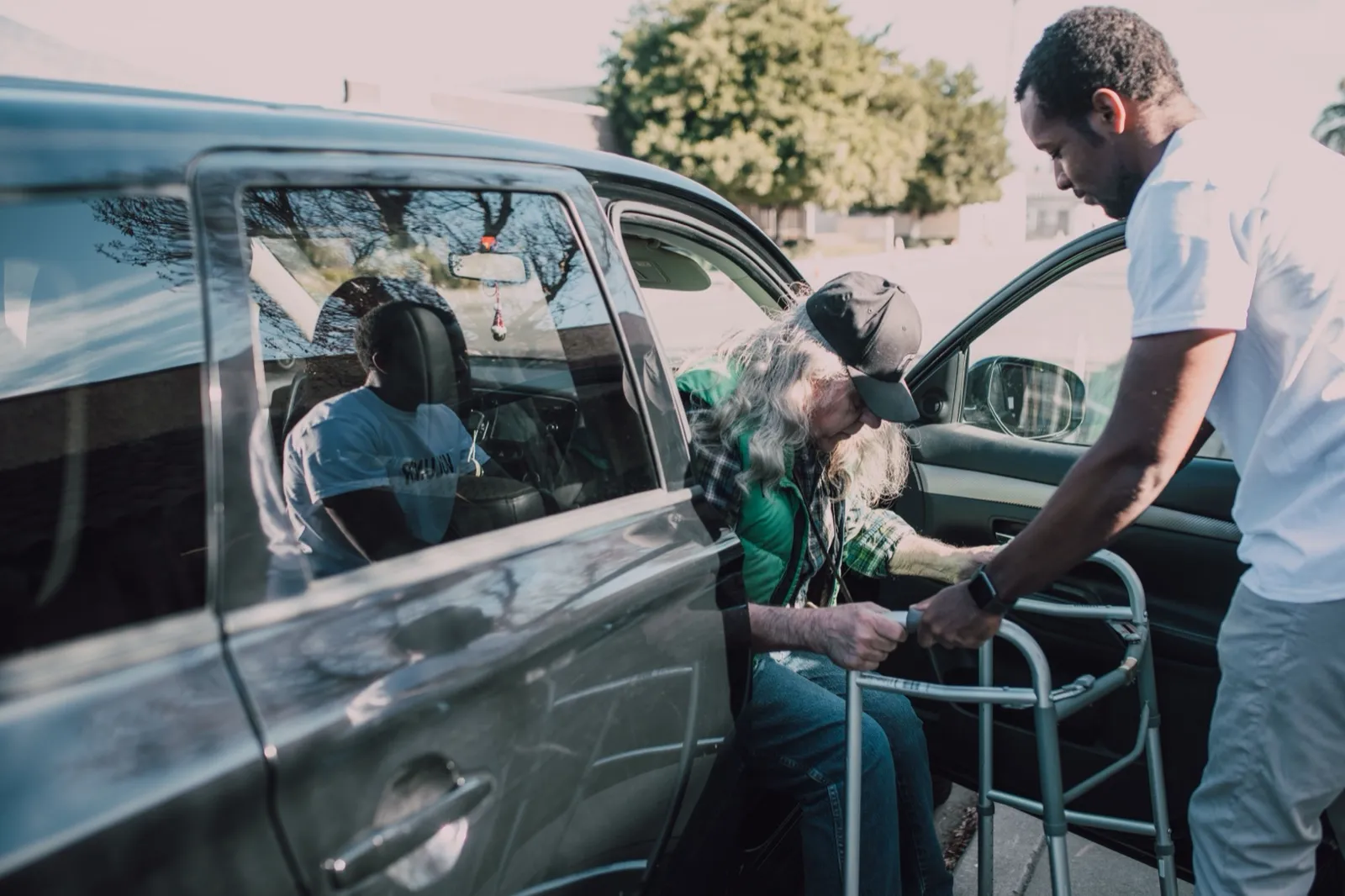
To prevent passenger falls, guard riders at the moments they fall: stepping off curbs and home steps, climbing into the van, riding a lift or ramp, and standing up after treatment. Park close on level ground, use a sturdy step stool, keep everyone seated and belted until the van stops, and let dizzy riders sit first. Report every fall to the broker right away.
- More than one in four adults 65 and older falls each year, and one fall doubles the chance of another (CDC, September 2026).
- Watch the changes in level: the curb, the home steps, the van step, and the edge of a lift or ramp.
- Georgia Medicaid and Verida in Tennessee require a retractable step or a sturdy metal step stool, 8.25 inches high, on vehicles with a step up, and ban milk crates.
- Keep every rider seated and belted until the van stops. Many cannot brace themselves for a sudden stop.
- Report a fall right away, even with no injury. Modivcare and MTM Health in Rhode Island want the written report within 24 hours.
Most of a NEMT ride is spent sitting down. The risky minutes come at either end: on the path to the van, at the curb, on the van step, on the lift, and in the first seconds after a rider stands up. Each of those moments has a habit that makes it safe, and each fall that happens anyway has a report you owe the broker.
Where passenger falls happen on a NEMT ride
Falls are common among the people you carry. The CDC says more than one in four adults 65 and older falls each year, and falling once doubles the chance of falling again (page updated September 4, 2026). Older adult falls lead to about 4.5 million emergency department visits a year. Falls are also the most common cause of traumatic brain injury in older adults.
Less than half of older adults who fall tell their doctor, the CDC says. On a ride, the driver may be the only one who saw it. That is one more reason to report every fall, even a small one.
A ride has the same danger points every time. Each one is a change in level, a change in position, or a moment when the rider is moving and you are not beside them.
| Moment on the ride | What goes wrong | The habit that prevents it |
|---|---|---|
| The walk from the door to the van | Uneven paths, wet leaves or ice, a dark porch, a rider hurrying | Walk beside the rider, close enough to steady them, at their pace |
| Stepping off or onto a curb | The rider misjudges the height, often with bifocals on | Pull up tight to the curb and name the edge out loud |
| Climbing into the van | A high first step, a wobbly stool, a hand on a swinging door | A sturdy stool on firm ground and a hand on a fixed grab handle |
| The lift or ramp | A wheel rolls off the edge, or a standee loses grip | Barriers up, both hands on the rails, the platform level with the floor |
| Inside the moving van | Standing before the stop, a belt on the floor, hard braking | Seated and belted before you move, smooth stops |
| At the destination | A dizzy rider stands too fast, or is left alone at the curb | Let the rider sit first, and walk them in when the trip calls for it |
The rest of this guide takes these in order.
Which riders are most likely to fall
The CDC lists the conditions that make a fall more likely: lower body weakness, trouble with walking and balance, vision problems, foot pain or poor footwear, not enough vitamin D, and medicines such as tranquilizers, sedatives, or antidepressants. Some over-the-counter medicines affect balance too. Most falls come from a mix of these, and the more a person has, the higher the risk.
Three kinds of riders need extra attention:
- Dialysis riders on the way home. NIDDK says standard hemodialysis can leave people tired or washed out for several hours, and that low blood pressure from treatment can make them faint or more likely to fall. See dialysis transportation.
- Riders who get dizzy when they stand. The CDC’s postural hypotension brochure (2017) says blood pressure can drop when a person sits up or stands. Symptoms can come on when they stand up suddenly, in the morning, after a large meal, or when they are ill. It links the condition to some diuretics, antidepressants, and blood pressure medicines, to Parkinson’s disease and some types of dementia, to dehydration, and to long bed rest. That last one describes many hospital discharge riders.
- Riders on blood thinners. The CDC warns that head injuries from falls can be very serious for people taking certain medicines, such as blood thinners.
You do not need a rider’s medical history to drive them safely. What you need is a note on the trip about what matters for the ride, such as “uses a walker,” “dizzy after dialysis,” or “four steps at home, rail on the left.” Ask dispatch to keep those notes on every repeat trip.
Curbs, paths, and the walk to the van
Park where the rider does not have to cross the street
Where you stop decides how far the rider walks and what they step over. MTM Health’s Virginia handbook (approved August 10, 2026) says drivers park where passengers can reach the entrance safely without crossing streets whenever possible. It assigns infraction points for failing to park in a safe place for loading and unloading.
Pull in close to the curb so the rider steps onto it, not down into the street. At a house, stop where the path to the door is shortest and flattest, even if that means a longer walk for you.
Guard the rider, even if you are not holding them
New York’s Medicaid manual (effective August 25, 2023) gives a useful definition of hands-on help. Personal assistance means physically helping the rider walk, climb or go down stairs, ramps, curbs, and other obstacles, and removing obstacles in the way. It includes touching the rider or, if they prefer not to be touched, staying close enough to prevent an injury from a sudden loss of balance.
That is the habit to teach: stay within arm’s reach on every change in level.
- Walk at the rider’s pace. Rushing to make the next pickup is when drivers step away too early.
- Keep the walker or cane in front of the rider, and have it ready before they stand, not after.
- Clear the path. Move a garden hose, a toy, or a folded wheelchair out of the way before the rider starts walking.
- Say what is coming. The CDC says bifocal or progressive lenses can make things look closer or farther away than they are, so name the curb and the step before the rider reaches it.
- Look at the shoes. Loose slippers and worn soles slip. If the rider is willing to change, give them the minute it takes.
Weather and light
Minnesota’s training rule for special transportation drivers (Minnesota Rules 8840.5910) requires practice handling wheelchairs on uneven, wet, or icy surfaces. Every driver needs that skill, in any state. Salt or sand the path yourself if you carry it, and never let a rider cross ice alone. The bad weather policy guide covers when to stop running trips.
Light matters at dawn dialysis runs and evening discharges. The ADA rule for accessible vans and buses (49 CFR 38.31) requires outside lights that put at least 1 foot-candle on the street for 3 feet out from the bottom step or lift edge when the door is open. MTM Health’s Virginia handbook requires vehicles to meet these ADA specifications (49 CFR part 38, subparts A and B). Keep the door lights working, and carry a flashlight for dark porches.
Steps at home and at the clinic
How far you go with the rider depends on the level of service on the trip. Read it on the manifest before you arrive.
| Level of service | What the driver does | Where the rule comes from |
|---|---|---|
| Curb to curb | Opens doors, helps the rider in and out of the vehicle, folds the mobility device. No lifting. The driver stays at or near the vehicle and does not enter buildings. | MTM Health Virginia handbook (2026), Verida manual for BlueCare Tennessee (October 2026) |
| Door to door | Helps the rider between the vehicle and the door of the home or destination. No lifting. In Virginia, drivers other than ambulance and stretcher van crews do not enter a residence. | MTM Health Virginia handbook (2026) |
| Door through door | Enters the home and the medical office with the rider, from inside one to inside the other | Rhode Island’s contract with MTM Health (effective July 1, 2025) |
| Hand to hand | Hands the rider to a named person at the destination. The rider is never left alone. | CareOregon manual (February 2024), MTM Health Virginia handbook (2026) |
The names do not mean the same thing everywhere. CareOregon’s manual (version 1.3, February 2024), a set of guidelines it offers the ride brokerages serving its Oregon members as a template for their providers, defines door to door as walking the rider to the waiting area inside. MTM Health’s Rhode Island handbook lists door through door as its own level, and New York’s Medicaid manual uses door through door to mean personal assistance. Go by the definitions in your own broker’s manual.
Stairs
Stairs are where the rules differ most. CareOregon’s manual says drivers help riders with stairs when needed or asked, but may not physically assist or carry a rider up or down them, and must tell the NEMT manager when that is the case. MTM Health’s Virginia provider page (September 2026) says drivers may not carry a member or their wheelchair up or down steps. New York goes the other way for ambulettes: Medicaid sets no limit on the stairs or floors a crew must climb to give personal assistance, from the rider’s apartment door or nursing home room. It also warns that the state’s Medicaid Inspector General has found ambulette services that did not give that help, and that providers can be sanctioned for it.
If a rider cannot manage the stairs with you guarding them, stop. Call dispatch for a stair chair, a second crew member, or a stretcher van. For the hands-on moves themselves, see passenger transfer techniques.
Look at the steps before the rider does
The CDC’s home safety checklist (2017) names the stair hazards that cause falls: objects left on the steps, broken or uneven steps, no light at the top and bottom, and loose handrails or a rail on only one side. Check for them before the rider starts down. If the same hazard is there every week, add it to the rider’s trip notes, and tell the family or facility. The checklist is free to hand out.
Getting in and out of the van
The first step into a van is often higher than any step at home. Georgia’s NEMT manual (July 1, 2026) and Verida’s manual for BlueCare Tennessee (October 2026 edition) set the same rule for vehicles that need a step up to enter:
- A retractable step, or a step stool the program approves. Tennessee also allows a running board installed to the maker’s directions.
- The stool: four legs with anti-skid tips, sturdy metal with a non-skid tread, 8.25 inches high, 15 inches wide, and 14 inches deep, or an equal replacement.
- No substitutes. Both manuals say a milk crate or anything like it is never acceptable.
Verida’s Tennessee manual adds two more floor rules. The floor must be commercial anti-skid ribbed rubber or carpet, and seat belts must be stored off the floor when not in use, where they cannot catch a foot. The ADA rules for accessible vans and buses ask for the same things: slip-resistant steps and floors, a contrasting color band along every step edge (49 CFR 38.25), and handrails at the entrance that a rider can grab from outside the vehicle (49 CFR 38.29).
A safe step in and out
- Set the stool on firm, level ground, square to the door. Never on a slope, grass, or ice.
- Have the rider hold a fixed grab handle, not the door, which can swing.
- Stand close behind and to the side, within arm’s reach, while the rider steps up one foot at a time.
- Seat first, then legs. Once the rider sits, they bring their legs in. Then buckle them.
- On the way out, set the stool before the rider moves, and have the walker or cane in place before they stand.
- Pick the stool up as soon as the rider is clear, so no one trips on it.
Lifts and ramps
The federal ADA rule on lift use, 49 CFR 37.165, sets the standard: staff help riders use lifts, ramps, and securement systems when needed or asked, and leave their seats to do it. It also lets riders with disabilities who do not use wheelchairs, including standees, use the lift or ramp.
ADA lifts must fit riders who use walkers, crutches, canes, or braces, and lifts and ramps are built to stop the falls that used to happen on them (49 CFR 38.23):
| Part | What the rule requires | What the driver checks |
|---|---|---|
| Lift outer barrier | Stays raised or closed whenever the platform is occupied and more than 3 inches above the ground | It rises every cycle. If it does not, the lift is out of service. |
| Lift inner barrier | Keeps a wheelchair from rolling off the vehicle side until the platform is fully raised | The rider does not move until the platform stops at floor level |
| Side barriers | At least 1.5 inches high on a lift, 2 inches on a ramp | Nothing bent or missing |
| Lift handrails | On both sides, moving with the platform, 30 to 38 inches above it | A standee holds both rails for the whole ride up or down |
| Ramp slope | No steeper than 1 in 4 when deployed to the ground | Deploy to the curb when you can, for a gentler slope |
| Ramp attachment | Firmly attached, with no gap over 5/8 inch | The ramp does not shift under a heavy power chair |
| Stowed ramp | Stored so it cannot hit a passenger in a sudden stop | It is latched before you drive |
Federal lift standard FMVSS 403 adds a warning signal. It must go off when the platform is more than 1 inch below the vehicle threshold while a person or mobility aid is on the threshold area (49 CFR 571.403). A lift for public use must have a warning you can both see and hear. Treat that signal as a stop sign: nobody steps or rolls toward the threshold until the platform is level.
Park the van on level ground before you deploy anything. Check the lift before your first trip and log it on the wheelchair lift inspection log. For choosing between the two, see wheelchair ramp vs lift, and for riders who stay in their chair, see wheelchair securement.
Inside the moving van
Riders fall inside vans too, usually when they stand before the van stops or when the driver brakes hard. Broker and state rules read alike on this:
- MTM Health, Virginia (2026). Seat belts stay fastened at all times while the vehicle moves. The driver helps any passenger who cannot buckle. The vehicle does not move until every belt is fastened. The handbook assigns infraction points when a vehicle does not stay stopped until the passenger is secure.
- Georgia (July 1, 2026). Drivers help passengers get seated and buckled, and confirm that every passenger is belted and every wheelchair is secured before the vehicle moves.
- New York (August 25, 2023). Passengers keep their seat belts buckled while inside the vehicle, and the driver helps anyone who cannot buckle their own belt, if asked.
Minnesota’s training rule explains why smooth driving matters. Drivers must learn that passengers may have balance or mobility problems and may not be able to grab railings or brace themselves for sudden stops, sharp turns, or other abrupt moves. Modivcare’s incident form lists harsh braking as its own reportable event.
Tell riders to stay seated until the van has stopped and you have opened their door. Leave more room behind the car ahead than you would alone, so you rarely need to brake hard.
At the destination
Georgia’s manual says drivers confirm, before they leave, that the passenger is inside the destination. MTM Health’s Virginia handbook says members are escorted safely inside before the driver departs. On a hand-to-hand trip, neither CareOregon’s manual nor MTM Health in Virginia lets the rider out of the driver’s care until they are handed to a person at the facility or home. A rider with dementia left alone at a curb can walk off and fall where no one sees it.
The return trip from dialysis or a procedure is when riders are weakest. The CDC’s postural hypotension brochure gives the steps to follow when a rider stands:
- Sit up first, then pause at the edge of the seat before standing.
- Move the feet up and down and squeeze the hands a few times before standing, or march in place once up.
- Take your time changing position.
- Have something to hold when you stand up.
- Do not walk while dizzy. Sit back down and wait.
If a rider is still dizzy after a few minutes, tell the clinic staff before you load them. It is better to wait at the chair than to catch someone on the van step.
If a rider falls: what the driver does
NIOSH’s safe patient handling curriculum (Publication 2009-127) says the sudden high effort of stopping a patient from falling carries a high risk of injury for the caregiver. For heavy patients it says that in most cases there is very little the caregiver can do to stop the fall, and the job becomes protecting the person. Train drivers on these steps:
- Do not try to catch the full weight. Lower the rider to the nearest flat surface, such as the seat or the ground, as MedlinePlus advises (reviewed October 19, 2025), and protect their head.
- Move objects out of the way that could hurt them, such as the stool or a door edge.
- Keep the rider still and check for injury. Ask about pain and whether they hit their head.
- Do not lift the rider off the ground by hand. NIOSH lists lifting a patient from the floor as a task that puts the caregiver at risk when done alone. Its guidance says a person who cannot help get up needs a floor-based lift and two or more caregivers, and that a caregiver lifting more than 35 pounds of a patient’s weight should use a device instead. Most van crews carry no floor lift, so keep the rider still and comfortable and wait for help.
- Call 911 if the rider is hurt, hit their head, or cannot get up. CareOregon’s manual tells providers to call 911 when an emergency needs an ambulance, tell brokerage dispatch right away, and send a written report within 24 hours. The medical emergency guide covers the rest.
- Call dispatch. Verida’s Tennessee manual requires drivers to tell the provider immediately, the provider to tell Verida immediately, and other transportation to be arranged if needed.
- Offer medical care and record the answer. The CDC says an older adult who hits their head should see a doctor right away. Modivcare’s form records whether treatment was offered and whether the member accepted or refused it.
- Tell the person receiving the rider, such as the clinic front desk or a family member, and note their name. Modivcare’s form asks for it.
- Save the evidence. Photograph the spot, keep any dash camera video, and get witnesses’ names. Modivcare’s form warns that losing records, photos, or video after an incident, even by accident, can bring court sanctions if it becomes a lawsuit.
What to report after a fall, and by when
Report every fall, even when the rider says they are fine. Deadlines come from your broker contract or your state:
| Program | Deadline | What it covers |
|---|---|---|
| Modivcare (form, August 2022 version) | Written report within 24 hours | Any transportation event, with or without injury, including falls inside and outside the vehicle and incidents while loading or unloading |
| MTM Health, Rhode Island (updated July 1, 2026) | Any injury: phone call immediately, written report within 24 hours. No injury: written report within 24 hours. Police report within 5 business days. | Missing any reporting requirement or deadline costs $500 in liquidated damages |
| MTM Health, Virginia (approved August 10, 2026) | Report every incident | Failing to report is a 3-point infraction with an immediate suspension of at least 5 days, and 3 points close the trip marketplace to you until they come off |
| CareOregon manual (February 2024) | Injury: written notice immediately. No injury: within 24 hours. | Providers may be penalized for failing to report |
| New York Medicaid (August 25, 2023) | NYSDOH NEMT Accident and Incident Report to the broker within 48 hours | All enrolled transportation providers |
| Medical Answering Services, New York (February 2022) | Death, ambulance response, or hospitalization: immediately. Others: within 2 business days. | Lists a member fall while assisting or while entering or leaving the vehicle. Keep the report at least 6 years. |
| Verida, Tennessee (October 2026 edition) | Immediately | Any incident or accident |
| Texas managed care (UMCM 16.4, version 2.0.1, August 1, 2021) | Serious injury: the health plan or its transportation subcontractor reports to HHSC within four hours of notice | Any accident or incident during transport, loading, or offloading |
When two rules cover the same trip, as the state manual and the broker policy do in New York, meet the shorter deadline. The Texas four-hour clock binds the health plan and its ride subcontractor, so they need your call within minutes, not at the end of the shift.
Modivcare’s form shows what brokers look at: the time the driver started the shift, how many trips they had done that day, the weather and the ground, whether the rider used a mobility device, whether an attendant rode along, and who saw it. CareOregon asks for objective documentation, meaning what was seen, heard, or measured, not what someone felt. Write it on your incident report form the same day.
If the driver is the one hurt, OSHA’s rule applies to your company as the employer. An employee’s in-patient hospitalization must be reported to OSHA within 24 hours, and a death within 8 hours (29 CFR 1904.39). The toll-free number is 1-800-321-6742.
Train drivers and review every fall
Minnesota’s rule is a good model for training, even outside Minnesota. Within 45 days of starting, drivers who carry wheelchair riders or help them transfer take at least 8 hours of passenger assistance training, and drivers who carry only riders who walk take at least 4. The 8-hour course covers moving wheelchairs up and down steps, curbs, ramps, and lifts, handling them on uneven, wet, or icy ground, and helping riders who walk stand, sit, and go up and down steps and curbs. Record each course on a driver training log, and see NEMT driver training for a first-week plan.
Then learn from each fall. CareOregon’s manual calls for a written collision and incident investigation procedure, followed for every incident. Texas requires health plans and their transportation subcontractors to track accidents and incidents to spot trends across the same drivers, vehicles, and riders. A small company can do the same in a notebook:
- Within a week, ask what happened, where, and at which moment on the ride.
- Fix what you can: a worn stool tip, a burned-out door light, a lift barrier that sticks. Catch these on the daily vehicle inspection checklist.
- Update the rider’s trip notes, such as “needs the lift” or “sit two minutes after dialysis.”
- Retrain the driver on the step that failed, and pair them with an experienced driver for a few trips.
- Look for patterns across the month: the same address, the same van, the same time of day.
Frequently asked questions
Do I have to report a fall if the rider was not hurt?
Yes, under every broker and state rule in this guide. Modivcare's incident form (August 2022 version) must be sent within 24 hours for any transportation event, with or without an injury, and it lists slips, trips, and falls inside and outside the vehicle. Medical Answering Services in New York names a member fall while entering or leaving the vehicle as a reportable event. Call the broker first, then send the written report.
Does a NEMT driver have to help a rider down the steps at home?
It depends on the level of service on the trip. Curb-to-curb drivers stay at or near the vehicle, and door-to-door drivers help between the vehicle and the building door. CareOregon's manual (February 2024) says drivers help riders with stairs when needed but may not physically assist or carry them, and MTM Health in Virginia bars carrying a rider or a wheelchair up or down steps (September 2026). New York's Medicaid manual (August 25, 2023) sets no limit on the stairs an ambulette crew must help with.
What step stool do NEMT brokers require?
Georgia's NEMT manual (July 1, 2026) and Verida's manual for BlueCare Tennessee (October 2026 edition) use the same standard for vehicles that need a step up. A retractable step is one option. The other is a sturdy metal step stool with four legs, anti-skid tips, and a non-skid tread, 8.25 inches high, 15 inches wide, and 14 inches deep. Both ban milk crates and similar substitutes.
Should a driver try to catch a rider who is falling?
Not by taking their full weight. NIOSH lists the sudden effort of stopping a patient's fall as a high-risk moment for caregiver injury, and its guidance for heavy patients says that in most cases there is very little a caregiver can do to stop the fall. MedlinePlus advises lowering a person who starts to fall to the nearest flat surface, such as a seat or the floor. Protect the head, move nearby objects away, and check for injury before anyone moves.
What if the rider says they are fine after a fall?
Offer medical care and report it anyway. The CDC says an older adult who falls and hits their head should see a doctor right away, and that head injuries can be very serious for people on blood thinners. Modivcare's form asks whether the member was offered treatment and has a line for the member to sign accepting or refusing it. Write down what the rider said, in their own words.
Can a rider who walks use the wheelchair lift?
Yes. Federal rule 49 CFR 37.165(g) lets riders with disabilities who do not use wheelchairs, including standees, use a vehicle's lift or ramp. ADA lifts must fit riders using walkers, crutches, canes, or braces, with handrails on both sides of the platform, 30 to 38 inches above it, that move with the lift (49 CFR 38.23). Offer the lift to any rider who struggles with the van step.
Official resources
- CDC: Preventing Falls and Hip Fractures, with STEADI brochures for older adults
- CDC STEADI: Check for Safety home checklist (share it with riders and families)
- CDC STEADI: Postural Hypotension brochure
- eCFR: 49 CFR 38.23, Lift and ramp specifications
- eCFR: 49 CFR 37.165, Lift and securement use
- Modivcare: Member Incident, Accident, and Injury Report form