Drivers and vehicles
Passenger Transfer Techniques for NEMT in 2027: Car, Wheelchair, and Stretcher Riders
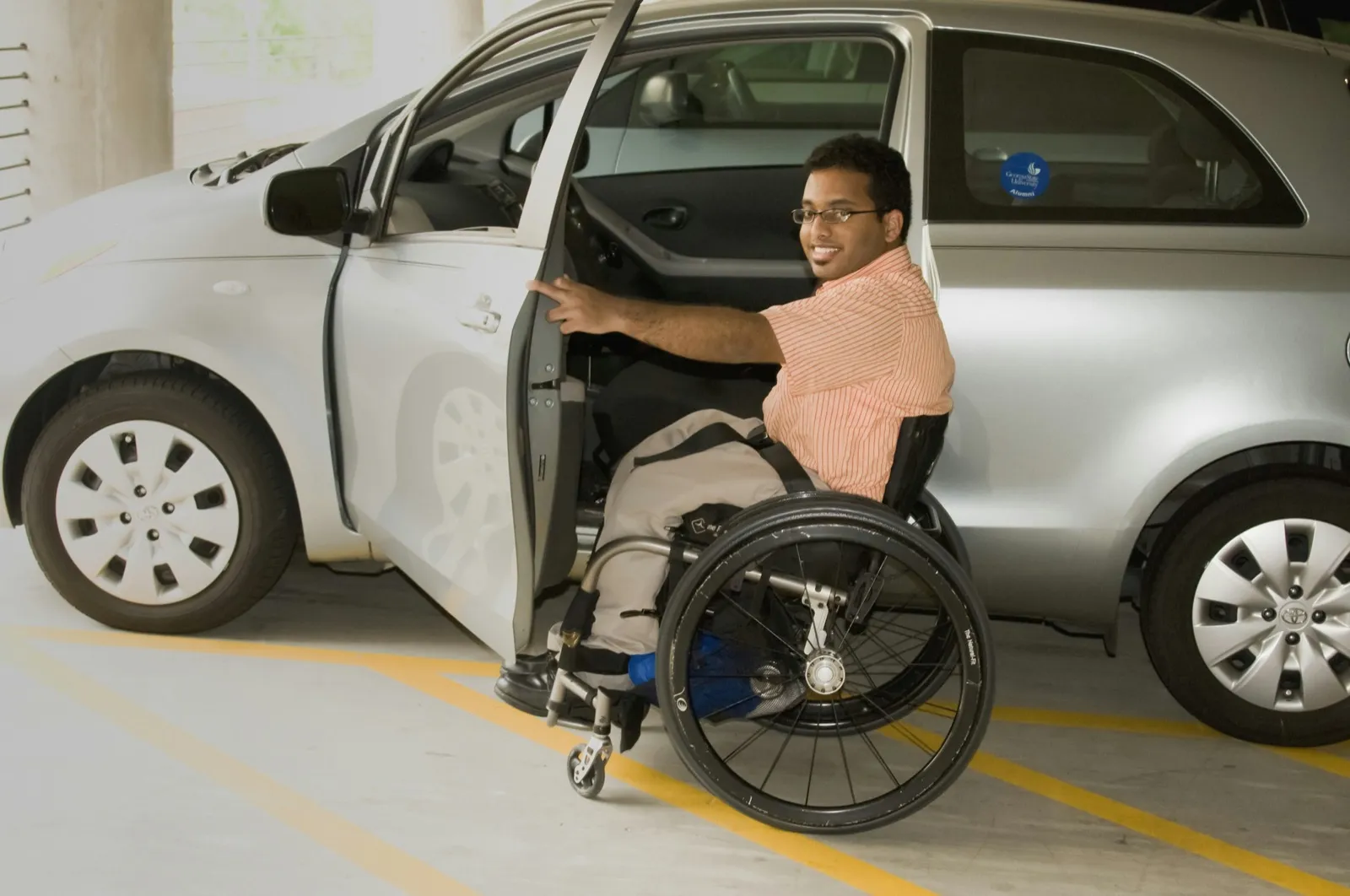
Safe passenger transfer techniques start with how much weight the rider can bear. A rider who stands steadily needs you close by, not lifting. One who bears some weight and follows directions gets a stand-pivot with a gait belt, or a transfer board. If you would have to lift more than 35 pounds, NIOSH treats the rider as dependent: use equipment, a stretcher crew, or facility staff.
- NIOSH treats any transfer that needs more than 35 pounds of lifting as a job for equipment, not for a person.
- Check weight bearing, arm strength, and cooperation before every transfer, and assume the rider cannot help when in doubt.
- A gait belt guides a rider who can stand. It is never a handle for lifting.
- Some broker manuals bar drivers from lifting riders or carrying them on stairs, so read yours before the first ride.
- Stretcher moves take at least two trained people, and heavier riders need a mechanical device and a third helper.
Every trip starts and ends with a transfer. The rider moves from a bed, a chair, or a front step into your vehicle, and back out again at the clinic. Those few seconds carry the most risk for both of you. This guide shows how to judge each rider, which method fits, what your broker lets you do, and when a transfer is not a driver’s job at all.
The lifting limit that protects your drivers
NIOSH, the federal institute for workplace safety research, calls patient handling the single greatest risk factor for work-related musculoskeletal disorders among health care workers (page dated May 9, 2024). It tells employers to provide lifting devices, train workers to use them, and run a safe handling program.
Its safe patient handling curriculum for nurses (Publication 2009-127, November 2009) is blunt. It says there is no safe way to lift another adult by hand, and that “proper” body mechanics alone do not protect the caregiver. Adults have no handles, their weight is uneven, and they can shift without warning. The curriculum lists the tasks that raise the risk:
- Lifting loads over 40 to 50 pounds, even under ideal conditions
- Lifting more than 12 times in a shift
- Reaching, bending, or twisting while lifting
- Lifting alone
- A sudden effort to stop someone from falling
A driver with eight round trips helps riders in or out of the vehicle up to 32 times a day. If even some of those moves turn into lifts, the driver passes 12 fast. That is why the limit matters.
The 35-pound rule
NIOSH’s curriculum uses one number for every transfer: if a caregiver would have to lift more than 35 pounds of a person’s weight, treat that person as fully dependent and use assistive devices. The same curriculum sorts every rider into one of three levels, and says to reassess before each task, because illness, fatigue, and medicine change what a person can do. When in doubt, assume the rider cannot help.
| What the rider can do | Level | How to move them |
|---|---|---|
| Stands and walks safely, with or without a cane or walker | Independent | Stand by. Open doors, steady a hand if asked, fold the walker. |
| Bears some weight and follows simple directions, needing no more than 35 pounds of help | Partial assist | Stand-pivot with a gait belt toward the stronger side, or a transfer board |
| Cannot stand but sits steadily and has arm strength | Partial assist | Transfer board, rider slides with you guiding |
| Cannot help with the move, needs more than 35 pounds of lifting, or behaves unpredictably | Dependent | Equipment and more people: a stretcher crew, facility staff, or a mechanical lift. Never a one-driver lift. |
OSHA’s nursing home guidelines (OSHA 3182-3R, 2009) are advisory. They say they are not a new standard, and that an employer’s duty to address ergonomic hazards comes from the general duty clause of the OSH Act. The same guidelines recommend that manual lifting be minimized in all cases and eliminated when feasible. For the insurance side of back injuries, see workers’ comp for NEMT drivers.
What drivers may and may not do
Federal law sets a floor, and brokers and states add limits. Read the assistance level on each manifest, then read your broker’s manual for what that level includes.
| Rule | What it says about hands-on help |
|---|---|
| Federal ADA rule, 49 CFR 37.165 (public and private providers) | Staff must help riders use lifts, ramps, and securement systems when needed or asked, and leave their seat to do it. You may recommend that a wheelchair rider move to a vehicle seat, but never require it. Riders with canes, walkers, or trouble with steps may ride the lift. |
| Virginia, MTM Health handbook (approved August 10, 2026) | Curb-to-curb help covers doors, getting in and out of the vehicle, and folding the wheelchair. Neither curb-to-curb nor door-to-door help includes lifting any member. Physical contact is limited to what safe help or first aid needs. |
| Virginia DMAS requirements (May 26, 2026) | Drivers leave the vehicle to open doors, give the assistance level on the manifest, and confirm every seat belt and wheelchair is secured before starting the vehicle |
| Oregon, CareOregon manual (February 2024) | Drivers help riders with stairs when needed but may not physically assist or carry them up or down. Moving a rider into or out of a wheelchair or bed, or giving full-weight support while walking, needs a license, training, and the broker’s authorization. |
| New York Medicaid (manual effective August 25, 2023) | Ambulette staff help riders walk, climb or go down stairs, ramps, and curbs, with no limit on floors. Lifting a rider onto an exam table is the aide’s or practitioner’s job, not the driver’s. |
| Georgia (NEMT manual, July 1, 2026) | Wheelchair dialysis riders get door-to-door service with no lift into the dialysis chair. The dialysis team does that transfer. |
When the rider in front of you needs more help than the manifest shows, stop and call dispatch before you try. A rider booked as curb to curb who cannot stand may need a different level of service, a second person, or a stretcher van. For what the highest assistance level adds, see door-through-door service.
Check the rider before every transfer
Take thirty seconds before each move. Ask the rider, and the caregiver or nurse if one is there, and watch how the rider moves.
- Weight bearing. Can the rider stand on both legs, on one leg, or not at all?
- Arm strength. Can the rider push up from the armrests or grip a handle?
- Balance. Can the rider sit upright without holding on?
- Understanding. Can the rider follow simple steps and tell you if something hurts? NIOSH’s assessment treats a rider whose behavior changes often as unpredictable, the same as one who cannot help.
- Pain and recent surgery. Ask about hips, backs, and bellies. OSHA’s guidelines say gait belts may not suit riders with recent abdominal or back surgery or an abdominal aneurysm.
- Dizziness. A rider who just sat up may feel dizzy on standing. Let them sit for a moment first.
- Weight and equipment. Heavy riders and wide chairs change the method and the vehicle. See bariatric transportation.
Then set up the space. Lock the wheelchair brakes, move footrests aside, and remove the armrest on the side you will use. Clear the path of rugs and ice. Put the two surfaces as close together and as level as you can. Explain each step before you do it and count out loud so the rider moves with you.
Car and minivan transfers for riders who walk
NIOSH’s transfer algorithm covers “car to chair” moves with the same rules as bed to chair: stand by for riders who bear full weight, and use a stand-pivot with a gait belt for riders who bear partial weight and cooperate.
Getting in
- Park where the door opens fully, on level ground, as close to the curb as you can. Slide the seat back and recline it slightly for more room.
- Walk with the rider to the open door. If the rider uses a walker, keep it in front of them until they turn.
- Have the rider turn and back up until they feel the seat against the back of their legs.
- Guide the sit. The rider holds a fixed point, such as the seat or door frame, not the door itself, which can swing. Protect their head from the roof edge.
- Legs last. Once seated, the rider turns and brings their legs in. If they need help with one leg, support it under the calf and heel.
- Buckle up. Virginia’s rules make the driver confirm every seat belt before starting the vehicle.
Getting out
Reverse the steps. The rider turns and puts both feet flat on the ground, scoots to the front of the seat, and stands on your count while pushing up from the seat. Have the walker or cane ready before they stand, not after.
Using a gait belt
OSHA’s guidelines describe gait belts with handles for riders who bear some weight and cooperate, including chair to car moves. Follow their points:
- Fasten the belt over clothing, never on bare skin, and make sure the rider cannot undo it.
- Stand close, and move the rider toward their stronger side.
- Use a rocking and pulling motion, not a lift.
- Never use the belt as a handle to hoist the rider’s weight.
Ask the rider to hold the seat or grab handle, never your neck or shoulders. If they hang on you, you carry their full weight.
Wheelchair riders: lifts, ramps, and seat transfers
Most wheelchair riders stay in their chair for the trip. The ADA rule lets you suggest a move to a vehicle seat, but the final decision is the rider’s (49 CFR 37.165 and DOT’s Appendix D guidance).
On the lift
- Deploy it the right way every time. DOT’s guidance puts that duty on the driver. An ADA lift has controls interlocked with the brakes, transmission, or door, so the vehicle cannot move while the lift is out (49 CFR 38.23).
- Let the rider choose the direction. Respect a preference to back on or roll on forward, unless only one way works or safety requires another. Many power chair users cannot turn to see behind them.
- Know the weight rating. An ADA lift has a design load of at least 600 pounds. Virginia’s broker has providers record each lift’s maker, model, age, and rated capacity, and be ready for bariatric riders where needed.
- Standees ride too. Riders with canes, walkers, or braces may use the lift, holding the handrails, which run 30 to 38 inches above the platform.
On a ramp
DOT’s guidance says a driver may have to push a manual wheelchair up the ramp, especially a steep one. ADA ramps can be no steeper than 1 in 4 when deployed to the ground, and ramps 30 inches or longer must hold 600 pounds (49 CFR 38.23). Keep the chair straight, keep both hands on the push handles, and control it on the way down.
Moving from the wheelchair to a seat
When the rider wants a seat, use a transfer board or a stand-pivot, depending on weight bearing.
- Park the chair at a slight angle to the seat and lock both brakes.
- Swing the footrests away and remove the armrest nearest the seat. NIOSH’s algorithm notes a seated transfer needs a chair with removable or recessing arms.
- For a board, the rider leans away while you slide one end under their thigh, then scoots across in small moves. OSHA’s guidelines call for boards with tapered ends, rounded edges, and a weight rating for the rider, with clothing between skin and board. They also say a board transfer takes more than one caregiver, so bring a second person.
- For a stand-pivot, put on the gait belt and pivot toward the rider’s stronger side.
- Fold the chair, stow it, and secure it. The rider’s chair is the first thing they need when you arrive.
See the full wheelchair securement steps for riders who stay in their chair.
Stretcher transfers take a trained crew
A stretcher rider cannot sit up for the trip, so every move is a lift or a slide. Never plan one for a single person. Virginia and New York require at least two crew members.
| Rule | Crew and training |
|---|---|
| Virginia DMAS (May 26, 2026) | A driver and an assistant with DMAS-approved training in first aid, bloodborne pathogens, and transferring, loading, and unloading stretcher riders. The rider is never left alone, and the provider supplies a scoop, Reeves, or stair chair stretcher when needed. |
| New York Medicaid (August 25, 2023) | At least two employees, and enough staff to lift and move the stretcher safely over curbs, doorways, and steps where there is no elevator or ramp |
| Minnesota Rules 8840.5910 | Two hours of stretcher training on top of the eight-hour passenger assistance course |
Bed to stretcher
NIOSH’s lateral transfer algorithm is built for exactly this move:
- Slide, do not lift. For a rider who cannot fully help and weighs under 200 pounds, use a friction-reducing sheet or a lateral transfer board.
- Add people and equipment for heavier riders. Over 200 pounds, NIOSH calls for a mechanical lateral transfer device or an air-assisted device and three caregivers.
- Set the heights. Lock the wheels on both surfaces. NIOSH says the destination should sit about half an inch lower than the starting surface.
- Count together so every crew member pulls at once, and keep the rider’s head, back, and hips moving as one.
Plan for the hardest point of the trip, such as the steps at home, before you arrive, and bring a stair chair when the rider needs one. For vehicle and cot rules, see stretcher van requirements, and for crew skills see NEMT stretcher training.
Equipment that does the lifting
NIOSH’s home health guidance lists slip sheets, slide boards, rollers, slings, belts, and mechanical hoists as tools designed to help both the worker and the person being moved (Publication 2012-120). A van carries only some of them.
| Equipment | Use it for | Watch for |
|---|---|---|
| Gait belt with handles | Riders who bear some weight and cooperate, including chair to car | Not for lifting. Over clothing. May not suit riders after recent abdominal or back surgery. |
| Transfer board | Riders with good sitting balance, from one level surface to another, such as wheelchair to car seat | Tapered ends, rounded edges, a weight rating. OSHA says a lateral transfer needs more than one caregiver. |
| Friction-reducing sheet or lateral board | Bed to stretcher for riders under 200 pounds | Enough crew to pull evenly |
| Stair chair, scoop, or Reeves stretcher | Stairs with no elevator | Virginia requires the provider to supply one when the rider needs it |
| ADA wheelchair lift or ramp | Wheelchair riders and standees | The lift’s rated capacity |
| Mechanical or sling lift | Fully dependent riders | Trained staff and a lift built for the move. For a car transfer, NIOSH says to pick a sling lift designed to reach a person in a car. |
When a rider falls or cannot transfer
Falls are common among the riders you carry. The CDC says more than one in four adults 65 and older falls each year, and one fall doubles the chance of another (as of September 2026).
If a rider starts to go down, do not try to catch their full weight. NIOSH lists the sudden effort of stopping a fall as a high-risk moment for the caregiver. Guide the rider to the seat or the ground, protecting their head.
- Check for injury before moving them. OSHA’s guidelines say to assess the person first.
- Do not lift them off the floor by hand. OSHA’s guidelines say a person who can stand with minimal help may use a gait belt, and one who cannot needs a powered lift.
- Call 911 if the rider is hurt or needs an ambulance. CareOregon’s manual requires it when an emergency needs ambulance transport.
- Tell the broker at once. CareOregon wants dispatch told immediately and a written incident report within 24 hours. Texas requires health plans or their transportation subcontractors to report an accident with serious injury to a member, an attendant, or a driver to the state within four hours of notice.
- Write it down the same day on an incident report form: time, place, what happened, who helped, and who you called.
If a rider cannot transfer safely at pickup, do not force it. Call dispatch to change the vehicle, add a second person, or rebook. Rebooking beats a fall. For the habits that prevent falls on curbs, steps, and ramps, see how to prevent rider falls.
Training drivers to transfer riders safely
States that write transfer training into their rules want hands-on practice, not a video.
| Rule | What drivers must learn |
|---|---|
| Minnesota Rules 8840.5910 | At least eight hours of passenger assistance training for drivers who carry wheelchair riders or help them transfer. It covers moving wheelchairs on steps, curbs, ramps, lifts, and icy ground, and, where the service moves riders to a seat, assisted, unassisted, two-handed, and standing transfers. Drivers who carry only riders who walk take four hours, and refreshers come every three years. |
| Ohio Adm. Code 4766-3-13 (effective June 15, 2022) | Ambulette drivers finish a passenger assistance course at least every three years, covering transfer techniques, wheelchair handling, lift operation, and emergency procedures, with hands-on loading and unloading |
| Virginia, MTM Health handbook (2026) | PASS training before a driver carries members, including taxi drivers who give door-to-door or hand-to-hand service |
Run your own practice on your own vans. Pair each new driver with an experienced one for real transfers before solo work, and record each course in a driver training log. The NEMT driver training guide lays out a first-week plan, and PASS certification explains the course many brokers ask for.
Frequently asked questions
Can NEMT drivers lift passengers?
Usually not by hand. MTM Health's Virginia handbook (approved August 10, 2026) says curb-to-curb and door-to-door help does not include lifting any member. CareOregon's provider manual (February 2024) bars drivers from moving riders into or out of a wheelchair or bed unless they are licensed, trained, and authorized by the broker. NIOSH guidance treats any transfer that needs more than 35 pounds of lifting as a job for equipment.
Do I have to help a wheelchair rider onto the lift or ramp?
Yes. Federal rule 49 CFR 37.165 requires staff to help riders use lifts, ramps, and securement systems when needed or asked, and to leave the driver's seat to do it. DOT's guidance on that rule says a driver may have to push a manual wheelchair up a steep ramp. You may suggest that a rider move to a vehicle seat, but you may not require it.
Should NEMT drivers use a gait belt?
For riders who bear some weight and can follow directions, yes, if your broker allows hands-on help. OSHA's nursing home guidelines (OSHA 3182, revised 2009) list gait belts with handles for chair to car transfers, fastened over clothing, with a rocking and pulling motion toward the rider's stronger side. They warn that belts are not for lifting and may not suit riders with recent abdominal or back surgery.
How many people does a stretcher transfer take?
At least two. Virginia requires a driver and an assistant with state-approved training in transferring, loading, and unloading stretcher riders (May 26, 2026). New York requires at least two employees and enough staff to lift safely. NIOSH's lateral transfer guidance uses a friction-reducing device for riders under 200 pounds, and a mechanical device with three caregivers above that.
What should a driver do if a rider falls during a transfer?
Guide the rider down to the seat or the ground instead of trying to catch the full weight, then check for injury before any move. OSHA's guidelines say a person who cannot stand with minimal help needs a powered lift, which most vans do not carry, so do not lift the rider from the floor by hand. Call 911 if the rider is hurt, and tell your broker at once.
Who moves a rider onto the exam table or the dialysis chair?
Usually the facility. New York's Medicaid transportation manual (effective August 25, 2023) says lifting a rider from a wheelchair onto an exam table is the job of the rider's aide or the medical practitioner, not the driver. Georgia's NEMT manual (July 1, 2026) says the dialysis team moves wheelchair riders to the dialysis chair, while stretcher trips run bed to bed or bed to treatment chair.
Official resources
- NIOSH: Safe Patient Handling Training for Schools of Nursing (transfer algorithms)
- OSHA: Guidelines for Nursing Homes (transfer equipment and when to use it)
- OSHA: Safe Patient Handling tools and resources
- NIOSH: Safe Patient Handling and Mobility
- eCFR: 49 CFR 37.165, Lift and securement use
- eCFR: 49 CFR 38.23, Lift and ramp specifications