Drivers and vehicles
NEMT Dash Cameras in 2027: Where Video Is Required, What It Proves, and the Privacy Rules
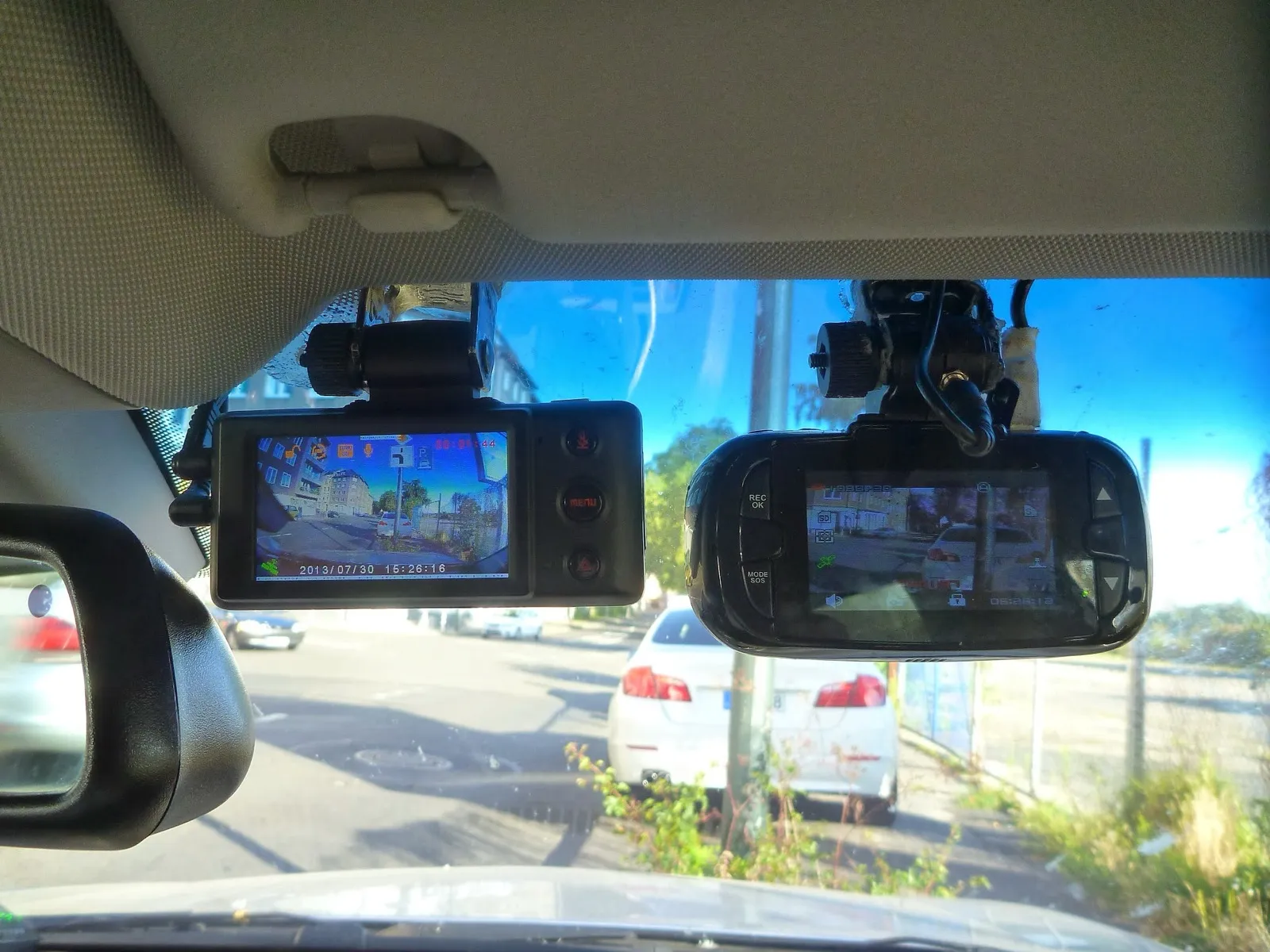

NEMT dash cameras record the road and the cabin so you can prove what happened on a ride. Camera rules come from states and brokers: Colorado requires two-way video for fleets over five vehicles, and Arkansas broker contracts and Modivcare in Mississippi require it too. Treat rider footage as health information, leave audio off unless everyone knows, and save incident clips before they record over.
- Camera rules come from states and broker contracts. Colorado, Arkansas, Modivcare in Mississippi, and Verida in DC each set their own specs.
- Video helps you answer crashes, complaints, and audits. GPS and the trip log still prove the miles and times.
- Recording audio brings in wiretap laws, and several states require every person in a private conversation to consent.
- If HIPAA reaches you, rider footage is health information: limit who sees it, encrypt it, and sign a business associate agreement with any cloud vendor.
- Write down how long you keep footage, and pull every clip tied to an incident before the camera records over it.
A camera in your van is a witness that does not take sides. It can clear a driver after a crash, settle a rider complaint, or back up a disputed pickup. It also records people on the way to medical care, so it comes with privacy duties that a regular fleet camera does not.
Where NEMT vehicles need dash cameras
Camera rules come from state laws and broker contracts, so they differ from program to program. As of September 2026, these programs require or recommend video:
| Program | Who it covers | What it requires | Date |
|---|---|---|---|
| Colorado, state law | Providers carrying Health First Colorado members. Fleets of five or fewer vehicles are exempt. | Two-way video dash cameras and a recording system that captures each member’s pickup and drop-off (C.R.S. 25.5-1-802(14)) | In effect since July 1, 2026 |
| Arkansas, NET broker contracts | Every vehicle carrying Medicaid beneficiaries | A working video system with HD 720p video, GPS on the camera, at least 45 days of playback, and an interior view of all passenger activity, including boarding. It records whenever the vehicle runs. Audio is not required. | Broker bid terms issued June 5, 2025, repeated in the Region G bid of June 19, 2026 |
| Mississippi, Modivcare network | All vehicles | Inward- and outward-facing cameras with AI-based real-time coaching and scoring of drivers | Provider manual, February 2024 |
| District of Columbia, Verida contract | All vehicles carrying eligible riders. The rule sits in the contract’s safety section for riders with intellectual and developmental disabilities, so confirm the scope with Verida. | Video-only cameras covering the driver and passenger compartments, with encrypted footage kept 12 months | Starts October 1, 2026. The DC Council deemed the contract approved on July 6, 2026. |
| Minnesota, protected transport | Protected transport only | A protected vehicle with safety locks, a video recorder, and a clear partition between rider and driver (Minn. Stat. 256B.0625, subd. 17) | In the statute as of September 2026 |
| Oregon, CareOregon | Contracted providers | Strongly recommends inward- and outward-facing dash cameras. Brokerages may set their own camera terms. | Provider manual version 1.3, February 2024 |
Two details matter in the programs that require video. In Arkansas, a vehicle whose video system is not fully working may not carry beneficiaries until it is fixed, and the driver’s daily inspection checklist includes the camera. In Colorado, the broker MediDrive asks providers, as of September 2026, to keep all vehicle recording devices working during every trip.
Colorado’s law does not define a fleet. If you run five or six vehicles, get the count in writing from MediDrive or the state. The Colorado camera law covers the rest of HB26-1328, and the Colorado state guide covers licensing.
Minnesota lawmakers have proposed going further. HF 4684, introduced March 25, 2026, would require a GPS system and a rear-facing camera in NEMT vehicles and two years of kept recordings. It was referred to the House Human Services Finance and Policy committee, and as of September 2026 the record shows no committee action. If your broker is not listed above, search its manual and contract for the words camera, video, and recording.
What camera footage proves, and what it does not
Footage is strongest when it shows something no one can argue about: the moment of impact, the ramp going down, the rider buckled in. Brokers already ask for it.
| Situation | What video can show | Keep with it |
|---|---|---|
| A crash | Who had the right of way, speed, following distance, and what the other driver did. MTM Health’s Pennsylvania provider agreement presumes a driver was at fault unless the driver provides evidence otherwise. | The police report, which MTM requires to verify a no-fault accident, plus photos and witness names |
| A rider complaint | Whether the driver was polite, helped the rider, and drove safely. CareOregon says footage can help a brokerage decide whether a complaint is substantiated, and its grievance investigations may request it. | The trip record, the GPS trail, and the driver’s signed statement |
| A fall on a ramp or lift | How the lift or ramp was used and whether the chair was secured. Arkansas requires the interior camera to capture boarding and offloading. | The incident report and the securement checklist |
| A disputed no-show | The van at the door, with a time stamp. Colorado’s cameras must capture images of each pickup and drop-off. | GPS arrival time, wait time, and the call log |
| An audit or fraud review | That the rider was on board for the trip that was billed. Colorado lets the state use video for audits, and Arkansas requires footage to be retrievable for auditing. | The trip log and the claim |
| Driver habits | Phone use, hard braking, and rolling stops, which coaching can fix before a crash | Training records |
Video does not prove everything. The miles on a claim come from GPS or the odometer, and the signature comes from the trip log. Colorado says video of members is not required for billing, and it bars requiring a rider to show a Medicaid ID card on camera for eligibility checks. See NEMT GPS tracking for the trail that proves the drive, and broker rider complaints for how to answer a complaint with records.
Choosing a camera setup for a NEMT van
Start from the strictest program you work in, then match the hardware to it.
| Feature | What to decide |
|---|---|
| Road-facing camera | Records crashes and near misses ahead of the van |
| Cabin-facing camera | Colorado calls for two-way video. Arkansas wants every passenger’s activity in view, and DC wants the driver and passenger compartments. |
| View of the door, ramp, or lift | Colorado wants each pickup and drop-off on video, and a door view also shows how the ramp or lift was used |
| Recording mode | Continuous recording, or saving clips only when a crash sensor or a button triggers it. Arkansas requires recording any time the vehicle is in operation. |
| Storage | Enough to hold your required playback: at least 45 days in Arkansas and 12 months under DC’s contract |
| GPS stamp | Arkansas requires GPS on the camera. A location stamp also ties a clip to your trip record. |
| Audio | Arkansas says audio is not required, and DC’s contract calls for video only. Audio brings in the consent laws below. |
| Cloud upload | Lets you pull a clip without visiting the van, but the vendor then holds rider footage and needs a business associate agreement |
Florida’s Department of Transportation posts what transit agencies pay for camera systems installed on new lowered-floor wheelchair minivans. These prices, from its TRIPS contract order form effective February 20, 2025, show the range for a system ordered with the van:
| Camera option on a new wheelchair minivan | Price |
|---|---|
| Two cameras with a 1 TB recorder | $1,610 to $3,243, depending on the system |
| Four cameras with a 2 TB recorder | $2,690 to $3,923 |
| Each additional camera, any system | $240 |
| 2 TB recorder hard drive | $350 |
Aftermarket kits and monthly cloud plans are priced differently, so get written quotes that list every camera, the storage, and any subscription. For the rest of a van’s price, see wheelchair van cost. Tell your insurance agent when cameras go in. The National Association of Insurance Commissioners says safety devices can help reduce commercial auto premiums, so ask whether cameras count. NEMT insurance cost covers the other levers.
Mounting the camera legally
Windshield rules vary by state. California lets you mount a video event recorder only in set spots: a 7-inch square in the lower corner farthest from the driver, a 5-inch square in the lower corner nearest the driver and outside the airbag zone, or a 5-inch square at the top center (Vehicle Code 26708(b)(13)). The law defines that device as one that loops continuously but saves video only when a crash, unusual motion, or the driver triggers it, and it may store no more than 30 seconds before and after the event. A camera that saves all of its footage does not fit that definition, so the exception may not cover it. Ask the California Highway Patrol or your lawyer before you mount one on the glass.
If a van counts as a commercial motor vehicle on interstate trips, federal rule 49 CFR 393.60(e) applies. Driver camera systems may sit no more than 8.5 inches below the top of the area the wipers sweep, or no more than 7 inches above its bottom, and outside the driver’s view of the road and signals. In other states, check the windshield obstruction law before you mount anything.
Rider privacy and HIPAA
A cabin camera records people on the way to dialysis, therapy, or a doctor. HIPAA reaches your company if you are a covered entity or a broker’s business associate, which HIPAA for NEMT walks through. If it does, treat rider footage as protected health information. HIPAA’s de-identification rule lists full face photographs and comparable images among the identifiers that must be removed before health information stops being protected (45 CFR 164.514). Brokers say the same. CareOregon’s manual lists photographic images of recognizable features and the full face, and voice identifiers, among the types of member information you must protect.
The Security Rule then applies to the video files. Here is what each requirement means for a camera system:
| HIPAA rule | What it means for cameras |
|---|---|
| Risk analysis, 45 CFR 164.308(a)(1)(ii)(A) | List every camera, memory card, recorder, laptop, and cloud account that holds footage, and the risks to each |
| Access control, 164.312(a) | Give each person who can view footage their own login. DC’s Verida contract limits access to authorized staff for safety reviews, grievance investigations, and quality checks. |
| Encryption, 164.312(a)(2)(iv) | Encrypt stored footage where you reasonably can. DC’s contract requires it. Encrypted files that meet HHS guidance are not “unsecured” health information (164.402). |
| Audit controls, 164.312(b) | Keep a record of who viewed, downloaded, or shared each clip |
| Device and media controls, 164.310(d) | Have a written way to dispose of memory cards and drives, and wipe them before reuse |
| Business associates, 160.103 and 164.502(e) | A vendor that stores footage for you maintains health information on your behalf, so it is a business associate or subcontractor and needs a signed agreement |
| Minimum necessary, 164.502(b) | Send the broker the clip for the incident, not the whole day |
A lost or stolen memory card with unencrypted rider video can be a breach. A covered entity must notify affected riders without unreasonable delay and no later than 60 days after discovery (164.404), and a business associate must tell the covered entity within the same outer limit (164.410). Some brokers want to hear much sooner. CareOregon requires a breach reported to the brokerage immediately, and no more than 24 hours later. See NEMT data breach for the steps, and sign a business associate agreement with any camera or cloud vendor before the first upload.
Sharing footage with police, lawyers, and insurers
If HIPAA applies, it lets you disclose health information for law enforcement in set cases, such as a court order, a court-ordered warrant, a subpoena or summons from a judicial officer, or a qualifying administrative request (45 CFR 164.512(f)). Ask your lawyer before you hand a clip to an officer without one. Legal services count as health care operations (164.501), so you can give your own lawyer what a claim needs. A lawyer who receives health information from you is a business associate under 160.103, so sign an agreement. Ask your lawyer how to share footage with your insurer. The vehicle accident guide lists the rest of the records to save after a crash.
Recording audio: the consent rules
Video and audio fall under different laws. Federal wiretap law makes it lawful to record a conversation when the person recording is part of it, or when one party to it has agreed (18 U.S.C. 2511(2)(d)). The law protects spoken conversations where the speaker expects not to be recorded and that expectation is justified (18 U.S.C. 2510(2)). Two riders talking to each other, or a rider on a phone call, may have no consenting party at all.
Several states go further and require everyone’s agreement:
| State | The rule |
|---|---|
| California | Recording a confidential conversation without the consent of all parties is a crime, with a fine of up to $2,500 per violation for a first offense (Penal Code 632) |
| Florida | Recording is lawful when all parties to the conversation have given prior consent (Statutes 934.03, 2026) |
| Illinois | Recording a private conversation in a surreptitious manner without the consent of all parties is eavesdropping (720 ILCS 5/14-2) |
| Maryland | Recording is lawful when the person is a party and all parties have given prior consent (Courts and Judicial Proceedings 10-402) |
| Massachusetts | Secretly recording a conversation without prior authority from all parties is an interception (chapter 272, section 99) |
| Washington | Private conversations need the consent of all persons in them. An announcement to everyone that the conversation is being recorded counts, if the announcement is recorded too (RCW 9.73.030). |
The simplest path is video only. DC’s contract calls for it, and Arkansas does not require audio. If you want cabin audio, post a notice at every passenger door, tell riders when they book, and have drivers mention it at pickup. California already requires a posted notice that passengers’ conversations may be recorded in any vehicle with a windshield video event recorder. Ask a local lawyer before you turn audio on in any state.
Drivers: notice, face scans, and access to footage
A driver-facing camera monitors your staff, and some states regulate that too.
- Connecticut. An employer that collects information about employees’ activities on its premises by electronic means, including cameras, must give prior written notice of the types of monitoring. A notice posted where employees can see it counts. Fines run up to $500 for a first offense, $1,000 for a second, and $3,000 after that (section 31-48d). The law does not say whether a vehicle counts as premises, so give the notice anyway.
- California. When an employee drives for hire in a vehicle with a video event recorder, the employer must give the employee or their representative unedited copies of the recordings on request, free, within five days (Vehicle Code 26708(b)(13)(F)).
- Illinois. Some driver cameras scan the driver’s face, for example to confirm who is driving or to spot drowsiness. A scan of face geometry is a biometric identifier. Before collecting one, you must tell the driver in writing what is collected, why, and for how long, and get a written release. You also need a public written policy to destroy the data once its purpose is met, or within 3 years of the driver’s last interaction with you, whichever comes first (740 ILCS 14/15). Plain photographs are not biometric identifiers under the law.
Modivcare’s Mississippi manual requires AI-based coaching and scoring of driver behavior, so drivers there are scored on how they drive. Put your camera rules in writing whatever your state: what the cameras record, when, who may view footage, and how it is used in coaching and discipline. Have every driver sign it, keep it in the driver file, and cover it in NEMT driver training.
How long to keep camera footage
Programs set very different periods, so write your own down and follow it.
| Rule | How long |
|---|---|
| Arkansas broker contracts | At least 45 days of playback, retrievable for audits |
| Verida’s DC contract, from October 1, 2026 | 12 months. The broker must give DC access to footage within 3 business days of a written request, or within 24 hours for safety or abuse allegations. |
| Colorado | The standard retention period in your own operating procedures. Missing video outside that period is not noncompliance, and the state may not take adverse action for it. |
| California windshield video event recorders | No more than 30 seconds saved before and after a triggering event |
| Footage tied to a crash, injury, complaint, or claim | With the incident file, until the matter is closed and for as long as that file must be kept |
| HIPAA | Six years for your written policies and other required documentation (45 CFR 164.316). That rule covers documentation, not the footage itself. |
Colorado’s state department may also ask for recordings for a program integrity review without warning, as long as each request is narrowly tied to the issue under review. A written period protects you there too.
Incident footage is the part you cannot lose. Modivcare’s accident form warns that an incident often leads to a lawsuit, that you may have a duty to preserve records including videos, and that losing them, even by accident, could bring significant court sanctions. Pull the clip the same day, save a copy off the camera, and log where it is. NEMT record retention covers the periods for trip logs, driver files, and claims.
How to add cameras to your fleet, step by step
- Read your rules. Pull the camera, video, and recording sections from your state manual and every broker contract. Note each program’s required views, playback period, and audio rule.
- Count your vehicles. In Colorado, a fleet of six or more needs two-way cameras. Get the broker’s count in writing if you are near the line.
- Pick the views. Road, cabin, and the door, ramp, or lift, so pickups, drop-offs, and securement are on video.
- Decide on audio. Leave it off unless you have a clear need and have met your state’s consent rules.
- Size the storage. Match the recorder or cloud plan to your longest required playback period.
- Lock down the footage. Sign a business associate agreement with the vendor, turn on encryption, give each viewer a unique login, and write down how memory cards are wiped and destroyed.
- Write the policy. Cover what is recorded, how long it is kept, who may view it, how the broker or a rider asks for a clip, and how incident footage is preserved. Add it to your policies and procedures.
- Give notice. Get each driver’s signed acknowledgment, and post a sign at every passenger door.
- Check it every day. Add the camera to the pre-trip vehicle inspection checklist. Where your program requires video, a van with a dead camera stays parked until it is fixed.
- Pull clips after every incident. Save the clip with the incident report the same day, then send the broker only what it asks for.
Frequently asked questions
Are dash cameras required in NEMT vehicles?
In some programs. As of September 2026, Colorado law requires two-way video dash cameras for providers with more than five vehicles, Arkansas broker contracts require an interior video system in every vehicle, and Modivcare's Mississippi manual requires inward and outward cameras. Verida's DC contract, starting October 1, 2026, requires them in vehicles carrying its riders. Everywhere else, check your broker contract and state manual.
Can I record audio inside my NEMT van?
Only with care. Federal law allows recording a conversation when one person in it consents (18 U.S.C. 2511). California, Florida, Illinois, Maryland, Massachusetts, and Washington generally require every party to a private conversation to agree. Arkansas says audio is not required, and DC's contract calls for video only. Leave audio off unless you need it, and post notice when it is on.
Is dash cam footage of riders covered by HIPAA?
Treat it that way if HIPAA reaches your company as a covered entity or a broker's business associate. HIPAA's de-identification rule lists full face photos and comparable images among the identifiers that make health information identifiable (45 CFR 164.514). Limit access, encrypt the files, wipe memory cards before reuse, and sign a business associate agreement with any vendor that stores footage for you.
How long should I keep NEMT camera footage?
At least as long as your contract says. Arkansas broker contracts require 45 days of playback, and Verida's DC contract keeps footage 12 months. Colorado measures you against the retention period in your own operating procedures. Keep any clip tied to a crash, complaint, or claim with that file until it is closed, because losing evidence can bring court sanctions.
Do I have to tell drivers and riders they are being recorded?
Often, yes. Connecticut requires employers to give prior written notice of electronic monitoring on their premises, including by camera, and a posted notice counts. California requires a posted notice that passengers' conversations may be recorded in any vehicle with a windshield video event recorder. Written notice to every driver and a sign at each door are good practice everywhere.
Can I give camera footage to the police or an insurer?
Yes, within limits. If HIPAA applies to you, it lets you disclose footage for law enforcement in set cases, such as a court order, a court-ordered warrant, a subpoena, or a qualifying administrative request (45 CFR 164.512(f)). Giving your own lawyer what a claim needs counts as health care operations. Share only the clip the matter needs, and check your broker agreement: MTM Health's Pennsylvania provider agreement bars sharing member information without MTM's written consent.
How much does a NEMT camera system cost?
On Florida's state transit contract, a two-camera system with a 1 TB recorder, ordered with a new wheelchair minivan, costs $1,610 to $3,243, and a four-camera system with 2 TB costs $2,690 to $3,923 (order form effective February 20, 2025). Each extra camera is $240. Aftermarket systems and cloud plans are priced differently, so get written quotes.
Official resources
- Colorado General Assembly: HB26-1328, the NEMT camera law
- HHS: HIPAA for professionals
- eCFR: 45 CFR 164.310, device and media controls (memory cards and drives)
- eCFR: 45 CFR 164.312, technical safeguards (access, audit, encryption)
- Arkansas DHS: NET broker solicitation 710-25-049 (vehicle video rules)
- Modivcare: Mississippi Medicaid Transportation Provider Manual
- CareOregon: Transportation Provider Manual (dash cameras and grievances)
- Florida DOT TRIPS: Minivan contract and order packet