Drivers and vehicles
CPR and First Aid Requirements for NEMT Drivers in 2027: State Rules, Broker Rules, and Renewals
.jpg)
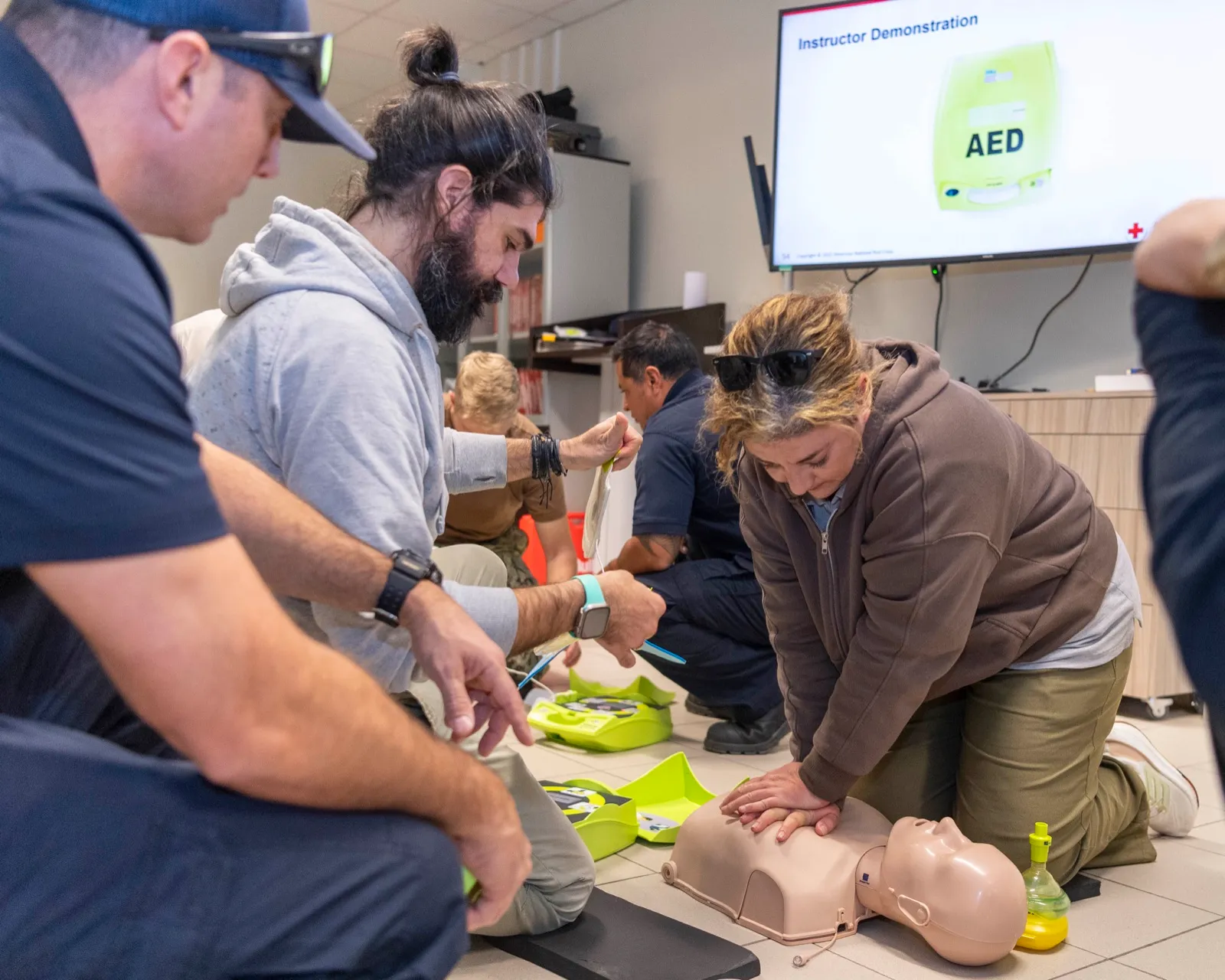
No federal rule requires CPR for NEMT drivers, but many states and brokers do. Louisiana, Oregon, Wisconsin, Mississippi, Colorado, and Maine write CPR into their rules, and Modivcare, MTM Health, Verida, and MediDrive ask for it. Choose a course with a hands-on skills test, because several programs reject online-only training, and renew each card at least every two years.
- Federal Medicaid law sets no CPR rule for drivers. Your state, your vehicle license, and your broker contract decide.
- Louisiana, Oregon, Wisconsin, Mississippi, Colorado, and Maine require CPR. Georgia, Kentucky, Minnesota, and California name first aid only.
- Pick a course with a hands-on skills session. Louisiana wants an in-person course, and OSHA says online training alone cannot teach CPR.
- American Heart Association cards last two years, and Arizona's Mercy Care and Arkansas both work on a two-year cycle.
- New Jersey crews need a health care provider level card, and Colorado adds naloxone training to CPR.
A rider can stop breathing between the clinic door and the van. That is why many NEMT programs want every driver trained in CPR and first aid before the first ride. The rules differ on who needs which course, how it has to be taught, and how long a card lasts, so check all three before you book a class.
Who sets CPR rules for NEMT drivers
Federal Medicaid law sets only four minimum checks for drivers and the companies they drive for. Each driver has a valid license and is not on the federal exclusion list, and each company has a process for state drug law violations and for reporting driving history. CMS says in its Medicaid Transportation Coverage Guide (SMD 23-006, September 28, 2023) that beyond those checks, federal Medicaid law sets no basic driver standards.
CPR and first aid rules come from three other places:
- Your state Medicaid rules or provider manual. Louisiana and Oregon, for example, list CPR among the training every driver finishes before carrying members.
- A license for your vehicle type. Ohio’s ambulette rules, New Jersey’s mobility assistance vehicle rules, Illinois’s stretcher van rules, and Mississippi’s NEMT permit rules each carry their own CPR line.
- Your broker or health plan contract. Brokers often add CPR where the state rule only says first aid.
If your drivers are employees, OSHA’s first aid rule can apply as well. It is covered in its own section below. For the full driver checklist beyond CPR, see NEMT driver requirements.
CPR and first aid rules by state
These state rules name CPR for drivers or crews, as of September 2026.
| State and rule | Who it covers | What it requires | Deadline and renewal |
|---|---|---|---|
| Louisiana, Medicaid Services Manual section 10.3 (issued July 14, 2025) | Every NEMT driver | CPR through an in-person course, ending in an active certification from a licensed instructor | Before transporting any Medicaid member |
| Oregon CCO rides, OAR 410-141-3925 (effective January 1, 2022) | NEMT drivers | Red Cross-approved first aid, CPR, and blood spill procedures courses, or equivalent | Before driving any member. Keep the certification. |
| Oregon fee-for-service brokerages, OAR 410-136-3040 (effective January 1, 2025) | Subcontractors’ drivers | The same three courses | Within 6 months of hire, kept as a condition of employment |
| Wisconsin specialized medical vehicles, DHS 105.39 | Drivers and attendants | Basic Red Cross or equivalent first aid and CPR, plus instructions on caring for a rider having a seizure | Before driving. First aid refresher at least every 3 years. CPR kept current. |
| Mississippi NEMT permits, Title 15, Part 12, Subpart 31, Rule 1.21 | Drivers | Current CPR certification, plus at least one person trained in adult and pediatric CPR to American Heart Association or Red Cross standards available to attend the patient | Kept current. A new driver needs state approval before driving. |
| Colorado, 10 CCR 2505-10 section 8.014.3 (version effective July 10, 2026) | Drivers of enrolled NEMT providers. Rideshare companies with a state PUC permit are exempt. | Training and certification in CPR and in naloxone administration | A standing condition for every driver |
| Maine, MaineCare Benefits Manual Chapter II, section 113.06-17 (effective April 5, 2015) | Drivers and attendants | Certified in first aid and CPR | Within 60 days of the first day of service under the broker agreement |
| Ohio ambulettes, OAC 4766-3-13 (effective June 15, 2022) | Ambulette drivers | Adult CPR and basic first aid, each with hands-on training from the Red Cross, the American Heart Association, the American Safety and Health Institute, or an approved equivalent | Up to 60 days on provisional status, then current and valid |
| New Jersey mobility assistance vehicles, N.J.A.C. 8:40-5.3 | Every crew member | A CPR card at the professional rescuer or health care provider level. Pediatric basic life support if you routinely carry children under 8. | The card must be on hand when state inspectors ask |
| Illinois stretcher vans, 77 Ill. Adm. Code 515.845 (amended November 1, 2024) | Both attendants (at least two per van) | CPR certification and stretcher training | Before the van operates |
| Arkansas NET, DHS broker bid terms IFB 710-25-049 (revision 2, June 2025) | Drivers | Current first aid and CPR certificates from a course that follows American Heart Association or Red Cross guidelines, with hands-on instruction and written and practical tests | The broker updates the records every 2 years |
Two of these rules add equipment. Mississippi requires a pocket mask for CPR in every permitted vehicle (Rule 1.21.5), and New Jersey requires a pocket mask, a CPR mask with a one-way valve, or another approved barrier device (N.J.A.C. 8:40-5.5). New Jersey also requires an EMT-Basic card plus CPR for the crew when the van carries oxygen equipment other than the rider’s own. See the Louisiana, Oregon, and New Jersey guides for the rest of each state’s rules.
States that name first aid but not CPR
Some rules require first aid training and stop there:
- Georgia (Part II NEMT manual, July 1, 2026, section 916). Drivers finish driver training, first aid, and spill kit and biohazard training before driving, and keep the certifications for as long as they work under the broker. A driver not trained before assignment has 90 days. Attendants need first aid too.
- Kentucky (603 KAR 7:080, section 12, certified April 25, 2025). Drivers and escorts receive first aid and bloodborne pathogens training.
- Minnesota (Rules 8840.5910). Drivers and attendants take a 4-hour first aid course within 45 days, and a 4-hour refresher every 3 years. It must cover shock, bleeding, airway management, heat and cold injuries, stroke and heart attack signs, diabetic emergencies, mental health first aid, and when and how to call for emergency help.
- California (22 CCR 51231.1 and 51231.2). Medi-Cal wheelchair van and litter van drivers and attendants hold at least a current Red Cross Standard First Aid and Personal Safety Certificate or equivalent.
- Virginia (DMAS requirements, updated May 26, 2026). The driver and assistant on a stretcher van finish DMAS-approved training in first aid, bloodborne pathogens, and stretcher transfers. Every driver completes the broker’s training program.
- Florida transportation disadvantaged program (Rule 41-2.006(4)). First aid and CPR policy is set locally in each area’s Transportation Disadvantaged Service Plan, so read the plan for your county.
A first-aid-only state rule is a floor. Each broker in the next section asks for CPR or first aid in its own credentialing, whatever the state rule says.
What brokers and health plans ask for
Broker contracts often decide the question in states where the rule is silent. These are the requirements on each broker’s own provider pages and manuals, as of September 2026:
| Broker or plan | What it asks for | When |
|---|---|---|
| Modivcare | A valid first aid and CPR certificate, alongside PASS and defensive driving | Kept valid while the driver works in the network |
| MTM Health | CPR and first aid for drivers in its independent driver program, offered free. Its Virginia handbook lists basic first aid as outside training. | Before a driver is authorized, and renewed before any credential expires |
| Verida | A first aid and CPR course covering adult first aid, CPR, and AED use, plus spill kit and bloodborne pathogens training | Before contracting, as part of credentialing |
| SafeRide Health | First aid, CPR, or AED training, with proof | During onboarding |
| MediDrive | First aid, CPR, and AED on its Colorado and Virginia provider pages | Before trip assignments in Colorado, and checked again over time |
| MediTrans (Louisiana) | A CPR and first aid certification uploaded with each driver’s documents | Before activation |
| LCP Transportation (Indiana) | First aid and CPR certification for every driver (credentialing checklist, July 2026) | During credentialing |
| Mercy Care (Arizona Medicaid plan) | CPR and first aid training for each driver (provider manual, July 2026) | Every two years, with HIPAA training every year |
MTM Health’s Virginia handbook (approved August 10, 2026) spells out the cost of a gap: failure to complete required training means lost trip assignments or removal from the network. Read the credentialing section of every agreement you hold, since one broker’s rule can be stricter than your state’s.
Which CPR courses count: classroom, blended, or online
Most rules name an organization and a format. Match both.
| Format | How it works | Where it falls short |
|---|---|---|
| Classroom | Lessons, practice on mannequins, and a skills test, all in person with an instructor | Meets every rule on this page |
| Blended | Online lessons, then an in-person skills session with an instructor. The American Heart Association issues its Heartsaver First Aid CPR AED card only after the skills session. | Louisiana’s manual says “in-person course,” so ask your broker in writing whether a blended course counts there |
| Online only | Videos and a quiz, with no hands-on practice | OSHA wrote on August 2, 2012 that online training alone does not meet its training standards for physical skills like CPR. Ohio and Arkansas require hands-on training. |
Which organizations the rules name
- Red Cross or equivalent: Oregon, Wisconsin, and California.
- American Heart Association or Red Cross: Mississippi and Arkansas.
- Red Cross, American Heart Association, or American Safety and Health Institute: Ohio ambulettes, or an equivalent the state board approves.
- American Heart Association, Red Cross, or National Safety Council: New Jersey, or another group the state health department finds follows American Heart Association CPR guidelines.
A card from any other provider depends on the word “equivalent.” Get your broker’s or state’s answer before you pay for it.
Which level to take
- Layperson first aid, CPR, and AED. A course such as the American Heart Association’s Heartsaver First Aid CPR AED meets most NEMT rules. Its card is valid for two years.
- Health care provider level. New Jersey defines CPR certification at the professional rescuer or health care provider level. The American Heart Association’s course at that level is BLS, and its card is also valid for two years.
- Pediatric. New Jersey requires pediatric basic life support for crews that routinely carry children under 8. Mississippi wants someone trained in adult and pediatric CPR available to attend the patient.
- AED and naloxone. MediDrive and Verida name AED training. Colorado requires naloxone administration training for every driver.
As of September 30, 2026, the American Heart Association lists the online part of Heartsaver First Aid CPR AED at $24.50, its pediatric version at $24.50, and HeartCode BLS at $38.00. The in-person skills session is sold separately by local training centers.
When drivers must be certified and how often to renew
Deadlines range from before the first ride to six months after hire.
| Deadline | Programs |
|---|---|
| Before the first ride | Louisiana, Oregon CCO rides, Wisconsin, Georgia (first aid), MTM Health in Virginia, MediDrive in Colorado |
| Within 45 days | Minnesota (first aid) |
| Within 60 days | Maine, and Ohio ambulettes on provisional status |
| Within 90 days | Georgia, only for a driver not trained before assignment |
| Within 6 months of hire | Oregon fee-for-service brokerages |
The strictest deadline wins. If you hold a broker contract with a “before the first ride” rule, a state’s 60-day grace period does not help you on that broker’s trips.
Renewal works the same way:
| Rule | Renewal |
|---|---|
| American Heart Association Heartsaver and BLS cards | Valid for two years |
| Mercy Care, Arizona | CPR and first aid training every two years |
| Arkansas NET | The broker updates first aid and CPR records every two years |
| Wisconsin | First aid refresher at least every 3 years, CPR kept current |
| Minnesota | A 4-hour first aid refresher every 3 years |
| Louisiana, Oregon, Mississippi, New Jersey, Ohio, Modivcare | The certification must stay current |
Never let a driver carry riders on an expired card. Put every expiration date in the driver file and on your compliance calendar.
Drivers who are EMTs, nurses, or paramedics
Some rules accept a medical license instead of a separate course:
- Wisconsin. A licensed EMS practitioner, licensed practical nurse, registered nurse, or physician assistant meets the first aid and CPR rule through continuing education that includes both.
- Ohio ambulettes. A current emergency medical responder, EMT, advanced EMT, or paramedic certification can replace the first aid card. Adult CPR is still listed as its own requirement.
- Oregon CCO rides. A licensed EMT may drive once the CCO verifies the license, re-verifies it every year, and runs its own exclusion and background checks. The rule’s list of courses for EMTs covers defensive driving and passenger safety, not the separate first aid and CPR courses.
- Minnesota. A driver with a current certificate under Minnesota Statutes section 144E.27, or a current first aid certificate from a certified course, does not repeat the 4-hour first aid course.
Brokers may still ask for a CPR card. Confirm before you skip one.
What OSHA expects when drivers are employees
OSHA’s rules protect your workers, not your riders, but they still shape training.
- First aid. Where no clinic or hospital is in near proximity, an employer must have someone adequately trained to give first aid, and first aid supplies readily available (29 CFR 1910.151). OSHA’s January 16, 2007 letter reads near proximity as care within 3 to 4 minutes where serious injuries can happen, and up to 15 minutes in lower-risk workplaces such as offices. A van on a long or rural route can be far from one.
- CPR. The same letter says OSHA recommends, but does not require, that workplaces have employees trained and certified in first aid, including CPR.
- Online courses. OSHA’s August 2, 2012 letter says physical skills such as CPR can only be learned by practicing them, so online training alone does not meet its training standards.
- Bloodborne pathogens. An employee assigned first aid duties is covered by the bloodborne pathogens standard. Training comes at initial assignment and at least yearly, at no cost and during working hours, and the hepatitis B vaccine must be offered within 10 working days of initial assignment (29 CFR 1910.1030).
Oregon, Kentucky, and Virginia’s stretcher van rules also require blood spill or bloodborne pathogens training, so one class can cover both.
How to set up CPR and first aid for your drivers
- List every rule that applies. Pull your state’s NEMT rule, your vehicle license rule, and the credentialing section of every broker and health plan agreement you hold.
- Pick the strictest level. If one contract needs health care provider CPR, AED, pediatric, or naloxone training, train everyone to that level so any driver can take any trip.
- Book a classroom or blended course. Confirm the organization is one your rules name, and that the skills session is in person. Book seats before a new driver’s start date.
- Train attendants too. Wisconsin, Maine, Minnesota, California, Illinois, and New Jersey rules reach attendants or crew members, not only drivers.
- File the card. Keep a copy of each card, front and back, with the issue and expiration dates in the driver file. Mississippi requires driver records kept at least 5 years. Use the driver file checklist and log each class on the driver training log.
- Update each broker. Upload the new card to every broker portal before the old one expires. MTM Health’s Virginia roster tracks first aid dates for each driver.
- Set reminders 60 days out. That leaves time to find an open class before the card lapses.
- Stock the van. Carry the first aid kit your state and broker list, and a CPR barrier mask where the rules require one.
- Teach the emergency steps. Virginia’s stretcher van rule sets a clear order: call 911 first, then your own dispatch. First aid can continue until emergency services take over or the van reaches the hospital. Put those steps in your emergency plan.
CPR is one part of a new driver’s first week. PASS, securement, defensive driving, and HIPAA training come with it, and NEMT driver training lays out the full plan. For the passenger assistance course most brokers name alongside CPR, see PASS certification.
Frequently asked questions
Do NEMT drivers need CPR certification?
In many programs, yes, though no federal rule requires it. CMS says federal Medicaid law sets only four minimum checks for drivers and their companies, so states and brokers decide. As of September 2026, Louisiana, Oregon, Wisconsin, Mississippi, Colorado, and Maine require CPR in their rules, and Modivcare, MTM Health, Verida, MediDrive, and MediTrans ask for it. Georgia, Kentucky, Minnesota, and California rules name first aid, and their brokers can add CPR.
Is online CPR certification accepted for NEMT drivers?
Usually not on its own. Louisiana requires CPR from an in-person course taught by a licensed instructor. Ohio ambulette rules and Arkansas broker terms require hands-on training, and Arkansas adds a practical test. OSHA wrote on August 2, 2012 that online training alone does not meet its standards for physical skills like CPR. A blended course, with online lessons and an in-person skills session, is the safer choice.
How often do NEMT drivers renew CPR?
Plan on every two years. American Heart Association Heartsaver and BLS cards are valid for two years. Mercy Care in Arizona wants CPR and first aid training every two years, and Arkansas has its broker update first aid and CPR records every two years. Wisconsin requires a first aid refresher at least every three years and a CPR certification kept current.
Which CPR course should a NEMT driver take?
A layperson course with first aid, CPR, and AED, such as the American Heart Association's Heartsaver First Aid CPR AED, covers most state and broker rules. New Jersey mobility assistance vehicle crews need CPR at the professional rescuer or health care provider level, such as BLS. Add a pediatric course if you carry young children: New Jersey requires pediatric basic life support for crews that routinely carry children under 8.
Does a driver who is an EMT or nurse need a separate CPR card?
Sometimes not. Wisconsin counts a licensed EMS practitioner, licensed practical nurse, registered nurse, or physician assistant as meeting its first aid and CPR rule through continuing education that covers both. Ohio lets an EMR, EMT, AEMT, or paramedic card stand in for the first aid card, but still lists adult CPR separately. Ask your broker before you skip a course for anyone.
How much does CPR certification cost for a NEMT driver?
As of September 30, 2026, the American Heart Association sells the online part of Heartsaver First Aid CPR AED for $24.50 and HeartCode BLS for $38.00. The hands-on skills session is sold separately by local training centers, which set their own price. MTM Health says it offers CPR and first aid free to drivers in its independent driver program.
Do attendants and stretcher van crews need CPR too?
Often, yes. Illinois requires every stretcher van attendant to be CPR certified, and each van runs with at least two. Wisconsin and Maine apply their first aid and CPR rules to attendants as well as drivers. Virginia requires the driver and assistant on a stretcher van to finish state-approved first aid and bloodborne pathogens training. New Jersey applies its CPR rule to every mobility assistance vehicle crew member.
Official resources
- CMS: Medicaid Transportation Coverage Guide (SMD 23-006)
- Louisiana Medicaid Services Manual, Chapter 10: Medical Transportation
- Oregon OAR 410-141-3925, NEMT driver standards
- Wisconsin DHS 105.39, Specialized medical vehicle providers
- Ohio OAC 4766-3-13, Ambulette driver qualifications
- Minnesota Rules 8840.5910, Driver and attendant training
- eCFR: 29 CFR 1910.151, OSHA first aid rule
- eCFR: 29 CFR 1910.1030, OSHA bloodborne pathogens standard