Operations
Transporting Dementia Patients: Calm Pickups, Safe Handoffs, and Riders Who Resist
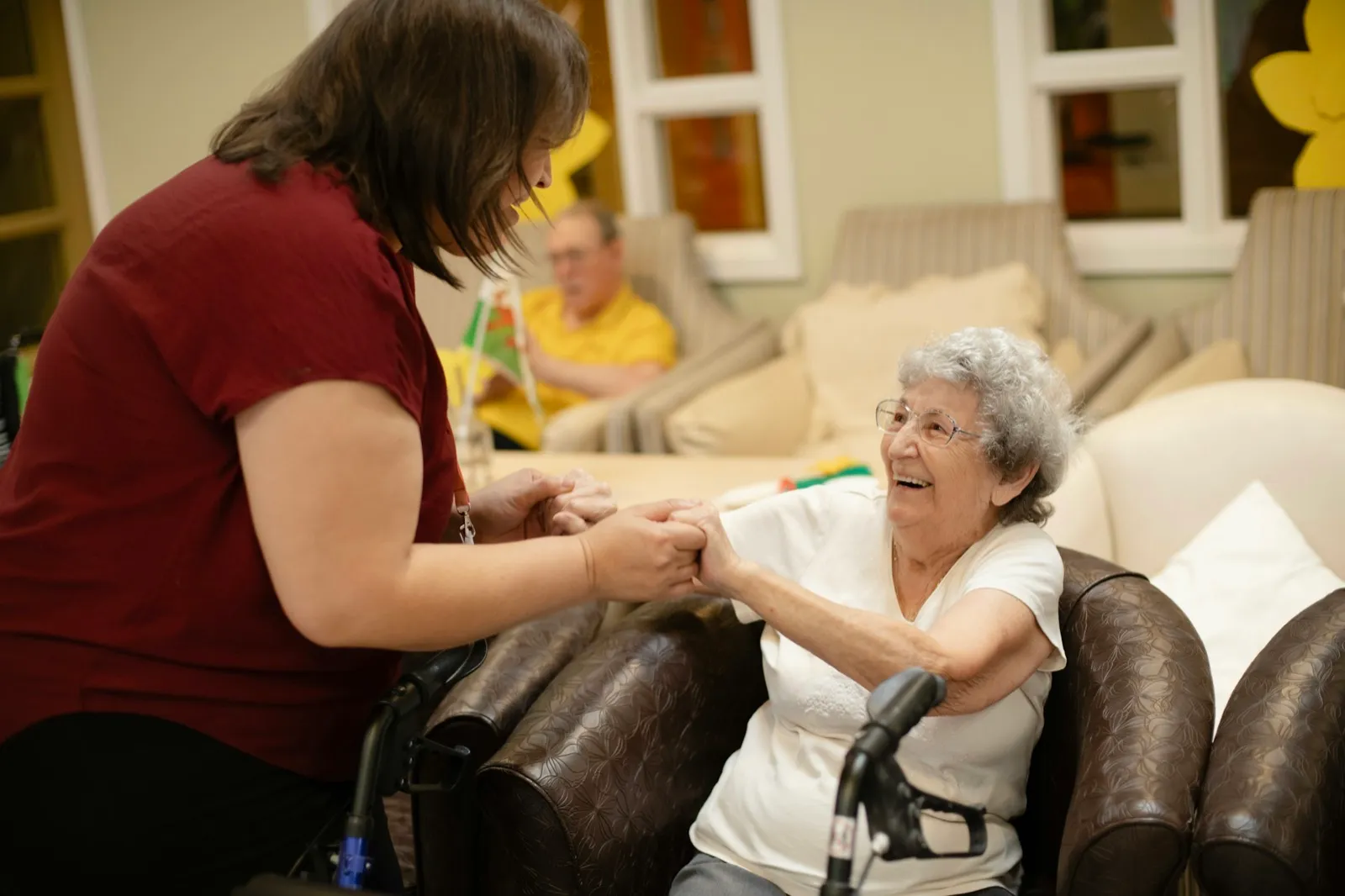
Transporting dementia patients safely starts before the van leaves: confirm the level of help, any escort, and who hands the rider over and who receives them. At the door, speak calmly, give one simple step at a time, and never rush. Keep the rider in sight until a named person takes over, and never force a rider who refuses. Call dispatch instead.
- Settle the level of help, the escort, and the person at each end with the broker before the trip, not at the curb.
- Book the same driver and earlier appointments when you can. A new face or a late-day ride can add to confusion.
- Never pull, lift, or restrain a rider who refuses. Step back, bring in the caregiver, and call dispatch before you leave.
- A rider who walks away and out of sight is an emergency: call 911, say the rider has dementia, then call dispatch.
- Hand the rider to a named person. MTM Health's Virginia handbook counts a skipped hand-to-hand handoff as member abandonment.
A rider with dementia can seem calm at the door and be frightened two minutes later. Most trouble on these rides comes from rushing, surprises, and a handoff nobody planned. The fixes cost little: a call the day before, the same driver, short sentences, and a named person waiting at each end.
What dementia changes about a ride
The National Institute on Aging (NIA) lists the communication changes that matter most in a van. A person with Alzheimer’s may struggle to find words, understand what words mean, follow a long conversation, or block out background noise such as a radio or a phone call. Some forget a language they learned second and understand only their first.
Behavior usually has a cause. NIA’s list of causes of agitation includes pain, too little sleep, a sudden change in a well-known place, routine, or person, too much noise, and being pushed to do something the disease has made hard. A strange driver, a loud van, and a rush out the door can stack three of those at once.
Two more patterns shape the day:
- Sundowning. NIA uses the word for restlessness, agitation, and confusion that start or worsen in the late afternoon or early evening. A 4:30 return can be a harder ride than the 9:00 pickup.
- Wandering. NIA says many people with Alzheimer’s wander away from home or their caregiver, and advises never leaving a person with a history of wandering unattended.
The payer side agrees that these riders need more than a ride to the curb. CMS says beneficiaries with disabilities often need more than curb-to-curb service, and states must consider support needs when they choose the mode (SMD 23-006, September 28, 2023). MTM Health’s Virginia handbook (approved August 10, 2026) gives members with dementia or developmental disabilities as examples of riders who may need hand-to-hand service.
| What the driver sees | What may be behind it | What helps |
|---|---|---|
| The same question again and again | Memory loss | Give the same calm answer each time |
| The rider does not follow a long instruction | Trouble following long conversations | One short step at a time |
| Upset when the radio is on or the phone rings | Trouble blocking out background noise | Radio off, short calls with dispatch |
| Answers only in another language | A second language has faded | Send a driver who speaks the first language, if you have one |
| Restless or tearful late in the day | Sundowning | Book earlier returns, keep waits short |
| Reaches for the door or unbuckles | Fear, or a wish to go home | Pull over safely and call dispatch |
The last column applies NIA’s caregiver advice to a van. It is not a medical rule, and a rider’s family or care home often knows what works better.
Set up the trip before the day of the ride
Most failed dementia rides were decided at booking. Dispatch has the time to fix them there.
Check the level of help and the escort
Read the manifest for three things: the level of help, whether an escort rides along, and whether you must supply an attendant. The broker sets them from what the medical provider reports. MTM Health’s Level of Need form for Missouri, for example, asks the medical professional about confusion, memory problems, and alertness, and whether the patient can remove themselves from unsafe situations. See NEMT medical necessity form.
Escort rules differ by state:
- Louisiana (Medicaid Services Manual section 10.2, issued July 14, 2025) lets the broker decide whether an attendant is required. Its list of conditions that may require one includes dementia or other cognitive impairments and a risk of elopement. The attendant may not be the transportation provider or its employee, so your driver cannot fill that role.
- Colorado (NEMT billing manual, revised July 17, 2026) covers an escort when the member is an at-risk adult who cannot make personal or medical decisions or provide needed self-care, as certified in writing by the attending provider. The escort must be physically and cognitively able to give the help needed. Colorado adds that no one counts as at-risk because of age or disability alone.
You may not add an escort requirement yourself. The federal ADA rule for transportation says an entity shall not require a rider with a disability to travel with an attendant (49 CFR 37.5(e)). If a rider clearly cannot travel alone and the manifest shows neither an escort nor hand-to-hand, call the broker before the trip and put your concern in writing. The escorts and caregivers guide covers who may ride along and how escorts are booked.
Keep the same driver
MTM Health’s Virginia handbook expects providers to make a best-faith effort to use the same driver on recurring and standing order trips. It says continuity matters most for members with medical, mobility, or cognitive needs, and asks you to document when an alternate driver takes the trip. For a rider with dementia, a familiar face at the door is the easiest win you have.
Build a trip card
Keep these notes on every dementia rider’s trip, and update them after each ride. The rider profile form has room for most of them.
| Note | Why it matters |
|---|---|
| Level of help and escort, from the manifest | The broker sets them, and pay can depend on them |
| Name and phone of the person handing the rider over | Someone must be at the door, not an empty lobby |
| Name and phone of the person receiving the rider | The handoff needs a named person |
| The name the rider answers to | NIA advises calling the person by name |
| First language | Some riders lose a second language |
| What upsets the rider, and what calms them | Noise and change are common triggers |
| Any history of wandering | The driver must never leave this rider alone |
| Usual appointment length | Helps you plan the return before sundown |
When the clinic has a choice of times, ask the family or care home for a morning slot. It is a request, not a rule, but it follows NIA’s sundowning advice.
A calm pickup, step by step
- Arrive in the window and do not hurry the rider. MTM Health’s Virginia handbook says members may not be required to board before the scheduled pickup time. CareOregon’s manual for its Oregon ride programs says drivers cannot require a member to leave earlier than scheduled.
- Announce yourself. On trips that are not curbside, MTM Health’s handbook has drivers identify themselves, show identification, and announce their arrival at the entrance or to facility staff.
- Make eye contact and use the rider’s name. NIA lists both first among its communication tips.
- Say one short thing at a time. “Hi, Mrs. Lopez. I’m Sam. I’m driving you to the clinic.” Wait for an answer before the next step.
- Offer small choices, not open questions. NIA suggests questions with a yes or no answer, gives “fish or chicken” as the kind of two-option question to ask, and suggests rephrasing when the first try does not land.
- Keep your tone warm and matter-of-fact. NIA warns against talking about the person as if they are not there, and against baby talk.
- Guide gently. NIA suggests gentle touch to guide, such as holding the person’s hand. MTM Health’s handbook limits physical contact to what safe assistance or trained first aid needs. Lifting and transfers follow the rules in passenger transfer techniques.
- Buckle and check every belt before you move. MTM Health’s handbook requires drivers to help any passenger who cannot fasten a belt, and keeps the vehicle stopped until every belt is buckled.
- Tell the caregiver when you expect to arrive, so the person receiving the rider is ready.
During the ride
Keep the van quiet and predictable. Turn the radio off or down, keep dispatch calls short, and answer repeated questions the same way each time. NIA’s advice for agitation is to stay patient, speak calmly, listen to the concern, avoid arguing, and reassure the person that they are safe.
If the rider says they need to go home, do not argue about where they are going. Say where you are headed in a few words, and move the talk to something easy, such as the weather or a favorite song. NIA lists distraction as a way to ease agitation.
If the rider unbuckles or reaches for the door
- Pull over and park in a safe place out of traffic. MTM Health’s Virginia handbook requires this whenever passenger behavior interferes with safe driving, and has the driver notify dispatch to ask for help.
- Call dispatch and ask for help.
- Do not drive on with the belt off. MTM Health’s standard provider agreement (the January 1, 2023 version Pennsylvania posts) requires drivers to refuse to start or continue a trip when a member will not use the seat belt properly.
- Stay with the rider. The same agreement says no driver or attendant may leave a member unattended in the vehicle.
Restraints are not an answer for ordinary NEMT. CareOregon’s manual lets secure transport providers use mechanical or other restraints only in an emergency, to prevent a member from causing immediate and serious harm. If a rider may need that level of care, it is a different service with its own rules: see behavioral health transportation. Before you rely on child safety locks for an adult rider, get your broker’s answer in writing.
When a rider will not get in the van
A refusal at the door is common, and it is rarely about you. Handle it the same way every time.
- Step back and stop asking. Do not pull, push, or lift. CareOregon’s manual bars drivers from giving full-weight support or moving a member into or out of a wheelchair unless licensed, trained, and authorized by the brokerage.
- Listen, then try once more, slowly. NIA says being pushed to do something hard can cause agitation, and suggests listening to the person’s concerns and offering a distraction.
- Ask the caregiver or staff member to help. A familiar person can often explain the trip in words the rider trusts.
- Call dispatch before you leave. CareOregon requires drivers to wait at least 15 minutes past the scheduled pickup and to notify dispatch before leaving a no-show. MTM Health’s Virginia handbook has drivers follow its no-show procedure and try to reach the member by phone or text first.
- Write down what happened. Note the times, who was there, what the rider said, and who you called.
The broker decides what happens next. CMS says states may not deny rides because of no-shows, even frequent ones, but may add steps such as confirming the ride the night before or assigning a single provider (SMD 23-006). If refusals keep happening, ask the broker to review the level of help or approve an escort. For what a refused trip pays, see billing for no-shows.
Can you stop taking a rider with dementia?
Only for the right reasons, and through the broker. The federal ADA rule lets a transportation entity refuse service to someone whose conduct is violent, seriously disruptive, or illegal, or who is a direct threat to others. It bars refusing service solely because a disability causes an appearance or involuntary behavior that may offend, annoy, or inconvenience your staff or other people (49 CFR 37.5(h)). Repeated questions, crying, or asking to go home are not grounds. A rider who hits the driver or grabs the wheel may be. The steps for reporting it are in difficult NEMT passengers.
When a rider walks away
Treat a missing rider as an emergency from the first minute.
- Keep the rider in sight if you can do it safely, and speak calmly as you follow.
- If you lose sight of the rider, call 911 at once. NIA tells caregivers to call 911 in an emergency and explain that the person has dementia. Give a description: height, clothing, and the direction the rider went.
- Call dispatch next, then the family or care home. NIA suggests caregivers keep a recent photo or video to help police, so the family may have one ready.
- File an incident report the same day. Modivcare’s member incident report (version August 2022) is due within 24 hours for any transportation event, injury or not, and lists member conduct among the events. Other brokers set their own forms and deadlines. The incident report form has the fields most brokers ask for.
Prevention starts at booking. NIA suggests that people who wander carry ID or wear a medical bracelet with their name, address, and a caregiver’s phone number. Ask families whether the rider has one, and add it to the trip card.
The handoff at the destination
A rider who needs hand-to-hand service is never left at a door. CareOregon’s manual (February 2024) calls hand-to-hand a full escort: the driver may not leave the member unattended, hands the member to a specific person, and checks the member in at the appointment and at the destination after it. MTM Health’s Virginia handbook, in its boarding rules for trips that are not curbside, also has drivers escort members safely inside before they leave.
- Hand the rider to a named person, and write down that person’s name and the time. The hand-to-hand guide lists the records to keep, and the trip log template has room for them.
- Do not drop a rider at a closed building. CareOregon bars drop-offs more than 15 minutes before the facility opens unless the member asks for it.
- If no one is there to receive the rider, keep the rider with you. Call dispatch, ask the broker for direction, and wait for its answer. Do not leave the rider in a lobby to save time.
- Know your limits inside. CareOregon bars drivers from going into a private home or a resident’s room unless licensed, trained, and authorized by the brokerage, and from going into the exam room.
The penalty for skipping the handoff is heavy. MTM Health’s Virginia handbook defines member abandonment to include dropping a member at the wrong location and failing to give the correct level of service, naming hand-to-hand. It sits in the handbook’s most serious group of violations, with an immediate suspension of at least 5 days and possible permanent removal of the driver or vehicle from MTM Health’s network.
Talking with families, care homes, and clinics
Families and care home staff are your best source of what works for each rider. They also want to hear how the ride went.
If your company is a HIPAA covered entity, the Privacy Rule lets you share information directly relevant to a family member’s, friend’s, or caregiver’s involvement in the rider’s care (45 CFR 164.510(b)). It also lets you tell a family member or caregiver where the rider is and how the rider is doing, which matters when a rider has wandered off. When the rider is present and able to make decisions, get agreement first, give a chance to object, or reasonably infer there is no objection. When the rider cannot decide, share what is directly relevant, using professional judgment about the rider’s best interest. See HIPAA for NEMT providers.
Drivers also see things a clinic does not. MTM Health’s Virginia handbook requires mandatory reporter training on reporting suspected abuse, neglect, or exploitation before a driver carries members. Who must report, and to whom, is set by state law: see mandatory reporter. For local help for older adults and their families, the federal Eldercare Locator answers calls and texts at 1-800-677-1116.
Memory care homes and adult day programs send many of these riders. A clean handoff record on every trip is proof you can show them when you ask for their work. See adult day care transportation and NEMT facility contracts.
Training drivers for dementia rides
MTM Health’s Virginia handbook lists the training drivers must finish before carrying members. It includes fraud, waste, abuse, and HIPAA; assisting passengers with disabilities and emergency situations; passenger sensitivity and wheelchair securement; cultural competency; sexual harassment; safety awareness; mandatory reporter training; credential management; and outside courses in basic first aid and defensive driving. None of those modules is a dementia course by name, so add a short one of your own.
- Teach the basics from NIA’s free caregiver pages. NIA’s Alzheimer’s and related Dementias Education and Referral (ADEAR) Center answers questions at 800-438-4380.
- Practice three scenes out loud: a rider who will not get in, a rider who asks to go home every few minutes, and a rider who grabs the door handle.
- Walk through the handoff at your busiest memory care home and clinic, so drivers know where to find the right person.
- Log the session in your driver training log, next to PASS certification and the rest of your NEMT driver training.
For riders whose behavior turns unsafe for anyone on board, follow the steps in difficult NEMT passengers.
Frequently asked questions
Can a person with dementia ride NEMT alone?
Sometimes. The broker decides, usually from the medical provider's answers. Louisiana lists dementia, other cognitive impairments, and a risk of wandering off among the conditions that may require an attendant. Colorado covers an escort for an at-risk adult who cannot make personal or medical decisions when the attending provider certifies it in writing. A rider who travels without an escort often needs the hand-to-hand level instead.
Can my company require a family member to ride along?
Not on your own. The federal ADA rule for transportation says an entity may not require a rider with a disability to travel with an attendant (49 CFR 37.5(e)). The payer and its broker decide when an escort is needed. If you think a rider cannot travel safely alone, tell the broker in writing and ask it to review the level of help.
Can I refuse to drive a rider because of dementia behavior?
Not for behavior that only annoys or inconveniences your driver. Under 49 CFR 37.5(h), you may not refuse service solely because a disability causes an appearance or involuntary behavior that may offend or annoy others. You may refuse a rider whose conduct is violent, seriously disruptive, or a direct threat to others. Report it to your broker and follow its process before you stop taking the trips.
Can a driver lock the doors or hold a rider who keeps trying to get out?
Holding a rider down is not part of an NEMT driver's job. MTM Health's Virginia handbook limits physical contact to what safe assistance or trained first aid needs, and CareOregon's manual lets even secure transport providers use restraints only in an emergency to prevent immediate and serious harm. Pull over safely and call dispatch. Get your broker's answer in writing before using child safety locks for an adult.
What if no one is there to receive the rider?
Do not leave the rider. CareOregon's manual says a hand-to-hand trip does not permit the driver to leave the member unattended, and the rider must be handed to a specific person. Keep the rider with you, call dispatch, and wait for the broker's direction. MTM Health's Virginia handbook counts failing to give the hand-to-hand level as member abandonment, in its most serious group of violations.
Do I get paid if a rider with dementia refuses to get in?
Usually not as a completed trip. CMS says miles driven with no member on board, including the drive back after a member no-show, generally cannot be paid, and states and providers may not charge the member for a no-show (SMD 23-006, September 28, 2023). States may build that cost into their rates, and brokers set their own rules. Report the refusal the way your broker requires, with the times and the calls you made.
Can my driver tell the family how the ride went?
Usually, within limits. If your company is a HIPAA covered entity, the Privacy Rule lets you share information directly relevant to a family member's or caregiver's involvement in the rider's care, and tell them the rider's location and general condition (45 CFR 164.510(b)). If the rider can make decisions and is present, get agreement or give a chance to object first. Share only what that person needs.
Official resources
- NIA: Tips for communicating with someone who has Alzheimer's
- NIA: Wandering and getting lost
- NIA: Agitation, aggression, and sundowning
- NIA: Alzheimer's and related dementias information for caregivers
- ACL: Eldercare Locator, local help for older adults and families
- eCFR: 49 CFR 37.5, ADA rules on attendants and refusing service