Operations
NEMT Vehicle Breakdown: What to Do When a Van Breaks Down With Riders Aboard
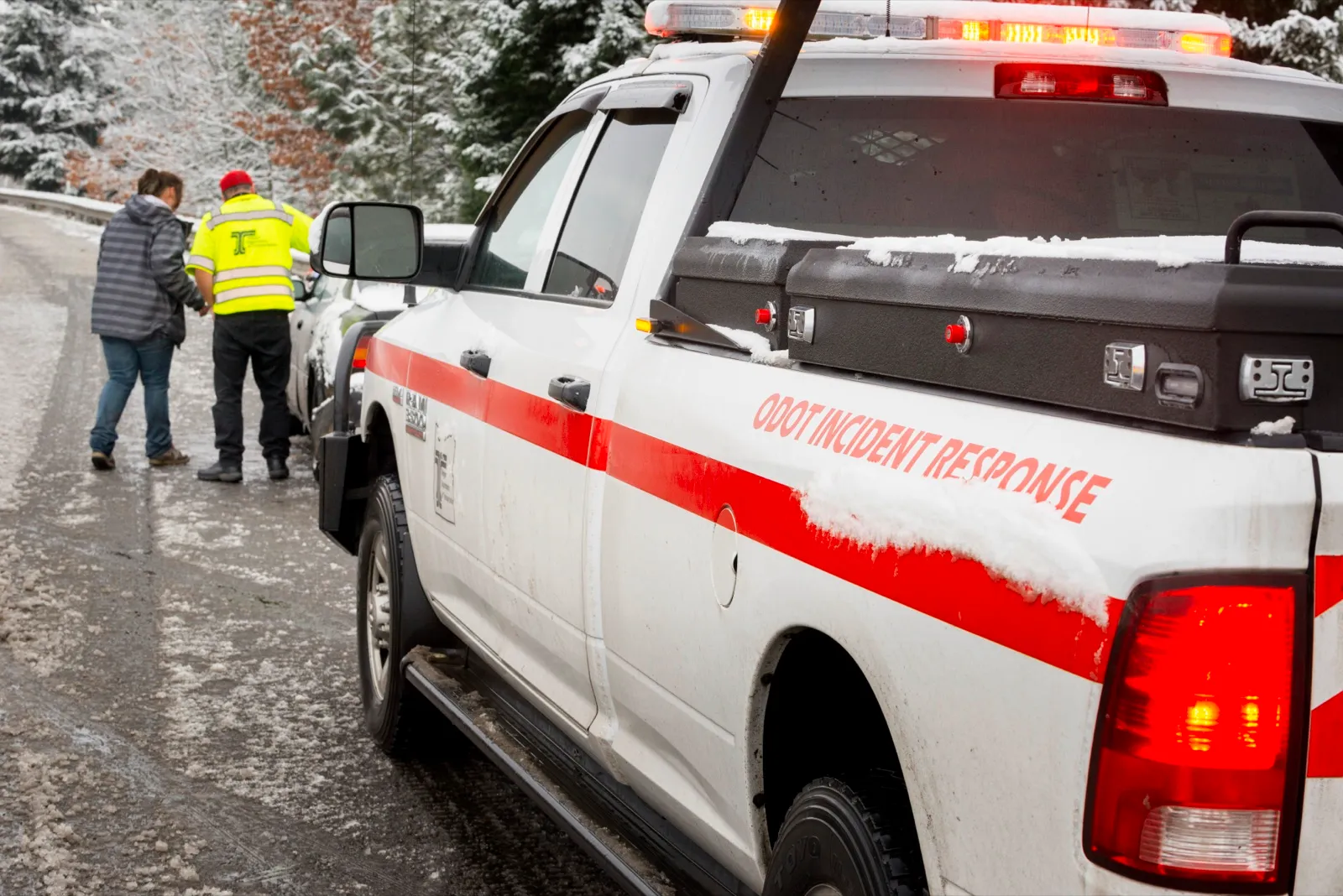
.jpg)
When a NEMT vehicle breaks down, get it out of traffic, turn on the hazard lights, set out warning triangles, and keep riders belted in unless fire or traffic makes the van unsafe. Then call dispatch, which tells the broker at once so a credentialed backup van or another provider can finish each trip. Log the breakdown and send a written report, often within 24 to 48 hours.
- Safety comes before the schedule: get out of traffic, set out triangles, and keep riders belted in unless fire or traffic makes the van unsafe.
- Call the broker as soon as a trip is at risk, so it can send backup or reassign the ride while there is still time.
- Only a vehicle and driver the broker has credentialed for that level of service can finish the trip. New York bans handing it to another company yourself.
- Write it up the same day. MTM Health in Rhode Island wants a written report within 24 hours and charges $500 when you skip it.
- Keep a spare that can run your hardest trips. A wheelchair van can cover a sedan trip where the broker allows it, but a sedan can never carry a wheelchair rider.
A breakdown with riders aboard is two problems at once. The van has to be made safe on the side of the road, and every rider on it, plus everyone waiting later on its run, still needs a ride. The hour after the van stops decides whether those trips get covered, paid, and forgiven on your scorecard.
What to do in the first 15 minutes
The driver handles the roadside. Dispatch handles everything else. Put these steps on a card in every van.
- Get out of the travel lanes. Signal, pull onto the right shoulder or into a lot, and turn on the hazard lights. If the van can still roll safely, a side street or lot keeps everyone farther from traffic than a highway shoulder does. If your vans are commercial motor vehicles under federal rules, a van found unsafe on the road may keep going only to the nearest place it can be safely repaired, and only when that is less hazardous than leaving it on the highway (49 CFR 396.7).
- Set the parking brake and put out the triangles. Keep the hazards flashing until the triangles are out. The placement is in the table below.
- Decide whether riders stay in or get out. California’s Driver’s Handbook tells drivers stalled on a freeway to stay inside with seat belts on until help arrives. It says getting out and staying away can be safer where the shoulder is too narrow, where there is a guardrail, or where a safe spot lets you wait away from the lanes. Wheelchair riders stay in their securements unless the van must be emptied.
- Get everyone out at once for smoke or fire. The U.S. Fire Administration says to turn off the engine, get everyone out, never go back in, and not open a hood or trunk that may have fire under it. Move everyone at least 100 feet from the van and well away from traffic, then call 911.
- Watch the temperature inside. The National Weather Service warns never to leave disabled adults in a parked vehicle, that heat illness can set in on a mild day in the 70s, and that cracked windows barely slow the heating. If the engine and air conditioning are dead on a hot day, ask dispatch to send the first rescue van to the riders at most risk. In a winter storm the Weather Service says to stay in the vehicle, run the motor about 10 minutes each hour with a window open a little, and keep snow off the exhaust pipe.
- Call 911 for anyone hurt, sick, or in danger. A breakdown can turn into a medical call. See a medical emergency during a ride.
- Call dispatch with the facts. Where the van is, who is aboard and at what level of service, what failed, whether the lift or ramp still works, whether the van can move, and the next pickups on the run.
Where the warning triangles go
Federal placement rules bind commercial motor vehicles only, but they are a sound standard for any van. Every truck and bus they cover must carry three reflective triangles or at least six fusees (49 CFR 393.95), and the driver places them as soon as possible, within 10 minutes (49 CFR 392.22, amended February 19, 2026).
| Where the van is stopped | Where the three triangles go |
|---|---|
| Two-way road | One on the traffic side, 10 feet behind the van. One 100 feet behind. One 100 feet ahead. |
| Divided or one-way road | One on the traffic side within 10 feet of the rear. One 100 feet behind. One 200 feet behind. |
| Within 500 feet of a curve, hill crest, or other blind spot | Place the triangle on the blind side 100 to 500 feet from the van, so drivers see it before the blind spot |
| In a business or residential district | Not required, unless it is dark and street lights do not make the van visible from 500 feet |
Minnesota writes its own version into its special transportation rules. Every vehicle must carry three triangles (8840.5925). A van disabled outside a business or residential district when headlights are required gets one 10 feet back on the traffic side, a second about 100 feet back, and a third about 200 feet back on a one-way road (Minnesota Rules 8840.5950).
Who to call, and in what order
Dispatch makes these calls so the driver can stay with the riders.
| Call | Why | What programs require |
|---|---|---|
| The broker’s dispatch line | It can send backup or give the trip to another provider | New York has providers alert the broker as soon as possible and notes brokers answer the phone 24/7 (policy manual, effective August 25, 2023). MAS, New York’s broker, wants to hear as soon as you know you cannot make or complete a trip (manual, October 1, 2023). |
| Each rider’s appointment | To find out whether the rider can still be seen | Texas health plans confirm the medical provider can still see a late member (UMCM 16.4, section 2550) |
| Riders waiting later on the run | To give them a new time or another way to get there | Georgia has the provider contact riders at their pickup points and advise them of other pickup arrangements when appropriate (manual, July 1, 2026, section 903.1.6) |
| Family or facility staff for a hand-to-hand rider | Someone must be there to receive the rider | Your broker’s level of assistance rules |
| A tow or roadside service | To clear the van | Your roadside plan or insurer |
Use the phone, not the portal. MTM Health’s Rhode Island handbook (last updated July 1, 2026) does not allow same-day turnbacks, and every turnback must be done at least 24 hours before the appointment. So a trip at risk today goes to MTM by phone: its 24/7 provider hotline and dispatch line is 888-597-1180.
Brokers start their own backup at set points. Georgia’s broker must have a backup vehicle in place within 30 minutes after a vehicle is deemed unavailable for any reason (section 912), and Texas health plans arrange backup once a pickup is more than 30 minutes late (section 2400). The guide to a NEMT driver running late lists those marks by state.
Rescue trips: who can finish the ride
When the van cannot be fixed on the spot, the riders move to another vehicle. Florida’s Duval County transportation plan (approved September 2025) describes mechanical breakdowns as ones that need someone other than the driver to fix and usually require moving passengers to another vehicle. What matters is which vehicle.
| Rescue option | When it works | The catch |
|---|---|---|
| Your own spare van | It is close and credentialed for the rider’s level of service | MTM Health may not pay for trips in vehicles it has not credentialed, and may charge liquidated damages (standard agreement, January 1, 2023, section 2.N). |
| Another of your vans already on the road | It has a gap in its schedule near the breakdown | Its own later trips may now run late. Tell the broker about those too. |
| The broker reassigns the trip | You have no free vehicle that fits | This is the only path in New York. Some brokers keep their own backup, like the “shooter vans” Georgia requires its broker to have for this purpose (section 701.5). |
| A rideshare the broker sends | Ambulatory riders who need no hands-on help | Georgia allows rideshare backup only for ambulatory members who need no physical assistance (section 804.1). Never for wheelchair or stretcher riders. |
| Another company you call yourself | Only if the broker agrees in writing | New York used to allow short-term subcontracting with, or leasing vehicles from, another enrolled provider after a breakdown, and no longer does. MTM’s agreement bars any subcontract without its express written consent (section 12.A). |
Texas shows what a backup should be. Its Medicaid health plans keep a roster of each provider’s vehicles and backup vehicles, with the VIN or plate and the vehicle type (UMCM 16.4, section 2110). Virginia’s Medicaid agency requires the network to have enough backup vehicles to recover trips, and backup drivers and vehicles must meet every driver and vehicle rule (requirements updated May 26, 2026). A spare the broker has never seen is not a backup. See subcontracting NEMT trips for why a friend’s van is not one either.
Who gets rescued first
- Riders already on the broken van. They are stuck at the roadside.
- Riders whose care cannot wait. Dialysis, chemotherapy, and hospital discharges come next.
- Everyone else on the run, in pickup order.
Before a rescue van heads to a clinic, confirm the appointment can still happen. Texas health plans must keep a trip recovery protocol for accidents: a backup vehicle takes the member on to the appointment only if the member is willing and able and the medical provider confirms the appointment can be kept (section 5100). If it cannot, the rescue van takes the rider home, and the broker helps reschedule.
Wheelchair and stretcher riders
A rider who uses a wheelchair waits for a lift or ramp vehicle, and a stretcher rider waits for a stretcher van and its crew. CMS says that if a Medicaid member uses a wheelchair, the state must make sure the ride is in a wheelchair-accessible vehicle (SMD 23-006, September 28, 2023). Georgia defines stretcher service as a reclining ride for a member who needs at least two people to get to and from the vehicle (section 709.3). So a stretcher rescue needs two people to move the rider, not one.
When the lift is what failed:
- Use the manual backup. Every lift built to federal accessibility standards must have an emergency way to lower a rider to the ground and to raise and stow the empty lift if power fails (49 CFR 38.23). Teach each driver the manual backup on the van they drive, often a hand pump, before they need it.
- Take the van off wheelchair trips. Federal rules require lifts and securements to be kept working and repaired promptly. While one is out, you take reasonable steps to serve the riders who would use it (49 CFR 37.161). A van with a dead lift can still carry ambulatory riders if the broker allows it.
- Keep the rider secured while you wait. A wheelchair rider stays tied down in the van unless smoke, fire, or traffic makes it unsafe. CareOregon’s manual bars drivers from carrying a member up or down stairs, so plan the rescue around the rider’s own chair.
The wheelchair securement guide covers straps and belts, and the NEMT emergency plan template has an evacuation part for each van.
What to report, log, and bill
Report it as an incident
Several programs count a breakdown as an incident, not just a delay.
| Program | What counts | What to file |
|---|---|---|
| New York Medicaid | An occurrence, breakdown, or public disturbance that interrupts the trip and makes the driver stop | Every event on the NYSDOH NEMT Accident and Incident Report, sent to the broker within 48 hours (required since January 1, 2022) |
| Texas Medicaid health plans | An occurrence, event, breakdown, or public disturbance that interrupts the trip | Accident and incident data the health plan tracks by driver, vehicle, and member (section 5100) |
| MTM Health, Rhode Island | Service disruptions and securement issues, among its Tier 2 incidents | Tell MTM promptly and send a written report, both within 24 hours. Missing it costs $500. |
| Duval County, Florida | Every breakdown or road call | A Vehicle Breakdown Report to the county’s coordinator |
The incident report form has room for all of it.
Log each leg as it really happened
Write down the time the van failed, where, the odometer reading, when the riders moved, and which van and driver finished each leg. Arizona’s fee-for-service program requires a new Daily Trip Report for each vehicle when a driver uses more than one vehicle on the same date of service (billing manual, revised July 31, 2026). Your trip documentation has to show the rescue, not the plan.
Bill only what your company drove
Medicaid generally pays only the provider that gave the service, not anyone it hands the claim to (42 CFR 447.10). Bill the legs your company drove, in vehicles and with drivers the broker credentialed. In May 2026, Indiana’s fee-for-service broker denied 67 claims for an unauthorized vehicle and 78 for a service not provided to the member.
A late rescue can cost the trip. Washington’s sample broker contract, posted by its Health Care Authority for the July 2021 to June 2025 term, bars payment when the rider arrives too late to be seen. The broker may still pay when the delay was not the provider’s fault, such as a traffic accident that stopped all traffic.
Protect your scorecard
CareOregon’s manual says a provider no-show may be excused for an accident or an unforeseen vehicle issue, case by case. It also warns that a pattern of no-shows or last-minute reassignments can lead to a corrective action plan. A clean incident report filed the same day is what makes the excuse stick. See NEMT broker scorecards.
Backup vehicle options to set up now
Brokers expect a plan before the breakdown. MTM’s standard agreement requires a specific contingency or backup plan for every trip you accept (section 2.P), and CareOregon requires a contingency and backup plan for members who may be picked up excessively late.
Some contracts set a number. Florida’s county plans for the transportation disadvantaged program require their carriers to keep one backup vehicle for every ten in service in Duval County (plan approved September 2025), and one for every six in DeSoto, Hardee, Highlands, and Okeechobee counties (plan amended February 10, 2026).
| Option | What it gives you | What to check first |
|---|---|---|
| A spare van you own | The fastest rescue, already credentialed and insured | The payment and insurance on a van that sits most days. The fleet size calculator has a spare input. |
| A spare that can run your hardest trips | One vehicle that covers every level you carry | A wheelchair van with ambulatory seats can take a sedan rider. CareOregon allows that swap without asking. A sedan can never carry a wheelchair rider. |
| A rental or loaner while your van is in the shop | Keeps a route running during a long repair | The standard business auto form covers liability for a non-owned temporary substitute while your covered auto is out for breakdown or repair. The broker must still credential the vehicle before it carries riders. |
| A roadside assistance plan | A tow and a jump start | It moves the van, not the riders |
| A nearby provider | Coverage in an area you cannot reach fast | Only through the broker, never on your own |
Using any vehicle before the broker approves it can mean no payment for the trip and liquidated damages under MTM’s agreement (section 4.D). Add the spare to every broker’s vehicle list the day you buy it. For coverage limits and certificates, see NEMT insurance requirements.
How to prevent the next breakdown
Prevention starts with a daily inspection, which some brokers and states already require.
- Inspect before every shift. MAS requires drivers to document an inspection of each vehicle before every shift and may audit the records. Minnesota requires a daily safety inspection with a record of the date, mileage, and needed repairs, covering brakes, parking brake, steering, lights and reflectors, tires, horn, wipers, mirrors, emergency equipment, lifts and ramps, and securement devices (8840.5950). The vehicle inspection checklist covers the same items.
- Pull a van that is not safe to run. Federal rules bar operating a commercial motor vehicle in a condition likely to cause an accident or a breakdown (49 CFR 396.7).
- Log every breakdown by van. Duval County sorts them into mechanical failures, such as the engine, fuel system, electrical, cooling, or steering, and other failures, such as tires, a wheelchair lift or ramp, air conditioning, or running out of fuel. Two of the same failure on one van is a pattern.
- Service by the schedule. The NEMT vehicle maintenance guide has a preventive schedule for vans, lifts, and ramps.
What every van should carry for a breakdown
Minnesota’s equipment rule is a good baseline list (8840.5925):
- Three emergency warning triangles
- A mounted, charged fire extinguisher rated at least 5B:C
- A flashlight that works
- A blanket at all times, and an ice scraper from October 1 to April 30
- Spare fuses, if the van has an interior fuse box
- A strap cutter with no exposed blade
- A radio or phone for two-way contact, hands-free while driving
- A first aid kit and a body fluids cleanup kit
Virginia adds paperwork: each vehicle carries its registration, insurance card, and the broker’s accident and incident procedures and forms, plus the lease if the vehicle is leased (requirements updated May 26, 2026). Add a printed card with every broker’s dispatch number, so a driver with a dead phone battery can still borrow a phone and call.
Frequently asked questions
Should riders get out of a broken-down NEMT van?
Usually not. California's Driver's Handbook tells drivers stalled on a freeway to stay inside with seat belts on until help arrives. It names cases where getting out and staying away is safer, such as a shoulder that is too narrow, a guardrail, or a safe spot to wait away from the lanes. Get everyone out at once if there is smoke or fire: the U.S. Fire Administration says to move at least 100 feet from the vehicle and away from traffic, then call 911.
Can another NEMT company's van finish my trip?
Only if the broker arranges it or agrees in writing. New York once let an enrolled provider subcontract with, or lease vehicles from, another provider after a breakdown, and no longer allows it: you call the broker, and the broker finds another company. MTM Health's standard provider agreement (January 1, 2023 version posted by Pennsylvania) bars subcontracting any service without MTM's express written consent.
How fast does a backup vehicle have to arrive?
It depends on the program. Georgia's NEMT manual (version date July 1, 2026) has the broker put a backup vehicle in place within 30 minutes after a vehicle is deemed unavailable for any reason. Texas Medicaid health plans must arrange backup when a pickup is more than 30 minutes late, or 30 minutes after a rider calls for a return ride. Call early so the clock starts sooner.
Does a breakdown count as a provider no-show?
It can, but some brokers excuse it. CareOregon's transportation provider manual (version 1.3, February 2024) says a provider no-show may be excused for an accident or an unforeseen vehicle issue, case by case, and asks you to report to dispatch at once when you cannot perform a trip. A pattern of no-shows or last-minute reassignments can still lead to a corrective action plan.
Does my auto insurance cover a rental van while mine is in the shop?
The standard business auto form does, for liability. That form (ISO CA 00 01, 10 13 edition, as posted by Sonoma County) covers a vehicle you do not own, used with its owner's permission as a temporary substitute while your own covered vehicle is out of service for a breakdown or repair. Confirm your own policy with your agent, and have the broker credential the vehicle before it carries riders.
Do I have to report a breakdown to the broker?
Yes, in many programs. New York and Texas both define an incident to include a breakdown that interrupts a trip. New York has required its NEMT Accident and Incident Report for every event since January 1, 2022, sent to the broker within 48 hours. MTM Health's Rhode Island handbook (last updated July 1, 2026) wants service disruptions reported within 24 hours, with a written report, and charges $500 when you do not.