Drivers and vehicles
What to Do After a NEMT Vehicle Accident: First Steps, Who to Call, and What to Keep
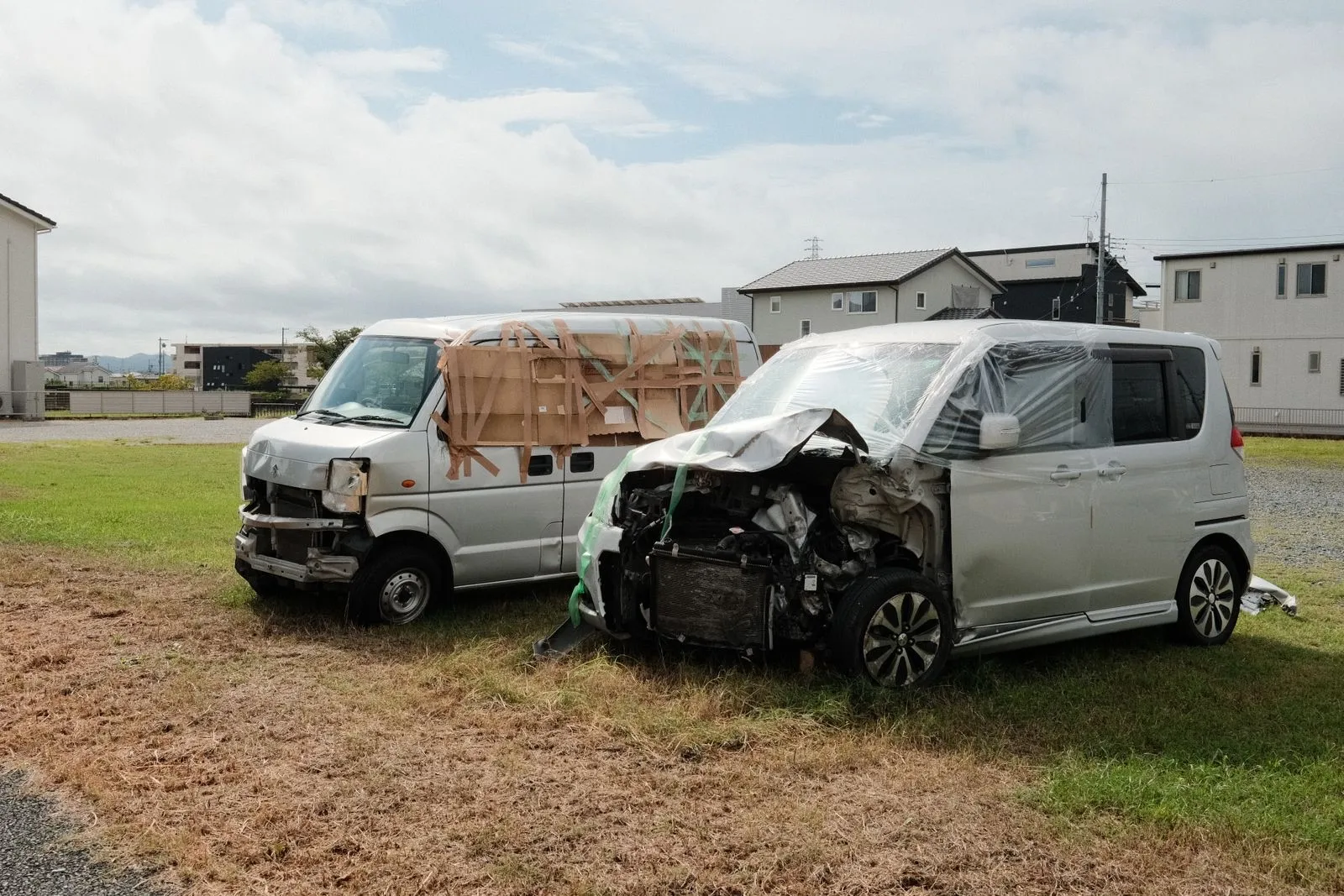
After a NEMT vehicle accident, stop, make the scene safe, call 911 if anyone is hurt, and phone the broker so riders get care and a new ride. Then report on each clock: the police and DMV under state law, your insurer as soon as possible, and the broker in writing, usually within 24 to 72 hours. Save photos, video, and GPS data before they are lost.
- Call 911 when anyone is hurt, then the broker. Modivcare wants to hear about every accident on its trips right away, injury or not.
- The written report is due fast: 24 hours at Modivcare and MTM Health in Rhode Island, 48 hours in New York, and 72 hours in Louisiana.
- Many broker contracts require a post-accident drug test. Louisiana wants the result of a screen done within 12 hours of the crash.
- MTM Health treats a crash as your driver's fault unless documents such as the police report show otherwise, so collect them.
- Keep the file for years. In Texas the two-year clock to sue does not run while a rider is under 18 or of unsound mind.
A crash with a rider on board starts several clocks at once. The police, the DMV, your insurer, your broker, and sometimes your state each have their own deadline, and missing one can cost you the contract. This guide covers the first hour at the scene, who to call and by when, and the records that protect the company afterward.
What to do at the scene, step by step
Keep a printed copy of these steps and a blank incident report form in every van. Brokers and states expect it: Modivcare’s 2025 compliance attestation has drivers keep its accident form in the vehicle, and MTM Health’s Virginia handbook (May 2026) lists incident and accident procedures among the required onboard items.
- Stop and make the scene safe. Drivers in a crash must stop. Texas, for example, requires the driver to stop at or near the scene, check whether anyone needs aid, and stay until information is exchanged (Transportation Code 550.021). Turn on the hazard lights. Minnesota’s special transportation service rules require warning triangles 10 feet and about 100 feet behind a van stopped on a highway outside a business or residential area when lights are required (Minnesota Rules 8840.5950).
- Move the van only when it is safe and allowed. If nobody is hurt and the van can be driven, some states want it out of traffic. Florida requires a reasonable effort to move a damaged vehicle that is blocking traffic (Florida Statutes 316.061). Texas requires it on metro freeways (550.022).
- Check every rider and call 911 when anyone is hurt. CareOregon requires the driver to call 911 when an ambulance is needed, then tell broker dispatch right away. Louisiana’s Medicaid manual has the driver notify emergency services immediately. Ask each rider whether they want medical care and write down the answer. For what to do in the moment, see a medical emergency during a ride.
- Call the police when the law requires it. In Texas, call right away when anyone is hurt or killed or a vehicle cannot be driven normally (550.026). In Florida, call right away when anyone is hurt or killed or the damage looks like $500 or more. Starting October 1, 2026, that damage threshold is $2,000 (316.065). Get the officer’s name, badge number, and report number.
- Phone the broker. Call dispatch as soon as riders are safe, so it can send another vehicle and warn the clinic. Modivcare wants to hear about any accident right away. MTM Health’s standard agreement also requires you to tell MTM about significant delays and make other plans to finish the trip when the appointment can still be kept.
- Exchange information. Texas requires each driver to give their name and address, the vehicle’s registration number, and the name of the liability insurer, and to show a driver’s license if asked (550.023). Photograph the other driver’s license, insurance card, and plate.
- Record the scene. Photograph every vehicle, the road, signs, and each rider’s seat and securement. Get the names and phone numbers of witnesses. The Texas Department of Insurance notes that independent witnesses can help prove fault.
- Save the video before it records over. Modivcare’s accident form warns that an incident often leads to a lawsuit, and that losing records such as photos and video, even by accident, can bring court sanctions.
- Hand each rider off and write it down. Note where each rider went next, who received them, and whether that person was told about the crash. In Louisiana, when a rider goes to an emergency room, the driver notifies the Louisiana Department of Health, the broker, and a family member right away.
Stick to facts with the other driver and the police: what happened, in order. Leave fault to the investigation and the insurers.
Who to notify after a NEMT accident, and by when
Your broker contract and your state set your exact deadlines. These are the rules with written deadlines as of September 2026.
| Who | When | Rule or example |
|---|---|---|
| 911 | Right away when anyone needs emergency care | CareOregon and Louisiana require it |
| Police | Right away when state law requires | Texas: an injury, a death, or a vehicle that cannot be driven. Florida: an injury, a death, or apparent damage of $500 or more ($2,000 starting October 1, 2026) |
| Broker, by phone | Right away | Modivcare: any accident. MTM Health in Rhode Island: any injury right away, crashes without injury within 24 hours. New York: a death, an ambulance response, or a hospital stay |
| Broker, in writing | Usually 24 to 72 hours | Modivcare and MTM Health in Rhode Island: 24 hours. CareOregon: right away with an injury, 24 hours without. New York: 48 hours. Louisiana: 72 hours |
| Broker, a copy of the police report | Within days | New York: 24 hours after you receive it. MTM Health in Rhode Island: 5 business days. Louisiana: the state crash report within 15 business days |
| DMV | 10 days in some states | New York’s MV-104, California’s SR-1, and Florida’s driver report when no police report is required |
| Your auto insurer | As soon as possible | Your policy sets its own claim deadlines |
| Workers’ comp insurer, when a driver is hurt | 5 to 10 days | California 5 days, Florida 7, Texas 8 after more than a day off work, New York 10 |
| OSHA, when an employee dies or is hospitalized | 8 or 24 hours | Not for crashes on a public road outside a work zone |
| Your state license office | When your license requires it | New Jersey mobility assistance vehicle providers: phone by the end of the next business day, written report within 14 calendar days |
New York’s Medicaid transportation manual (effective August 25, 2023) sets 48 hours for the written report, while the state’s report form still says 2 business days. Filing within 48 hours meets both.
In Rhode Island, MTM Health’s handbook (updated July 1, 2026) says failing to report an accident with an injury or death right away will end your MTM contract, and a miss on any of its reporting rules costs $500 in liquidated damages. MTM’s Virginia handbook counts a failure to report an incident or accident among its 3-point violations, which bring at least a 5-day suspension and possible removal of the driver or vehicle.
MTM’s standard agreement also requires immediate notice of any civil claim against you or your drivers arising from its trips. If a rider or another driver files a claim months later, tell the broker then too.
What your broker will ask for, and why it matters
The written report is where the broker decides whether your driver caused the crash. Use the broker’s own form when it has one. Modivcare’s report asks for more than most owners expect:
- The time the driver’s shift began and how many trips they had done that day
- The vehicle’s VIN, plate, and insurer, and whether it has a camera
- Weather and road conditions, and whether pickup and drop-off were on time
- Whether the trip was shared, and any escort, attendant, service animal, or mobility device on board
- Whether the rider was offered medical care, with a signature if they refused
- Witness names, the police agency and report number, and a statement signed by the driver
Fault is the part that follows your driver. MTM Health’s standard agreement presumes a crash was the driver’s fault unless the driver provides evidence otherwise, and it requires copies of police reports to verify a no-fault accident. It bars drivers convicted of two or more at-fault accidents with injury or damage within 36 months. MTM’s Virginia handbook allows no more than two chargeable accidents or moving violations on the driving record in three years.
CareOregon’s brokers treat every incident as preventable until documentation proves otherwise, and they track the results by driver and provider. Good documentation, CareOregon says, includes an unbiased third-party account such as a police statement or proof that the other driver’s insurer paid, plus a narrative signed by the driver. Patterns can lead to a driver’s suspension or a corrective action plan for the company.
Police and DMV crash reports in four states
A broker report never replaces a report the law requires. New York’s incident policy says so plainly. Here is what four large states ask of drivers as of September 2026.
| State | When to call the police | The driver’s own report | The police report |
|---|---|---|---|
| New York | Right away when someone is hurt or killed | MV-104 to the DMV within 10 days for a death, an injury, or more than $1,000 in damage to one person’s property. Missing it is a misdemeanor, and the DMV may suspend the license until it is filed | Send a copy, or the MV-104A, to your NEMT broker within 24 hours of receiving it |
| California | A driver of a vehicle other than a common carrier vehicle reports an injury or death crash in writing to the CHP or city police within 24 hours. A common carrier vehicle’s owner or driver reports it to the CHP by the 10th of the next month (Vehicle Code 20008) | SR-1 to the DMV within 10 days if anyone is hurt, however slightly, or killed, or property damage is over $1,000. The driver, or the driver’s insurance agent, broker, or legal representative, files it | The SR-1 is required on top of any police, CHP, or insurance report |
| Texas | Right away for an injury, a death, or a vehicle that cannot be driven normally | The officer writes the state report, but a city may require drivers to file their own by ordinance (550.067) | The officer files it within 10 days for an injury, a death, or $1,000 or more in damage. People in the crash, a driver’s employer, and insurers can buy a copy for $6 |
| Florida | Right away for an injury, a death, or apparent damage of $500 or more ($2,000 starting October 1, 2026) | Each party gives the officer proof of insurance. When the crash needs no police report, the driver sends a written report to the Department of Highway Safety and Motor Vehicles within 10 days | The officer files a long-form report within 10 days of finishing the investigation when anyone is hurt or complains of pain, a vehicle is towed, a driver leaves the scene or is impaired, or a commercial motor vehicle is involved |
Other states set their own rules, so check your state DMV. If your vans are commercial motor vehicles used in interstate commerce, FMCSA also requires an accident register kept for 3 years after each accident, with copies of every report owed to a state or an insurer (49 CFR 390.15).
Post-accident drug and alcohol testing
Federal post-accident testing reaches only CDL drivers and contractors of FTA-funded transit agencies. For everyone else, the test comes from your broker contract and your own policy. Line up a testing site before you need one, and write the steps into your drug and alcohol policy.
| Rule | Who it covers | What it requires |
|---|---|---|
| MTM Health standard agreement (January 1, 2023) | Drivers and attendants on MTM trips | Drug and alcohol screening after an accident and on reasonable suspicion. Refusing to test in the time allowed counts as a positive result |
| MTM Health, Rhode Island (July 1, 2026) | Rhode Island MTM providers | A five-panel program with mandatory pre-employment, post-accident, and random tests |
| Louisiana Medicaid (July 14, 2025) | Louisiana NEMT providers | The 72-hour accident report to the broker includes the result of a drug screen done within 12 hours of the incident |
| FMCSA, 49 CFR 382.303 | CDL drivers of commercial motor vehicles on public roads | Test after a death, or after a citation when someone was treated away from the scene or a vehicle was towed. Alcohol: record why if not done within 2 hours, stop trying at 8. Drugs: within 32 hours |
| FTA, 49 CFR 655.44 | Contractors of transit agencies funded under 49 U.S.C. 5307, 5309, or 5311 | Test after a death, and after any other accident unless the driver’s performance can be completely discounted, using the same 2, 8, and 32 hour limits |
Under both federal rules, a driver who does not stay available for the test may be treated as refusing, and nothing requires delaying medical care to test. The FTA definition of an accident counts an injury treated away from the scene or a van towed for disabling damage. See drug and alcohol testing for NEMT drivers and whether your drivers need a CDL.
Insurance claims: your policy, the rider, and Medicaid
Tell your insurer about the crash as soon as possible. The Texas Department of Insurance notes that most companies have deadlines for filing claims, and asks you to send the police report, photos, and any medical bills. Texas law then gives the insurer deadlines on your own claim: it must acknowledge the claim within 15 days, accept or reject it within 15 business days after it has everything it needs (or 45 days with a stated reason), and pay within 5 business days after it agrees to. In Texas, uninsured motorist coverage will not pay for a hit-and-run you did not report to the police.
Your broker contract shapes the claim too. MTM Health’s standard agreement makes your insurance primary and non-contributory, names MTM as an additional insured, and requires coverage that includes loading and unloading. It also has you defend MTM and its client against claims from your trips. Tell your adjuster when a claim names the broker, and see NEMT insurance requirements for the limits brokers set.
When a Medicaid rider is hurt, the state Medicaid program may pay the medical bills first. Federal rules then require the state to look for paid claims that point to an injury and seek payment from liable third parties (42 CFR 433.138). Send any state letter about a rider’s care to your adjuster.
When your driver is hurt
A driver hurt on the job is a workers’ compensation claim. State deadlines are short:
| State | The employee tells you | You report to your insurer |
|---|---|---|
| California | Within 30 days (Labor Code 5400) | Give the claim form within one working day of learning of an injury that needs more than first aid (5401), and file the report within 5 days (6409.1) |
| Florida | Within 30 days (440.185) | Within 7 days of learning of the injury |
| Texas | Within 30 days (Labor Code 409.001) | By the 8th day after the employee misses more than one day of work (409.005) |
| New York | Within 30 days (Workers’ Compensation Law 18) | Within 10 days of the accident when it causes a day of lost time beyond that shift, or care beyond ordinary first aid (Workers’ Compensation Law 110) |
You do not have to report to OSHA a death or hospital stay caused by a crash on a public street or highway outside a work zone, but the injury still goes on your OSHA logs if you must keep them (29 CFR 1904.39). See workers’ comp for NEMT drivers and OSHA rules for NEMT companies.
Every claim lands on your loss runs, the claims history the next insurer reviews, which is one reason NEMT insurance costs climb after crashes.
Records that protect the company
Claims can arrive long after the crash. In Texas, a person has two years to sue for a personal injury, and that clock does not run while a rider who was under 18 or of unsound mind at the time of the crash stays that way (Civil Practice and Remedies Code 16.001 and 16.003). For a child rider, the two years start at 18. Build one accident file the day it happens.
| Record | Why it helps |
|---|---|
| The broker’s report and your own incident form | Shows you reported on time and what the driver saw |
| Police report number and copy, and any DMV report | The document MTM needs to treat a crash as no-fault |
| Photos, witness names, and the driver’s signed statement | CareOregon counts a third-party account and a signed narrative as good documentation |
| Dash camera video | CareOregon says footage can go to the broker as evidence when it decides whether an incident is substantiated |
| GPS data for the trip | Shows speed, stops, and times. New York has required GPS breadcrumbs for every trip since April 3, 2023 |
| The trip log or manifest | Shows who was on board, the level of service, and the times. See NEMT trip documentation |
| The driver file | License, driving record, training, and the post-accident test result |
| The vehicle file | Inspections, lift service, and maintenance before and after the crash |
| Insurance claim papers | Minnesota requires a file of claims and every accident report owed to the state or an insurer |
If your vans record video, set a retention period in writing and pull the accident footage before it is erased. Colorado’s HB26-1328, in effect since July 1, 2026, requires Medicaid transportation providers with more than five vehicles to carry members only in vehicles with two-way video dash cameras. It does not require keeping video past the retention period set in your own operating procedures. See dash cameras in NEMT.
The file holds rider health information. If your company is a HIPAA covered entity, legal services are part of health care operations (45 CFR 164.501), so you can give your lawyer what the case needs, and share only what each party needs. See HIPAA for NEMT. For how long to keep each record, see NEMT record retention.
Getting the van and the driver back on the road
The van. CareOregon requires an ASE-certified mechanic to assess any vehicle damaged in an accident before it goes back into service, and damaged vehicles may not keep doing NEMT trips. Check the lift, ramp, and securement straps too, using the vehicle inspection checklist. If the van is replaced, add the new one to your broker’s vehicle roster and your insurance before it carries anyone. MTM requires immediate notice when you add or remove a vehicle on a scheduled auto policy. In New Jersey, a mobility assistance vehicle license is void once the vehicle becomes unusable. Colorado’s HB26-1328 makes trips in noncredentialed vehicles ineligible for payment.
The driver. A broker can pull a driver from its trips after a crash. CareOregon’s manual lets its brokers disqualify a driver at once for repeated collisions or a single serious collision, such as reckless driving. CareOregon also requires a written collision investigation procedure that you follow for every crash. In Minnesota, a driver who did not follow your written accident policy must retake that training before driving again (Minnesota Rules 8840.5950). Where the crash shows a skill gap, schedule a defensive driving course or securement retraining and record it in the driver file.
The company. Review every accident at month’s end with the others. The same route, time of day, or task behind several reports points to a fix, such as retraining or a safer pickup spot.
Frequently asked questions
Do I have to report a NEMT accident if nobody was hurt?
Yes, to your broker, and often to the police or DMV too. Modivcare wants to hear about any accident on its trips right away. MTM Health in Rhode Island and CareOregon want a report within 24 hours even for a crash with no injuries, and New York requires a report for every accident with a Medicaid rider in or around the vehicle. State crash reports also turn on damage, such as more than $1,000 in New York and California.
Does the driver need a drug test after a NEMT accident?
If your broker contract or your own policy says so, and many do. MTM Health's standard agreement lists post-accident drug and alcohol screening, and its Rhode Island handbook makes post-accident drug screens mandatory. Louisiana wants the result of a drug screen done within 12 hours. Federal clocks apply only to CDL drivers of commercial motor vehicles and to contractors of FTA-funded transit agencies: alcohol within 8 hours and drugs within 32 hours.
Can my driver finish the trip after a crash?
Only in a vehicle that is safe to drive, and often not in that van at all. CareOregon bars a damaged vehicle from NEMT service until an ASE-certified mechanic has checked it. Call broker dispatch right away so it can send another ride or tell the clinic, and write down where each rider went next: the appointment, home, or an emergency room.
Who pays a Medicaid rider's medical bills after a NEMT crash?
Usually the liability insurance of whoever caused the crash, which may be your policy. Medicaid may pay the bills first, but every state Medicaid agency must look for paid claims that point to an injury and seek payment from liable third parties (42 CFR 433.138). If the state contacts you or your insurer about a rider's care, pass the letter to your claims adjuster.
Will an accident keep my driver off broker trips?
It can. MTM Health's standard agreement bars drivers convicted of two or more at-fault accidents with injury or damage in 36 months, and it presumes a crash was the driver's fault unless the driver shows otherwise. Copies of police reports are required to prove a no-fault accident. MTM's Virginia handbook allows no more than two chargeable accidents or moving violations in three years.
Do I report a driver's crash injury to OSHA?
Not when it came from a crash on a public street or highway outside a construction work zone. Other work-related deaths go to OSHA within 8 hours, and in-patient hospital stays, amputations, and losses of an eye within 24 hours (29 CFR 1904.39). If you keep OSHA injury logs, a crash injury still goes on them.
How long should I keep accident records?
As long as the longest rule that applies to you, and longer while any claim is open. MTM Health's standard agreement requires full records for 10 years. New York requires you to keep the accident report and attachments for 6 years or 3 years past the rider's 18th birthday, whichever is longer. Minnesota requires special transportation providers to keep accident records at least 3 years. Ask your insurer before you destroy anything.
Official resources
- New York DMV: Form MV-104, Report of Motor Vehicle Crash
- California DMV: File an SR-1 accident report
- Modivcare: Member Incident, Accident, and Injury Report form
- New York State Department of Health: NEMT Accident and Incident Report form
- OSHA: Report a fatality or severe injury
- Texas Department of Insurance: Auto insurance guide
- eCFR: 49 CFR 382.303, FMCSA post-accident testing