Brokers
NEMT Subcontractor Work in 2027: How to Run Trips Under Another Provider
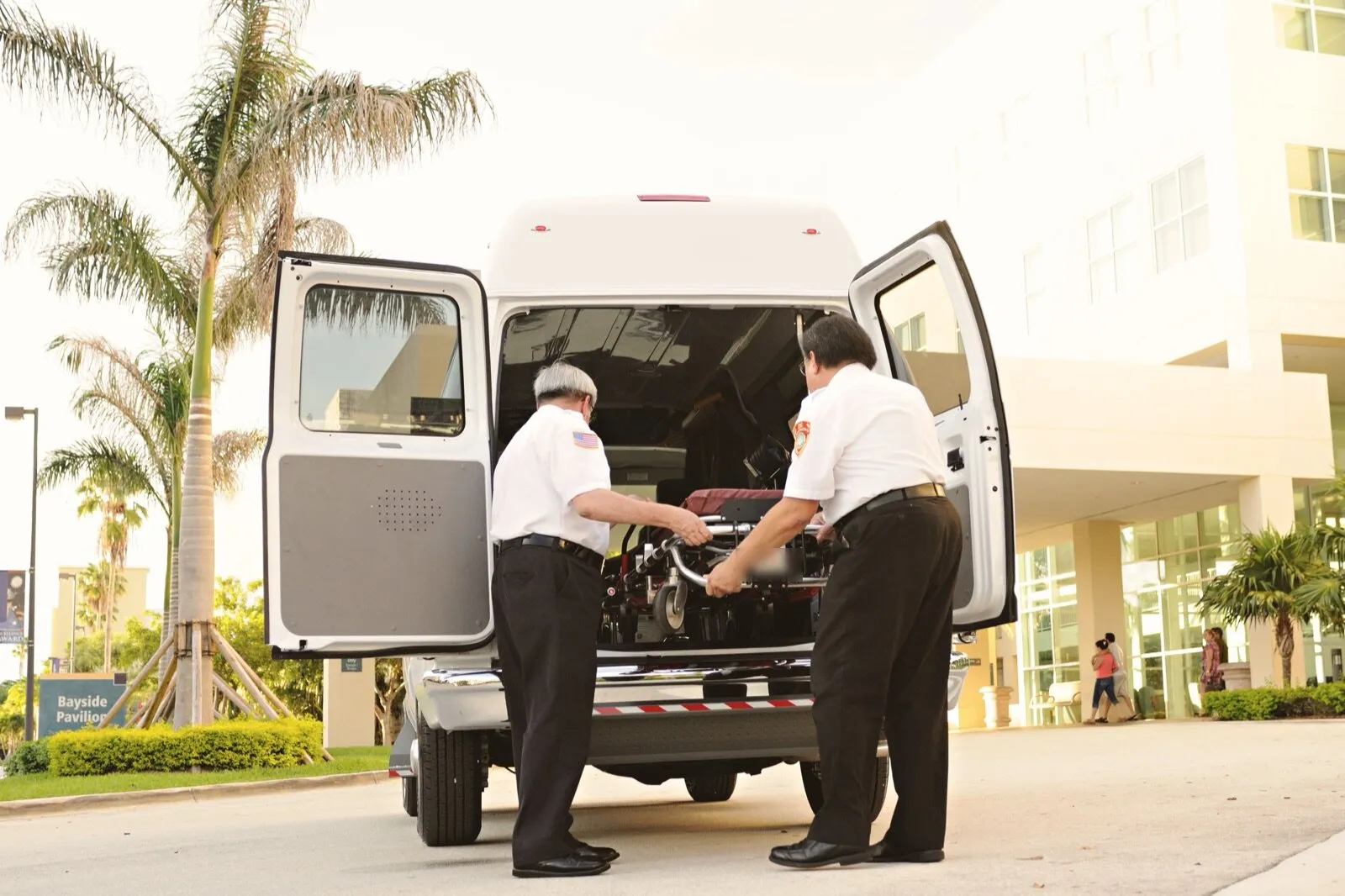
A NEMT subcontractor is a company that drives trips another provider holds under its own broker, health plan, or facility contract. Broker agreements such as MTM Health's and WellTrans's forbid it without written consent, and New York Medicaid forbids it entirely. Where it is allowed, the broker still approves your drivers and vans, and the prime provider stays answerable for every trip, so both companies sign an agreement first.
- Start with the prime's payer agreement. MTM Health and WellTrans require written consent, and New York does not allow subcontracting at all.
- Consent is not a shortcut. A driver or van the broker never approved can mean an unpaid trip and a penalty for the prime.
- The prime keeps every duty it owes the broker, so its insurance, reporting, and records rules land on you through the subcontract.
- Turned-back trips usually return to the broker, so your own network contract is the steadiest source of overflow.
- No rider details should reach you until a subcontract and a HIPAA business associate agreement are signed.
An established company with more trips than vans is a tempting first customer for a new NEMT business. Running its overflow can keep your van busy while your own enrollment works its way through. Done without the payer’s blessing, it can also mean trips nobody pays for, an insurance claim nobody covers, and a broker that drops both companies.
Can you run trips under another NEMT provider?
In this arrangement one company, the prime, holds the contract with a broker, health plan, or facility. Your company drives some of the prime’s trips, and the prime pays you out of what the payer pays it. Brokers use the word subcontractor more loosely: MTM Health’s Virginia handbook (approved August 10, 2026) addresses every provider in its network as a subcontracted transportation provider, and Kentucky’s sign-up page for broker networks is titled “Subcontract Non-Emergency Medical Transportation Provider.” This page is about the level below that network, where your company works for one of its members.
Whether the arrangement is allowed is written in the prime’s payer contract. Here is what published agreements and manuals said as of September 2026:
| Program | Rule on handing trips to another company | Document date |
|---|---|---|
| New York Medicaid | Forbidden. Providers are personally and directly responsible for transporting enrollees, and that duty may not be assigned, delegated, or subcontracted. | Policy manual effective August 25, 2023 |
| MTM Health standard agreement | Only with MTM’s express written consent, for any service and any person or business (section 12.A). A driver is an individual the provider itself retains or employs (section 1.E). | January 1, 2023 version posted by Pennsylvania |
| WellTrans, Indiana | Only with WellTrans’s express written consent, which it may withhold in its sole discretion. An unauthorized assignment is void. Drivers and vehicles must be registered with and pre-approved by WellTrans, or the trip is not paid. | Revised October 16, 2025 |
| Modivcare, Kansas | No subletting, subcontracting, or arranging transportation from any third party, and only vehicles the provider owns or leases. | Manual updated May 2022, linked from Modivcare’s Kansas page |
| CareOregon brokerages, Oregon | A provider that cannot run a trip sends it back to the brokerage for reassignment and may not change assigned rides without authorization. | Manual version 1.3, February 2024 |
New York once let an enrolled company subcontract trips to another enrolled company, or lease its vehicles, for a short time after a breakdown or similar emergency. It no longer allows either, because such arrangements can slip past the safety and financial controls the Medicaid program relies on. Today a New York provider that runs short of vehicles calls the broker, and the broker finds a different company.
Vehicle ownership rules shut the same door from another side. New York requires ambulance, ambulette, and taxi providers to own their vehicles or lease them in the provider’s own name from a manufacturer or licensed dealer, and to register, insure, and maintain them. A provider may not use a vehicle registered to, insured by, or maintained by someone else, and violators can be disenrolled. So a plan to “run your van under my contract” can break the rules even if the trip itself never changes hands.
Trips that a hospital, nursing home, or rider pays for directly are governed by that customer’s contract. Before you drive one, get a copy of the clause in the prime’s facility agreement that permits another company to do the work. See NEMT facility contracts.
What the prime provider stays liable for
A prime that hands you a trip keeps every promise it made about that trip. The principle starts at the top. Under 42 CFR 438.230, a Medicaid health plan keeps ultimate responsibility for its state contract even when it subcontracts, and government auditors can inspect its subcontractors and their contractors for 10 years after the contract period ends. Broker agreements then place the same weight on each provider in the network.
| Duty the prime keeps | Where the agreements put it |
|---|---|
| Running what it accepted | MTM treats accepted trips as equal in priority to the provider’s other work and requires a backup plan for each one (section 2.P). A provider leaving MTM must still run its assigned trips through the 30-day notice period (section 14.B). |
| Using only approved drivers and vans | MTM may withhold pay for trips run by uncredentialed drivers or in uncredentialed vehicles, and can charge liquidated damages (sections 2.N and 6.B). WellTrans charges $100 per driver per day, capped at $2,500 a month per occurrence, and $100 per vehicle per day for a vehicle it has not registered or that is missing from the provider’s insurance. |
| Screening everyone who works its trips | WellTrans providers promise that no employee or subcontractor on its trips has a Medicaid or Medicare fraud conviction, a program termination, or an exclusion. Louisiana’s Medicaid manual (July 14, 2025) bars anyone who employs or contracts with an excluded person from claiming Medicaid payment for that person’s services. |
| Answering for injuries | Each MTM provider takes on the defense of MTM and its client, and covers their losses, for claims tied to its work, including claims from people it engaged (section 10.A), and insurance minimums do not cap that promise (section 9.C). WellTrans’s indemnity covers services provided by the provider or at its direction. |
| Paying the workers | MTM holds the provider responsible for paying each employee and contractor on the work (section 2.KK). |
| Keeping records | MTM wants complete records for 10 years (section 2.S). WellTrans wants them for the contract term plus 10 years, with copies produced on three days’ notice. |
| Protecting member details | MTM forbids giving member information to any person or business without its written consent, beyond internal use (section 21.B). |
| Absorbing penalties | MTM may pass along any amount its client charges it because of the provider, and may withhold liquidated damages from payments (sections 7.A and 7.B). |
MTM’s Virginia handbook shows the stakes. Putting a driver, attendant, or vehicle on a trip without ever credentialing them in MTM’s system is a top-level violation there: 3 points, an immediate suspension of at least 5 days, and possible permanent removal of that driver or vehicle.
A careful prime therefore treats your company like its own staff. Expect it to ask for every credential, a certificate listing it as additional insured, and trip records by a fixed day. The NEMT liability guide covers what happens when a claim arrives.
Four ways a new company can cover another provider’s overflow
Providers turn trips back for ordinary reasons: a van in the shop, a driver out sick, a stretcher request on a day with no crew. What matters is the route those trips take to you.
| Route | Your contract is with | What the broker must approve | Best for |
|---|---|---|---|
| Drive for the other provider | That provider | You, as its driver | Owners still forming their company |
| Subcontract with consent | The prime | Your company, drivers, and vans, in writing | A prime with steady overflow, under a broker that allows it |
| Facility or private-pay overflow | The prime | Nothing, because no broker is involved | Work the facility contract lets the prime pass on |
| Your own network contract | The broker | Your company, as a provider | Getting turned-back trips offered to you directly |
Drive for the other provider first
Joining another company as its driver is the simplest legal way in. MTM’s agreement counts an individual the provider directly retains or employs as its driver (section 1.E). The provider keeps a file on each driver, owner-drivers included: license, criminal background check at hire and yearly, a three-year driving record pulled yearly, drug and alcohol results, and training certificates (section 5.C). You learn manifests, signatures, and claims from the inside while your own company is enrolled. If you would drive as a contractor rather than an employee, read can NEMT drivers be 1099 contractors.
Subcontract with written consent
If the prime’s agreement allows consent, the prime requests it from the broker. Keep a copy that names your company before your van moves. The broker will still want to approve your drivers, vans, and insurance as it would for any provider. See NEMT broker credentialing.
Take facility and private-pay overflow
Work that a facility or rider pays for is outside the broker’s rules, so the facility contract is the only permission you need. Keep this deal separate from Medicaid work, and never pay the prime for sending Medicaid riders your way. The anti-kickback guide explains why that kind of referral payment is a risk.
Join the network and take turned-back trips directly
When a network provider cannot run a trip, the broker usually takes it back. New York tells a short-handed provider to alert the broker so it can find another company. CareOregon’s manual has providers return trips for reassignment, and lists vehicle capacity and driver schedule limits among the acceptable reasons. The broker then offers the trip to another company in its network, and that company can be yours.
Getting in can take a while. As of September 2026, MTM Health’s Rhode Island page estimates 8 to 12 months on its waitlist for new providers, and Kentucky requires new network companies to keep at least three approved drivers and three working vehicles. For what to do while you wait, see when a broker network is full and starting with one van.
What subcontract work pays
Money moves in one direction: payer to prime, prime to you. MTM’s agreement has its providers look only to MTM for payment and never bill a member, even if MTM or its client fails to pay (section 6.C). As a subcontractor, the prime is the only company you can collect from.
A worked example makes the trade-off clear. As of September 2026, MTM Health posts its Rhode Island Schedule A (effective July 1, 2023) as its current rates. A curb-to-curb wheelchair trip in business hours, picked up within 40 miles of where the provider keeps its vans, pays $28.50 for the first 5 miles plus $2.50 for each mile beyond them. The trip length and the prime’s share below are example numbers.
| Example: one 12-mile wheelchair trip | Amount |
|---|---|
| Base rate, first 5 miles | $28.50 |
| 7 additional miles × $2.50 | $17.50 |
| MTM pays the prime | $46.00 |
| Prime’s example share, 20% | $9.20 |
| Paid to you | $36.80 |
Across 10 such trips in a day, the example share comes to $92 that your own contract would have paid you. Add the chance that the prime pays late or not at all, and overflow work makes more sense as a stepping stone than as a business plan.
The prime’s deadlines become yours:
- MTM pays properly submitted, uncontested invoices within 30 days of electronic submission, and will not pay a claim submitted more than 90 days after the date of service (section 6.A).
- WellTrans requires invoices with completed trip logs within 60 days, rejects any after 90 days, and pays twice a month within 30 days of submission. It can hold payments while its own client owes it money, and it deducts a trip a facility reports as not attended unless the provider responds in writing within 30 days.
Late trip logs from you can push the prime past its deadline, and then neither company is paid.
Terms to settle before the first trip
Get the arrangement signed by both companies before any rider gets in your van. The subcontractor agreement checklist has the full list. These terms carry the most weight:
| Area | Terms to settle |
|---|---|
| Permission | A copy of the broker’s written consent, naming your company and service area |
| The work | Counties, service levels, trip types, hours, and how trips are offered, accepted, and handed back |
| Money | The rate (a set price per trip, a price per mile, or a cut of the payer’s rate), who keeps after-hours, wait time, and no-show pay where the payer pays it, and a payment date counted from when you deliver trip records |
| Paperwork | What each trip record must show (pickup and drop-off times, rider signatures, mileage, and proof of any no-show), the format, and the due date |
| Denials | Which denials, recoupments, and penalties you absorb, limited to those your own service caused |
| Insurance | Limits that match the payer’s contract, the prime and the payer as additional insureds, and advance notice of any cancellation. MTM’s standard agreement sets general liability at $500,000 per occurrence and auto at a $500,000 combined single limit, while MTM’s Rhode Island network wants $1,500,000 on each as of September 2026. See NEMT insurance requirements. |
| Claims | Each company defends and pays for claims its own work causes |
| Incidents | The payer’s reporting clocks, passed down. WellTrans expects a phone call within 3 hours of any accident or incident that injures someone, and a written report within 24 hours of any accident or incident. |
| Privacy | A HIPAA business associate agreement, covered below |
| Ending it | Notice periods, standing orders, and final payment. MTM may end its agreement at once if its own client contract ends (section 14.D), and a subcontract under it ends the same moment in practice. |
| Your independence | You hire, pay, train, and insure your own drivers |
Sharing rider information under HIPAA
Every manifest carries protected health information: who the rider is, where they live, where they are going, and what help they need. HIPAA follows that information from company to company. Modivcare’s 2025 compliance training lays out the chain: Modivcare is a business associate of the health plans and state agencies it serves, and its transportation providers count as its subcontractors. A company one step further down becomes a business associate too, because HIPAA covers any subcontractor that creates, receives, maintains, or transmits protected health information for a business associate (45 CFR 160.103).
Before sending you any trip details, the prime must get satisfactory written assurances that you will safeguard them (45 CFR 164.502(e)). The contract that documents those assurances has required contents under 45 CFR 164.504(e)(2):
| Your promise in the agreement | What it looks like day to day |
|---|---|
| Limit use to what the agreement allows or the law requires | Rider details go to the driver running the trip, not to anyone else |
| Safeguard electronic records under the Security Rule | Locked phones, separate logins, secure file transfer |
| Report unapproved uses and breaches | A lost manifest or a misdirected text gets reported to the prime |
| Bind anyone you hire to handle it to the same terms | A billing service you hire signs one too |
| Open your records to HHS if asked | Keep your policies and logs where you can produce them |
| Give back or destroy rider information after the work ends, if feasible | Wipe old manifests from drivers’ phones |
The prime’s own contract may be tighter than the federal rule. WellTrans’s subcontractor business associate agreement gives one business day to report a security incident. MTM’s confidentiality clause means the prime needs MTM’s written consent before it shares member details with your company. See HIPAA for NEMT providers.
Step by step: set up subcontract work the right way
- Read the prime’s payer agreement. Find the sections on assignment, subcontracting, drivers, and vehicles.
- Get consent in writing. The prime asks the broker, and you keep a copy.
- Check enrollment. Federal rules require states to screen, enroll, and revalidate all network providers of Medicaid health plans (42 CFR 438.602(b)). Ask the broker whether your company needs its own Medicaid enrollment for this work.
- Credential every driver and van with the broker before they carry anyone.
- Screen your people. Federal law requires states to make sure every NEMT provider and driver they pay is not excluded from federal health programs or on the OIG exclusion list, that every driver holds a valid driver’s license, and that each provider has a process to address state drug law violations and to disclose each driver’s driving history to the state (SMD 23-006, September 28, 2023). Keep the results in each driver file.
- Insure to the payer’s limits, with the prime and the payer named on your certificates.
- Sign the subcontract and the business associate agreement before any rider information arrives.
- Build a records routine that gets trip logs to the prime well before its billing deadline.
- Track how much of your revenue comes from the prime, and keep applying for your own contracts. See working with multiple NEMT brokers.
Frequently asked questions
Is it legal to subcontract NEMT trips to another company?
It depends on the payer. New York's Medicaid manual (effective August 25, 2023) forbids it. MTM Health's standard agreement, in the January 1, 2023 version Pennsylvania posts, requires MTM's express written consent for any subcontract, and WellTrans's Indiana agreement (revised October 16, 2025) lets WellTrans refuse consent at its sole discretion. Trips a facility or private-pay rider pays for follow that customer's contract instead.
Can I run a friend's overflow trips while I wait for my own broker contract?
Not without the broker's written consent, and never in New York. Under MTM's agreement, drivers must be the provider's own credentialed drivers, and trips run by drivers or in vans MTM never credentialed may go unpaid. A safer start is driving for your friend's company as its credentialed driver, while you apply to the broker so it can offer turned-back trips to your company directly.
Who pays when a rider is hurt on a subcontracted trip?
The prime is on the hook to the broker either way. MTM's standard agreement requires its provider to defend MTM and its client and cover their losses from claims tied to the provider's service, and WellTrans's indemnity reaches services provided at the provider's direction. Between the two companies, the subcontract decides: whose policy responds first, who defends a lawsuit, and whether the prime is an additional insured on your policies.
Can I put my van under another company's broker contract?
Usually not. Every vehicle needs the broker's approval, and MTM may refuse to pay for trips in vehicles it has not credentialed. New York makes ambulance, ambulette, and taxi providers own their vehicles or lease them in their own name, and register, insure, and maintain them. Modivcare's Kansas manual allows only vehicles the provider owns or leases.
How much does a NEMT subcontractor earn per trip?
Whatever the prime agrees to pay. On an example 12-mile business-hours wheelchair trip at MTM Health's Rhode Island rates (effective July 1, 2023), MTM pays the prime $46.00. If the prime kept an example 20 percent, you would receive $36.80. Tie your pay date to your trip records, because MTM will not pay a claim filed more than 90 days after the ride.
Is a NEMT subcontractor the same as a 1099 driver?
No. A subcontractor is its own company, with its own drivers, vans, and insurance. A contract driver is one person the provider retains, credentialed as that provider's driver. MTM's agreement allows a provider to go without workers' compensation on a driver only if it shows a state exemption and contracts with the driver's company by name.
Official resources
- New York Medicaid Transportation Policy Manual (subcontracting and vehicle ownership rules)
- Kentucky Transportation Cabinet: How to join a regional broker network
- eCFR: What a business associate agreement must contain (45 CFR 164.504)
- HHS OIG: List of Excluded Individuals and Entities
- CMS: Medicaid Transportation Coverage Guide (SMD 23-006)