Growth
OPWDD Transportation Work in New York: Category 0606 and Day Program Contracts
.jpg)
Overview
OPWDD transportation is work driving people with developmental disabilities to OPWDD day programs and from certified residences to appointments. You never bill Medicaid: nonprofit agencies pay you out of their own Medicaid rates, and OPWDD pays its own route contractors directly. You enroll in eMedNY category 0606, register with OPWDD on Form 108, check every driver and aide, and win agency contracts or OPWDD route bids.
- OPWDD day programs and certified residences must provide or pay for their own clients' rides, out of their own Medicaid rates.
- You enroll in eMedNY category 0606 but never bill Medicaid. The agency that hires you pays you.
- Form 108 makes you an OPWDD registered provider and commits you to Justice Center background checks for every driver and aide.
- Drivers go on DMV's LENS within 12 months of enrolling, and each trip record is kept six years.
- OPWDD buys rides for its own day habilitation sites by bid, priced per route, with an attendant on every route.
New York’s Office for People With Developmental Disabilities (OPWDD) supports a ride market that sits outside the Medicaid broker. Day programs and certified residences must provide or pay for their own clients’ rides, so some hire transportation companies directly and pay them from their own Medicaid rates. This page covers who pays, the approvals you need, the rules on every trip, and how OPWDD buys rides for its own programs. For the broker, licenses, and Medicaid fee schedule, start with the New York guide.
Who pays for OPWDD rides
New York’s Medicaid Transportation Policy Manual, effective August 25, 2023, puts two kinds of rides on the programs themselves:
- Rides to and from day services. OPWDD Day Treatment, Day Habilitation, Community Habilitation, Prevocational Services, and Employment Services agencies must provide or pay for these rides out of their day program reimbursement.
- Rides from certified residences to appointments. Certified intermediate care facilities (ICF/DDs), supervised community residences, and supervised and supportive Individualized Residential Alternatives (IRAs) must provide or pay for every resident’s ride to medical and clinical appointments, at no added cost to Medicaid.
The exceptions are emergency 911 ambulance trips and ambulance discharges from a hospital, which are still billed to Medicaid. The manual says ambulances should not be used for routine appointments or day program rides.
The money is already in the agency’s rate. Under 10 NYCRR 86-10.3, the state updates each day habilitation agency’s to/from transportation amount every year from that agency’s own cost report: its reported to/from transportation cost divided by its billed units. What an agency spends on rides shapes what it gets back, which is why it cares about your price and your paperwork.
Medical rides for people who do not live in a certified residence go through the Medicaid broker as usual. OPWDD acts as a local social services district under county code 98, and the broker prior authorizes those trips. See the MAS guide.
Category 0606: enrolled, but never billing Medicaid
eMedNY describes category of service 0606 as an entity that transports Medicaid enrollees to OPWDD programs and facilities that have transportation built into their rate, using ambulette or taxi level vehicles. Companies in 0606 do not submit claims to Medicaid. The program or facility pays them from the rate it receives.
Enrollment is still required. A joint Department of Health and OPWDD memo dated August 9, 2016 announced the rules that took effect January 1, 2017: most programs that drive their own clients were enrolled automatically, but transportation subcontractors were not. Each subcontractor had to enroll by the end date of its existing contract, and the OPWDD agency is responsible for making sure every transportation company it uses is enrolled.
What you need before an agency can hire you
Plan on four approvals: licenses for your vehicle level, OPWDD registered provider status, Medicaid enrollment in category 0606, and background checks on every worker who will ride with the people OPWDD serves.
- Get the licenses for your vehicle level. For ambulette-level work, eMedNY asks for a NYSDOT common carrier certificate or contract carrier permit, or proof that NYSDOT waived the requirement, plus a DMV Article 19-A letter of compliance dated on or after the most recent July 1. For taxi or livery-level work, keep records that drivers hold a valid Class E license and that vehicles carry taxi or livery plates. The Article 19-A guide covers the driver files.
- Register with OPWDD on Form 108. Taxi and livery-level applicants send proof of OPWDD registration with the 0606 application. Agencies need it too: under 14 NYCRR 633.22(o), certified and waiver programs may hire a company that supplies transportation only if it is a registered provider, unless none of its workers will have regular and substantial unsupervised contact with the people served.
- Enroll in eMedNY under category 0606. The eMedNY non-medical transportation page, last updated May 2026, lists 0606 and a $750 application fee. The same page says every non-medical transportation applicant needs a letter of support from Medical Answering Services (MAS), but its notice names only categories 0602, 0603, 0605, and 0609. Ask eMedNY at 1-800-343-9000 whether your 0606 application needs one before you file.
- Run every background check before anyone rides alone with a client. The next section lists them.
- Sign a written contract with each agency. Use the facility transportation agreement template as a checklist, and get the contract end date in writing, because Form 108 asks for it.
OPWDD Form 108, registered provider approval
Form 108, revised March 2024, is how a company that supplies transportation or staff to OPWDD providers becomes a registered provider for background check purposes. You list each state operations office or nonprofit agency you serve and each contract’s end date, adding Form 108a for more contracts. Your CEO or a designee signs it, and you email a scan to OPWDD’s Incident Management Unit at Regprovider.approvals@opwdd.ny.gov. You file it again every year, even when nothing changed, and whenever a contract changes. Set up a shared business mailbox for OPWDD’s notices, because the form asks for one that more than one person watches.
By signing, you agree to:
- Name authorized persons with the Justice Center for the Protection of People with Special Needs. Only they request and read check results, and you file a revocation within 14 days after one leaves that role.
- Run the checks in order. A Staff Exclusion List check comes first. Then come a criminal background check, a Mental Hygiene Law 16.34 check, and in most cases a Statewide Central Register of Child Abuse and Maltreatment check, for each employee who will have regular contact with the people served.
- Wait for results. No employee gets unsupervised contact until every required result is back. Keep each employee’s check and consent forms for six years after the employee leaves.
- Train and sign. Each employee signs the Justice Center Code of Conduct at hire and every year, and finishes incident identification and reporting training within three months of starting.
- Cooperate in investigations under 14 NYCRR Part 624 that involve your staff or vehicles, and never retaliate against an employee who reports an incident.
See NEMT driver background checks for the federal and Medicaid checks these sit on top of.
Driver and trip rules on OPWDD work
Driving records and LENS
The August 9, 2016 memo kept in force OPWDD’s Article 19-A guidance of February 5, 1992, under which every driver’s abstract is reviewed for an acceptable record. It also required every enrolled provider and subcontracted transporter to enroll its drivers in the DMV License Event Notification Service (LENS), or a similar service that sends automatic notices of violations, within 12 months of enrolling as a Medicaid transportation provider. As of October 2026, LENS charges $7 to add a driver and $1 per notification, from a prepaid account, and DMV allows two weeks to process an application.
Trip records
The same memo lists what to keep for every trip, for six years from the date the record is made:
- The person’s name and the date of the trip.
- The address.
- The times the trip started and ended. GPS data counts.
- The driver’s license number, printed name, and signature.
For a certified residence’s trips, the purpose of the trip replaces the address, and the times are when the vehicle left and returned to the residence. You do not need duplicate logs if the program’s attendance or residence logs already hold these items, so settle in the contract who keeps them. Our trip log template has columns for each one.
Safety on every ride
OPWDD’s memo “Supporting Individuals to Safely Access Community Activities” applies to state-run and nonprofit programs and to contracted transportation companies. It requires:
- Supervision inside the vehicle as each person’s service plan sets out. Nobody is left alone in a vehicle unless the plan explicitly allows it.
- A no-one-left-behind check by a named person after every trip: opening the doors in cars, a back-to-front walk-through in minivans, vans, and buses, or electronic sensors that are tested and maintained.
- Written proof for every minivan, van, or bus trip that everyone boarded and got off as planned.
- Staff who know each rider. Your drivers and aides must know each person’s needs for help and supervision, including wheelchair securement where it applies.
The memo also says an agency that hires a transportation company must make sure the company’s policies and staff training match these safeguards, so expect agencies to ask for your written procedures and training records.
OPWDD’s Health and Safety Alert of February 2023 adds safe practices: doors locked while moving, no eating or drinking in a moving vehicle because of choking risk, never carrying a wheelchair rider when the securement is not working, and two staff at the lift when possible. It lists a kit for each vehicle: a first aid kit, a CPR mask, a seat belt cutter, a road safety kit, emergency numbers, and a charged phone. Agencies may build the alert into the safety training that 14 NYCRR 633.8 requires of their own staff within three months of starting and every year after. See wheelchair securement.
How OPWDD buys rides for its own day programs
OPWDD’s state operations offices run their own day habilitation programs and buy those rides by public bid. The statewide Invitation for Bid OPD 010924 was released November 17, 2023, opened bids on January 9, 2024, and set a contract start of September 1, 2024, subject to change, for an expected three-year term. OPWDD also bid Nassau and Suffolk counties separately in April 2024, and the Milton day habilitation program in Ulster County in March 2024.
The statewide bid covered these offices and counties:
| State operations office | Counties |
|---|---|
| Broome | Broome, Chenango, Delaware, Tioga, Tompkins, Otsego |
| Capital District | Albany, Fulton, Montgomery, Rensselaer, Saratoga, Schenectady, Schoharie, Warren, Washington |
| Central NY | Cayuga, Cortland, Herkimer, Lewis, Madison, Oneida, Onondaga, Oswego |
| Finger Lakes | Chemung, Livingston, Monroe, Ontario, Schuyler, Seneca, Steuben, Wayne, Wyoming, Yates |
| Long Island | Nassau, Suffolk |
| Metro | Bronx, New York |
| Taconic | Columbia, Dutchess, Greene, Putnam, Ulster |
| Western NY | Allegany, Cattaraugus, Chautauqua, Erie, Genesee, Niagara, Orleans |
How the route work is priced and paid
- By route, per day. You bid one daily price per route for a day program, and every route to that program bills at that price. To bid on a program, you must serve every rider on its roster. OPWDD awards each day program to the responsible bidder with the lowest estimated annual total cost, and you are paid only for routes you actually run.
- OPWDD pays you, not Medicaid. Invoices go in within 30 days of service, naming the site and the dates, and are paid electronically.
- Raises are capped. Prices hold for the first year. After that, either side may ask for an adjustment 30 to 60 days before each anniversary, tied to the consumer price index for the Northeast, or for the New York City area on Metro and Long Island routes. OPWDD sets the amount, capped at 3.0% a year.
- No subcontracting without OPWDD’s written permission.
- Insurance. Workers’ compensation, plus liability of at least $1,000,000 per person and $2,000,000 per accident for bodily injury and $2,000,000 for property damage, with OPWDD named as additional insured, plus $1,000,000 combined single limit auto liability on owned, non-owned, and hired vehicles. See NEMT insurance requirements.
What every route required
- An attendant on every route, at least 19, trained in CPR and first aid, with 3 hours of training before starting and a 2-hour refresher each year. The attendant sits toward the back to watch every rider.
- Qualified drivers and vehicles: Article 19-A certified drivers, current NYSDOT operating authority, NYSDOT-inspected vehicles, a TLC paratransit base license or exemption letter for New York City routes, and a place on OPWDD’s registered provider list before the start date.
- Time limits: no rider on board more than 60 minutes each way, no pickup before 7:00 a.m. without written approval, and service for a new rider within 5 days of OPWDD’s authorization.
- A staff handoff at both ends. No curbside drop-off until OPWDD staff are there to receive the rider.
- Reports: notice to OPWDD of any delay over 20 minutes, and for any accident, breakdown, or injury, an immediate phone call plus a written report within 24 hours, with signed statements from the driver and the attendant.
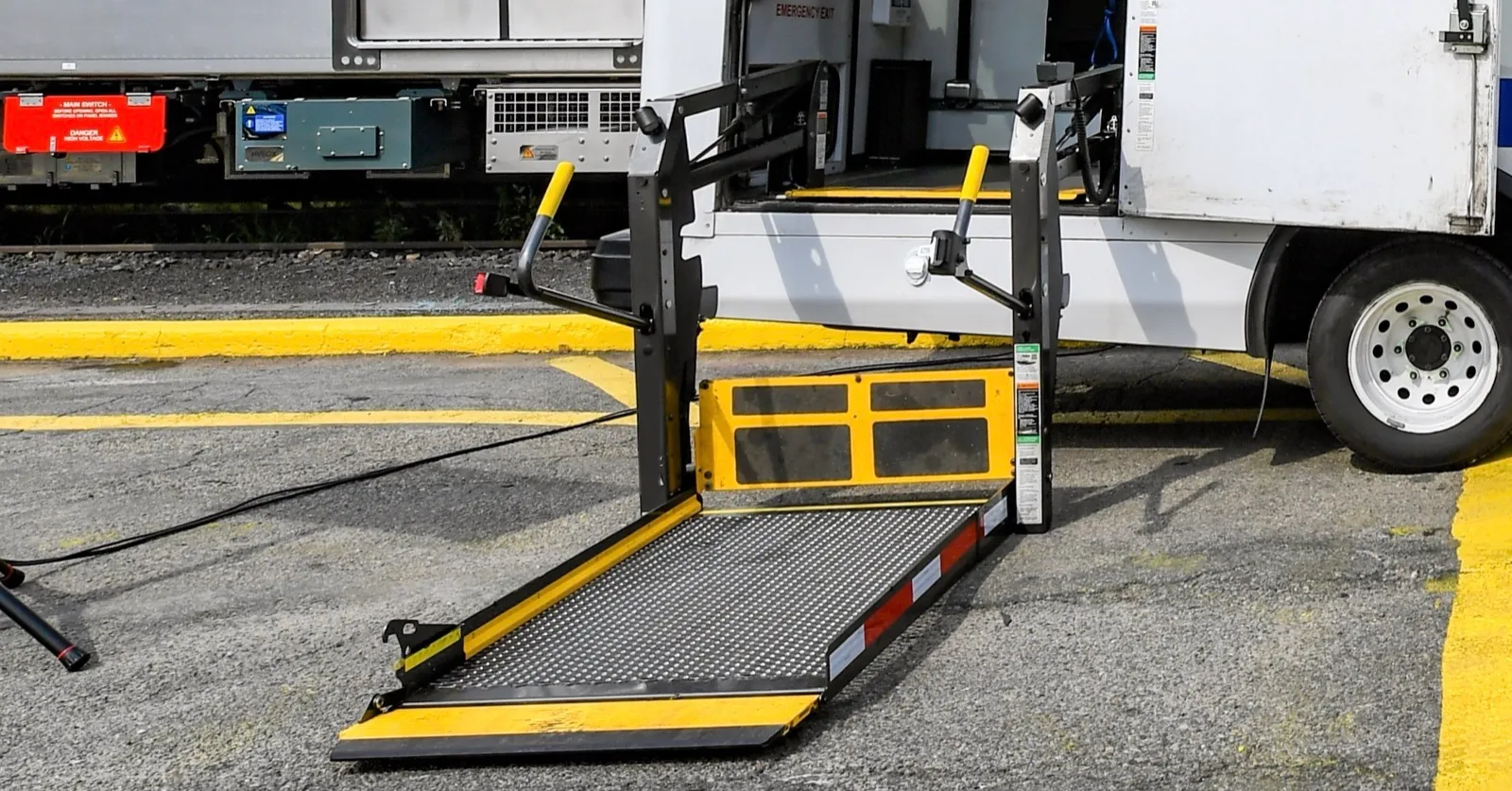
- Equipment: a hydraulic lift with a kick plate and anti-roll mechanism, 4-point wheelchair securement, lap and shoulder belts, heat and air conditioning that hold 66 to 76 degrees, and at least one lift rated for power wheelchairs.
The bid planned three-year contracts starting September 1, 2024, and OPWDD’s procurement page listed no newer transportation bids as of October 2026. Watch that page and the New York State Contract Reporter for the next round. Our guide to government NEMT contracts covers how public bids are scored.
How to win work with nonprofit agencies
As of October 2026, OPWDD relies on more than 500 nonprofit service providers that it certifies and regulates to deliver day, residential, and employment services. Each one buys rides its own way, so the sale is local.
- List the agencies near you that run day habilitation, prevocational, or employment programs, or certified residences, and ask for whoever manages transportation.
- Ask what they do now. Some drive their own vans. Ask when outside contracts end, which routes are hard to cover, and whether residents need wheelchair or stretcher vehicles for appointments.
- Lead with your approvals: proof of 0606 enrollment, your Form 108 approval, your background check process, LENS enrollment, insurance, and training records. Under the 2016 memo, agencies must also confirm that the company they hire is not on the Medicaid exclusion list.
- Price by route or by trip, and say in writing who supplies the attendant and who keeps the trip records.
- Sign a HIPAA business associate agreement if you will see riders’ health information, as OPWDD’s own bid required. See HIPAA for NEMT.
Residences also need rides to medical appointments that the broker will not pay for, which work like other facility contracts. People who self-direct their OPWDD services can use their budget for some rides tied to a service in it, but never for programs that already include transportation in their fee, under OPWDD’s self-direction guidance of March 10, 2022. For waivers that pay for rides as their own service, see waiver transportation. Many adult day health care programs, which are not OPWDD programs, also pay for their own rides; see adult day care transportation.
Watch one threshold as you grow. Under 18 NYCRR 521-1.2, effective December 28, 2022, a provider that claims or receives at least $1,000,000 from Medicaid in any 12 months, directly or indirectly, must run a compliance program. The Office of the Medicaid Inspector General (OMIG) counts as indirect any payment you receive for delivering Medicaid services that comes from someone other than the state, so payments out of an agency’s Medicaid rate may count toward the threshold. Ask OMIG’s Bureau of Compliance at 518-408-0401 once your OPWDD work grows. See NEMT compliance programs.
Frequently asked questions
Do I bill Medicaid for OPWDD day program rides?
No. eMedNY says companies in category of service 0606 do not submit Medicaid claims. Their pay is built into the rate the OPWDD program or facility receives from Medicaid, so the program pays you directly under your contract. You still enroll in 0606, and a joint state memo of August 9, 2016 makes the agency responsible for confirming that you did.
What is OPWDD Form 108?
It is the Registered Provider Approval Request Form, revised March 2024. Companies that supply transportation or staff to OPWDD providers use it to become registered providers for background check purposes. You list each agency you serve and each contract end date, sign it, and email it to OPWDD's Incident Management Unit. You refile every year, even with no changes, and whenever a contract changes.
Do my drivers need Article 19-A?
For ambulette-level 0606 work, yes: eMedNY asks for a DMV Article 19-A letter of compliance dated on or after the most recent July 1. OPWDD's 2024 to 2027 day habilitation route bid required Article 19-A certified drivers on every route. Taxi or livery-level work needs drivers with a valid Class E license and vehicles with taxi or livery plates.
Who pays when a group home resident goes to the doctor?
The residence. Under New York's Medicaid Transportation Policy Manual, effective August 25, 2023, OPWDD-certified ICF/DDs, supervised community residences, and supervised and supportive IRAs must provide or pay for every resident's ride to medical and clinical appointments at no added cost to Medicaid. Emergency 911 ambulance trips and ambulance hospital discharges are still billed to Medicaid.
Can I subcontract OPWDD routes to another company?
Not on OPWDD's own route contracts without written permission: the 2024 to 2027 day habilitation bid barred subcontracting unless OPWDD approves it in writing. When a nonprofit agency hires you, you are its subcontractor, and a joint state memo of August 9, 2016 makes the agency responsible for confirming you are enrolled as a Medicaid transportation provider.
How long do I keep OPWDD trip records?
Six years from the date each record is made, as announced in the joint Department of Health and OPWDD memo of August 9, 2016. Each trip needs the person's name, the date, the address, the start and end times (GPS data counts), and the driver's license number, printed name, and signature. A program's own logs can hold these items, so agree in your contract on who keeps them.
Official resources
- OPWDD: Form 108, Registered Provider Approval Request Form
- eMedNY: Non-medical transportation enrollment
- eMedNY: Additional requirements for transportation enrollment, by category of service
- OPWDD: Procurement opportunities
- OPWDD: Vehicle and transportation safety alert (February 2023)
- NYS DMV: License Event Notification Service (LENS)