Growth
Government NEMT Contracts in 2027: Where Bids Are Posted and How Small Companies Win Them
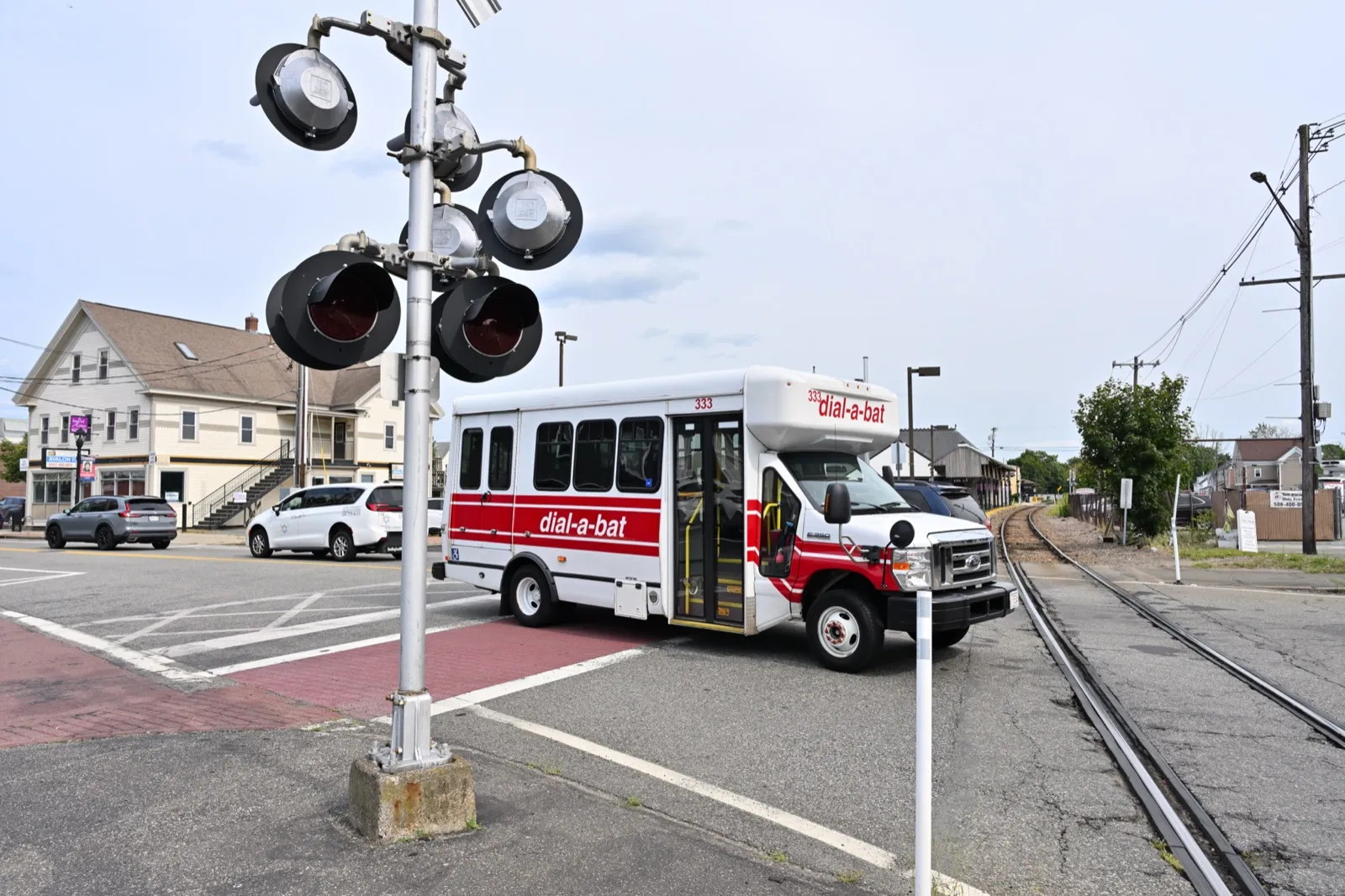

Government NEMT contracts are ride contracts that federal, state, county, and transit agencies award through public bids. Federal ones, such as VA wheelchair and stretcher rides, post on SAM.gov under NAICS 485991. State, county, and transit bids post on each buyer's own portal or notice list. You need a free SAM.gov registration, each buyer's vendor registration, and often a partner when a contract is bigger than your fleet.
- Federal ride contracts post on SAM.gov, and as of September 2026 most active notices there under NAICS 485991 came from VA medical centers.
- State, county, and transit buyers post on their own portals and notice lists, so register with each one you want to serve.
- A SAM.gov registration is free, can take up to 10 business days to activate, and must be renewed every 365 days.
- Federal service contracts over $2,500 carry wage determinations, and transit contracts bring ADA and drug testing rules.
- Small companies bid bigger contracts as subcontractors, in joint ventures, or through SBA's mentor-protégé program.
Government buyers pay for rides the same way they buy anything else: they post a notice, take bids or quotes, and award to the company that meets the rules at the best value. The hard part is knowing where each buyer posts, and having your registrations done before the notice goes up.
Who buys NEMT rides through government contracts
Six kinds of public buyers put ride work out to bid. Each posts in a different place and brings its own rules.
| Buyer | What it buys | Where it posts | Guide |
|---|---|---|---|
| VA medical centers | Wheelchair van, stretcher, and other special mode rides for eligible veterans | SAM.gov | VA transportation contracts |
| State Medicaid agencies | Broker contracts, and in some states rides bought directly | The state procurement portal | NEMT broker RFPs |
| Counties | Medicaid rides where counties run the program, as in Ohio and Pennsylvania | County purchasing pages and commissioners’ agendas | Ohio county NET contracts |
| Transit agencies | ADA paratransit and dial-a-ride service run by a contractor | The agency’s procurement page | ADA paratransit contractor |
| Area agencies on aging | Rides for people 60 and older | Agency RFP notices and mailing lists | Area agency on aging transportation |
| School districts | Rides for students whose plans call for transportation | District bid pages | Student transportation contracts |
What the contracts are worth
Real awards from 2025 and 2026 show the range:
- Dauphin County, Pennsylvania. On June 18, 2025, commissioners approved 2025-26 Medical Assistance Transportation Program agreements that included $774,900 with a private NEMT company, $106,596 for specialized NEMT, and $882,875 for a call center that screens riders and assigns trips to transportation subcontractors. The same meeting added $125,000 to the county’s existing NEMT agreement with the same company because use ran much higher than expected. See MATP in Dauphin County.
- Phoenix VA. A six-week emergency bridge order for non-ambulatory NEMT, awarded without competition on September 18, 2026, was worth $596,046.50 while the long-term contract was competed.
- Philadelphia VA. A wheelchair van contract set aside for service-disabled veteran-owned small businesses posted an award of $12,861,206.20 on September 24, 2026.
- Aging agencies. At the same June 2025 Dauphin County meeting, the county’s area agency on aging also got approval for 2025-26 agreements with eight local senior transportation groups, worth $1,086 to $20,154 each.
Where federal NEMT bids are posted
Federal agencies post on SAM.gov, the governmentwide point of entry for contract notices. Under the FAR text in the eCFR as of September 2026, a proposed contract expected to exceed $25,000 must be posted there. Buys between $20,000 and $25,000 go on SAM.gov or another public place for at least 10 days (48 CFR 5.101). The rewritten FAR Part 5 that agencies apply under the FAR overhaul deviations puts every proposed contract over $20,000 on SAM.gov unless an exemption applies, with a 10-day posting for buys up to $25,000.
Search Contract Opportunities by NAICS code 485991, Special Needs Transportation, and add keywords such as wheelchair, stretcher, special mode, and non-emergent. VA also posts some mixed ambulance and wheelchair van work under 621910, Ambulance Services, as the Wilmington VA medical center did on July 16, 2026. Save each search so SAM.gov emails you new notices.
What each notice type means
These 2026 VA notices show the stages one contract moves through:
| Notice | What it means | What to do | 2026 example |
|---|---|---|---|
| Sources sought | A market check, not a request for offers | Reply with a capability statement and your small business status | Spokane VA, August 28, followed by a request for quotes on September 1 |
| Combined synopsis and solicitation | The notice and the request for quotes in one | Quote by the deadline | Saginaw VA, first posted July 20, quotes due September 10 |
| Solicitation | The full request for proposals or quotes | Read every attachment and amendment | Altoona VA, first posted April 29, offers due June 5 after an amendment |
| Justification | Explains why an order was not competed | Note when the long-term contract will be bid | Phoenix VA bridge order, September 24 |
| Award notice | Who won and for how much | Mark the end date for the next bid | Philadelphia VA, September 24 |
Timing is short. For many contracts, the agency posts its notice at least 15 days before the solicitation. For commercial services, the contracting officer may shorten that or combine the two (48 CFR 5.203). The Kansas City VA’s combined notice, first posted July 29, 2026, asked for quotes in two weeks, and two amendments later the due date was September 4.
Before you bid, look up past awards on USAspending.gov to see who holds the work near you, what it paid, and when it ends.
Where state, county, and transit bids are posted
State and local buyers use their own portals. Many of them spend federal grant money, and then federal grant rules set the floor (2 CFR 200.320):
| Size of the buy | What the buyer must do |
|---|---|
| Up to the micro-purchase threshold ($15,000 under the FAR as of September 2026, or up to $50,000 if the buyer self-certifies a higher one) | May award without quotes if the price is reasonable |
| Up to the simplified acquisition threshold ($350,000, or a lower one the buyer sets) | Get price quotes from an adequate number of qualified sources |
| Above that | Use sealed bids, publicly advertised for local governments, or proposals with public notice that list every evaluation factor |
Grant-funded buyers should put small, minority-owned, women-owned, and veteran-owned businesses on their solicitation lists, and may split a big contract into smaller ones so they can bid (2 CFR 200.321). Ask to be on the list.
Each state runs its own portal. Four examples, as of September 2026:
| State | Where bids post | How vendors sign up |
|---|---|---|
| Texas | The Electronic State Business Daily, where state agencies, universities, school districts, cities, and counties post, and anyone can view without signing in | The Centralized Master Bidders List costs $70 a year |
| North Carolina | The electronic Vendor Portal, which sends registered vendors information on upcoming bids | Register in the portal. The state budget enacted in July 2026 eliminated the Office for Historically Underutilized Businesses, and the Small Business Enterprise Program is moving to the Division of Purchase and Contract. |
| New York | The NYS Contract Reporter, the state’s official listing of contract opportunities | A free account |
| Ohio | OhioBuys, run by the Department of Administrative Services | A supplier portal account through the state’s OH ID login |
Counties rarely have a big portal. Watch the purchasing office’s bid page and the commissioners’ meeting agendas and minutes, which list every ride agreement, its amount, and its term, as Dauphin County’s June 2025 minutes do. Transit agencies post on their own procurement pages. Area agencies on aging often mail requests for proposals to a list, so call and ask to be added.
Registrations to finish before you bid
| Registration | Why you need it | Cost and timing |
|---|---|---|
| SAM.gov entity registration, All Awards | Required for federal offers at submission and at award (48 CFR 52.204-7). Grant-funded buyers check it too. | Free. Up to 10 business days to activate. Renew every 365 days. |
| Unique Entity ID and CAGE code | SAM.gov assigns the ID during registration, and a CAGE code after you submit if you do not have one | Free. An ID alone does not let you bid. |
| NAICS codes in your SAM.gov profile | Set-asides use the size standard for the contract’s code | Part of registration |
| SBA certifications (8(a), HUBZone, women-owned, VetCert) | Needed to bid on those set-asides | Apply to SBA well before a bid you want |
| State vendor registration | Needed to get state bid notices and payments | Texas $70 a year. New York free. |
| DBE certification | Counts toward DOT-funded transit agencies’ contracting goals | Through your state’s unified certification program |
| Medicaid enrollment | Often required when Medicaid pays for the rides | See how to become a Medicaid transportation provider |
Choose the All Awards registration. A Financial Assistance Awards Only registration covers grants and loans, not contracts. Keep your record public: a restricted record is hidden from state and local governments that may want to hire you.
SAM.gov validates your legal name and address and checks your taxpayer ID with the IRS. Have your EIN, your bank routing and account numbers for payment, and your ownership details ready. APEX Accelerators, formerly PTACs, help with registration for free. For who to screen on the exclusion list, see SAM exclusion check.
These are the size standards for codes NEMT companies use, as of September 2026 (13 CFR 121.201):
| NAICS | Industry | Small if average annual receipts are at most |
|---|---|---|
| 485991 | Special Needs Transportation | $19.0 million |
| 485999 | All Other Transit and Ground Passenger Transportation | $19.0 million |
| 485310 | Taxi and Ridesharing Services | $19.0 million |
| 621910 | Ambulance Services | $22.5 million |
| 485410 | School and Employee Bus Transportation | $30.0 million |
DOT’s rules for disadvantaged business enterprises changed on September 25, 2026. The final rule keeps the October 2025 interim rule’s end to race- and sex-based presumptions, so every applicant now needs an individual finding of social and economic disadvantage.
Rules that come with government ride contracts
- Federal wages. The Service Contract Act covers federal service contracts over $2,500. You must pay at least the wages and fringe benefits in the wage determination built into the contract (Department of Labor). Price from it, not from your usual pay scale.
- Transit contracts. A private company that runs demand response service for a public entity must meet the ADA rules that entity would have to meet (49 CFR 37.23). Contractors of transit agencies funded under Sections 5307, 5309, or 5311 fall under FTA drug and alcohol testing (49 CFR 655.3).
- Grant-funded contracts. Contracts over $10,000 must address termination for cause and for convenience. No award goes to a party on the SAM.gov exclusion list, and bids over $100,000 need an anti-lobbying certification (2 CFR 200, Appendix II).
- Helping write the bid. A company that drafts a buyer’s specifications or work statement is barred from competing on that procurement (2 CFR 200.319(b)). Answer market questions, but do not write the scope.
- Staying registered. Federal contractors keep SAM.gov active during performance and through final payment (48 CFR 52.204-7).
Local contracts add their own terms. The Southern Mississippi Area Agency on Aging’s fiscal year 2026 transportation contract, for example, requires a fidelity bond of at least 25 percent of the contract amount and general liability of at least $500,000.
How small companies team up to bid
Federal rules name two kinds of team: companies that form a partnership or joint venture to act as the prime contractor, and a prime that agrees to use other companies as subcontractors (48 CFR 9.601).
| Option | How it works | Rules to know |
|---|---|---|
| Subcontract to a prime | A larger company wins and pays you to run part of the trips | The prime’s own limits apply, and local contracts often need the buyer’s approval before you start. See subcontracting NEMT trips. |
| Joint venture of small businesses | Two or more small companies bid together as one | The venture counts as small if each member is small for the contract’s NAICS code (13 CFR 125.8) |
| SBA mentor-protégé joint venture | An SBA-approved mentor, which can be a large company, joint ventures with its small protégé | The venture may bid as small wherever the protégé qualifies (13 CFR 125.9), and the protégé must do at least 40 percent of the venture’s work (13 CFR 125.8(c)) |
A mentor-protégé agreement lasts up to six years, and a protégé may have two mentors, for no more than 12 years in total. SBA must approve the agreement before the two firms bid together. As of September 2026, SBA says applications go through its Certify system, need a SAM.gov profile for both firms, and take about 15 days of screening plus 90 days of processing.
The 50 percent rule on set-asides
On a small business set-aside worth more than $350,000, and on any 8(a), HUBZone, veteran-owned, service-disabled veteran-owned, or women-owned set-aside, the prime may not pay more than 50 percent of what the government pays it to firms that are not similarly situated (13 CFR 125.6). A similarly situated firm holds the same small business status as the prime (13 CFR 125.1). So on a small business set-aside, work you pass to another small company still counts as yours, and work you pass to a large company does not.
Local buyers restrict teaming too. Ohio’s aging agency agreements require the agency’s authorization before a provider subcontracts any duties (OAC 173-3-06), and the Southern Mississippi contract bars assignment without written consent. Put the team in your proposal so the buyer approves it up front.
Small business set-asides and goals
Federal law sets a yearly goal of at least 23 percent of prime contract dollars for small businesses. Separate goals, counted across prime contracts and subcontracts, are at least 5 percent for service-disabled veteran-owned firms, 5 percent for small disadvantaged businesses, 5 percent for women-owned firms, and 3 percent for HUBZone firms (15 U.S.C. 644(g)).
Under the FAR, a contract above $15,000 and up to $350,000 is set aside for small business unless the contracting officer does not expect offers from two or more competitive small businesses. Above $350,000, it is set aside when the officer expects at least two small business offers at fair market prices (48 CFR 19.502-2). VA uses its own order, with service-disabled veteran-owned firms first and other veteran-owned firms next (48 CFR 819.7005).
The 2026 VA notices show the mix. Spokane had no set-aside, so any company could quote. Kansas City and Philadelphia were set aside for service-disabled veteran-owned small businesses, and Saginaw for veteran-owned small businesses.
How to find and win a government NEMT contract, step by step
- List the buyers near your garage. Find the VA medical centers, county ride programs, transit agencies, area agencies on aging, and school districts within your service area.
- Register in SAM.gov. Pick All Awards, add NAICS 485991 and any other codes you might bid under, and put the renewal date on your calendar.
- Sign up with every portal. Register on your state’s portal and ask each county, transit agency, and aging agency to add you to its bid list.
- Save your searches. Set SAM.gov alerts for your codes and keywords, and check local bid pages every week.
- Answer sources sought notices. Send a one-page capability statement with your fleet, service area, hours, certifications, and references.
- Study the incumbent. Look up past awards on USAspending.gov and in county minutes to learn the price, the term, and when it ends.
- Decide how to bid. Go alone if you can run the full volume, or line up a prime, a joint venture partner, or subcontractors.
- Read the whole package. Check the wage determination, insurance limits, vehicle and driver rules, and reporting, and send questions before the deadline.
- Price from your real costs. Start from your cost per trip, then add the required wages, insurance, and any bond.
- Submit on time and complete. Acknowledge every amendment, sign every form, and keep proof of delivery.
- Get ready to start. The Kansas City solicitation includes a 30-day mobilization period after award, so have drivers, vehicles, and insurance lined up before you win.
Frequently asked questions
Do I need a SAM.gov registration for a state or county NEMT contract?
Not always, but it helps. Federal offers require an active registration when you submit and at award. Many state, county, and aging agency buyers spend federal grant money, and federal grant rules bar them from awarding to anyone on the SAM.gov exclusion list. Some also ask for your Unique Entity ID on the proposal. Keep your record public so state and local buyers can find you.
What NAICS code do NEMT companies use for government contracts?
NAICS 485991, Special Needs Transportation, is the code on VA's 2026 wheelchair van and stretcher van notices. VA also posts some combined ambulance and wheelchair van work under 621910, Ambulance Services. As of September 2026, a company is small under 485991 with average annual receipts of $19.0 million or less. List every code you might bid under in your SAM.gov profile.
Is SAM.gov registration free?
Yes. SAM.gov charges nothing to get a Unique Entity ID, register, or renew. Anyone who charges to register you is a private company, not SAM.gov. Free help is available from APEX Accelerators, which SAM.gov lists as an official source of contracting help for small businesses.
Can a one-van NEMT company win a government contract?
Yes, if the contract fits the fleet. Small buys sit below formal bid thresholds, and small county and aging agency contracts can run a few thousand dollars a year. For bigger work, a small company can subcontract to a larger prime or form a joint venture. On a small business set-aside above $350,000, though, the prime may not pay more than half the contract to firms that are not similarly situated.
What is a sources sought notice?
It is a market check, not a solicitation. The agency wants to know which companies can do the work and which small business groups they belong to. The Wilmington VA's July 2026 notice said it was issued to gauge interest among all socioeconomic groups. A short reply with your capability statement, fleet, service area, and certifications puts you on the buyer's radar before the bid comes out.
How long do I have to respond to a federal ride solicitation?
It varies. For many contracts, the rules require a notice at least 15 days before the solicitation. For commercial services, the contracting officer may set a shorter period or combine the notice and solicitation. The Kansas City VA's combined notice, first posted July 29, 2026, asked for quotes by August 12. Amendments then moved the deadline twice, to September 4, so check SAM.gov every few days.
Official resources
- SAM.gov: Contract opportunities search
- SAM.gov: Get a Unique Entity ID and register
- SAM.gov: Wage determinations
- USAspending.gov: Search past federal awards
- APEX Accelerators: free government contracting help
- SBA: Federal contracting
- SBA: Contracting assistance programs (mentor-protégé and joint ventures)
- U.S. Department of Labor: Service Contract Act