Drivers and vehicles
NEMT Vehicle Signage Requirements in 2027: Names, Numbers, Stickers, and Words to Avoid
.jpg)
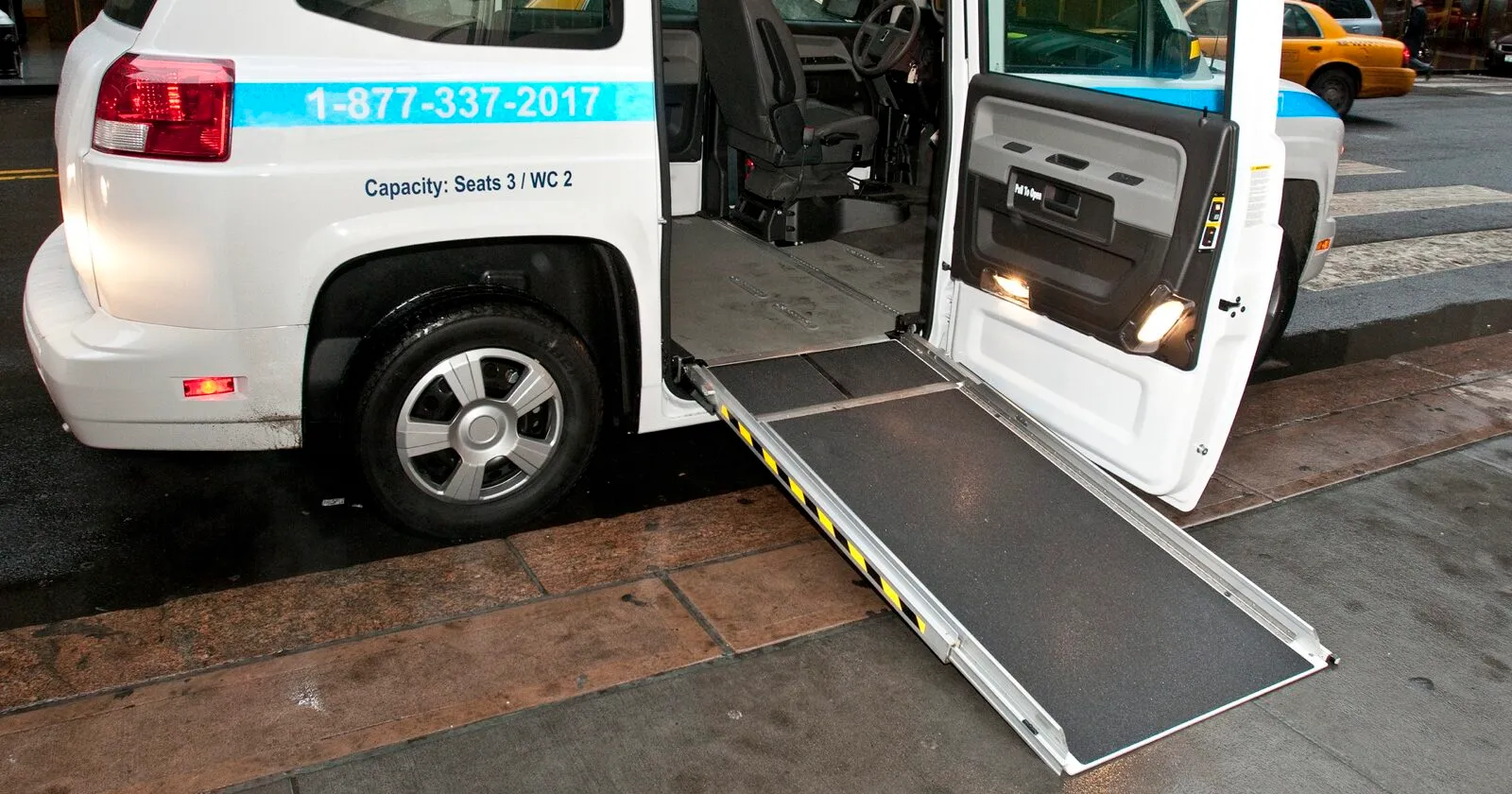
Most NEMT programs require your business name, usually with your phone number, on both sides of every vehicle in letters 2 to 6 inches high, plus no smoking, seat belt, and complaint signs inside. Several ban "Medicaid" or any wording that shows who rides. Rhode Island requires a state sign with no company name, and interstate commercial vehicles also need your USDOT number.
- Letter your legal business name, and usually your phone number, on both sides of every van, at the largest size any of your programs requires.
- Keep "Medicaid," "Medicare," and any wording that shows who rides off the van and out of your business name.
- Rhode Island is the exception: its vehicles carry a black-on-white state sign with your NEMT number and no company name.
- Inside, post the no smoking and seat belt signs, your vehicle number, and the broker's complaint line.
- Use permanent lettering. Magnetic signs fail in Virginia, Ohio, New Orleans, and Jefferson Parish, and New Orleans wants paint.
Lettering is part of the vehicle inspection, and in Jefferson Parish, Louisiana, a van missing any required item fails. No single national design exists for Medicaid rides. Your state Medicaid program, each broker and health plan, and any city or county permit office set their own rules, so letter every van to the strictest rule you work under.
What the outside of a NEMT vehicle must show
Almost every program asks for the same three things, in different sizes and places:
- Your business name, exactly as it appears on your enrollment. Louisiana’s Medicaid manual (Section 10.3, issued July 14, 2025) requires the business name on your IRS Form CP 575 to match all your other records, including your vehicle signage. Settle your business name before you pay a sign shop.
- Your phone number, so the public and facilities can reach you.
- A vehicle number in many programs, so a complaint can be tied to one van.
These are the rules in effect as of September 2026.
| Program | Letter height | What goes where | Rule and date |
|---|---|---|---|
| Texas Medicaid health plans | 6 inches | Provider name and vehicle number, plus a “How is my driving?” sticker with a phone number the public can call | Uniform Managed Care Manual 16.4, version 2.0.1, effective August 1, 2021 |
| New Orleans NEMT permits | 6 inches | Company name on both sides, painted and permanent. Permit (CPNC) number in 4-inch figures on the rear quarter panel on both sides. No unit numbers and no window signs. | Administrative Rule 17-02, effective August 7, 2017 |
| New Jersey mobility assistance vehicles | 4 inches name, 3 inches number, 8 inches symbol | Trade name from the vehicle license on both sides. Vehicle number on both sides and the rear. International Symbol of Access on both sides and the rear. | N.J.A.C. 8:40-5.9 |
| Virginia Medicaid fee-for-service | 3 inches | Business name and phone number on both sides, permanently affixed, in a contrasting color | DMAS requirements, May 26, 2026 |
| Tennessee health plans | 3 inches | Business name and phone number decaled on at least both sides, in a contrasting color | TennCare contract, Amendment 25, July 1, 2026 |
| Mississippi fee-for-service (Modivcare) | 3 inches | Business name and phone number on at least both sides, plus the state placard on each door and the rear | Modivcare manual, February 2024 |
| Ohio ambulettes | 3 inches sides, 1.5 inches rear | Service name permanently affixed | Ohio Adm. Code 4766-3-08, effective August 1, 2017 |
| Jefferson Parish, Louisiana | 3 inches | Vehicle number, company name, and phone number on both sides and the rear | Parish requirements sheet |
| Kentucky regional brokers | 2 inches, block letters | Company legal name on the driver and passenger doors | 603 KAR 7:080, Section 13 |
| Massachusetts HST brokers | 2 inches | Business name, permanent or semi-permanent, on the right passenger door and the rear | State HST standards, revised July 1, 2025 |
| Pennsylvania PUC carriers | 2 inches high, 1/2 inch wide | Name and certificate number, “Pa.P.U.C. No. A-”, on each side | 52 Pa. Code 29.71 |
| Louisiana Medicaid | No size set | Name, phone number, and vehicle number on the driver side, the passenger side, and a van’s rear. Never on windows where they block the driver’s view. | Section 10.3, July 14, 2025 |
| Minnesota special transportation service | Readable from 50 feet in daylight | Business name and USDOT number on both sides, in sharply contrasting colors | Minn. R. 8840.5925 |
| Arizona fee-for-service | No size set | A sign or logo with the company name while carrying AHCCCS members | AHCCCS manual chapter 14, revised July 31, 2026 |
If you drive for more than one program, meet the largest size and every location. A van lettered at 6 inches on both sides and the rear passes a 3-inch rule, but a 3-inch van fails in Texas. The full vehicle checklist for each program is in NEMT vehicle requirements.
Rhode Island uses a state sign with no company name
Rhode Island’s EOHHS Certificate and Vehicle Signage Policy (updated September 16, 2024, effective October 31, 2024) requires a state sign on every NEMT vehicle in place of the usual name-and-phone rule. It shows, line by line, your assigned NEMT number, “RI EOHHS,” “NON-EMERGENCY MEDICAL TRANSPORTATION,” and your TP code.
- Black text on a white background, readable by the public.
- No company name, logo, or slogan added to the sign.
- One sign in the middle of each side door. No other spot is accepted.
- You send in receipts for the signs ordered for each vehicle, and logistics staff check signs during field audits.
The same policy requires a separate fleet that carries only NEMT members. See the Rhode Island guide for the certificate itself.
Mississippi’s placard
Mississippi’s Department of Health rules for NEMT vehicle permits (as posted in July 2026) require a placard on the outside of each door and on the rear, visible from other vehicles. It reads “NON-EMERGENCY MEDICAL TRANSPORT VEHICLE” and then “THIS SERVICE DOES NOT PROVIDE MEDICAL CARE.” Modivcare’s Mississippi manual repeats the door and rear placard rule for its network.
Words and symbols to keep off the van
What you leave off matters as much as what you put on. Three kinds of wording cause trouble.
Program names that show who is riding
- Virginia. “To comply with HIPAA requirements,” the words “Medicaid” and “FAMIS” may not appear on the vehicle or in the business name. The broker’s inspection stickers leave them off too (DMAS, May 26, 2026).
- Tennessee. No words on the vehicle may imply that TennCare enrollees are being transported, and the business name may not imply it either (TennCare contract, July 1, 2026).
- Mississippi. Modivcare bars “Medicaid,” “Medicare,” or any wording showing that their members ride, anywhere on the vehicle, including in your business name (February 2024).
The reason is privacy. Federal rules require every state Medicaid agency to safeguard information about applicants and beneficiaries, including their names, addresses, and the medical services they receive (42 CFR 431.305). A van marked “Medicaid” tells the neighbors that the person getting in is on Medicaid. See HIPAA for NEMT for the rest of your privacy duties.
Federal law adds a second reason. No one may use “Medicaid,” “Medicare,” “CMS,” or “HHS” in an advertisement or other communication in a way that could give the false impression that CMS or HHS approved or authorized it, or that you are connected with them (42 U.S.C. 1320b-10). Van lettering advertises your company, so keep those words out of it.
Emergency words, symbols, and lights
A NEMT van must not look like an ambulance.
- New Jersey bars the Star of Life, a Greek or Maltese cross, and any symbol implying advanced life support on a mobility assistance vehicle. It also bars words such as “Advanced Life Support,” “Basic Life Support,” “Critical Care Transport Unit,” “Emergency Medical Technician,” “Paramedic,” “Specialty Care,” and “Trauma.” “Ambulance” or “Emergency” may appear only in a lawfully incorporated name, and no real or apparent emergency lights or sirens are allowed (N.J.A.C. 8:40-5.9).
- Virginia bars the Star of Life and emergency warning devices, such as flashing lights, sirens, and air horns, on stretcher vans unless the company holds a state EMS license. Any extra lettering must be smaller than your name and may not imply emergency care. An ambulance turned into a stretcher van must lose every ambulance marking and red, amber, or flashing light.
- Minnesota bars special transportation service providers from using “medical,” “emergency,” “life support,” or “ambulance” in their name, ads, or service descriptions. The full phrase “nonemergency medical transportation” is allowed (Minn. R. 8840.5450 and Minn. Stat. 174.30).
For stretcher vans, see stretcher van requirements.
Is the word “medical” allowed?
Usually. Rhode Island’s sign and Mississippi’s placard both require it. What programs object to is a payer’s name (Medicaid, Medicare, TennCare, FAMIS) and anything suggesting emergency care. Minnesota is the strict case: “nonemergency medical transportation” is fine, but “medical” alone is not.
Advertising, wraps, and look-alike designs
- Massachusetts HST standards allow no advertising or other labeling while riders are in the vehicle, unless the broker authorizes it.
- Miami-Dade County bans decorative or advertising decals and complete wrapping of one or more windows on the for-hire vehicles it regulates.
- New Orleans bars signs on windows, and Louisiana Medicaid bars them wherever they would block the driver’s view.
- Pennsylvania bars marking a vehicle to imitate another carrier’s vehicles in the same area, and treats it as grounds to revoke the certificate (52 Pa. Code 29.103).
If you want your vans to bring in private-pay riders, put your name, phone number, and website where the rules allow, and keep the rest of your NEMT marketing off the vehicle.
Signs inside the vehicle
Riders need to know how to complain and what the rules are. Programs spell out the inside signs almost word for word.
| Program | Inside the vehicle |
|---|---|
| Virginia | Vehicle license number, the broker’s toll-free and Voice/TTY numbers, and complaint procedures, also in writing for members who ask. “NO SMOKING” (including vapor and e-cigarettes) and “ALL PASSENGERS WILL USE SEAT BELTS.” |
| Tennessee | Vehicle license number and the health plan’s toll-free number. Complaint procedures in writing, in at least English and Spanish. “ALL PASSENGERS SHALL USE SEAT BELTS,” “NO SMOKING,” and a railroad crossing decal on vehicles that must stop at every crossing. |
| Texas | “No Smoking, Eating, or Drinking,” “All passengers must wear seat belts,” and “Weapons Prohibited” |
| Mississippi (Modivcare) | Your name, fleet number, and phone number, Modivcare’s toll-free numbers, and written complaint procedures |
| Kentucky | Your name, the vehicle number, and the coordinator’s customer service number, also in writing on request |
| Minnesota | A “NO SMOKING” sign visible to every passenger, and complaint contact information: the Metropolitan Council’s in vehicles on its service, MnDOT’s in all others |
| Pennsylvania PUC paratransit | The commission’s complaint decal, or its complaint notice printed on the receipt |
| Massachusetts HST | An ID card in plain view with your name, the broker’s name and complaint number, and how to complain to the HST Office |
| MTM Health agreement (January 1, 2023 version posted by Pennsylvania) | A sign telling riders that drivers do not take responsibility for personal items |
Wheelchair vans can need more. Virginia requires its NEMT vehicles to meet the federal ADA vehicle specifications in 49 CFR part 38 before approval. Those specs call for a priority seating sign and a sign marking each wheelchair securement location, with characters at least 5/8 inch high (49 CFR 38.27). See wheelchair securement.
Drivers carry identification too. Virginia requires a uniform shirt showing a name, or the NEMT Program ID badge the broker issues after training, shown to the member on arrival. Kentucky requires name tags and company photo ID.
Inspection stickers, decals, and plates
Leave room on the rear windows for the stickers that prove a van passed. Brokers and permit offices put them in fixed spots.
| Program | Sticker or decal | Where it goes |
|---|---|---|
| Virginia (MTM Health) | Broker inspection sticker showing the plate number and VIN, in versions for pass, in process, and fail, renewed at twice-yearly inspections | Outside of the passenger side rear window, lower right corner |
| Tennessee | Health plan’s current inspection sticker | Outside of the passenger side rear window, lower right corner |
| Mississippi (Modivcare) | Green sticker for a pass, yellow for a provisional pass with reinspection within 10 days. Neither may say “Medicare” or “Medicaid.” | Outside of the rear window |
| Louisiana Medicaid | The broker’s decal showing the date the vehicle passed | On the vehicle |
| Ohio ambulettes | State permit decal, kept unobstructed. The permit cannot move to another van. | Outside of the right rear window |
| Minnesota | MnDOT decal, $45 a year, valid one year from the last day of the month it was issued | Displayed conspicuously |
Louisiana brokers photograph each side of the vehicle and its signage at every inspection, so have the lettering finished before you book one. The same manual requires a “for hire,” “public,” or “public handicapped” license plate registered in your business name. Other states handle for-hire plates their own way. See livery vehicle and the vehicle inspection checklist.
When your USDOT number goes on the van
FMCSA’s marking rule (49 CFR 390.21T) covers commercial motor vehicles subject to its safety rules. Each one shows:
- Your legal name or a single trade name, as listed on your Form MCS-150.
- “USDOT” followed by your number.
- Both on both sides, in letters that contrast sharply with the background and can be read from 50 feet in daylight while the vehicle is parked.
The marking may be painted or a removable device. If another company’s name also appears on the vehicle, such as a facility you drive for, your name and number must follow the words “operated by.” Other information may appear as long as it does not conflict.
A vehicle counts as a commercial motor vehicle under these rules only when it is used in interstate commerce and weighs 10,001 pounds or more, or is designed or used to carry more than 8 people for pay, counting the driver. Most NEMT sedans and small wheelchair vans on in-state trips do not qualify. The rules also set aside the transportation of sick and injured persons (49 CFR 390.3T), so ask FMCSA how that applies to your trips before you rely on it. Vehicles designed or used for 9 to 15 people, counting the driver, that are not paid directly are excused from most of the rules but still must show the USDOT number. The test for who needs a number is in DOT number for NEMT.
State rules can reach further. Minnesota requires the business name and USDOT number on every special transportation service vehicle, interstate or not. Ohio ambulettes working under a contract that requires other signage, or under another name, add “Owned and operated by,” “Operated by,” or “Owned by” with the service’s name, at least 1.5 inches high, on the rear and both sides.
A rented van is covered too. For a commercial vehicle rented for 30 days or less, FMCSA accepts the rental company’s name and USDOT number on the vehicle if the rental agreement shows your name, address, and USDOT number, carries the rule’s law enforcement cooperation sentence, and stays in the vehicle.
Magnetic signs, vinyl, and paint
Magnetic signs are cheap, and a sign that can come off is exactly what several programs refuse.
| Rule | Removable signs |
|---|---|
| FMCSA marking, commercial motor vehicles | Allowed if the sign meets the legibility rule |
| Minnesota special transportation service | Allowed if the sign meets the legibility rule |
| Massachusetts HST | Permanent or semi-permanent lettering |
| Tennessee health plans | Name and phone number decaled on the vehicle |
| Virginia Medicaid | Permanently affixed lettering required |
| Ohio ambulettes | Permanently affixed lettering required |
| New Orleans | Painted, permanently attached lettering. No magnetic signs. |
| Jefferson Parish | No magnetic signs accepted |
Permanent lettering, painted or cut vinyl, meets the other rules here. Two are worded more narrowly: New Orleans says the lettering must be painted, and Tennessee’s health plan contract says decaled. Choose a color that contrasts with the body, because Virginia, Tennessee, Mississippi, New Jersey, FMCSA, and Minnesota all require contrast.
How to letter a NEMT van, step by step
- List every program you drive for. Include your Medicaid broker, each health plan, your state license, and any city or county permit.
- Use your legal name exactly. Match your IRS letter and your Medicaid enrollment, or register the trade name first.
- Pick the largest letter height and every required spot. Sides, rear, and front doors add up fast.
- Add your phone number and a vehicle number on each van, unless a local rule says otherwise. New Orleans bans unit numbers and uses the permit number instead.
- Leave off payer names and emergency symbols. No “Medicaid,” “Medicare,” or state program names, and nothing that looks like an ambulance.
- Order the inside signs each program lists, and a complaint card with the broker’s numbers.
- Use permanent vinyl or paint in a contrasting color (paint in New Orleans), and keep the rear windows clear for inspection stickers.
- Photograph each side before the broker inspection, and keep the photos with the vehicle file.
- Take markings off when a van leaves service. Pennsylvania requires you to remove the certificate number immediately when a vehicle is permanently removed from service (52 Pa. Code 29.72). See when to replace a NEMT vehicle.
Frequently asked questions
Does a NEMT van have to show the company name?
In most programs, yes. Virginia, Tennessee, and Mississippi require your business name and phone number on both sides in letters at least 3 inches high. Kentucky wants your legal name on the driver and passenger doors, Massachusetts on the right passenger door and the rear, and Arizona fee-for-service a sign or logo with the company name. Rhode Island is the exception: its state sign shows your NEMT number and no company name.
Can I use magnetic signs on a NEMT vehicle?
Only where the rules allow a removable sign. FMCSA's marking rule and Minnesota's rules accept a removable device if it meets the legibility standard. Virginia and Ohio require permanently affixed lettering, New Orleans requires painted lettering with no magnetic signs, and Jefferson Parish accepts no magnetic signs. Permanent vinyl lettering meets every rule here except New Orleans, which requires paint.
Can my van say "Medicaid transportation"?
No in several states. Virginia bars "Medicaid" and "FAMIS" on the vehicle and in the business name. Tennessee bars any words implying TennCare enrollees ride. Modivcare's Mississippi manual bars "Medicaid," "Medicare," or any wording showing that their members ride, anywhere on the vehicle. Federal law, 42 U.S.C. 1320b-10, also bars using "Medicaid" or "Medicare" in a way that suggests government approval.
How big do the letters on a NEMT van have to be?
Between 2 and 6 inches, depending on the program. Texas health plans require 6-inch letters for the provider name and vehicle number. New Jersey wants the trade name at 4 inches. Virginia, Tennessee, Mississippi, and Ohio ambulettes use 3 inches. Kentucky, Massachusetts, and Pennsylvania PUC carriers use 2 inches. Letter every van to the largest size among the programs you drive for.
Does a wheelchair van need the wheelchair symbol on it?
In New Jersey, yes. A mobility assistance vehicle shows the International Symbol of Access on both sides and the rear, at least 8 inches high. Where a program requires wheelchair vans to meet the federal ADA vehicle specifications, as Virginia does, the specs call for a sign inside marking each wheelchair securement location, with letters at least 5/8 inch high. New Orleans allows accessibility signs with the department's approval.
Do I need my USDOT number on my NEMT van?
If the van is a commercial motor vehicle covered by FMCSA's safety rules, yes: your legal or trade name and "USDOT" with your number, on both sides, readable from 50 feet in daylight. Most in-state sedans and small wheelchair vans fall outside those rules. Minnesota is stricter and requires the business name and USDOT number on both sides of every special transportation service vehicle.
Official resources
- eCFR: 49 CFR 390.21T, FMCSA vehicle marking rule
- Virginia DMAS: NEMT driver, attendant, and vehicle requirements
- Rhode Island EOHHS: NEMT Certificate and Vehicle Signage Policy
- New Jersey Department of Health: N.J.A.C. 8:40 (mobility assistance vehicles)
- Minnesota Rules chapter 8840, special transportation service
- Louisiana Medicaid: Medical Transportation provider manual
- Texas HHSC: Uniform Managed Care Manual chapter 16.4