Drivers and vehicles
Do NEMT Drivers Need a Chauffeur License in Michigan? Vans, Buses, and the Limousine Act

Overview
In Michigan, a NEMT driver needs a chauffeur license when the vehicle can seat 9 or more people, driver included, because MDOT regulates it as a bus. Drivers of vehicles with 8 or fewer seats that your company registers with LARA are limousine drivers, and the Vehicle Code exempts them. The license takes a written test at any Secretary of State office and costs $35 as of October 2026.
- Seat count decides it: a vehicle that can seat 9 or more, driver included, is an MDOT bus, and its drivers need a chauffeur license.
- Drivers of LARA limousine vehicles with 8 or fewer seats need no chauffeur license, but each must carry a current copy of their driving record in the vehicle.
- The chauffeur license is a written test at any Secretary of State office, with no road test for a licensed driver, and costs $35 or $50 enhanced.
- A vehicle designed for 16 or more people also needs a CDL with the passenger endorsement and a medical card.
- Michigan Medicaid requires a license suited to the class of vehicle, so match each driver's license to the vehicle before the first trip.
Which Michigan NEMT drivers need a chauffeur license
Michigan handles paid driving with a separate license type, the chauffeur’s license. Whether your drivers need one depends on the vehicle they drive and the law that regulates it, and the dividing line is seat count, driver included.
The Michigan Vehicle Code, MCL 257.6, makes three kinds of drivers chauffeurs:
- Motor carriers of passengers. Anyone who drives as a motor carrier of passengers under the Motor Bus Transportation Act. That act covers vehicles seating 9 or more, driver included, that carry riders for pay (MCL 474.103).
- Bus drivers. Anyone who drives a bus or school bus. The Vehicle Code defines a bus as a vehicle designed for 16 or more passengers, driver included (MCL 257.4b).
- Heavy vehicle drivers. Anyone employed mainly to drive a vehicle rated 10,000 pounds or more. The statute ties this one to hauling merchandise for sale or delivery.
The same section then excludes limousine drivers, taxicab drivers, rideshare drivers, and volunteer drivers who are reimbursed only for operating costs. MDOT closes the loop for NEMT: its bus and limousine page says a non-emergency vehicle carrying 9 or more passengers, driver included, is regulated under the Motor Bus Transportation Act.
Find your vehicle
Put together, the rules sort a NEMT fleet like this as of October 2026:
| Vehicle or driver | Chauffeur license | Why |
|---|---|---|
| Car, minivan, or wheelchair van with 8 or fewer seats, registered with LARA | No | Limousine drivers are excluded |
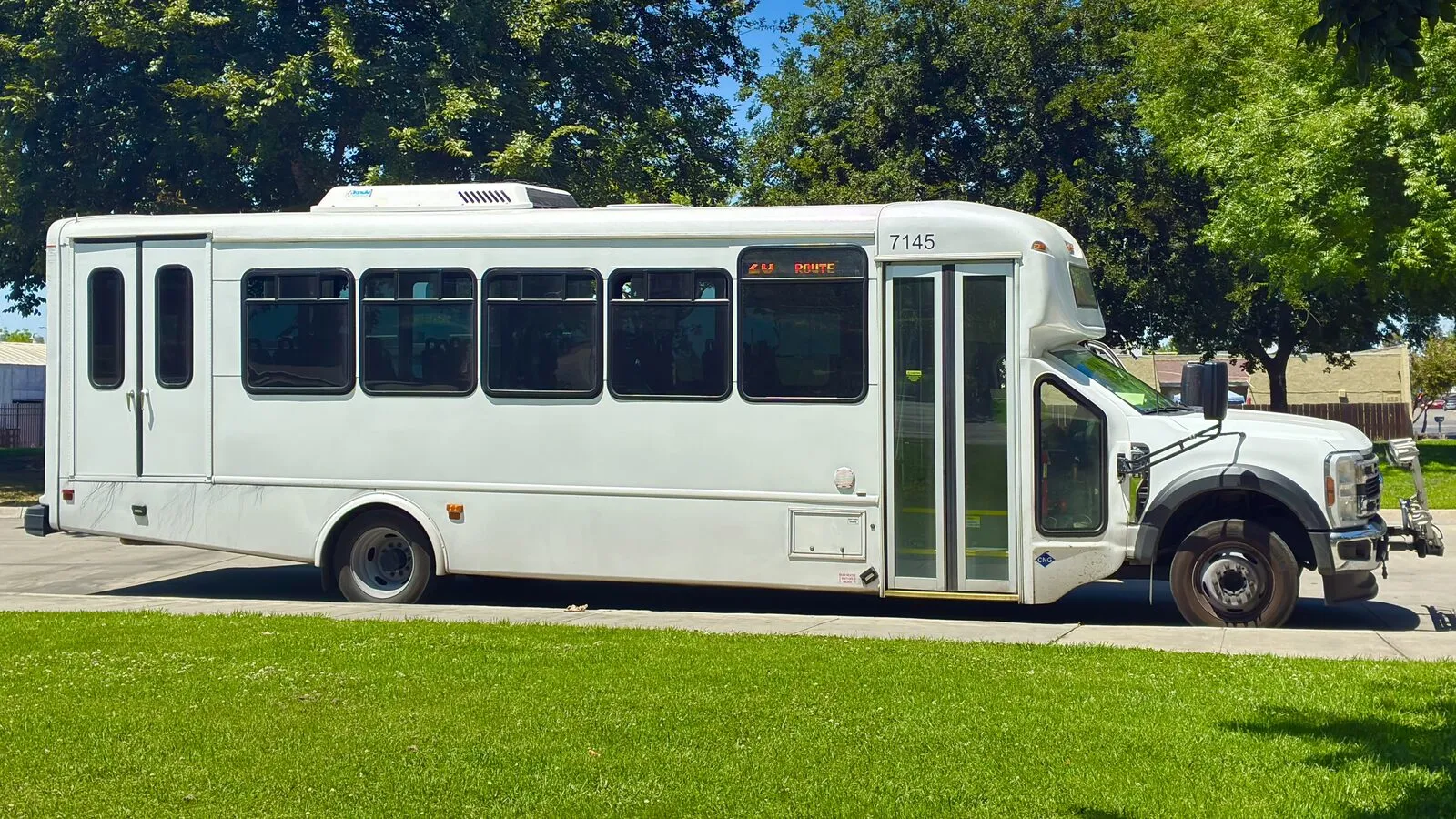
| Van that can seat 9 to 15, carrying riders for pay | Yes | MDOT bus under the bus act |
| Bus designed for 16 or more | Yes, plus a CDL | Vehicle Code bus, federal CDL line |
| Taxicab with a roof light | No | Taxicab drivers are excluded |
| Volunteer paid only for operating costs | No | Volunteer drivers are excluded |
Count seats the way MDOT does. It treats each 14 inches of seat width as one seating position under 49 CFR 571.10, and a vehicle that can hold 9, driver included, stays a bus even if you let only 8 ride. To register it with LARA as a limousine instead, the seating must be physically reduced to 8 or fewer. The Michigan state guide covers LARA and MDOT registration, fees, and insurance.
Why limousine drivers skip it, and what they carry instead
A company that runs sedans, minivans, and converted wheelchair vans with 8 or fewer seats registers them with LARA. The state’s limousine act defines a limousine as a for-hire passenger vehicle seating 8 or fewer, driver included (MCL 257.2102), so those drivers are limousine drivers. The Secretary of State’s chauffeur guide (TS-025, January 2025) lists them among the drivers who need no chauffeur’s license.
They still have a records duty. Under MCL 257.208b:
- The driver keeps the most current copy of the nonpersonal information on their own driving record inside the limousine, where any prospective passenger may review it.
- The carrier, meaning your company, subscribes to the Secretary of State’s commercial look-up service, which charges $15 for each record looked up.
- The penalty for a driver or carrier who fails to provide the information is a civil infraction, and each failure counts as a separate offense.
Put a fresh copy in a sleeve in each vehicle whenever you pull a new record. The limousine act also sets driver background checks, a minimum age of 19, and limits on moving violations (MCL 257.2107), which the state guide lists.
How to get a Michigan chauffeur license
A driver who already holds a Michigan license can get a chauffeur’s license in one visit. These steps follow the Vehicle Code and the Secretary of State’s guide (TS-025, January 2025):
- Confirm the driver’s age. MCL 257.303 bars a chauffeur’s license for anyone under 18, except as the Vehicle Code provides otherwise. Michigan Medicaid also requires commercial NEMT drivers to be at least 18. A broker can set a higher minimum in its agreement, so read yours before you hire. The MTM Health guide covers MTM’s own driver rules.
- Study the chauffeur guide. TS-025 explains the rules and prepares drivers for the knowledge test. Its study topics include speed limits for heavier vehicles, following distance outside city limits, handling curves and downhill grades, mirrors and blind spots, flags on long loads, the 13 foot 6 inch height limit, warning devices for a disabled vehicle, and drying wet brakes.
- Take the written test at any Secretary of State office. No driving test is required unless the driver has never been licensed.
- Choose standard or enhanced. The standard chauffeur’s license costs $35. The enhanced version costs $50 and also serves as a federally approved identity and citizenship document for re-entering the United States by land or sea from Canada, Mexico, Bermuda, or the Caribbean.
- Get a medical card if the vehicle needs one. TS-025 says a chauffeur needs a medical examiner’s certification to drive a vehicle rated 10,001 pounds or more, one designed for 16 or more people including the driver, or one carrying hazardous materials. Federal rules (49 CFR part 567) require a certification label showing the gross vehicle weight rating (GVWR), usually on the driver’s door edge or door pillar, so read it for every van in your fleet.
- Add a CDL for large buses. A vehicle designed for 16 or more people, driver included, or one rated 26,001 pounds or more, also needs a CDL. Michigan adds the group designation to the operator’s or chauffeur’s license, and a bus for 16 or more also needs the passenger endorsement on that commercial license (MCL 257.312e). Since February 7, 2022, a first passenger endorsement also requires entry-level driver training. Do NEMT drivers need a CDL walks through the federal lines.
- Copy the license into the driver file. Keep a copy of the chauffeur’s license, any medical card, and the driving record together, and track each expiration date.
Nonprofits, public agencies, and heavy vans
Three situations fall outside the simple seat-count rule. Ask the Secretary of State or MDOT before you rely on an exemption in any of them.
- Nonprofit corporations. The limousine act’s definition leaves out vehicles run by a nonprofit corporation that provides transportation services (MCL 257.2102), so a nonprofit’s drivers cannot rely on the limousine exclusion. The Motor Bus Transportation Act exempts a 501(c)(3), (4), (19), or (23) nonprofit only when its service is limited to registered members or funded under Public Act 51 of 1951 through MDOT programs (MCL 474.104). Work outside those limits falls back under the act, so drivers of the nonprofit’s vehicles with 9 or more seats then need a chauffeur’s license.
- Cities, counties, and transit authorities. The bus act does not apply to local governments, public transportation authorities, or regional transit authorities. Their drivers still count as chauffeurs when they drive a bus designed for 16 or more passengers, driver included.
- Heavy vans outside the limousine rule. The current statute ties the 10,000-pound test to hauling merchandise, but TS-025 still describes it as covering paid passenger driving too. If a driver of a heavy van is not a limousine, taxi, or volunteer driver, get the Secretary of State’s answer in writing.
What Michigan Medicaid and the brokers check
The Medicaid Provider Manual, in the version dated October 1, 2026, requires drivers for commercial and nonprofit NEMT providers to hold a valid driver’s license appropriate to the class of vehicle being operated. It also requires compliance with Vehicle Code sections 304 and 319 on restricted licenses, and MDHHS can deny or revoke enrollment over a restricted or suspended license. A driver who needs a chauffeur’s license for a 12-passenger van and does not have one is not licensed for that vehicle, so match each driver’s license to each vehicle before you schedule.
Each broker adds its own paperwork:
- SafeRide Health, as of October 2026, asks for each driver’s license and supporting documents for background and sex offender registry checks, motor vehicle reports, pre-hire drug screens, first aid or CPR, defensive driving, and wheelchair securement training. See SafeRide Health in Michigan.
- MTM Health writes its driver rules into its provider agreement. The standard agreement, in the January 1, 2023 version Pennsylvania posts, requires a current license suited to the vehicle and to state and local rules, a copy of it at credentialing, and drivers at least 21. Ask for the Michigan version before you hire, and see MTM Health in Michigan.
- Modivcare arranges fee-for-service rides in Wayne, Oakland, and Macomb counties under its MDHHS broker contract. See Modivcare in Michigan for its driver rules.
Local MDHHS offices arrange fee-for-service rides in the rest of the state, and the Michigan fee-for-service guide covers how those trips are approved and billed on the MSA-4674. For the driver rules that apply everywhere, see NEMT driver requirements, and track each driver’s documents with the driver file checklist.
Frequently asked questions
Do wheelchair van drivers need a chauffeur license in Michigan?
Not when the van seats 8 or fewer people, driver included, and your company registers it with LARA as a limousine carrier. The Vehicle Code excludes limousine drivers from the chauffeur definition (MCL 257.6). If the van can seat 9 or more, MDOT treats it as a bus under the Motor Bus Transportation Act, and its drivers need a chauffeur license.
Can I carry only 8 riders in a 9-seat van to avoid the bus rules?
No. MDOT says a vehicle that can hold 9 passengers, including the driver, is regulated under the Motor Bus Transportation Act even if you let only 8 ride. The seating must be physically reduced to 8 or fewer before the vehicle can be licensed as a limousine with LARA. MDOT measures 14 inches of seat width as one seating position.
Is a chauffeur license the same as a CDL in Michigan?
No. A chauffeur license covers paid driving that needs no CDL, such as a 12-passenger van. A CDL is needed for a vehicle designed for 16 or more people, driver included, or one rated 26,001 pounds or more. Michigan adds the CDL group designation to an operator's or chauffeur's license (MCL 257.312e), so a bus driver for hire carries the chauffeur license, the CDL group, and the passenger endorsement on one license.
How much does a Michigan chauffeur license cost?
The Secretary of State's chauffeur guide (TS-025, January 2025) lists $35 for the standard license and $50 for the enhanced license, which also works as an identity and citizenship document for re-entering the United States by land or sea from Canada, Mexico, Bermuda, or the Caribbean. MCL 257.811 sets the same $35 fee for an original or renewal chauffeur's license. A licensed driver takes only the written test. Adding a CDL group designation costs $25 and each endorsement $5 under MCL 257.312e.
Do volunteer drivers need a chauffeur license in Michigan?
No, when the volunteer is reimbursed only for vehicle operating costs. MCL 257.6 excludes a person driving for a volunteer program on those terms. Michigan Medicaid still sets its own floor for volunteer drivers: at least 18, able to read and communicate in English, a valid license for the class of vehicle, insurance, and the program's screening.
Does a Michigan chauffeur need a medical card?
Only for certain vehicles. The Secretary of State's guide says a chauffeur needs a medical examiner's certification to drive a vehicle rated 10,001 pounds or more, one designed for 16 or more people including the driver, or one carrying hazardous materials. Check the weight rating on the label by the driver's door before you assign a driver to a heavy van.