What Is a Type III Vehicle in Minnesota? The Van, Driver File, and Training for Student Rides (2027)

Overview
A Type III vehicle in Minnesota is a van or car used to carry students that seats 10 or fewer people including the driver, has a gross vehicle weight rating of 10,000 pounds or less, and is not marked as a school bus. The van needs a State Patrol inspection certificate. Each driver needs annual training, a background check, a physical, drug testing, and a yearly license check.
- A Type III vehicle seats 10 or fewer including the driver, has a gross vehicle weight rating of 10,000 pounds or less, and carries no school bus paint or lettering.
- The State Patrol inspects the van every year and issues a certificate good for 12 months. Your STS decal from MnDOT does not replace it.
- Each driver needs a separate file with annual training, a background check, a medical card, drug testing, and a yearly license check.
- Since the 2026 session law, every school transportation operator must apply for a USDOT number, and first aid kits are changing to a school transportation standard.
The same minivan can carry Medicaid riders under your special transportation service (STS) decal and students on a school contract. The two jobs follow different rules. This page covers the school side: what makes a van a Type III vehicle, what the State Patrol inspects, and what each driver’s file must hold. The Medicaid side is in the Minnesota state guide, and the contracts themselves are in special needs student transportation contracts.
What counts as a Type III vehicle
Minnesota Statutes 169.011, subdivision 71, paragraph (h), sets two limits. A Type III vehicle has a maximum manufacturer’s rated seating capacity of 10 or fewer people, including the driver, and a gross vehicle weight rating (GVWR) of 10,000 pounds or less. It also must not be outwardly equipped and identified as a Type A, B, C, or D school bus or a Head Start bus.
Both numbers are the manufacturer’s ratings, not yours, so confirm them from the vehicle’s certification label and the manufacturer’s specifications before you bid. If you converted a van, read the statute’s extra rule: a van or bus converted to seat ten or fewer and placed in service on or after August 1, 1999 must have been originally manufactured to comply with the passenger safety standards. Ask the State Patrol inspector about any converted van before you count on it.
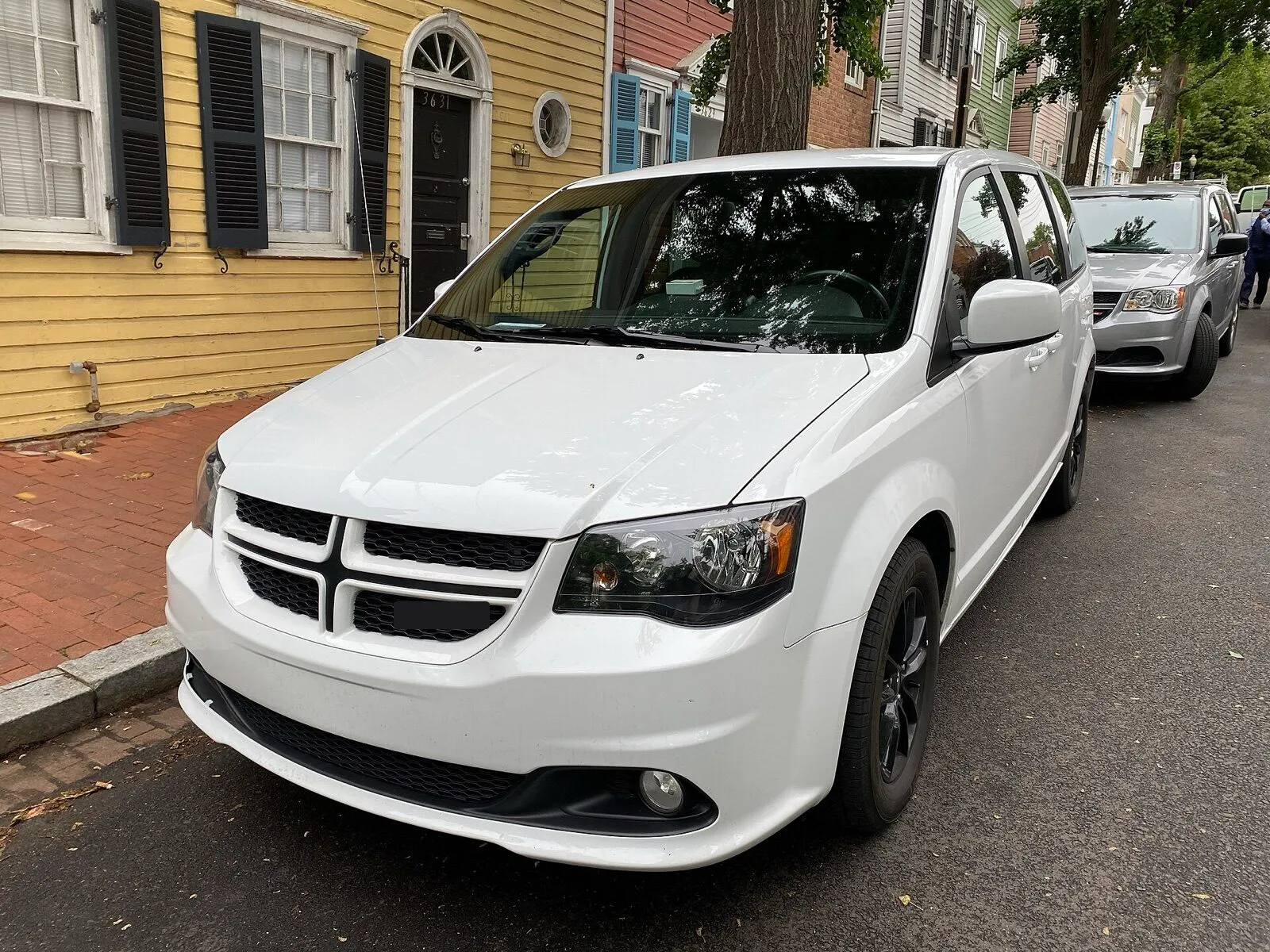
Most minivans, passenger vans, and small wheelchair vans fall inside both limits. A vehicle over either limit is not Type III. If it carries students, it falls under the rules for the other school bus classes, such as Type A-I, a cutaway van conversion rated up to 14,500 pounds. Those classes have their own vehicle and driver rules. See do NEMT drivers need a CDL for where the commercial license line sits.
Minnesota law counts a Type III vehicle as a school bus (subdivision 71, paragraph (b)). That is why the school bus inspection rules reach your minivan.
What the van must carry and show
Minnesota Statutes 169.454 sets the vehicle standards for a Type III vehicle that carries students, whether a district or a private company owns it. As of October 2026:
- Age. A model year 2007 or older vehicle may not be used, unless it was built to the structural requirements of federal motor vehicle safety standard 222, the school bus seating standard.
- Color. Any color except national school bus yellow.
- Fire extinguisher. At least one 10BC rated dry chemical extinguisher, held in a bracket in the driver’s compartment where the driver and passengers can reach it. The pressure gauge must be readable without taking it out of the bracket.
- Body fluids kit. A body fluids cleanup kit in a removable, moisture- and dust-proof container, mounted in an accessible place in the driver’s compartment and marked to show what it is.
- First aid kit. A ten-unit kit, or the school transportation kit described below.
- No school bus marks. The words “school bus” may not appear anywhere on the outside, or inside where a motorist can see them.
- No bus lights or arm. The eight-lamp warning system and the stop-signal arm are prohibited. All other lamps must meet federal standard 108.
- Mirrors. A clear interior mirror with a good view of the students and the road behind, plus a left and a right exterior mirror.
- Trunk option. The extinguisher, first aid kit, and warning triangles may ride in the trunk if a label in the driver and front passenger area says where they are.
Two 2026 changes matter. Chapter 85 of the 2026 session laws, signed May 12, 2026, requires first aid kits that meet the National School Transportation Specifications and Procedures (NSTSP) in vehicles of model year 2027 and newer. Other vehicles may carry either a ten-unit kit or an NSTSP kit, and after January 1, 2030 every Type III vehicle needs an NSTSP kit. The same law says anyone providing school transportation in a school bus as defined in subdivision 71 must apply for a USDOT number, which is used to track the State Patrol’s inspections. The Legislature’s bill page lists August 1, 2026 as the effective date, so both rules are in force now.
Minnesota Rules 7470.1300 adds a daily routine. Before the van is driven, the driver or another designated person checks the brakes, steering, lights and reflectors, tires, fluid levels, horn, wipers, and mirrors, and a copy of the day’s pretrip report rides in the vehicle. The State Patrol posts example daily, weekly, and monthly Type III pretrip forms.
Registration adds one more paper. Minnesota Statutes 168.102 says a school bus may not be registered in the state for the first time without a certificate from the State Patrol or the dealer showing that it meets the rules, and the State Patrol’s resources page says all school buses must have that preregistration certificate. If your van is already registered as an ordinary vehicle, ask the inspector or Driver and Vehicle Services whether you need one.
The State Patrol inspection and certificate
The Minnesota State Patrol inspects every school bus, Type III included, once a year, and may also check any of them unannounced (Minnesota Statutes 169.451). Its letter to new Type III carriers lists what to have in hand before you schedule:
- A vehicle that meets the Type III requirements above.
- A USDOT number. An STS provider already went through the FMCSA application for one; the inspector can tell you whether that number is the one to use.
- Your company name registered with the Secretary of State. If you employ other drivers, the letter also asks you to register with the Department of Employment and Economic Development so your insurance requirements are met.
- Completed driver files.
- An agreement to transport students for a school or a school bus carrier.
Then contact your regional school bus inspector, listed by county on the State Patrol’s school bus contacts page, or call the Office of Pupil Transportation Safety information line at 651-350-2000. Bring the paperwork. The letter says the inspector will not inspect the van without it.
What happens at the inspection:
- Pass. The inspector puts a certificate on the lower left corner of the windshield. It is valid for 12 months after the month printed on it. Any defect found must be repaired within 14 days, the person who fixes it signs and dates the report, and you keep the report at your principal place of business for 12 months.
- Out-of-service defect. The inspector puts a rejection sticker on the windshield. Until the State Patrol reinspects, the van may carry students for up to 30 days, but only if the defects are fixed and the owner or a designee signs the report saying so. The signed report rides in the first aid kit.
- Repeat defect. A defect found last time and still not fixed fails the inspection.
Driving without a valid certificate is a misdemeanor. Operating a van with a rejection sticker when the 30-day conditions are not met is a gross misdemeanor. If you think an annual inspection report is wrong, the State Patrol’s inspection review program lets you challenge it, and requests are due within 45 days of the inspection.
What each driver must meet
Minnesota Statutes 171.02, subdivision 2b, is the driver rule. A class A, B, C, or D license without a school bus endorsement is enough, if all of these hold:
- Employment. The driver is an employee of the entity that owns, leases, or contracts for the vehicle. That points to W-2 drivers. See 1099 or W-2 drivers.
- Training. Your company has a policy for annual training and certification of the driver (next section).
- Background check. A check that meets one of the standards the statute lists. For most contractor drivers that is the check in section 171.321, subdivision 3: the state criminal history repository, the driver’s license records, and a national check if the driver has lived in Minnesota less than five years. Your STS drivers already pass a Department of Human Services background study, but the Type III statute names its own standards, so ask the inspector whether the study you hold is accepted.
- Physical. The driver takes the physical required under section 171.321, subdivision 2, and carries the original or a copy of a current medical examiner’s certificate, or other proof of being medically qualified.
- Drug testing. Pre-employment testing, and compliance with your testing policy (see the testing section below).
- License check. You verify the license with the National Driver Register or the Department of Public Safety at least once every 380 days.
- Student training. Students riding the van must have the safety training the district gives under section 123B.90. That duty sits with the district and school, not with you.
The statute excuses a school or school district employee who is not hired only to drive from the physical and the drug testing. Your drivers are not school employees, so both apply.
Three things end a driver’s Type III work:
- DWI. A conviction under the DWI statutes, or a license revocation under the implied consent law, bars the driver for five years from the date of conviction.
- A disqualifying offense. Any felony, any drug violation under chapter 152, a violation of one of the listed sexual-conduct, privacy, or indecency statutes, or a DWI while driving a school bus bars the driver for good (Minnesota Statutes 171.3215, subdivision 1).
- Moving violations. A conviction for a moving violation under chapter 169 within three years of the first of three other moving violations bars the driver for one year from the last conviction.
The driver reports each conviction to you within 10 days of the conviction. A driver whose license is suspended, revoked, canceled, or disqualified must tell you in writing before the end of the business day after the day the driver gets notice. The State Patrol posts a notification form for the first duty.
The driver file and annual training
The statute requires a separate file for each Type III driver, kept at your business location and open to inspection. The State Patrol’s file sheet (revised February 2022) lists what goes in:
- Documentation of the annual training under 171.02, subdivision 2b, paragraph (c)
- Documentation of the compliant background check
- A copy of the medical examiner’s certificate
- The annual license verification
- Any moving violation disclosure notices
Pre-employment drug test results are subject to review. You may keep them apart from the general file if you choose.
The annual training must cover nine topics: safe operation of a Type III vehicle; student behavior, including students with disabilities; orderly conduct and handling misconduct; the laws, rules of the road, and local school bus safety policies; emergencies; seat belts and child restraints; pretrip inspections; safe loading and unloading, including never loading in a traffic lane and escorting a student across the road only after the motor is off and the key is out; and the 10-day duty to report convictions.
The State Patrol offers recommended aids for the training. They include a Type III slide presentation, a knowledge quiz with an answer key (revised July 9, 2025), and three Type III forms: a driver evaluation, a pretrip evaluation, and an evaluator certification. The evaluation forms score driving skills such as backing, turns, merging, loading, and car seat use, and the special needs section covers lift use and securing equipment. The statute asks for training and certification, and the State Patrol’s letter calls its Type III forms recommended, so they are one way to show it. Date each one and keep it in the file.
Drug and alcohol testing
Subdivision 2b requires an employer to test applicants for drugs before they start, and requires current drivers to follow the employer’s policy under Minnesota Statutes 181.951. The employer may use a breath test for random alcohol testing.
Minnesota’s testing law shapes how you do it:
- Write the policy first. Testing must follow a written drug and alcohol testing policy that has the minimum content in section 181.952, and use an approved lab or the on-site oral fluid procedure.
- Test after the offer. You may test an applicant only after a job offer, and only if every applicant offered that position gets the same test.
- Random tests need a safety-sensitive job. Section 181.951, subdivision 4, allows random testing only for safety-sensitive positions, which are jobs where impairment would threaten anyone’s health or safety. A student van driver fits.
- Reasonable suspicion. You may test a driver you reasonably suspect is under the influence, or who caused a work-related accident, under subdivision 5.
The federal drug and alcohol rules in 49 CFR part 382 apply to drivers who operate a commercial motor vehicle and are subject to CDL requirements (49 CFR 382.103). A Type III driver on a class D license is outside them. See NEMT driver drug testing for the Medicaid side, and start the written policy from the drug and alcohol policy template.
How the Medicaid and school rules compare
The special transportation service standards do not apply to special transportation provided by a school bus as Minnesota defines it (Minnesota Statutes 174.30, subdivision 1). A Type III vehicle is one. So your student routes run under the school rules above, and your Medicaid rides keep running under the STS standards, which Minnesota requires of NEMT providers other than public transit systems, volunteers, and not-for-hire vehicles (Minnesota Statutes 256B.0625, subdivision 17).
| Item | Medicaid rides (STS) | Student rides (Type III) |
|---|---|---|
| Inspector | MnDOT | Minnesota State Patrol |
| Inspection | At least yearly, unannounced checks allowed | Yearly, plus random spot checks |
| Mark on the van | STS decal, $45 a year | Inspection certificate on the windshield |
| Driver clearance | Department of Human Services background study | A check under 171.321, subd. 3, or another listed standard |
| Driver training | Before service, within 45 days, then every three years | Annual training and certification |
| Driving record | Reviewed yearly | License verified at least every 380 days |
The statutes do not say whether one van may hold both an STS decal and a Type III certificate, or how the two inspections fit together. Call MnDOT’s STS office and the State Patrol inspector before you retrofit or buy a van for both jobs, and get the answer in writing. Keep Medicaid rider records and student records apart; the student transportation guide explains why. See Minnesota NEMT rates for what the Medicaid side pays.
Rules for students with disabilities
Minnesota Rules 7470.1600 and 7470.1700 apply when a student with a disability cannot be safely transported on the regular route or goes on a special route to a special education program:
- The district picks the vehicle based on the students’ disabling conditions, and decides whether an aide is needed.
- Communication. A vehicle carrying students with disabilities needs a two-way communications system, a responsible aide, or both.
- Wheelchairs. A school bus that carries students in wheelchairs needs fastening devices that hold the chairs in a fixed position. See wheelchair securement.
- Information in the vehicle. Each driver and aide has the student’s name and address, the nature of the disability, emergency health care information, and phone numbers for the physician, parents, and a second emergency contact, on paper or through the two-way communication system.
- Training. Each driver and aide learns basic first aid and the procedures for the students in their care, and within one month of the assignment completes in-service training on the needs of students with disabilities.
Rule 7470.1500 adds limits for Type III drivers. They may not stop traffic, and they may not load or unload in a traffic lane, on a shoulder, or in a right-hand or turn lane. They must come to a complete stop and shift to neutral or park before loading or unloading. For child seats and boosters, see children in NEMT.
When the full rules do not apply
Minnesota Statutes 169.454, subdivision 13, exempts a vehicle that otherwise qualifies as Type III from the vehicle standards and from the driver licensing rules in section 171.321 when it carries students in a nonscheduled situation. The vehicle must be registered and insured, and the driver must be an employee or agent of a school district with a valid license. That fits a one-time ride for a district. A standing route is scheduled work, so a daily contract route needs the inspection, the driver files, and the training.
How to add a Type III van, step by step
- Check the van’s rating. Confirm the manufacturer’s rated seating capacity and GVWR, and that the model year is 2008 or newer, unless the van was built to the school bus seating standard.
- Equip it. Add the bracketed 10BC extinguisher, the first aid kit and body fluids kit, and the mirrors. Strip any school bus lettering. Buy an NSTSP first aid kit if the van is model year 2027 or newer.
- Confirm your USDOT number and Secretary of State registration.
- Write the policies. Draft the annual training policy and a written drug and alcohol testing policy.
- Build each driver file. Training record, background check, medical card, license verification, and the conviction notice form. Use the free driver file checklist.
- Get the contract. The State Patrol will not schedule the inspection without an agreement to transport students.
- Schedule the inspection with the regional inspector and bring every file.
- Put the certificate on the windshield and note its renewal month on your compliance calendar.
- Repeat each year: retrain, check each license within 380 days, and reinspect before the certificate runs out.
Frequently asked questions
Does a Type III driver need a CDL or a school bus endorsement?
No. Minnesota Statutes 171.02, subdivision 2b, lets the holder of a class A, B, C, or D license without a school bus endorsement drive a Type III vehicle, as long as the driver and the employer meet the conditions in that subdivision. A regular class D license is enough for the license itself.
Can I use my special transportation service wheelchair van for students?
Only if it meets the Type III limits and passes the State Patrol inspection for school use. The special transportation service standards do not apply to service provided by a school bus as Minnesota defines it, and a Type III vehicle is one. Medicaid rides in the same van still follow the STS standards. The statutes do not say how the two inspections fit together, so ask MnDOT and the State Patrol inspector before you buy a van for both jobs.
Who inspects a Type III vehicle, and how often?
The Minnesota State Patrol inspects it at least once a year. The certificate it issues is good for 12 months after the month printed on it. The State Patrol can also inspect any school bus at random, without notice. Driving without a valid certificate is a misdemeanor.
Do Type III drivers need drug and alcohol testing?
Yes, under Minnesota law. The employer must require pre-employment drug testing of applicants, and drivers must follow the employer's testing policy, which can include random and reasonable-suspicion tests. The employer may use a breath test for random alcohol testing. The federal testing rules in 49 CFR part 382 apply to drivers subject to CDL requirements, so a driver on a class D license is outside them.
What disqualifies a driver from Type III work?
A DWI conviction or implied consent revocation bars the driver for five years. A conviction for any felony, any drug offense under chapter 152, or one of the sexual-conduct, privacy, and indecency offenses the statute lists bars the driver for good. A fourth moving violation conviction within three years bars the driver for one year. The driver must report each of these to the employer within 10 days of the conviction.
Can a district employee use a Type III van for a one-time trip without all of this?
Minnesota exempts nonscheduled trips by a school district employee or agent from the vehicle standards and the driver licensing rules, if the vehicle is registered and insured and the driver holds a valid license. A daily route is scheduled work, so plan on the full set of rules for any route you run under contract.
Official resources
- Minnesota State Patrol: School bus safety resources (Type III forms, quiz, and training slides)
- Minnesota State Patrol: Becoming a Type III carrier
- Minnesota State Patrol: School bus contacts and regional inspectors
- Minnesota Statutes 169.454: Type III vehicle standards
- Minnesota Statutes 171.02: Driver license classes and the Type III exception
- MnDOT: Become a special transportation service provider