Compliance
Transporting Children in NEMT: Car Seats, Escorts, and Consent
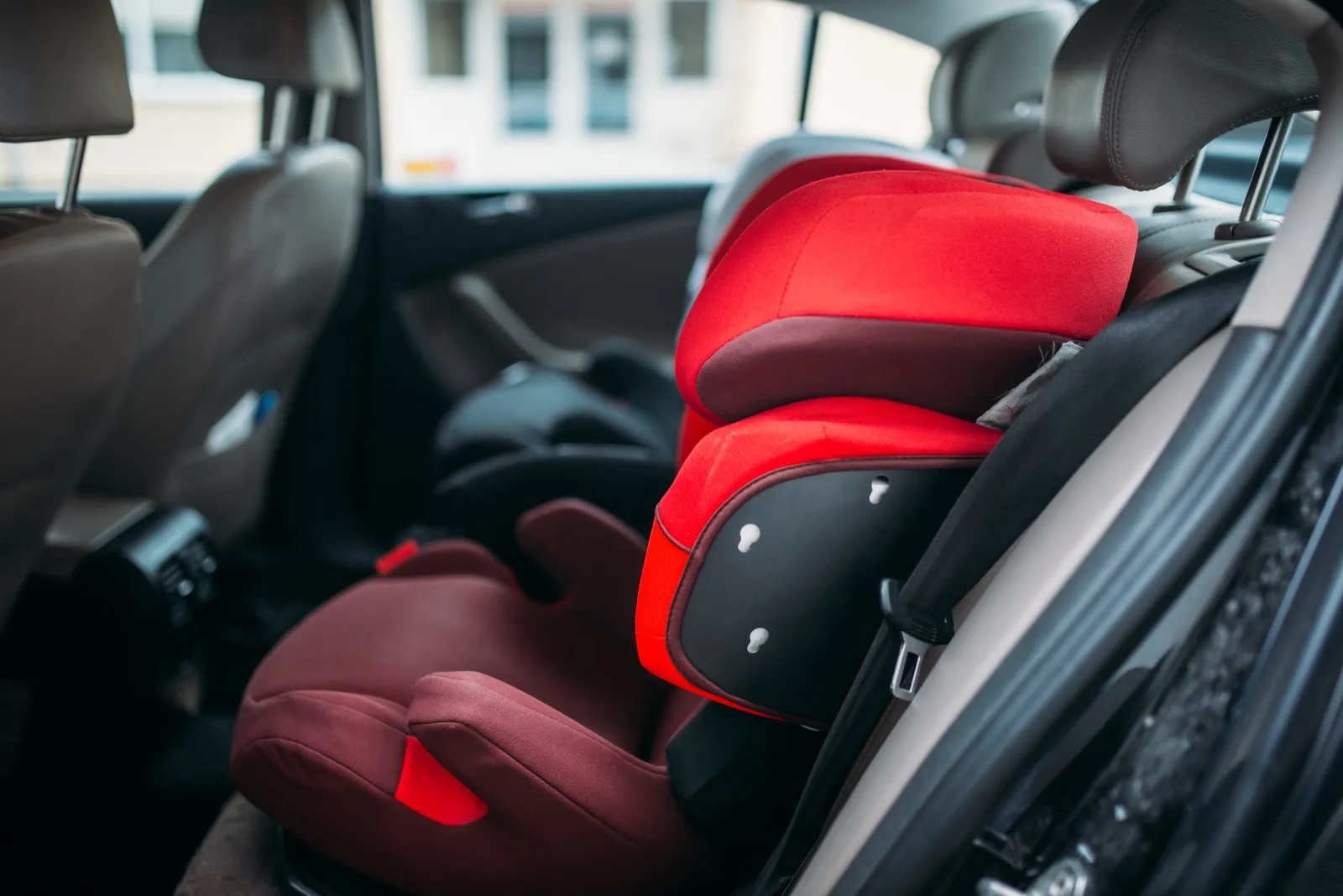

NEMT child passengers usually ride with a parent or an adult the parent names, and Medicaid covers that adult's ride. The age cutoff depends on the program, from 12 and under in Oregon to under 18 in North Carolina's health plans. Parents usually bring and install the car seat, and without one, drivers turn the trip away.
- Under the EPSDT benefit, when a child needs someone to come along, Medicaid must cover that person's ride too.
- Escort ages differ: 12 and under in Oregon, under 16 in Indiana and Connecticut, under 18 in North Carolina's plans. Texas lets riders 15 to 17 go alone only with a parent's written consent.
- Parents bring and install the car seat in most programs. Texas and Oregon bar the ride, or cancel it, when the seat is missing.
- Some state car seat laws exempt for-hire vehicles, but Texas applies its law to Medicaid transportation contractors.
- California tightens its booster rule for children 8 to 15 on January 1, 2027.
Children ride NEMT to well-child visits, therapy, dental care, and specialists, often with a parent in the next seat. Three questions come up on these trips: who has to come along, who brings the car seat, and whether a teenager can ride alone. Each program answers them a little differently, and the answers decide whether a trip runs, gets canceled, or gets paid.
Who pays for a child’s ride and the adult who comes along
Medicaid members under 21 have the Early and Periodic Screening, Diagnostic, and Treatment benefit, known as EPSDT. Federal rule 42 CFR 441.62 requires the state to offer the family, and provide when asked, necessary help with transportation and with scheduling appointments.
The adult who rides along is covered too. Federal rule 42 CFR 440.170(a) counts the cost of an attendant as a travel expense when one is needed, including the attendant’s transportation, meals, and lodging, and a salary when the attendant is not family. CMS’s Medicaid Transportation Coverage Guide (SMD 23-006, September 28, 2023) is direct about children: if a child needs to be accompanied to care, the state must cover the transportation of the person accompanying the child, including round trips for an admission or discharge and trips out of state.
The same guide covers two situations NEMT companies see:
- School pickups. When a child leaves school for a Medicaid service in the community, Medicaid can pay for the ride from school to the provider and back to school or home, plus an attendant when one is needed. Ordinary school bus rides are not covered.
- Parents of hospitalized children. A state may pay for a parent’s ride to a child in a hospital, NICU, or residential treatment when the parent must take part in the care, such as family therapy or consent for surgery. Rides just to visit are not covered.
Who has to ride with a child
Programs require an adult with young riders, but the age cutoff and the proof differ. These are the rules in five programs as of September 2026:
| Program | Who must ride with the child | Can an older minor ride alone? |
|---|---|---|
| Oregon Health Plan CCOs (OAR 410-141-3935, amended effective July 1, 2026) | Children 12 and under: a parent, stepparent, grandparent, or guardian, or an adult 18 or older the parent or guardian authorizes | The rule sets no escort age above 12. Riders with special physical or developmental needs have an attendant at any age. |
| Texas Medicaid health plans (NEMT Services Handbook, UMCM 16.4) | 14 and under: a parent, guardian, legally authorized representative, or another adult they authorize in writing | 15 to 17, with the parent’s signed written consent presented before the trip, or for care the law lets the minor keep confidential |
| Indiana Medicaid (IHCP Transportation Services module, August 19, 2025) | Younger than 16: an adult, such as a parent | The module’s escort rule stops at 16 |
| Connecticut Medicaid, through MTM Health | Under 16: a parent, legal guardian, or caregiver | 12 to 15, with a consent form the parent signs. A child who misbehaves riding alone needs an adult on every later ride. |
| North Carolina Medicaid health plans (NEMT policy amended January 1, 2025) | Under 18, unless emancipated: an attendant, who may or may not be a parent | No |
Broker agreements add their own terms. MTM Health’s standard provider agreement, in the January 1, 2023 version Pennsylvania posts, has you carry the member and one escort or attendant as requested, and requires MTM’s approval for more than one. Attendants you employ must be at least 21, though that rule does not apply to a parent or caregiver. For how escorts work for adult riders, see escorts and caregivers.
Children in state custody can follow separate rules. Oregon’s rule says the Department of Human Services sets written guidelines for members in its custody, and those take precedence where they differ.
When a teenager can ride alone: consent
Where a program lets an older minor ride without an adult, it wants proof that a parent agreed.
- Texas health plans. The member presents the parent’s, guardian’s, or legally authorized representative’s signed, written consent to the health plan or its transportation contractor before the trip. If the provider does not have it on hand, it is verified at the time of the trip. HHSC lists an optional parental accompaniment form among its NEMT form examples.
- Connecticut. MTM Health posts a Minor Consent to Travel form for members 12 to 15, and an escort approval form for members 11 and under who need a facility escort.
- Texas confidential care. A member 15 to 17 may also ride alone to treatment the law lets the minor keep confidential.
Privacy rules follow the same logic. Under HIPAA, a parent or guardian generally acts for an unemancipated minor, so you can discuss the child’s trip with them (45 CFR 164.502(g)). The main exception is care the minor may lawfully consent to alone, where the minor generally controls that information. If a teen books a ride to that kind of care, follow your broker’s instructions on who you may talk to. See HIPAA for NEMT providers.
Keep every consent form and written authorization with the trip record, since it is your proof the ride was allowed.
Car seats: who brings them and who installs them
In the programs below, the family supplies the seat. In Texas and Oregon, the parent or caregiver installs it, not your driver.
| Program | Who supplies the seat | Who installs it | No seat |
|---|---|---|---|
| Texas health plans | The member’s family | The parent. Drivers may not install or secure child safety seats. | The trip is canceled and recorded as a member no-show, also when the parent cannot install the seat |
| Oregon Health Plan CCOs | The parent, guardian, or adult caregiver, as Oregon car seat law requires | The parent, guardian, or adult caregiver | The driver must not transport the child |
| Virginia Medicaid (MTM Health handbook, May 2026) | Parents or guardians, for children through age 7. Seats must fit the child’s age and weight and not be past their expiration date. | Not stated | Not stated |
| Wisconsin Medicaid (DHS member rules, January 2024) | The member | The member | Not stated |
| MTM Health standard agreement | Not stated | Not stated | The driver must deny transportation when a proper seat is not available or is refused |
MTM’s standard agreement also bars drivers from placing children in car seats in the front seat, and bars leaving any member unattended in the vehicle.
In these programs a missing seat ends the trip at the door. Ask about it when the ride is booked, and put it on the manifest. See how no-shows are handled in the NEMT no-show policy template.
State car seat laws and the for-hire exemptions
Your state’s car seat law sets the type of seat by age and size. Some laws exempt paid passenger vehicles, which is where NEMT companies can get confused. The broker or Medicaid rule usually still requires the seat.
| State | Who needs a car seat or booster | Paid passenger vehicles | Law |
|---|---|---|---|
| Texas | Under 8, unless taller than 4 feet 9 inches | The for-hire exemption excludes companies carrying clients under a nonemergency Medicaid transportation contract, so the law applies to NEMT | Transportation Code 545.412 |
| California | Under 8, in a rear seat. Under 2, rear-facing unless 40 pounds or 40 inches tall. A child under 8 who is 4 feet 9 inches or taller may use the seat belt. | No for-hire exemption. The driver’s duty does not apply when the child’s parent or legal guardian is riding. | Vehicle Code 27360 and 27363 |
| Florida | 5 and under. Through age 3, a separate car seat or built-in seat. Ages 4 and 5, a car seat or a booster. | Does not apply to chauffeur-driven vehicles hired to carry people for pay. The parent or guardian is responsible. | Statutes 316.613 |
| New York | Under 4, in a child seat, rear-facing under 2. Ages 4 through 7, in a child restraint. | Taxis and liveries are exempt from the car seat rules. Riders 8 to 15 must still be belted. | Vehicle and Traffic Law 1229-c |
| Oregon | Under 2, rear-facing. 40 pounds or less, in a child seat. Over 40 pounds and 4 feet 9 inches or shorter, in a booster until age 8. | Drivers of paid vehicles for 15 or fewer people need not ensure the child seat. A passenger 16 or older who is responsible for the child can be cited instead. | ORS 811.210 and 811.215 |
Two notes on the table:
- Oregon’s Medicaid rule still requires the seat on NEMT trips. OAR 410-141-3935 requires the parent to provide and install a seat that meets state law, and bars the driver from transporting the child without one.
- California changes on January 1, 2027. Under AB 435, children 8 to 15 must ride in a child restraint unless the seat belt fits them by a 5-step test: back against the seat, knees bent at the seat edge, shoulder belt across the chest and not the neck, lap belt low on the thighs, and able to sit that way for the whole trip.
Other states set their own ages and exemptions. Check your state’s vehicle code, then your broker agreement. Our state guides, such as Texas and Oregon, cover each program’s rider rules.
What NHTSA recommends by age
NHTSA’s recommendations go by age and size. As posted in September 2026:
| Age | NHTSA recommends |
|---|---|
| Under 1 | Always rear-facing |
| 1 to 3 | Rear-facing as long as the seat’s height and weight limits allow, then forward-facing with a harness and tether |
| 4 to 7 | Forward-facing with a harness and tether until the child outgrows it, then a booster |
| 8 to 12 | A booster until the seat belt fits: lap belt across the upper thighs, shoulder belt across the shoulder and chest |
NHTSA says to keep children in the back seat at least through age 12. Certified technicians at inspection stations check seats, usually free of charge.
Vehicles, drivers, and training
Anchors for the seat. Federal standard FMVSS 225 requires child seat anchorage systems in passenger cars, in trucks and multipurpose vehicles rated 8,500 pounds or less, and in buses rated 10,000 pounds or less. It does not apply to shuttle buses (49 CFR 571.225). Check which seating positions in each van have lower anchors and a tether anchor. Where a seat has none, the car seat goes in with the vehicle seat belt as the seat’s instructions allow.
After a crash. NHTSA recommends replacing a car seat after a moderate or severe crash. A crash counts as minor only if the vehicle could be driven away, the door nearest the seat was not damaged, no one was hurt, the airbags did not deploy, and the seat shows no damage. Tell the parent, and note it on your incident report.
Driver screening. Texas health plan drivers may never have a felony or misdemeanor conviction for abuse, neglect, or exploitation of children, older adults, or people with disabilities, at any time before or after hire.
Training. Some programs set training for child riders:
- Texas requires training on assistive devices, including child safety seats, within 30 days of hire and every year after.
- Minnesota’s special transportation rules require 3 hours of child restraint training for drivers and attendants who carry children in car seats, and 4 hours of abuse prevention that covers maltreatment of minors (Minnesota Rules 8840.5910).
- MTM Health’s Virginia handbook includes mandatory reporter training on suspected abuse, neglect, and exploitation.
See NEMT driver training for the full course list.
Hand-to-hand service. Some riders must be handed from one responsible adult to another. MTM Health’s Virginia handbook defines hand-to-hand service as moving the member from a person at pickup into the hands of facility staff, family, or another responsible party at the destination. When a child rides alone with consent, confirm at booking who will meet the child.
Billing for the adult and the child
How the adult is paid depends on the program:
- Indiana pays the accompanying adult as its own line under the child’s member ID: T2001 with a commercial ambulatory base code T2003, A0130 with the TK modifier on a nonambulatory trip, and the TK modifier on the taxi codes. The driver’s ticket must show the adult’s name, signature, and relationship. Indiana pays no extra when you do not charge your other customers for a companion.
- Oregon bars the health plan and its transportation contractors from any additional charge for the attendant.
- North Carolina requires the attendant to ride at no additional cost to the member or the attendant.
- Texas health plans need no paperwork for a parent, guardian, or legally authorized representative riding with a member under 18. Attendants for adult members need documented need before the trip is paid.
See T2001 and NEMT billing codes for how escort codes work in other states.
A booking and pickup checklist for child riders
Put these questions in your trip intake and on your trip request form:
- The child’s age. Record the date of birth, and the height and weight when a car seat or booster will be needed.
- Who rides along. Get the adult’s name and relationship. If it is not the parent or guardian, ask for the written authorization your program requires.
- Consent for a teen riding alone. Confirm the signed form is on file before the trip, where your program allows it.
- The car seat. Ask which seat the child uses and remind the parent to bring and install it. In Virginia, the seat must not be past its expiration date.
- Extra passengers. Count siblings who will ride, and the seats they need. Check your broker’s rule on more than one escort.
- Where the child is picked up and dropped off. Note school pickups and who will meet the child at the destination.
- Mobility equipment. Note a wheelchair or stroller, and see wheelchair securement.
At the door, the driver confirms the adult matches the booking, checks that the seat is in the back and installed by the parent, and calls dispatch before driving away without a required seat or escort. Write these steps into your NEMT policies and procedures so every driver handles child riders the same way.
Frequently asked questions
Do NEMT companies have to provide car seats for children?
Usually not. Parents or guardians bring them. MTM Health's Virginia handbook, approved August 10, 2026, has parents supply seats for children through age 7, sized to the child and not past their expiration date. Oregon's rule, amended effective July 1, 2026, has the parent, guardian, or adult caregiver provide and install the seat. Check your broker agreement before you buy seats for your vans.
Can a NEMT driver install a child's car seat?
Not in Texas health plan trips, where the state's NEMT handbook bars drivers from installing or securing a child safety seat. Oregon puts installation on the parent, guardian, or adult caregiver, and Wisconsin's member rules say the member secures the seat. Where your program allows help, train drivers first. Minnesota requires 3 hours of child restraint training for drivers who carry children in car seats.
Can a 15-year-old ride NEMT alone?
It depends on the program. Texas health plans let members 15 to 17 ride alone with a parent's signed consent given before the trip, or for care the law lets the minor keep confidential. MTM Health in Connecticut lets riders 12 to 15 ride alone with a signed consent form. North Carolina's health plans require an attendant for every member under 18 who is not emancipated.
Does Medicaid pay for the parent who rides with a child?
Yes. CMS's 2023 transportation guide says that when a child under 21 needs someone to come along, the state must cover that person's transportation, including round trips out of state. How you get paid depends on the program. Indiana pays a separate accompanying adult code. Oregon bars extra charges for the attendant, and North Carolina requires the attendant to ride at no added cost to the member or the attendant.
What happens if the parent forgets the car seat?
The child does not ride. MTM Health's standard agreement tells drivers to deny transportation when a proper seat is not available or is refused. In Texas health plan trips, the trip is canceled and recorded as a member no-show, including when the parent cannot install the seat. Call dispatch, note the reason, and follow your broker's rebooking steps.
Can a child ride in the front seat of a NEMT vehicle?
Avoid it. MTM Health's standard agreement bars drivers from placing children in car seats in the front seat, and NHTSA recommends the back seat for children at least through age 12. California allows a front seat car seat only in listed cases, such as no rear seat, and never a rear-facing seat in front of an active passenger airbag.
Official resources
- NHTSA: Car seats and booster seats, with free inspection station help
- NHTSA: Car seat recommendations for children by age and size (printable)
- NHTSA: Car seat use after a crash
- CMS: Medicaid Transportation Coverage Guide (SMD 23-006), EPSDT section
- CMS: Early and Periodic Screening, Diagnostic, and Treatment benefit
- Texas HHSC: NEMT Services Handbook (UMCM chapter 16.4)
- Oregon: OAR chapter 410, division 141 (NEMT rules)