Growth
Medical Courier Business in 2027: How to Add Specimen and Pharmacy Runs to a NEMT Company
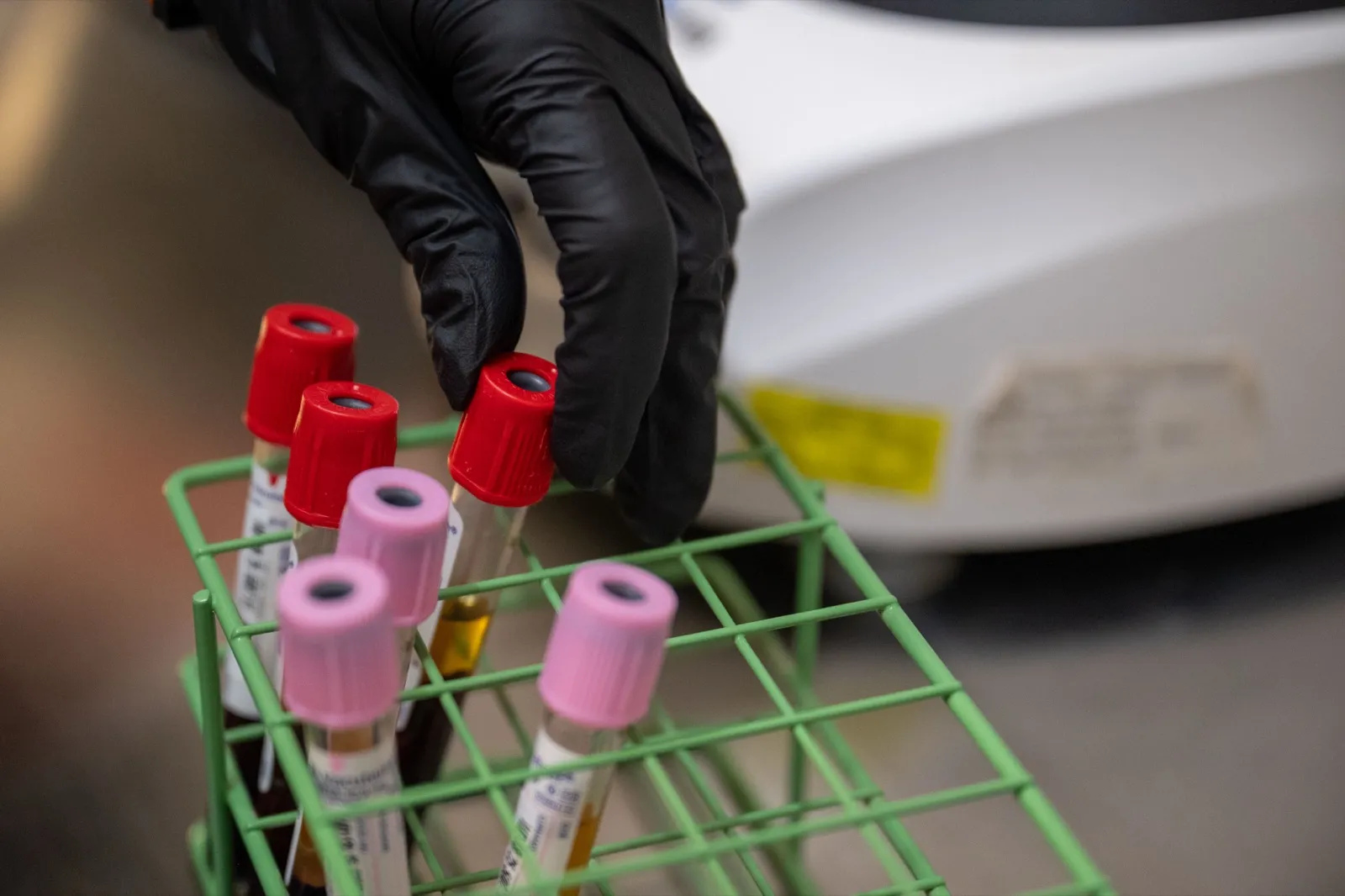
.jpg)
Overview
A medical courier business carries lab specimens, prescriptions, and supplies for labs, clinics, hospitals, and pharmacies, and a NEMT company can run it with vans idle between rides. Specimens that may hold a pathogen travel as Category B under 49 CFR 173.199 in triple packaging. Drivers who could reasonably be expected to touch blood fall under OSHA's bloodborne pathogens standard. You bill the lab or pharmacy, never Medicaid.
- Courier work fills van hours between rides, but it is paid by labs, clinics, and pharmacies, not by Medicaid or a broker.
- Specimens that may hold a pathogen ship as Category B: triple packaging, the UN3373 mark, and a person who knows the rules on every leg.
- A Category B specimen that breaks or spills in your van means a call to the National Response Center within 12 hours and a written DOT report within 30 days.
- The ISO business auto form excludes damage to property you carry, so ask your agent how lost or spoiled specimens are covered.
- VA contracts active in 2026 were worth about $53,000 to $162,000 for a year of lab or pharmacy courier service in one area.
Many NEMT vans sit parked for hours in the middle of the day and after the last dialysis return. Courier work can fill those hours: carrying blood and urine samples from clinics to labs, prescriptions from pharmacies, and supplies between hospital sites. The van and driver you already have do most of the job. What changes are the rules for what you carry, who pays, and how you insure it.
What medical courier work is and who pays for it
A medical courier moves things, not patients. The usual loads are diagnostic specimens, prescriptions, lab supplies, medical records, and equipment. The customers are the businesses that need them moved:
- Clinics and doctor’s offices that send samples to an outside lab every afternoon.
- Reference labs and hospital labs that pick up from many collection sites on a set route.
- Pharmacies that deliver to patients, nursing homes, or other branches.
- Hospitals and health systems that move samples, supplies, and records between buildings.
- VA medical centers, which buy courier service by federal contract.
Every one of them pays your invoice directly. Medicaid NEMT pays for rides that take members to care, so no courier run can be billed to Medicaid or a broker. That makes courier work a true second payer, the kind of revenue the payer mix guide recommends adding before one broker controls your month.
What courier contracts are worth
Federal award records show the size of real routes. These VA contracts were active in 2026. Four of the five were set aside for service-disabled veteran-owned small businesses and drew 9 to 13 offers each. The Grand Junction award was not competed. Amounts are what USAspending shows obligated as of October 2026.
| Where | Service and term | Obligated | Offers |
|---|---|---|---|
| Lexington, Kentucky | Lab courier, April 1, 2026 to March 31, 2027 | $98,949.62 | 12 |
| Reno, Nevada | Medical courier, September 1, 2026 to August 31, 2027 | $142,265.80 | 9 |
| Seattle, Washington | Pharmacy courier, February 1, 2026 to January 31, 2027 | $161,873.52 | 13 |
| Martinsburg, West Virginia | Lab courier for the medical center and its clinics, October 2, 2025 to October 1, 2026 | $157,500.00 | 12 |
| Grand Junction, Colorado | Daily lab courier for outpatient clinics, March 7, 2026 to March 6, 2027 | $52,899.60 | 1 |
Each also shows a potential end date in 2030 or 2031 if every option year is used. VA posts these as courier work under NAICS 492110, Couriers and Express Delivery Services, or 492210, Local Messengers and Local Delivery. As of October 2026, SBA’s size standards in 13 CFR 121.201 make a company small at up to 1,500 employees under 492110 and up to $34.0 million in average yearly receipts under 492210. To bid, register in SAM.gov and add both codes. The VA transportation contracts guide walks through registration and bidding.
The DOT rules for carrying specimens
The Department of Transportation’s Hazardous Materials Regulations decide how a specimen must be packed and what the carrier must know. The starting point is 49 CFR 173.134. An infectious substance is Division 6.2, split into Category A, for forms that can cause permanent disability or life-threatening disease on exposure, and Category B, for everything else. Many common loads are not regulated as hazardous materials at all.
| What you carry | How DOT treats it | What you need |
|---|---|---|
| Samples for routine tests not related to infectious disease, such as drug screens, cholesterol, glucose, pregnancy, kidney or liver tests, and cancer biopsies | Not regulated as Division 6.2 when infection is unlikely (173.134(b)(11)) | Leakproof, labeled packaging under OSHA rules and the lab’s instructions |
| Dried blood spots and fecal occult blood cards | Not regulated as Division 6.2 (173.134(b)(9)) | The lab’s packaging |
| Blood collected for transfusion, and tissues or organs for transplant | Not regulated as Division 6.2 (173.134(b)(7)) | The blood bank’s or transplant program’s procedures |
| Diagnostic specimens that may hold a pathogen | Category B, UN3373 (173.199) | Triple packaging, the UN3373 mark, and a contact name and phone |
| Category A infectious substances | Fully regulated (UN2814 or UN2900) | Every hazardous materials rule, starting with 173.196. Keep them out of a NEMT business. |
| Used sharps and red-bag waste | Regulated medical waste, UN3291 | Separate packaging rules (173.197), and a state hauler registration in states such as Florida |
Packing Category B specimens
Category B specimens that follow 49 CFR 173.199 are excepted from the rest of the hazardous materials rules, apart from incident reporting. The rule sets out the package:
- Three layers. A primary receptacle, a secondary packaging, and a rigid outer packaging. For liquids, both inner layers are leakproof, with enough absorbent between them to soak up the entire contents.
- A tested package. The completed package must pass a 1.2 meter (3.9 foot) drop test with no leak from the primary receptacle. Buy UN3373 kits and close them the way the maker’s instructions say, as the rule requires.
- The mark. A diamond with “UN3373” on the outer package, each side at least 50 mm long, beside the words “Biological substances, Category B” in letters at least 6 mm high.
- A contact. The name and phone number of someone who knows the material and its emergency response, on a document or the outer package. The phone must be monitored during business hours.
- Ice or dry ice outside the secondary packaging. With ice the outer package must be leakproof, and with dry ice it must let carbon dioxide gas escape. Mark it “Dry ice” with a note that the contents are for diagnosis or treatment.
Usually the clinic or lab packs the specimen and you carry it. Under 173.199(e), every person who offers or transports a Category B substance under this section must know its requirements, so train drivers to refuse a package that is unmarked, leaking, or not closed.
The vehicle exception, and why it rarely fits a NEMT van
Section 173.134(b)(10) lifts the rules for non-Category A patient samples carried by a private or contract carrier “in a motor vehicle used exclusively to transport such materials.” A van that also carries riders is not used exclusively for specimens, so pack to 173.199.
The materials of trade exception in 49 CFR 173.6 does not help either. It covers Category B samples carried by a private motor carrier in direct support of a principal business that is not transportation (49 CFR 171.8). A clinic carrying its own samples can use it. A company paid to carry them cannot.
If a specimen breaks in your van
For any infectious substance other than regulated medical waste, breakage, spillage, or suspected contamination during transportation is a reportable incident (49 CFR 171.15(b)(3)). Category B shipments stay subject to this rule. The person in physical possession, usually your driver, must phone the National Response Center at 800-424-8802 as soon as practical and within 12 hours. A written report on DOT Form F 5800.1 follows within 30 days (49 CFR 171.16). Put the number in every courier van and practice the call.
Drug test specimens
DOT drug tests need extra care, because a specimen crushed or lost in transit cancels the test (40.33(f)). Under 49 CFR part 40, a collector normally packs urine and oral fluid specimens in a shipping container. No container is required when a laboratory courier hand-delivers them from the collection site to the lab (40.45 and 40.51), and for urine the collector then prepares the sealed bag as the courier service directs (40.79). Write your handling steps down and give them to every collection site you serve.
Can you carry specimens and riders in the same van?
Keep them apart. 49 CFR 177.870 bars hazardous materials, other than a few listed items such as emergency shipments of drugs and hospital supplies, on vehicles carrying passengers for hire when another practical way to ship them exists. Category B packages under 173.199 are excepted from that rule, but Category A substances, waste, and other hazardous materials are not.
The rider’s trip is the bigger reason. CareOregon’s provider manual (version 1.3, February 2024) says members must ask the brokerage in advance to authorize any extra stop, even a pharmacy stop. A detour to drop a cooler at a lab is an unauthorized stop on someone else’s ride. It adds ride time, puts patient labels in view of another person, and adds miles the broker never assigned.
Run courier work in the gaps: a midday loop between the morning and afternoon dialysis runs, or an evening lab route after the last return. The vehicle utilization guide shows how to find those hours on your own schedule.
OSHA bloodborne pathogens rules for courier drivers
The OSHA standard at 29 CFR 1910.1030 applies to employees with occupational exposure: reasonably anticipated contact with blood or other potentially infectious materials from doing their job. You make that call for each job title in a written exposure determination, without counting on gloves to prevent the contact. A driver who handles specimen bags all day, and is expected to deal with a cracked tube, belongs on the list.
Once a driver is covered, the full standard applies: a written exposure control plan, gloves at no cost, the hepatitis B vaccine offered within 10 working days of assignment, training each year, and a medical evaluation after any exposure. The OSHA guide for NEMT covers each piece, and the exposure control plan template has the written plan. Add courier tasks to the plan you already keep for drivers who clean vans.
The standard also covers the containers you pick up:
- Leakproof and closed. Specimens of blood or other potentially infectious materials go in a container that prevents leakage during transport, closed before it moves.
- Labeled once it leaves the building. A facility using universal precautions may skip labels inside, but outside the facility the container needs the biohazard label or a red container. OSHA’s FAQ (corrected November 1, 2011) accepts a DOT label on the outer shipping container, as long as any inner containers carry the OSHA label.
- Double-bagged if dirty. If the outside of the primary container is contaminated, it goes inside a second leakproof, labeled container, and a puncture-resistant one if the specimen could pierce it.
Carry a spill kit in every courier van, and clean any spill the way your exposure control plan says, using the vehicle cleaning checklist.
HIPAA: conduit or business associate?
Specimen labels and pharmacy bags carry patient names, and requisition forms carry diagnoses. Whether HIPAA reaches you depends on what you do with that information.
HHS addressed this in the 2013 omnibus rule (78 FR 5571 to 5572, January 25, 2013). It called the conduit exception “a narrow one,” meant to exclude only “mere courier services,” such as the Postal Service. A conduit transports information but does not access it, other than on a random or infrequent basis as needed to carry it. Whether a company is a conduit is decided on the facts of each service.
- Likely a conduit. You pick up sealed bags and totes, sign for a count, and deliver them unopened.
- Likely a business associate. You log specimens by patient name, keep delivery lists for a pharmacy, or use a tracking app with patient details.
When in doubt, expect the lab or pharmacy to ask for a business associate agreement, and read it the way you read your broker’s. The HIPAA guide for NEMT explains the safeguards an agreement will require.
Insurance for courier work
Your passenger coverage was written for carrying people. Tell your agent in writing before the first courier run, and ask three questions.
- Is courier use covered at all? Your application and policy describe how the vans are used. Adding goods delivery changes that description.
- What covers the load? The ISO business auto coverage form (CA 00 01, 10 13 edition) excludes property damage to property transported by the insured or in its care, custody, or control. A dropped cooler of specimens is your loss unless a separate policy, such as cargo or inland marine coverage, picks it up. Ask your agent which one fits.
- What do customers require? Labs and hospitals set their own limits, and federal contracts state any insurance they require in the solicitation. Match the certificate to each contract.
Interstate runs add a federal layer. A for-hire carrier hauling property across state lines must file proof of financial responsibility with FMCSA unless an exemption applies (49 CFR 387.301T). For a fleet of only vehicles under 10,001 pounds carrying non-hazardous property, the minimum is $300,000 (49 CFR 387.303T). See the NEMT insurance requirements guide for the passenger side.
Medical waste is a separate business with its own permits. Florida, for example, requires anyone who transports biomedical waste in the state to register with the Department of Health before starting, though the department may exempt loads under 25 pounds (section 381.0098(5), 2026 Florida Statutes). Turn down red bags and sharps containers unless you hold the permits.
How to price medical courier runs
Courier customers buy reliability on a schedule, and most pricing follows one of four models:
- Per route. A fixed price for a daily loop of set stops, such as five clinics to one lab each afternoon. Best for steady contracts.
- Per stop. A base price plus a fee for each pickup or delivery. Good for pharmacies with changing stop counts.
- Per mile or per hour. For long or irregular runs, such as moving supplies between hospital campuses.
- Rush or on demand. A higher price for a pickup within a set number of minutes, after hours, or on weekends.
Start from your own cost. The NEMT cost per mile calculator gives your vehicle cost, and driver time is the rest. The IRS standard mileage rate, 76 cents a mile for business use from July 1 to December 31, 2026, is a useful check on what one vehicle mile costs. Then add wait time at each stop, the empty miles back to base, spill kits and packaging if you supply them, and the extra insurance.
Check your quote against the market. The VA contracts above put a year of courier service in one area at about $53,000 to $162,000, and most drew 9 to 13 offers, so expect to compete on price.
How to add courier work, step by step
- Find the empty hours. Map when each van sits idle on a normal week, and keep a spare for broker work.
- Pick one customer type. Clinics sending samples to a lab are the simplest start. Pharmacies and hospitals come next.
- Write your rules. Add courier tasks to your exposure control plan, list what you will and will not carry, and set the steps for a broken specimen, including the 12-hour call.
- Train drivers. Cover 173.199 packaging and marks, refusing bad packages, bloodborne pathogens, privacy, and the spill kit. Keep training records.
- Equip the vans. Add a spill kit, gloves, a way to secure coolers so they cannot slide, and the incident phone number.
- Fix the insurance. Get written confirmation of courier use and cover for the load before the first run.
- Quote a pilot route. Offer one daily route for 30 days at a fixed price, with pickup and delivery times logged.
- Bid on federal work. Register in SAM.gov with NAICS 492110 and 492210, and search for VA lab and pharmacy courier notices near you.
- Report every month. Send on-time pickups and deliveries, any refused packages, and any incidents, and keep the record for your next bid.
For how this fits a wider growth plan, see how to grow a NEMT business.
Frequently asked questions
Can I carry lab specimens in my NEMT van?
Yes, between rides. Category B specimens packaged under 49 CFR 173.199 are excepted from the other federal hazardous materials rules, including the limits on hazardous materials in passenger vehicles for hire. Do not stop for a pickup with a rider aboard. A stop the broker did not assign adds time to the member's ride, and CareOregon's provider manual, for one, has members get every extra stop authorized by the brokerage in advance. Category A infectious substances and medical waste belong in a different operation.
Do medical courier drivers need hazmat training?
For Category B specimens shipped under 49 CFR 173.199, the rule is that each person who offers or transports them must know the requirements of that section. Category A and other fully regulated hazardous materials bring the full hazmat employee training and testing rules in 49 CFR 172.702 and 172.704. Your drivers also need OSHA bloodborne pathogens training if they could reasonably be expected to touch blood on the job.
Is a medical courier a HIPAA business associate?
Sometimes. HHS calls the conduit exception narrow, meant for mere courier services such as the Postal Service, which carry information without accessing it except on a random or infrequent basis. If you only move sealed bags, a lab may treat you as a conduit. If you log specimens by patient name, keep a pharmacy's delivery lists, or track loads in an app with patient details, expect the customer to ask for a business associate agreement.
How much do medical courier contracts pay?
It depends on routes, stops, and hours. Federal award records show VA courier contracts in 2026 such as $98,949.62 for a year of lab courier service in Lexington, Kentucky, $142,265.80 for medical courier service in Reno, Nevada, and $161,873.52 for pharmacy courier service in Seattle. Price your own work from your cost per mile and per hour.
Do I need a separate license to be a medical courier?
No federal rule creates a medical courier license for specimen and supply runs, though local business licenses and your insurer's rules still apply. Carrying property for hire across state lines brings a federal insurance filing with FMCSA. Medical waste is different. Florida, for example, requires anyone who transports biomedical waste in the state to register with the Department of Health first.
Can Medicaid pay for a courier run?
No. Medicaid NEMT pays for getting members to and from care. A specimen, prescription, or supply run is a service you sell to the lab, clinic, hospital, or pharmacy, and you invoice that customer directly under your own contract terms.