Growth
Alaska Waiver Transportation in 2027: SDS Certification for a Transportation-Only Business
.jpg)
Overview
To get SDS provider certification for waiver rides in Alaska, send Senior and Disabilities Services a Cert-01 application and a Cert-17 declaration marked Business Transportation Services, with your state business license and $300,000 auto and general liability coverage naming SDS. A new provider is certified on probation for one year. Then enroll with Alaska Medicaid to bill. The FY 2027 chart pays $23.72 per trip up to 20 miles.
- A van company that offers only rides certifies with SDS as a Business Transportation Services provider, using Cert-01 and Cert-17.
- All five Alaska waivers pay for rides: ALI, APDD, CCMC, IDD, and the Individualized Supports Waiver.
- You need $300,000 in commercial auto and general liability coverage with SDS as certificate holder, plus a state background check for every driver.
- SDS certifies a new provider on probation for one year, and you then enroll with Alaska Medicaid as provider type 047 to bill.
- The FY 2027 chart pays $23.72 per trip up to 20 miles and $47.42 over 20 miles, times a regional factor of up to 1.50.
Alaska’s home and community-based waivers pay for rides that help people with disabilities and older Alaskans reach their day programs, jobs, stores, and other places in their support plan. The Division of Senior and Disabilities Services (SDS) in the Alaska Department of Health certifies the companies that give those rides. A van company that offers only rides certifies as a Business Transportation Services provider, the transportation-only path on SDS’s forms.
Rides to medical care are a different service. Alaska Medicaid travel is approved trip by trip in advance and billed by enrolled taxi and wheelchair van companies, as the Alaska guide explains.
What Alaska waiver transportation covers
Under 7 AAC 130.290, waiver transportation takes a recipient, and an escort when one is authorized, to and from places where waiver services are given or where other community services and resources are available. The Transportation Services Conditions of Participation add that the service is for times when the recipient’s natural supports, such as family or friends, cannot give the ride. All five of Alaska’s home and community-based waivers pay for rides:
- ALI: Alaskans Living Independently
- APDD: Adults with Physical and Developmental Disabilities
- CCMC: Children with Complex Medical Conditions
- IDD: Intellectual and Developmental Disabilities
- ISW: the Individualized Supports Waiver
Every ride must be in the recipient’s support plan and receive prior authorization. The recipient’s care coordinator builds that plan with the recipient and a planning team the recipient chooses, so care coordinators are the people to introduce your company to.
Cert-17, the transportation service declaration (revised April 23, 2024), offers two ways in:
- Business Transportation Services (transportation only). For a company whose only waiver service is rides. This page follows this path.
- Private Transportation Services. For an agency that gives rides along with other waiver services, such as day habilitation or residential services. Cert-17 asks it for more: agency vehicle registrations, the Cert-37 policy assurances form, and eight written policies.
If you are already an SDS-certified agency for another service, you add transportation with Cert-41, the application for an additional service (revised December 17, 2019), and a Cert-17.
What SDS requires of a transportation business
Two documents set the standards. The Provider Conditions of Participation (effective September 1, 2022) apply to every waiver provider. The Transportation Services Conditions of Participation (revised September 5, 2017) add rules for rides, with a separate part for transportation businesses.
Insurance
Your certificate of insurance must show the policy numbers, current coverage dates, your agency name and physical address, the address of each service location the policy covers, and SDS as certificate holder at Senior and Disabilities Services, Provider Certification and Compliance, 1835 Bragaw Street, Suite 350, Anchorage, AK 99508. The coverage required:
- Commercial automobile liability on every vehicle used for recipients, at least $300,000 combined single limit per claim.
- Commercial general liability, at least $300,000 combined single limit per claim.
- Workers’ compensation as AS 23.30.045 requires, with a waiver of subrogation against the State. An agency with no employees or volunteers, where the owners do all the work, files the Cert-03 worker assurances form instead.
An employee or volunteer who drives a personal vehicle needs auto liability coverage that includes the recipient, or coverage under your agency’s policy. See NEMT insurance requirements.
Drivers
- Age and license. Every driver is 18 or older, with a current Alaska driver’s license in the class the vehicle needs and a safe driving record.
- Ability. Drivers must be physically capable of assisting recipients and willing to do it.
- Training. Train each driver in defensive driving, disability sensitivity and passenger assistance, watching the inside of the vehicle, universal precautions and infection control, accident and emergency protocols, and your policy on restrictive interventions.
- CPR and first aid. The Provider Conditions of Participation require CPR and first aid training that meets American Heart Association or American Red Cross standards, renewed at least every two years, for direct service workers and for staff giving agency-based transportation. The rule does not name transportation businesses, so ask SDS whether it expects the same of yours. See CPR requirements for NEMT drivers.
- Background checks. Under 7 AAC 10.900, anyone 16 or older who will have regular contact with recipients or access to their records needs a valid check through the state Background Check Program. You may not bill for a ride given by someone without a current check or variance.
Vehicles
- Ownership. The rule pays only for rides in vehicles your agency owns or commercially leases, and SDS will not certify an agency that uses only employee- or volunteer-owned vehicles. A personal vehicle is allowed only when SDS finds no other option for that recipient. A Business Transportation applicant does not send vehicle registrations, but the ownership rule still applies.
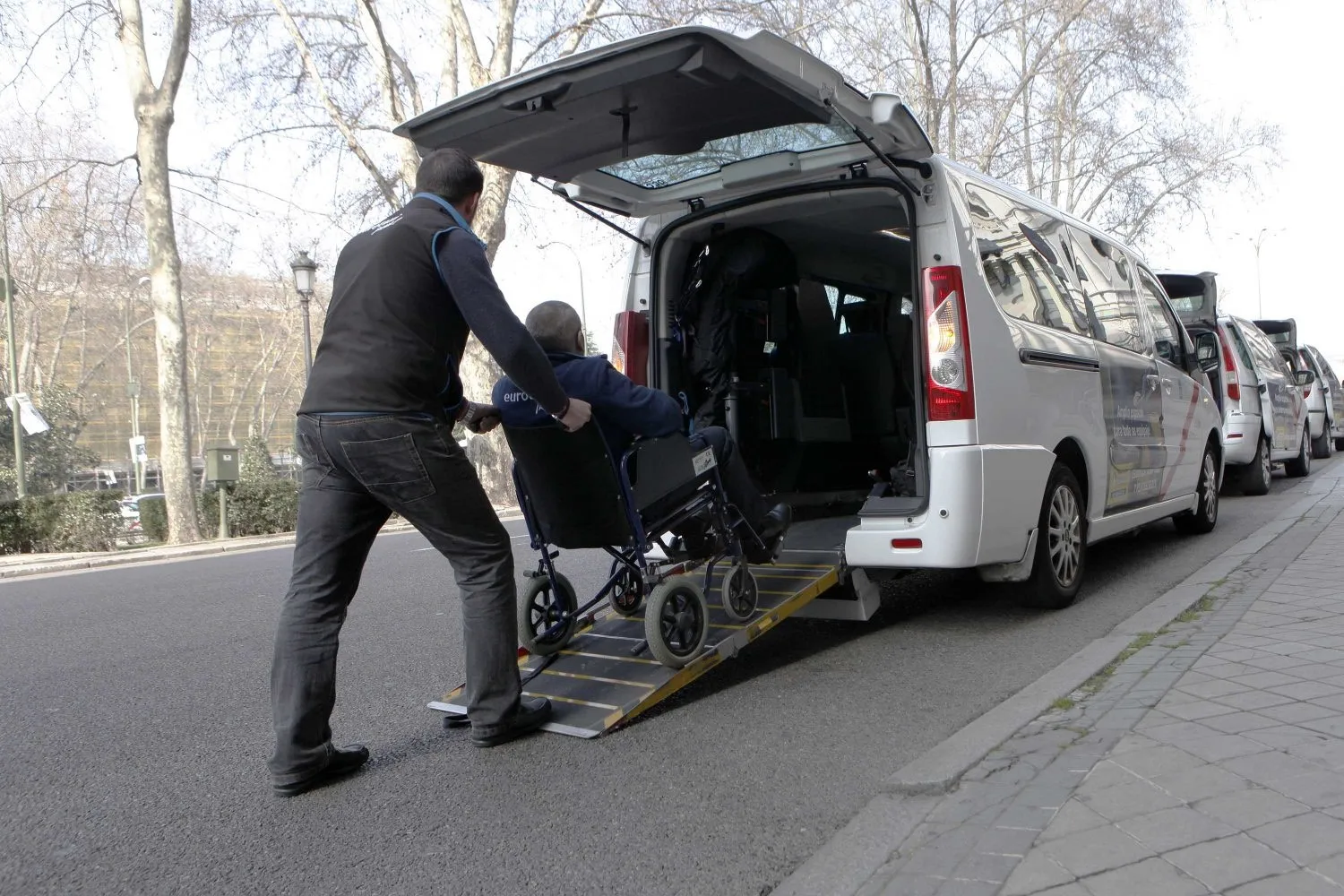
- Seats and securement. A transportation business gives every rider a seat and seat belt. Wheelchair securement must fit the device, follow its maker’s recommendation, and release both the chair and the rider within 60 seconds without tools. If a rider’s chair does not fit your system, you may move the rider to a seat only when it is safe, the rider agrees, and the chair rides along to the destination. See wheelchair securement.
- Equipment. Each vehicle carries a first aid kit, a fire extinguisher, and the tools needed to release riders in an emergency, plus two-way communication with emergency personnel or your dispatcher.
- Comfort and care. Keep the inside at a safe temperature all year and follow the maker’s preventive maintenance schedule.
- Fit for the rider. Before you serve a recipient, assess what mobility help they need, whether they need an escort, and what mobility device they use.
Money and operations
SDS also expects financial records showing you can cover at least three months of operating costs, including payroll and taxes, your insurance, and a physical office. You may not charge Medicaid more than you charge private pay clients for the same service.
How to apply for SDS certification
These steps follow the initial application guidance SDS revised on July 31, 2026.
- Get a State of Alaska business license. The owner on the license must match the form of organization on your application. If your city or borough requires a commercial passenger vehicle permit, include a copy; the Alaska guide covers Anchorage’s vehicle for hire permit.
- Buy the insurance above and get a certificate naming SDS.
- Take the SDS critical incident reporting course online through the SDS Training Academy. Send the certificate for your director of services or the person who supervises your drivers, and have supervisors repeat the course every two years. The settings training listed on Cert-01 is for adult day, day habilitation, residential, employment, congregate meal, and care coordination services, not transportation.
- Complete Cert-01, the certification application (revised May 8, 2024), and Cert-17, checking Business Transportation Services, the waivers you will serve, and each census area where you will drive. Cert-17 also names your transportation program director.
- Add Cert-37, the policy assurances form. Cert-17 asks for it only from Private Transportation, but the July 2026 guidance lists it for every applicant, and a missing form makes the packet incomplete.
- Add the core documents: your business license, certificates of insurance, an organizational chart naming every position (including owners, board members, and the person who bills Medicaid), and a personnel list if your chart cannot hold every name.
- Add your operations manual with the policies your service declaration calls for. Cert-17 lists its eight policy topics for Private Transportation only. Every provider still keeps the written policies the Provider Conditions of Participation require, such as complaints, confidentiality, and critical incidents, and sends them when SDS asks. See NEMT policies and procedures.
- Send one PDF packet to doh.dsds.certification@alaska.gov. Fax (907-754-3475) and unbound paper copies also work. An incomplete packet must be sent again in full within 30 days of SDS’s notice, or the application is denied.
- Set up your background check account. Once SDS accepts the application, it asks the Background Check Program to open an agency account. Every person on your organizational chart must be on that account’s roster before SDS approves you, and each driver needs at least a provisional clearance before working with recipients.
SDS can be reached at 907-269-3666 or doh.sds.info@alaska.gov.
Certification terms and renewal
Under 7 AAC 130.220, a provider SDS has not certified before gets a one-year probationary certification. During it, SDS will not certify more services or locations. A provider that meets the requirements then gets a standard two-year certification, or up to four years based on its compliance record.
SDS sends a renewal notice at least 90 days before your certification expires, and the full renewal packet is due 60 days before. The renewal guidance revised July 31, 2026 says the quality improvement report (Cert-50) is not required of transportation businesses that offer no other waiver services. Changes have their own deadlines: report a change of ownership, name, or physical location in writing 60 days ahead, and a criminal charge against an owner or administrator within one business day.
Enrolling with Alaska Medicaid
SDS certification alone does not get you paid. Under 7 AAC 105.210 you must also enroll in Medicaid, and SDS says certification comes first, then enrollment. Apply in the Alaska Medicaid Provider Enrollment Portal as provider type 047, Home Community Based Agency, as a group or a sole proprietor.
Alaska Medicaid asks for three documents with the application: its tax certification and provider enrollment agreement, your SDS certification, and your state business license. Home and community-based agencies are among the provider types that generally pay the federal application fee, which is $750 for calendar year 2026.
This is separate from the taxi (083) and wheelchair van (086) enrollments that carry Medicaid travel trips. If you hold one of those, you still enroll as type 047 for waiver rides.
What waiver rides pay
Alaska pays the lower of your charge and the rate on its Chart of Waiver Services Rates (7 AAC 145.520). These are the transportation rates on the FY 2027 chart SDS posts, dated August 4, 2026, for all five waivers:
| Code | What it pays for | Rate per trip |
|---|---|---|
| T2003 | Recipient, trip up to 20 miles | $23.72 |
| T2003 TN | Recipient, trip over 20 miles | $47.42 |
| T2001 SE | Attendant or escort | $23.72 |
| T2003 CG | Recipient, paratransit provider | $47.42 |
The FY 2026 chart, with its 3.2% increase effective July 1, 2025, paid $22.98 and $45.95 for the first two codes. Under 7 AAC 145.525, each July 1 that Alaska does not rebase the chart, it adjusts the rates for inflation, and the FY 2027 rates are 3.2% above FY 2026’s. The CG line is for ADA paratransit providers defined in 49 CFR part 37, subpart F. See T2003 and the TN modifier.
Regional factors
The chart raises every rate by the region where the provider is located, using the planning regions of the Alaska Geographic Differential Study of April 30, 2009. Multiply the rate by your region’s factor:
| Region on the chart | Factor |
|---|---|
| Anchorage, Mat-Su, Glennallen, Parks/Elliott/Steese Highways | 1.00 |
| Kenai Peninsula | 1.01 |
| Fairbanks | 1.03 |
| Delta Junction/Tok | 1.04 |
| Prince William Sound | 1.08 |
| Juneau, Ketchikan/Sitka, Southeast mid-size and small communities | 1.09 |
| Kodiak | 1.12 |
| Roadless Interior | 1.31 |
| Southwest small communities | 1.44 |
| Arctic | 1.48 |
| Bethel/Dillingham | 1.49 |
| Aleutian | 1.50 |
A trip up to 20 miles from a Bethel-based provider works out to about $35.34 ($23.72 × 1.49). For long rural runs, see rural NEMT.
How trips are counted
The rule pays per trip segment: travel to a place where the recipient gets out for an approved purpose. A ride from home to a day program and back is two segments. A stop of 15 minutes or less is an incidental stop and does not start a new segment.
The waiver transportation guide compares these limits with other states, so here they are in short. No pay for medical travel, rides already part of day or residential habilitation, errands without the recipient on board, or destinations more than 20 miles from home unless the support plan approves them. A trip where the driver waits more than 15 minutes for the recipient is not paid, except at the chart rate for trip segments under 20 miles. An escort cannot be your driver or another employee, unless that employee is giving the recipient another waiver or personal care service at the time.
Trip records and audits
Each trip goes in a travel log with the recipient’s name and any escort’s, the date, the start and end time of each segment, the pickup and drop-off points, and the start and end of any wait. Keep these records for at least seven years from the date of service, even if you sell or close the business (7 AAC 105.230). The trip log template has columns for each item.
SDS can review you at your office or wherever you give rides, through desk reviews, on-site reviews, and complaint investigations. Claims may cover only rides that were given, that are in the recipient’s support plan, and that are documented. Report suspected Medicaid fraud or financial exploitation of a recipient to the Medicaid Fraud Control Unit at 907-269-6279.
Frequently asked questions
Which Alaska waivers pay for transportation?
All five. The Cert-17 service declaration (revised April 23, 2024) lets you choose Alaskans Living Independently (ALI), Adults with Physical and Developmental Disabilities (APDD), Children with Complex Medical Conditions (CCMC), Intellectual and Developmental Disabilities (IDD), and the Individualized Supports Waiver (ISW). The FY 2027 rate chart lists the same transportation codes for all five.
Can my drivers use their own cars for waiver rides?
Only by exception. Under 7 AAC 130.290, Alaska pays for waiver rides in vehicles owned or commercially leased by the certified agency, and it will not certify an agency that uses only employee- or volunteer-owned vehicles. SDS approves a personal vehicle only when it finds no other option for a recipient, and the agency must document that the vehicle is safe, the driver is capable, and the insurance covers the recipient.
I already drive Medicaid travel trips in Alaska. Do I need a new Medicaid enrollment?
Yes. Medicaid travel companies enroll as taxi (provider type 083) or wheelchair van (086) providers. Waiver transportation is billed by a home and community-based agency, provider type 047, and Alaska Medicaid asks for your SDS certification and state business license to enroll as one. SDS says certification comes first, then Medicaid enrollment.
How long does SDS certification last?
A provider SDS has not certified before gets a probationary certification of one year under 7 AAC 130.220, with no added services or locations during it. A provider that meets the requirements then gets a standard certification of two years, or up to four years based on its compliance record. SDS sends a renewal notice 90 days before expiration, and your renewal is due 60 days before.
What happens if SDS finds my application incomplete?
SDS emails you, and you must send the entire packet again, not just the missing page. It does not return incomplete packets. Under 7 AAC 130.220, SDS denies the application if a complete one does not arrive within 30 days of its notice, so keep a full copy of what you send.
What does a waiver trip over 20 miles pay?
On the FY 2027 chart, $47.42 per trip, billed as T2003 with the TN modifier, compared with $23.72 for a trip up to 20 miles. A destination more than 20 miles from the recipient's home is paid only if the support plan approves it. The regional factor for your location raises both rates everywhere except the Anchorage, Mat-Su, and Glennallen regions and the Parks, Elliott, and Steese Highways region, which stay at 1.00.
Do waiver transportation drivers need background checks?
Yes. Under 7 AAC 10.900, anyone 16 or older who will have regular contact with recipients, or access to their records, needs a valid background check through the state Background Check Program. SDS has an account opened for your agency once it accepts your application, and you may not bill for a ride given by someone without a current check or variance.
Official resources
- Alaska DOH: SDS Provider Certification and Compliance Unit
- Alaska DOH: Approved SDS forms (Cert-01, Cert-17, Cert-41)
- Alaska DOH: SDS regulations and Conditions of Participation
- Alaska DOH: Initial waiver provider application guidance
- Alaska DOH: Waiver services rate charts
- Alaska DOH: Background Check Program
- Alaska Medicaid: Provider enrollment documents and fee