Wildfire Smoke Rules for NEMT Drivers: When the California, Oregon, and Washington Rules Reach a Van

Overview
Federal OSHA has no wildfire smoke standard. California, Oregon, and Washington have their own rules. California's starts when the AQI for PM2.5 reaches 151, Oregon's at 101, and Washington's at 72 for training and a written plan. All three exempt an enclosed vehicle with a cabin air filter and closed windows, so for NEMT drivers they mostly reach curb time, lift loading, and door-through-door help.
- Federal OSHA has no wildfire smoke standard. California, Oregon, and Washington each have a permanent rule of their own.
- A closed van with a working cabin air filter is exempt in all three states, but the curb, the lift, and the walk to the door are not.
- Check the AQI for PM2.5 at the start of every shift, and tell drivers the number and what changes.
- Keep free N95 respirators in every van before smoke season, and train drivers before the first smoky day.
- Riders with lung or heart disease, kidney disease, or diabetes are at higher risk, so keep their curb waits short.
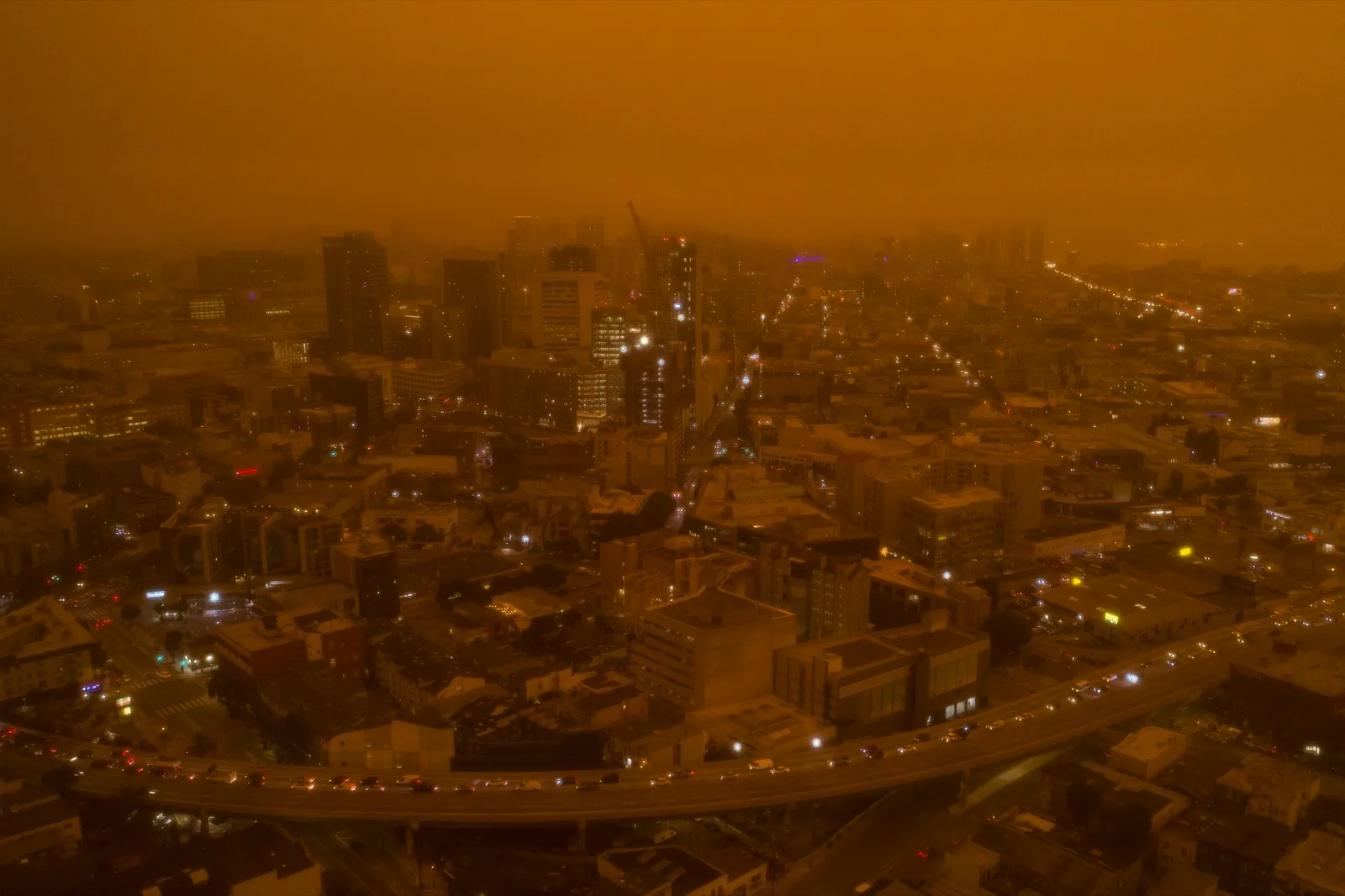
When a large fire burns, smoke can cover a region for days, often far from the flames. Your dialysis riders still need their chairs, and your drivers still spend part of every trip outside the van. Three states have rules for that work, and they reach a NEMT driver in a narrower way than most owners expect. This guide covers when each rule applies, what the enclosed vehicle exemption does and does not cover, and what changes for drivers and riders on a smoky day.
Is there an OSHA wildfire smoke rule?
No. Federal OSHA has no standard written for wildfire smoke. NIOSH’s page on wildland fire smoke and outdoor workers (July 16, 2026) points instead to the permanent rules adopted by Cal/OSHA, Oregon OSHA, and Washington’s Department of Labor and Industries. If you drive in any other state, two federal points still matter:
- If you require respirators, OSHA’s respiratory protection standard applies in full: a written program, medical evaluations, and fit testing (29 CFR 1910.134).
- If you only allow or hand out N95s for voluntary use, you must give each wearer the information in the standard’s Appendix D. Voluntary use of filtering facepieces, such as N95s, does not need a written program (1910.134(c)(2)).
Everything else in this guide comes from the three state rules. For the federal rules every NEMT employer follows, such as injury reporting, see OSHA for NEMT companies.
The three state rules side by side
Each rule is keyed to fine particles, PM2.5, the main harmful part of wildfire smoke. Washington’s starts earliest and California’s latest:
| Rule detail | California | Oregon | Washington |
|---|---|---|---|
| Rule and date | 8 CCR 5141.1, permanent since February 1, 2021 | OAR 437-002-1081, since July 1, 2022 | Chapter 296-820 WAC, since January 15, 2024, last amended February 6, 2026 |
| Starts at (AQI for PM2.5) | 151 | 101 | 72 for training and a written plan, 101 for controls |
| Free N95s | At 151 to 500, for voluntary use | At 101 and up, for voluntary use | At 101 for everyone exposed, handed to each person at 351 |
| Respirators required | Above 500, under a full program | AQI 277 on today’s scale (251 as written) | 849 and up, under a full program |
| Short exposures | Exempt at 1 hour or less a shift | Under 15 minutes an hour and 1 hour a day: training and N95s only | None, except that required respirators do not apply at 15 minutes or less a day |
| Enclosed vehicles | Exempt with a cabin air filter, closed except to get in or out | Exempt with a maintained filter, doors opened briefly, transit excluded | Same as Oregon |
A few details the table leaves out:
- Use the number for PM2.5. California’s rule applies when the current AQI for PM2.5 is 151 or more, regardless of the AQI for other pollutants. Washington L&I notes that the AQI also reports other pollutants, such as ozone, and that an AQI above 72 with no wildfire smoke is often caused by one of them.
- The AQI changed in May 2024. Washington moved its rule to EPA’s current scale. Oregon’s rule text keeps the old numbers, so Oregon OSHA’s fact sheet (August 2026) gives the crosswalk: its required-respirator level is AQI 277 today, and a full program starts at AQI 849. California’s own conversion table, in Appendix A of its rule, still uses the pre-2024 scale.
- Required respirators are rare but serious. At that level, California and Washington require a full respiratory protection program with fit testing and medical evaluation. Oregon lets you use a simpler Wildfire Smoke Respiratory Protection Program for filtering facepieces from its 200.9 microgram level up to the 500.4 microgram level, and a full program above it.
When the rules reach a NEMT van
All three rules exempt an enclosed vehicle whose air is filtered by a cabin air filter, with windows, doors, and other openings kept closed except to get in or out (8 CCR 5141.1(a)(2)). Oregon and Washington add two conditions. The filter must be properly maintained, and doors may open only briefly. Both also leave out buses, light rail, and other transit vehicles whose doors open often to board and drop off passengers (OAR 437-002-1081, WAC 296-820-805). Washington L&I’s questions and answers say workplaces where doors or windows open often, such as public transportation, are not exempt.
So the time inside a closed, filtered van is usually exempt, and the rest of a NEMT trip is not:
- Waiting at the curb or in a parking lot with the door open
- Running the lift or ramp and securing a wheelchair with the side door open
- Walking a rider to the door, or door-through-door help inside a building
- Fueling, cleaning the van, and time at the yard
How much of that time counts depends on the state:
- California exempts employees exposed at an AQI of 151 or more for a total of one hour or less in a shift. On a day at AQI 151 or more, a driver with 12 wheelchair pickups and drop-offs at 6 minutes outside each is outside for 72 minutes, and is covered.
- Oregon puts work with exposure of less than 15 minutes in an hour, totaling less than one hour in 24 hours, under training and voluntary N95s only.
- Washington has no time-based exemption, so a driver at the curb during heavy smoke is covered from the first minute.
Keep the exemption working where you can. Change each van’s cabin air filter on the maker’s schedule and log it in your vehicle maintenance log. Tell drivers to keep windows closed and shut the side door between loading steps.
Helping a facility evacuate during a fire is different. All three rules ease their requirements for emergency operations such as rescue and evacuation, though respirators still have to be offered. A routine dialysis ride is not an emergency operation. How to take part in an evacuation is in the NEMT emergency plan template.
What changes for drivers on a smoky day
The three rules share a core. Here it is as a daily routine:
- Check the air at the start of each shift, and again as smoke moves. California and Oregon require a check at the start of each shift. AirNow and its Fire and Smoke Map work in all three states, and state and local air agencies are listed as sources too.
- Tell drivers the number and what it means. Each rule requires a way to tell employees about the air and a way for them to report worse air or symptoms, and none lets you punish a driver for speaking up. A short text from dispatch at shift start works.
- Stock N95s in every van before the season. Respirators must be NIOSH-approved, free, and replaced when dirty or damaged. EPA’s smoke guide says one-strap paper masks and surgical masks give little or no protection. NIOSH notes that tight-fitting respirators do not seal over facial hair and do not filter gases such as carbon monoxide.
- Keep the van closed and on recirculate. EPA advises closed windows and vents with the air conditioning on recirculate. It also warns that carbon dioxide from the people inside can climb very high, possibly above 2,500 parts per million, in a newer car sealed on recirculate. Open the windows or vents for a moment when the smoke thins.
- Cut time outside. Call riders to be ready at the door, park as close as you safely can, and add rest breaks. California and Washington list reducing work intensity and adding rest periods as controls.
- Watch for symptoms that need care right away. Washington’s list includes wheezing or trouble breathing, an asthma attack, chest pain, nausea or vomiting, sudden numbness or weakness on one side, sudden confusion, sudden trouble seeing, and a sudden severe headache. A driver with any of them stops and calls 911, then dispatch.
Smoke often comes with heat. NIOSH warns that wearing a respirator, especially when hot or working hard, can raise the risk of heat-related illness. Run your heat illness prevention plan on the same days.
Train before smoke season, in a language drivers understand. California’s required topics are in Appendix B of its rule. Oregon requires training every year before exposure and keeps the latest record on file. Washington requires it before exposure at AQI 72 and every year after.
Riders on smoky days
The rules protect employees, but your riders are often the people most hurt by smoke. CDC lists people with asthma, COPD, diabetes, chronic kidney disease, or heart disease among those at increased risk (page updated August 24, 2026). That describes much of a dialysis schedule.
- Check the AQI when you build the next day’s schedule. If heavy smoke is forecast, call higher-risk riders the evening before, confirm the pickup, and ask them to wait indoors until the driver calls.
- Keep the van closed while riders board. Open the doors only as long as loading takes, and run the air on recirculate once they are shut.
- Riders on oxygen still follow the usual rules for securing tanks and keeping heat away from them. See transporting riders with oxygen.
- Masks for riders. A respirator can make breathing harder, so EPA’s guide tells older adults and people with heart or lung disease to ask their own doctor before wearing one. Offer a mask, never insist.
- Smoke makes driving harder too. EPA notes that smoke can cut roadway visibility and make driving hazardous. Slow down, use headlights, and add time to the schedule.
Trip decisions follow your weather policy. Run dialysis and other life-sustaining rides first, tell the broker the moment a trip cannot run, and record the reason. CareOregon’s manual (version 1.3, February 2024) requires its providers to keep written procedures for adverse weather and disaster events and to keep critical care rides running as far as possible. Notice, rescheduling, and billing are in the NEMT bad weather policy guide.
Where the smoke plan goes in your paperwork
- California. The rule ties its communication and training duties to section 3203, so put your smoke procedures inside your IIPP: how you check the AQI, how you tell drivers, where the N95s are, and the Appendix B training.
- Washington. A written wildfire smoke response plan must be in your accident prevention program before any work at AQI 72. It covers health effects and symptoms, how you get and share the PM2.5 reading, your protection methods, and respirator use. The Washington accident prevention program template is the home for it.
- Oregon. Keep training records with each employee’s name or ID, the date, and the trainer, and keep the latest record for one year. Add smoke to your adverse weather procedures if a broker such as CareOregon asks for them.
- Every state. Write smoke into your emergency and weather plans: who checks the air, what AQI changes your schedule, and how you reach riders.
Frequently asked questions
Does OSHA have a wildfire smoke standard?
No. Federal OSHA has no standard written for wildfire smoke, and NIOSH's outdoor worker page (July 16, 2026) points to the permanent rules California, Oregon, and Washington have adopted. Elsewhere, if you require employees to wear respirators, OSHA's respiratory protection standard (29 CFR 1910.134) applies in full. If you only let them wear N95s by choice, you must give them the information in the standard's Appendix D.
At what AQI do the wildfire smoke rules take effect?
California's rule starts when the current AQI for PM2.5 reaches 151, and Oregon's at a PM2.5 level of 35.5 micrograms per cubic meter, which is AQI 101. Washington's starts earlier: at 20.5 micrograms, or AQI 72, you need training and a written response plan, and at AQI 101 you must use controls and hand out N95s. Use the AQI for PM2.5, not the overall AQI.
Are NEMT vans exempt from the wildfire smoke rules?
Only while closed. All three states exempt an enclosed vehicle whose air passes through a cabin air filter, with windows and doors kept closed except to get in or out. Oregon and Washington ask for a properly maintained filter and doors opened only briefly, and they leave out buses and other transit vehicles that open their doors often to board passengers. Loading a wheelchair with the side door open is time outside the exemption.
Do I have to give NEMT drivers N95 masks during wildfire smoke?
Yes, when a covered driver is exposed at the trigger. California requires NIOSH-approved respirators, such as N95s, for voluntary use at an AQI of 151 to 500. Oregon requires free filtering facepiece respirators at AQI 101. Washington requires free N95s for everyone exposed at AQI 101 and hands them to each person at AQI 351. Voluntary N95 use needs no fit test or medical evaluation.
Does the AQI on AirNow match the numbers in the rules?
Not always. EPA changed how the AQI is calculated in May 2024. Washington updated its rule to the current scale on May 16, 2025. Oregon's rule text still uses the old numbers, so Oregon OSHA publishes a crosswalk: required respirators start at AQI 277 on today's scale, and a full respirator program at AQI 849. The PM2.5 concentrations in Oregon's rule did not change.
Can a NEMT company cancel rides because of wildfire smoke?
Treat heavy smoke like other bad weather. Tell the broker as soon as you know a trip cannot run so it can be placed with someone else, and keep dialysis and other life-sustaining rides going where it is safe. CareOregon's manual (version 1.3, February 2024) requires written procedures for adverse weather and disaster events and wants critical care rides kept running as far as possible.