Billing
How to Increase NEMT Profit in 2027: Six Levers Ranked With the Math
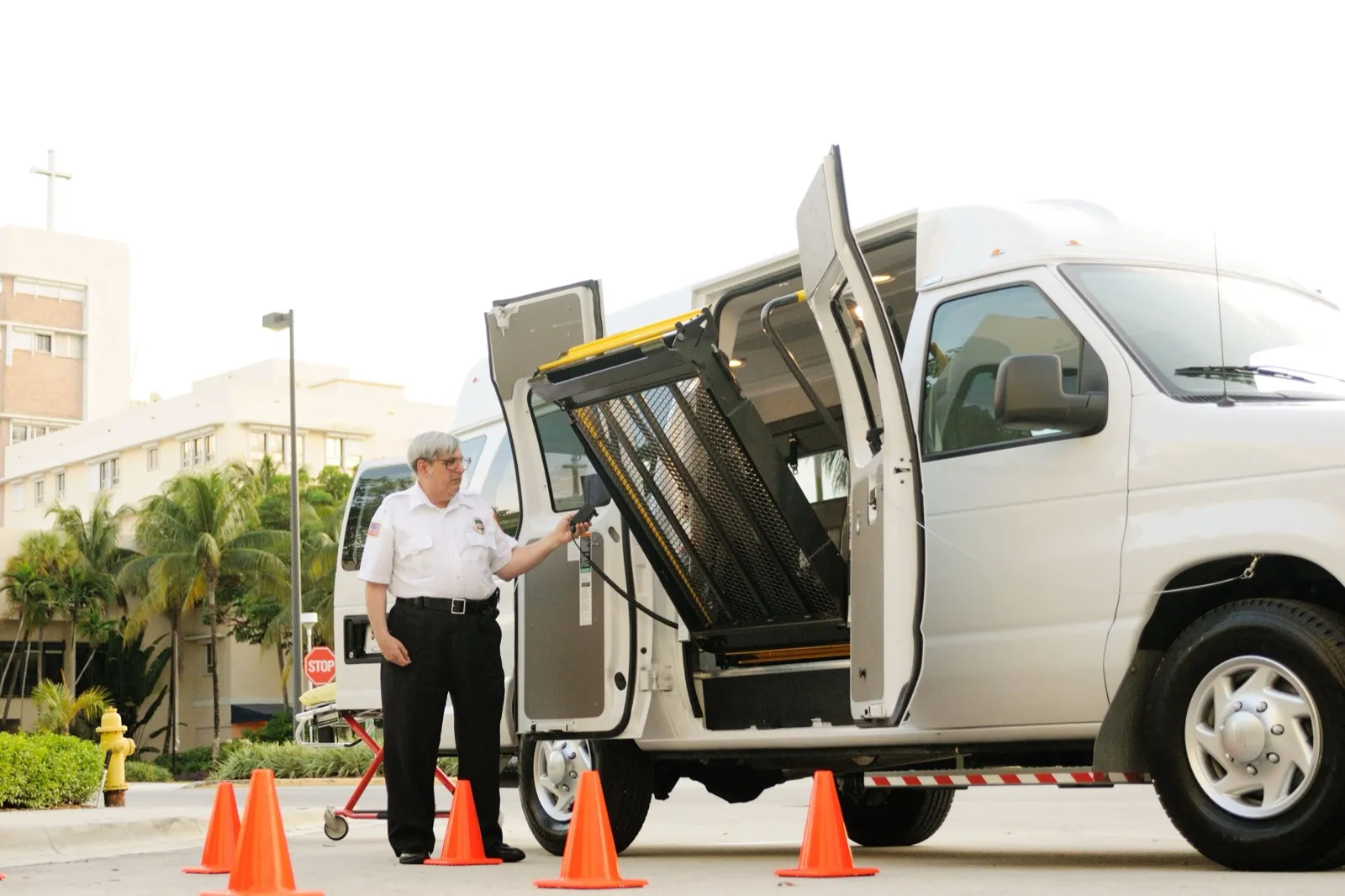
To increase NEMT profit, work the levers that add the most dollars per van: who pays you, which riders fill your van, how many paid trips each driver hour carries, how many miles run empty, how many riders miss their ride, and how many trips go unpaid. Size each one with your own rates and costs, then fix the biggest first.
- Size every lever in dollars a month on your own numbers before you change anything.
- In the example van, a better payer mix, the right riders for the van, and one more trip a day each add $600 to $950 a month.
- Cutting empty miles and no-shows adds about $360 to $400 a month each, and frees driver time for more trips.
- Bill only the level of service the rider needs and was approved for. The lever is which riders you carry, never the code you bill.
- Watch five numbers every week: revenue per trip, trips per driver hour, empty-mile share, no-show rate, and unpaid trips.
A NEMT van makes money on three things: what each trip pays, how many paid trips fit in a driver’s day, and how many miles and hours go unpaid. Your state or broker sets most rates, but you control more of the rest than it seems. Here is each lever, sized in dollars on one example van.
What raises NEMT profit most: six levers ranked
The example is one wheelchair van for one month at North Dakota’s fee-for-service rates, from the schedule updated July 1, 2026. North Dakota lists minibus, wheelchair van, and stretcher van rates side by side, which makes the levers easy to see. The trip counts, miles, and prices are example numbers, so swap in your own.
The example van
| Monthly number | Example |
|---|---|
| Paid one-way trips | 176: 8 a day for 22 days, 6 wheelchair and 2 ambulatory |
| Pay per 8-mile wheelchair trip | $18.05 base (A0130) + 8 × $2.57 a mile (S0209) = $38.61 |
| Pay per 8-mile ambulatory trip | $18.05 base (A0120, minibus or other transportation) + 8 × $0.72 a mile (S0215) = $23.81 |
| Revenue, every trip billed and paid | 132 × $38.61 + 44 × $23.81 = $6,144.16 |
| Driver, 176 hours × $18.09, plus 7.65% payroll taxes | $3,427.40 |
| Miles: 176 trips × (8 loaded + 6 empty), plus 10 no-shows × 6 empty | 2,524 |
| Vehicle cost at 76 cents a mile | $1,918.24 |
| Left before overhead | $798.52, or 13% of revenue |
The driver wage is the May 2025 median for shuttle drivers and chauffeurs in the Bureau of Labor Statistics industry that includes special needs transportation. The 7.65 percent is the employer’s 6.2 percent Social Security tax and 1.45 percent Medicare tax. The vehicle cost uses the IRS business mileage rate of 76 cents a mile, in effect from July 1 through December 31, 2026. That is a tax figure, not a quote for your van, so replace it with your own number from the cost per mile calculator.
Overhead such as dispatch, billing, the office, and workers’ compensation comes out of the $798.52. Here is what each lever adds to it.
| Rank | Lever | Change in the example | Added profit a month |
|---|---|---|---|
| 1 | Payer mix | 2 wheelchair trips a day move to a facility contract at an example $60 a trip | $941.16 |
| 2 | Level of service | The 2 ambulatory trips a day become wheelchair trips | $651.20 |
| 3 | Trips per driver hour | 1 more wheelchair trip a day in the same 8 driver hours | $615.34 |
| 4 | Empty miles | Empty miles per trip fall from 6 to 3 | $401.28 |
| 5 | No-shows | No-shows fall from 10 to 4 a month | $363.00 |
| 6 | Unpaid trips | 2 percent of billed revenue that would have gone unpaid gets paid | $122.88 |
Two cautions. The levers overlap, so do not add the rows together: rerun the whole month with every change at once. And the order depends on your numbers. Payer mix ranks first here only because of the example $60 price. At $50 a trip it adds $501.16 and drops to third.
1. Payer mix: who pays you, and how fast
Every payer sets its own rate for the same ride. The state fee schedule, each broker’s rate sheet, each health plan contract, a facility agreement, and a private rider can all pay differently for one 8-mile wheelchair trip.
Added profit = trips moved × (new pay per trip − old pay per trip)
In the example, 44 trips a month × ($60.00 − $38.61) = $941.16. The costs stay the same, because the van, driver, and miles do not change.
Private riders and facilities are the two payers whose price you set. See private pay NEMT, NEMT facility contracts, and how much to charge for NEMT. Check your state’s rules before you set private prices. North Dakota’s manual (January 2026) says you may not charge Medicaid more than you charge non-Medicaid riders, and a discount you give non-Medicaid riders on shared trips must be given to Medicaid members too.
Payer mix is also about risk. MTM Health’s standard agreement, in the January 1, 2023 version Pennsylvania posts, guarantees no minimum number of trips, and either side can end it on 30 days’ written notice. A company with one broker can lose most of its revenue in a month. See working with multiple NEMT brokers and NEMT payer mix.
Speed counts too. MTM’s agreement pays properly submitted, uncontested invoices within 30 days after online submission. Modivcare’s North Carolina agreement (version February 2021) pays twice a month, within 30 days of receipt. A payer that pays in 60 days asks you to carry two months of driver pay first. See NEMT cash flow.
2. Level of service: fill the van with the riders it is built for
The same van, driver, and miles earn very different amounts depending on the rider’s level of service. Here are North Dakota’s rates:
| Level of service | Base rate | Per loaded mile | 8-mile trip | 25-mile trip |
|---|---|---|---|---|
| Ambulatory, as minibus or other transportation (A0120, S0215) | $18.05 | $0.72 | $23.81 | $36.05 |
| Wheelchair van (A0130, S0209) | $18.05 | $2.57 | $38.61 | $82.30 |
| Stretcher van (T2005, T2049) | $97.37 | $2.57 | $117.93 | $161.62 |
Long ambulatory trips can lose money. North Dakota’s ambulatory mileage rate of 72 cents is below the example cost of 76 cents a mile. A 25-mile ambulatory trip pays $36.05. Its 31 miles, 25 loaded and 6 empty, cost $23.56 at the example rate, and one hour of the driver with payroll taxes costs $19.47, for $43.03. The trip loses $6.98. The same trip for a wheelchair rider pays $82.30 and leaves $39.27.
Added profit = trips changed × (pay at the new level − pay at the old level) − any added crew cost
In the example, 44 trips a month × ($38.61 − $23.81) = $651.20.
The level comes from the rider’s needs, not from your van. In North Dakota, a wheelchair or stretcher van trip requires a mobility impairment that keeps the member from safely using a bus, taxi, private car, or other common carrier, a trip to a covered service, and an authorization on form SFN 1507. Auditors take back the difference when a trip is billed at a higher level than it should have been. See Medicaid recoupment.
So the lever is which riders you carry, never the code you bill:
- Ask brokers and facilities for the riders your van is equipped for. A wheelchair van spending its day on ambulatory trips leaves money on the table. See how to get more broker trips.
- Match ambulatory work to a cheaper vehicle if you run one, so the wheelchair van stays free for wheelchair riders.
- Price stretcher work carefully. At North Dakota’s rates, an 8-mile stretcher trip pays $79.32 more than a wheelchair trip. If your state or broker requires a second crew member, one hour of that person at the same $18.09 wage plus payroll taxes costs $19.47, leaving $59.85. Read how to start a stretcher transportation business before you add a stretcher van.
3. Trips per driver hour: more paid trips in the same day
You pay the driver by the hour, but you are paid by the trip. Every trip you fit into hours you already pay for is mostly profit.
Trips per driver hour = paid one-way trips ÷ paid driver hours
The example van runs 176 trips in 176 driver hours, or 1.00 trip per hour. One more trip a day raises that to 1.13.
Added profit = added trips × (pay per trip − miles per trip × cost per mile)
In the example, 22 trips a month × ($38.61 − 14 miles × $0.76) = $615.34.
Ways to fill the day:
- Group standing orders. Riders going to the same dialysis center on the same schedule can fill one van’s day, trip after trip. See NEMT standing orders and dialysis transportation.
- Fill the gap between the A leg and the B leg. A driver waiting through a 4-hour appointment can run other trips nearby, where the timing allows.
- Plan will-call returns before the day starts, so a call does not pull a van across town. See NEMT route planning.
- Check your pace with the trips per day calculator and the vehicle utilization guide.
Shared rides where each rider is paid
Where each rider on a shared ride is paid separately, sharing is the biggest gain in trips per hour. Arizona’s fee-for-service manual (revised July 31, 2026) requires a separate trip report for each member in the van, each billed with the miles of that member’s most direct route. Two wheelchair riders going 8 miles each to the same dialysis center, at Arizona’s metro rates effective October 1, 2026 ($11.15 base plus $1.54 a mile), bill $23.47 each, or $46.94, for roughly one route.
Wait time is paid for only one member on a shared ride in Arizona. Other programs pay less, or nothing, for extra riders. North Dakota, the example state, pays a minibus, wheelchair van, or stretcher van for only one member per trip, however many ride (manual, January 2026). MTM Health’s Virginia handbook (approved August 10, 2026) says its pay reflects miles driven, mode, and multiloading. Read the rule before you pair riders. See NEMT multiloading.
Waiting or driving back
A long appointment raises a choice: wait at the clinic, or drive back and return. CMS says states generally may not cover long waits as a separate service, though they may build the cost into their rates or pay it in limited cases (SMD 23-006). Arizona pays $4.59 per half hour (T2007, October 1, 2026) only when the distance makes returning to base impractical. It does not pay for waits under 30 minutes, trips of 10 miles or less, one-way trips, round trips that use two vehicles or drivers, or waits where the odometer moves. See NEMT wait time billing and, for long runs, rural NEMT.
4. Empty miles: stop paying to drive with no one on board
CMS says miles with no member on board generally cannot be paid, though states may build their cost into the rate (SMD 23-006, September 28, 2023). North Dakota’s manual (January 2026) covers only loaded miles, unless the department approves unloaded miles on request. Every deadhead mile costs fuel and wear with nothing to bill.
Empty-mile share = empty miles ÷ total miles
Savings = trips × empty miles cut per trip × cost per mile
The example van drives 1,116 empty miles out of 2,524, a 44 percent empty-mile share. Cutting empty miles from 6 to 3 per trip saves 176 × 3 × $0.76 = $401.28 a month and drops the share to 29 percent.
It saves time as well. At an example 30 miles an hour, 3 fewer empty miles per trip saves 6 minutes, or about 17.6 hours over 176 trips. That is more than two full driver days a month, which is how many owners find room for lever 3.
Ways to cut empty miles:
- Take trips that start near where your vans already are, not near your garage.
- Build each day around clusters of pickups and drop-offs by area and time.
- Stage vans near dialysis centers and hospitals between legs instead of driving back to base.
- Settle your service area when you sign. MTM’s standard agreement says you accept the trips it assigns, so agree on the counties or zip codes you cover at the start.
Price your own empty miles with the deadhead cost calculator.
5. No-shows: turn missed rides back into paid trips
A rider who does not come out is a trip you do not bill, and usually the return trip is lost too. CMS says states and providers may not charge a member for a no-show, and states may not deny rides because of no-shows (SMD 23-006). North Dakota’s manual says member no-shows are not a service Medicaid pays for.
Profit from each no-show avoided = 2 × pay per leg − (loaded miles + return empty miles) × cost per mile
In the example, each avoided no-show is worth 2 × $38.61 − (16 + 6) × $0.76 = $60.50. The drive to the door was already spent. Cutting no-shows from 10 to 4 a month adds 6 × $60.50 = $363.00.
What works:
- Confirm every ride the day before, and again when the driver is on the way.
- Keep standing orders current with the clinic, so canceled appointments come off the schedule.
- Record the arrival time and the wait at the door, so a rider no-show never looks like your missed trip.
- Tell the broker about riders who miss often. CMS lets states add steps for them, such as confirming the ride the night before or the morning of.
See how to reduce NEMT no-shows, billing for no-shows, and the no-show cost calculator.
6. Unpaid trips: get paid for every ride you run
A trip that is billed late, billed with missing data, or run with an unapproved driver costs the same as a paid trip and brings in nothing. Broker contracts are strict about it:
| Contract | What it says |
|---|---|
| MTM Health standard agreement (January 1, 2023 version) | Claims more than 90 days after the date of service, or another limit MTM’s client sets, are not paid. Trips by uncredentialed drivers, attendants, or vehicles are not paid. |
| MTM Health Virginia handbook (approved August 10, 2026) | A clean claim within 6 months, with an electronic trip log showing the trip ID, scheduled and actual pickup times, departure and arrival times, and the member’s signature, or the claim is denied. Denials can be appealed within 365 calendar days. |
| Modivcare North Carolina agreement (version February 2021) | Invoices are due within 15 days of the ride. After 30 days they are cut 10 percent, and after 60 days they are not paid at all. |
Revenue kept = billed revenue × share of trips that would have gone unpaid
In the example, every 1 percent of billed trips that goes unpaid costs $61.44 a month, so stopping 2 percent from slipping adds $122.88.
- Bill every week, or every day where the payer allows it.
- Read every remittance and work each denial inside the payer’s window. See how to read remittance advice and NEMT claim denials.
- Track credential expiration dates for every driver and van, and keep anyone expired off broker trips.
- Keep what you are paid. Clean trip records protect you from money being taken back later.
Costs worth a second look
In the example, the revenue levers move profit more than any single cost cut, but three costs deserve a check:
- Driver pay. In the example, the driver takes $3,427.40, 56 percent of revenue. The best way to lower that share is more paid trips per hour, not a lower wage. See NEMT driver pay and the driver cost calculator.
- Fuel. The U.S. average for regular gasoline was $4.478 a gallon for the week of September 21, 2026, up $1.305 from a year earlier (EIA, released September 22, 2026). At an example 14 miles per gallon, fuel alone is 32 cents a mile. See how to reduce NEMT fuel costs.
- Insurance. Shop your policy at renewal with clean loss runs. See NEMT insurance cost.
The numbers to watch every week
Five numbers show which lever is slipping before it shows up in your bank account.
| Number | Formula | In the example |
|---|---|---|
| Revenue per paid trip | Revenue ÷ paid trips | $6,144.16 ÷ 176 = $34.91 |
| Trips per driver hour | Paid trips ÷ paid driver hours | 176 ÷ 176 = 1.00 |
| Empty-mile share | Empty miles ÷ total miles | 1,116 ÷ 2,524 = 44% |
| No-show rate | No-shows ÷ scheduled trips | 10 ÷ 186 = 5.4% |
| Unpaid share | Revenue unpaid after the filing window ÷ revenue billed | The example assumes 0% |
Track them per van and per payer. A payer whose trips pay less, run emptier, or get denied more often is a payer mix problem, not a driver problem. The profit per vehicle calculator runs the whole month with your numbers.
A 30-day plan to raise profit
- Pull last month’s numbers for each van: paid trips, paid driver hours, loaded and empty miles, no-shows, and billed against paid, by payer.
- Price a mile and a driver hour with your own fuel, repair, insurance, and payroll costs.
- Run each formula above with your rates, and rank the six levers in dollars.
- Pick the top two and set a weekly target for each, such as 1.1 trips per driver hour or no more than 3 no-shows a week.
- Start confirming every ride the day before, because it costs almost nothing.
- Ask each broker for trips near your existing routes and for the levels of service your vans are built for.
- Call two facilities or senior buildings about a direct contract. The facility agreement template has the terms to cover.
- Bill weekly and clear every denial before its deadline.
- After 30 days, rerun the whole month and pick the next lever.
For the full revenue picture per van, see how much a NEMT business makes.
Frequently asked questions
What is the fastest way to increase NEMT profit?
Start with the lever your own numbers show is biggest. In this page's example wheelchair van at North Dakota rates, moving two trips a day to a better-paying payer, carrying the riders the van is built for, and adding one trip a day in the same driver hours each add $600 to $950 a month. Cutting empty miles and no-shows adds about $360 to $400 each.
What is a good profit margin for a NEMT business?
It depends on your rates and costs, so measure your own margin rather than chasing an industry average. In the example on this page, a wheelchair van with a paid driver keeps 13 percent of its revenue before overhead such as dispatch, billing, and office costs. Your margin moves most with your rates, your trips per driver hour, and your cost per mile.
Does Medicaid pay for empty miles or no-shows?
Generally not. CMS says miles driven with no member on board, including the drive back after a rider no-show, generally cannot be paid, though states may build those costs into their rates (SMD 23-006, September 28, 2023). North Dakota, for example, does not cover unloaded miles unless the department approves them, and does not pay for member no-shows.
Should I take long ambulatory trips?
Check the mileage rate against your cost per mile first. At North Dakota's rates (July 1, 2026), a 25-mile ambulatory trip pays $36.05, while its miles and an hour of driver time cost about $43.03 at the example costs on this page. The same trip for a wheelchair rider pays $82.30. Under some broker agreements you accept the trips assigned, so settle your service area and levels of service when you sign.
Can I charge private pay riders less than Medicaid pays?
Check your state's usual and customary rule first. North Dakota's manual (January 2026) says you may not charge Medicaid more than you charge non-Medicaid riders, and a discount you give non-Medicaid riders on shared trips must be given to Medicaid members too. Pricing private rides below your Medicaid rate can lower what Medicaid pays you.
Do shared rides make more money?
Only where each rider is paid for. Arizona's fee-for-service program bills each member in the van separately, with the miles of that member's most direct route, and pays wait time for only one member. North Dakota pays a minibus, wheelchair van, or stretcher van for only one member per trip. MTM Health's Virginia handbook says its pay reflects miles driven, mode, and multiloading. Read your state manual and broker rate sheet before you pair riders.
How do I know which lever to pull first?
Measure one month per van: paid trips, paid driver hours, loaded and empty miles, no-shows, and what you billed against what you were paid, by payer. Put those into the formulas on this page with your own rates and cost per mile, and rank the results in dollars. Work the top two first, then rerun the whole month, because the levers overlap.