Starting a business
How Much Does a NEMT Business Make in 2027? Revenue and Profit per Van
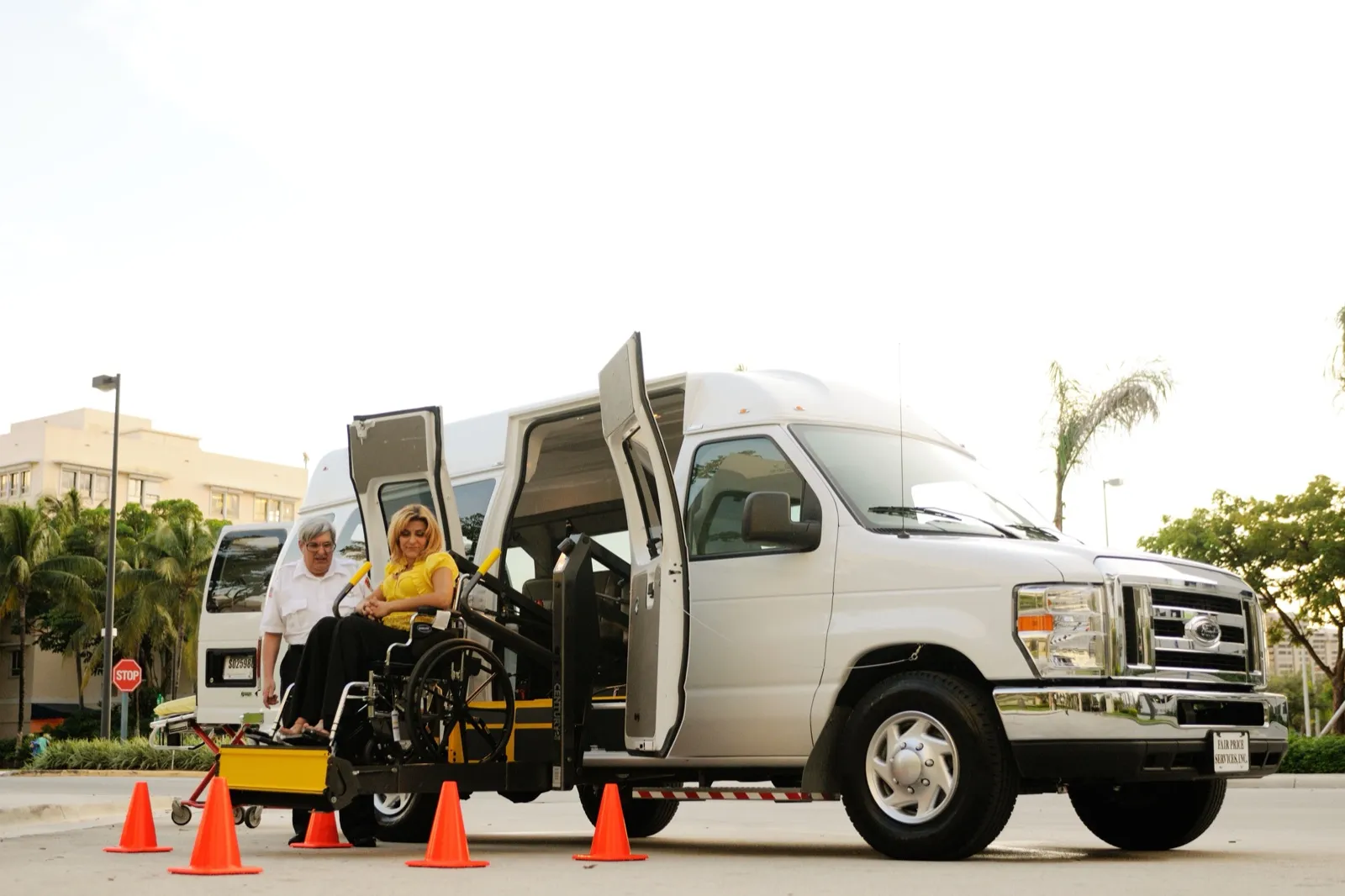
A NEMT business makes what its trips pay, minus driver, vehicle, and office costs. In the 2022 Economic Census, 47 percent of special needs transportation companies with employees that ran all year took in under $500,000. At Ohio's wheelchair van rates, a van running eight 10-mile trips a day, 22 days a month, grosses $7,744 and keeps about $2,310 before overhead with a paid driver.
- The middle NEMT company with employees took in $500,000 to $999,999 in 2022, and 13 percent took in $2.5 million or more.
- Revenue per van is paid trips times the rate, and the rate comes from your state or broker, not from you.
- At the same 8 trips a day, one wheelchair van grosses $4,673 a month at urban Arizona rates and $11,373 at Nebraska rates.
- In the worked example, driver pay is the largest cost, and an owner who drives keeps about $3,427 a month more than one who pays a driver.
- Empty miles, idle hours, no-shows, and weeks of waiting for payment decide whether a van makes money.
A NEMT company’s income comes down to three numbers: what each trip pays, how many paid trips each van runs, and what the driver and the miles cost. Your state or broker sets the first. The other two are where owners win or lose.
How much NEMT companies bring in: the Census numbers
The Census Bureau counts NEMT companies under special needs transportation, NAICS 485991. The 2022 NAICS manual defines it as companies that mainly transport people with disabilities or older adults, other than to and from school or work, sometimes in specially equipped vehicles. Its index lists nonemergency medical transportation under this code. Ambulance companies are counted in a different industry.
The 2022 Economic Census, the most recent, counted 3,462 of these companies with paid employees. Together they ran 3,662 locations, employed 59,334 people, and took in $5.81 billion. Of those companies, 2,792 operated for all of 2022. Here is how their revenue spread out:
| Revenue in 2022 | Companies | Share | Running share |
|---|---|---|---|
| Under $100,000 | 278 | 10.0% | 10.0% |
| $100,000 to $249,999 | 475 | 17.0% | 27.0% |
| $250,000 to $499,999 | 570 | 20.4% | 47.4% |
| $500,000 to $999,999 | 553 | 19.8% | 67.2% |
| $1 million to $2.49 million | 550 | 19.7% | 86.9% |
| $2.5 million to $4.99 million | 201 | 7.2% | 94.1% |
| $5 million or more | 165 | 5.9% | 100% |
Four things stand out:
- Most companies are small. Nearly half took in under $500,000, and the middle company fell between $500,000 and $999,999.
- A few companies are very large. Six companies with $100 million or more took in 23 percent of the revenue of all full-year companies.
- Payroll takes more than a third. Across the industry, annual payroll was $2.12 billion, or 36.6 percent of revenue.
- Many companies come and go. 670 of the 3,462 companies did not operate for the whole year.
Keep two limits in mind. These numbers are revenue, not profit: the Census reports revenue and payroll for this industry, but not what owners keep. And the Economic Census counts only businesses with paid employees, so an owner who drives alone with no payroll is not in the table.
What one NEMT trip pays
Revenue per van starts with the rate for one trip. The four state fee-for-service schedules below each pay a base rate for each one-way trip plus a rate for each loaded mile, the miles with the rider on board. Here is what they pay a wheelchair van for one 10-mile trip:
| Fee schedule | Base rate (A0130) | Per loaded mile (S0209) | One 10-mile trip | Effective |
|---|---|---|---|---|
| Arizona, Phoenix and Tucson metro areas | $11.15 | $1.54 | $26.55 | October 1, 2026 |
| North Dakota | $18.05 | $2.57 | $43.75 | July 1, 2026 |
| Ohio | $31.00 | $1.30 | $44.00 | January 1, 2024 |
| Nebraska | $46.12 | $1.85 | $64.62 | July 1, 2026 |
- Arizona pays higher rural rates, billed with the TN modifier, for trips that start outside the Phoenix and Tucson metro areas: $12.21 plus $1.66 a mile.
- Ohio pays the lesser of your charge or the maximum in the appendix to rule 5160-15-28, whose current version took effect August 1, 2026. For a managed care member, your agreement with the plan sets the rate.
- Nebraska’s July 1, 2026 schedule notes that rates did not rise this fiscal year because no increase was funded.
Broker and health plan trips pay the rate in your contract, which may be higher or lower than the state schedule. The state schedule is still a useful benchmark when a broker offers you a rate. For more states and levels of service, see NEMT reimbursement rates.
Revenue and profit per van: a worked example
Here is one wheelchair van for one month at each state’s rate. The trip counts, miles, and hours are example numbers, chosen to match the profit per vehicle calculator so you can swap in your own:
- 8 paid one-way trips a day, 22 working days a month, so 176 trips.
- 10 loaded miles and 5 empty miles per trip, so 2,640 miles a month.
- A driver paid for 8 hours a day, 176 hours a month.
Revenue per van
| Fee schedule | Pay per trip | A day (8 trips) | A month (176 trips) | A year |
|---|---|---|---|---|
| Arizona, metro | $26.55 | $212.40 | $4,672.80 | $56,073.60 |
| North Dakota | $43.75 | $350.00 | $7,700.00 | $92,400.00 |
| Ohio | $44.00 | $352.00 | $7,744.00 | $92,928.00 |
| Nebraska | $64.62 | $516.96 | $11,373.12 | $136,477.44 |
Costs per van
| Monthly cost | Amount |
|---|---|
| Driver, 176 hours × $18.09 | $3,183.84 |
| Employer Social Security and Medicare, 7.65% of wages | $243.56 |
| Vehicle, 2,640 miles × $0.76 | $2,006.40 |
| Total | $5,433.80 |
The driver wage is the May 2025 median hourly wage for shuttle drivers and chauffeurs in other transit and ground passenger transportation, the Bureau of Labor Statistics group that includes special needs transportation. Across all industries the median was $17.93. See NEMT driver pay for wages by state.
The vehicle cost uses the IRS business mileage rate of 76 cents a mile, in effect from July 1, 2026 (it was 72.5 cents from January 1 to June 30, 2026). The IRS builds that rate from the fixed and variable costs of running an ordinary car, and taxpayers use it in place of actual costs such as depreciation, insurance, repairs, gas, and tires. A wheelchair van with commercial insurance is not an ordinary car, so replace this number with your own cost per mile once you have a few months of bills. For taxes, IRS Publication 463 bars the standard rate once you use five or more vehicles at the same time.
Profit per van
| Fee schedule | Revenue a month | Left with a paid driver | Left when the owner drives |
|---|---|---|---|
| Arizona, metro | $4,672.80 | A loss of $761.00 | $2,666.40 |
| North Dakota | $7,700.00 | $2,266.20 | $5,693.60 |
| Ohio | $7,744.00 | $2,310.20 | $5,737.60 |
| Nebraska | $11,373.12 | $5,939.32 | $9,366.72 |
The same van, running the same day, loses $761 a month in urban Arizona and keeps $5,939 in Nebraska. The rate matters as much as anything you do on the road. And the owner who drives keeps the $3,427.40 a month that would go to a driver and payroll taxes, which is why so many companies start with the owner behind the wheel.
These results come before overhead: commercial insurance beyond what the IRS rate assumes, workers’ compensation, state unemployment tax, dispatch, billing, phones, and an office. They also come before the owner’s own taxes.
The costs that shrink the profit
Empty miles
CMS says miles driven with no Medicaid member on board generally cannot be paid, including the drive back when a rider does not show up. States may build those costs into their rates instead (SMD 23-006, September 28, 2023). Every deadhead mile still costs you fuel and wear. Here is the Ohio van with a paid driver at three levels of empty miles:
| Empty miles per trip | Vehicle cost a month | Left a month |
|---|---|---|
| 2 | $1,605.12 | $2,711.48 |
| 5 | $2,006.40 | $2,310.20 |
| 10 | $2,675.20 | $1,641.40 |
Going from 5 empty miles per trip to 10 costs the van $668.80 a month.
Idle hours between trips
You pay a driver by the hour, but you are paid by the trip. When gaps between riders grow, the same 8 hours bring in less. Here is the Ohio van with the driver’s hours held at 8 a day:
| Paid trips a day | Revenue a month | Left a month |
|---|---|---|
| 6 | $5,808.00 | $875.80 |
| 7 | $6,776.00 | $1,593.00 |
| 8 | $7,744.00 | $2,310.20 |
| 9 | $8,712.00 | $3,027.40 |
| 10 | $9,680.00 | $3,744.60 |
Each extra trip a day in the same hours adds $717.20 a month. Trips per driver hour is the number to watch every week.
Waiting at a clinic is usually unpaid too. CMS says states generally may not cover long wait times as a separate service, though they may in limited circumstances. Arizona pays $4.59 per half hour (T2007, October 1, 2026 rates) only when the distance makes a return to base impractical. It does not pay for waits under 30 minutes, one-way trips, trips of 10 miles or less, or round trips that use two vehicles or drivers.
No-shows and late cancellations
A rider who does not come out is a trip you do not bill, and CMS says states and providers may not charge the member for a no-show. In the Ohio example, one no-show a day costs $968 a month in lost trip pay, before the wasted miles. A provider that misses a pickup is not paid either, because no service was given. See how to reduce NEMT no-shows.
Waiting weeks for payment
MTM Health’s standard agreement, in the January 1, 2023 version Pennsylvania posts, pays uncontested invoices within 30 days after online submission. Claims sent more than 90 days after the ride are not paid, unless MTM’s client sets another limit. For state fee-for-service claims, federal rule 42 CFR 447.45 requires states to pay 90 percent of clean claims from practitioners within 30 days, but other claims only within 12 months of receipt.
That gap is cash you carry. The Ohio van with a paid driver costs $246.99 a working day. If the first payment arrives about five weeks after the first ride, the van runs up about $6,175 in driver and vehicle costs first. See NEMT cash flow for how to plan for it.
Payroll taxes and the owner’s taxes
As an employer, you pay 6.2 percent Social Security tax and 1.45 percent Medicare tax on each employee’s wages, the 7.65 percent in the example. Federal unemployment tax is 6.0 percent of the first $7,000 of each employee’s wages, or 0.6 percent after the full state credit: $42 per employee a year. Your state unemployment tax and workers’ compensation come on top.
If you own the company as a sole proprietor or through a single-member LLC, you also pay self-employment tax of 15.3 percent on your net earnings: 12.4 percent for Social Security and 2.9 percent for Medicare. Income tax comes after that. Whether your drivers are employees or contractors changes these costs, so read NEMT drivers: 1099 or W-2 before you hire.
Overhead
Overhead is what the company costs before any van moves:
- Insurance at the limits your brokers and state require. See NEMT insurance requirements.
- Dispatch and billing. Dispatchers in other transit and ground passenger transportation earned a median of $21.21 an hour, or $44,110 a year, in May 2025.
- Phones, software, an office, accounting, and licenses.
Trips are not promised either. MTM Health’s standard agreement says it does not guarantee any minimum number of trips, and actual volume may vary.
What an owner takes home at 1, 3, and 5 vans
Here is the Ohio example for a year, with each van running the same 8 trips a day. The results come before overhead and the owner’s taxes.
| Company size | Who drives and dispatches | Revenue a year | Left for the owner |
|---|---|---|---|
| 1 van | The owner drives, dispatches, and bills | $92,928 | $68,851 |
| 3 vans | Paid drivers, and the owner dispatches and bills | $278,784 | $83,167 |
| 5 vans | Paid drivers and a full-time dispatcher at the median wage | $464,640 | $91,128 |
The 5-van line is 5 × $27,722.40 left per paid-driver van, minus $47,484.42 for the dispatcher’s wage and the employer’s 7.65 percent payroll taxes. Revenue grows fivefold from one van to five, but what the owner keeps grows by about a third. Paid labor takes most of what each added van earns.
In this example, growth pays only when each van runs more paid trips per hour, at better rates, with fewer empty miles. Adding vans that run the same thin day mostly adds work.
How to raise what each van makes
- Carry riders who pay more. Stretcher trips pay far more than wheelchair trips: Arizona’s metro stretcher van base rate is $49.09 against $11.15 for a wheelchair van (October 1, 2026), and North Dakota’s is $97.37 against $18.05 (July 1, 2026). They need a stretcher van, so price that in first.
- Bill for attendants where the schedule pays. Ohio pays $15.00 for a wheelchair van attendant (T2001).
- Add private pay riders. Private pay is the one place you set the price. See private pay NEMT.
- Sign facility contracts. Dialysis centers, hospitals, and senior living buildings can contract with you for rides directly. See NEMT facility contracts.
- Group standing orders. Riders going to the same dialysis center at the same times cut empty miles and idle hours.
- Bill every week, cleanly. A claim that is late or rejected is revenue you already paid for.
For more ways to lift the margin, see how to increase NEMT profit.
How to work out what your NEMT business will make
Two formulas do the work:
Revenue per van a month = paid trips × (base rate + loaded miles × mileage rate)
Profit per van a month = revenue − driver cost − (loaded miles + empty miles) × cost per mile − the van’s share of overhead
- Get your real rate. Download your state’s fee schedule and ask each broker for its rate sheet in writing.
- Count the paid trips you can fill. Use standing orders and broker volume in your county, not a guess.
- Measure loaded and empty miles. Map a typical day from your garage, including the drive to each pickup.
- Price a mile. Start with the IRS rate, then switch to your own fuel, repair, insurance, and van costs.
- Price a driver hour. Add payroll taxes, workers’ compensation, and any benefits to the hourly wage.
- Add overhead. Divide your monthly insurance, dispatch, billing, and office costs across your vans.
- Run the math, then stress it. Try two fewer trips a day, twice the empty miles, and one no-show a day. If the plan works only on your best day, it does not work.
- Plan cash for the wait. Hold at least five weeks of costs per van before the first payment.
The NEMT revenue calculator and the profit per vehicle calculator run these formulas with your numbers. For the upfront budget, see the cost to start a NEMT business, and for the risks behind these numbers, see is NEMT a good business.
Frequently asked questions
How much does a NEMT business make a year?
It ranges widely. Of the 2,792 special needs transportation companies with employees that ran all of 2022, the Census Bureau counted 27 percent with revenue under $250,000, 20 percent between $250,000 and $499,999, and 20 percent between $1 million and $2.5 million. The middle company took in between $500,000 and $999,999. Those figures are revenue, not profit, and they leave out owners who drive alone with no payroll.
How much does one NEMT van make a day?
At state fee-for-service rates for wheelchair vans, 8 one-way trips of 10 loaded miles pay $212.40 a day in urban Arizona (October 1, 2026 rates), $350.00 in North Dakota and $516.96 in Nebraska (July 1, 2026 rates), and $352.00 in Ohio (maximums unchanged since January 1, 2024). That is revenue before the driver, fuel, repairs, insurance, and the van itself. Broker and health plan trips pay the rate in your contract instead.
What is the profit margin of a NEMT business?
There is no official figure, because the Census Bureau reports revenue and payroll for this industry, not profit. In 2022, payroll alone took 36.6 percent of the industry's revenue. In the worked example on this page, a paid-driver wheelchair van keeps 29.8 percent of its revenue at Ohio rates before overhead, and loses money at urban Arizona rates.
How much does a NEMT owner make?
It depends most on whether you drive. In the Ohio example on this page, an owner who drives one van keeps about $68,851 a year before overhead and taxes. With three vans and paid drivers, the owner keeps about $83,167, and with five vans and a paid dispatcher about $91,128. A sole proprietor or single-member LLC owner also pays self-employment tax of 15.3 percent on net earnings, plus income tax.
Do I get paid for empty miles or no-shows?
Generally not. CMS says miles driven with no Medicaid member on board, including the drive back after a rider no-show, generally cannot be paid, though states may build those costs into their rates. States and providers also may not charge a member for a no-show. Check your state fee schedule and broker contract for any exceptions.
How long until a new NEMT company gets paid?
Plan on weeks. MTM Health's standard agreement, in the January 1, 2023 version Pennsylvania posts, pays uncontested invoices within 30 days after online submission. Federal rules require state Medicaid programs to pay 90 percent of clean claims from practitioners within 30 days, but other claims only within 12 months of receipt. In the Ohio example, one van runs up about $6,175 in costs over 25 working days.