Growth
Nursing Home Transportation in 2027: Who Pays for Residents' Rides and What Facilities Require
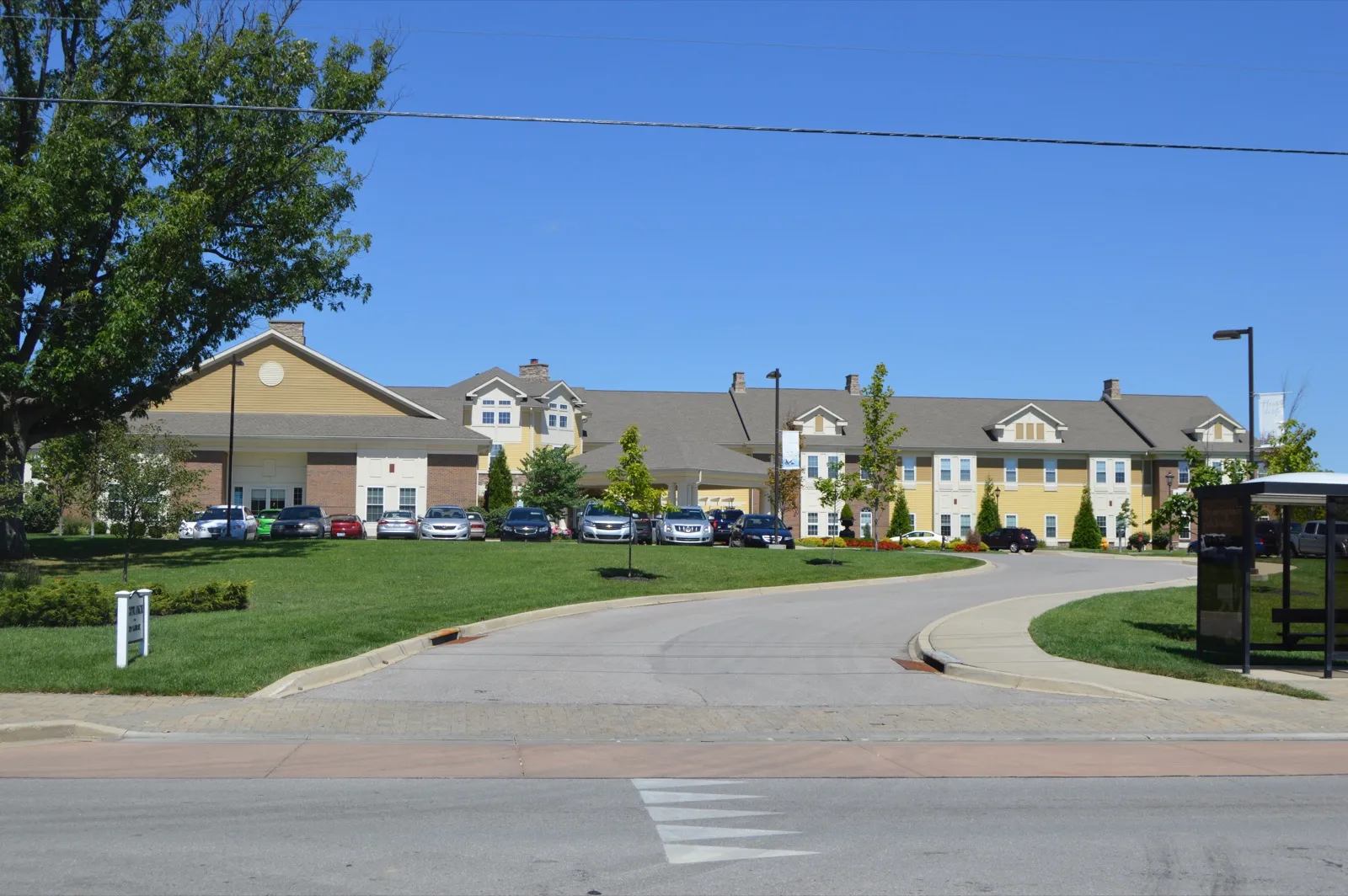

Overview
Original Medicare pays for no wheelchair or stretcher van rides, so a nursing home resident's van ride is paid by Medicaid, the home, the resident, or a Medicare Advantage plan, depending on the state, the stay, and the plan. Federal rules make the home help residents arrange rides to dental, lab, x-ray, vision, hearing, and foot care, keep people with abuse findings away from residents, and plan evacuation transportation.
- Original Medicare covers no wheelchair or stretcher van rides, during a nursing home stay or after it.
- During a covered Part A stay, most ambulance trips are the facility's bill, with listed exceptions such as dialysis and hospital admissions.
- States split on Medicaid rides: Indiana pays for them through the home's daily rate, and Wisconsin leaves them to the home to arrange.
- Homes must keep people with abuse findings away from residents, and contractors must report suspected crimes within 2 hours when someone is seriously hurt.
- Homes must plan evacuation transportation, and OIG tells them to check that a ride vendor can handle a wide-area disaster.
Who pays for a nursing home resident’s ride
Nursing homes book a steady stream of wheelchair and stretcher rides: dialysis, specialists, x-rays, dental visits, and trips home. Before you take one, find out who pays. That depends on three things: the kind of vehicle, whether the resident is in a Medicare-covered skilled nursing stay, and your state’s Medicaid rule.
The short answer: Original Medicare never pays for a van ride, Medicare-covered stays turn most ambulance trips into the facility’s bill, and Medicaid’s rule changes by state.
| Resident | Wheelchair or stretcher van | Ambulance |
|---|---|---|
| Original Medicare, in a covered Part A stay | Not Medicare. The home, the resident, or Medicaid where the state covers it | Usually the facility, except the trips listed below |
| Original Medicare, no covered Part A stay | Not Medicare. The home, the resident, or Medicaid where the state covers it | Medicare Part B, when its ambulance rules are met |
| Medicaid, long-term resident | Set by the state: the broker, the home’s daily rate, or the home itself | Medicaid or Medicare, under their ambulance rules |
| Medicare Advantage plan member | The plan’s own benefits | The plan’s rules |
Medicare covers no van rides at all
The Medicare Claims Processing Manual, chapter 6 (Rev. 13089, February 21, 2025), is blunt. Medicare provides no coverage at all, under Part A or Part B, for non-ambulance transportation such as an ambulette, wheelchair van, or litter van. If a resident could safely go by wheelchair van, neither the van nor an ambulance is covered, because the ambulance would not be medically necessary.
CMS adds that the resident may be financially liable for services Medicare does not cover. Federal rule 42 CFR 483.10(g)(18) makes the home tell each resident, before or at admission and periodically after, about charges for services Medicare, Medicaid, or the daily rate does not cover. See does Medicare cover NEMT for the full Medicare picture.
The Part A bundle and consolidated billing
A covered Part A stay is a short stay for daily skilled care, usually after at least 3 days as a hospital inpatient, and Medicare limits it to 100 days in each benefit period (Medicare.gov, 2026). During that stay, the skilled nursing facility bills Medicare for almost everything the resident receives, under consolidated billing. A company that supplies a bundled service must look to the facility for payment, not to Medicare or the resident. CMS leaves the price and payment timing to negotiation and urges facilities to put the terms in writing. It also says the facility stays responsible for paying for bundled, medically necessary services even without a valid arrangement.
Consolidated billing has limits. It does not apply to a nursing home outside Medicare, to the uncertified part of a building, or to a home that takes only Medicaid (section 10.2). Outside a covered Part A stay, it reaches only therapy, not rides. And a resident who leaves and does not get back to a skilled nursing facility before the following midnight stops counting as its resident when they leave (section 10.1).
Ambulance trips during a covered Part A stay
If you also run ambulances, section 20.3.1 sorts the trips. The ambulance company bills Medicare Part B for these:
- To the facility for admission, on the admission date.
- From the facility to the resident’s home on the discharge date.
- To or from a dialysis facility for dialysis.
- To a hospital or critical access hospital for an inpatient admission.
- After a departure to anywhere but another skilled nursing facility, when the resident does not return to one before the following midnight.
- A round trip to a hospital for emergency care or other listed intensive outpatient services, both legs.
The facility pays for these:
- A transfer to a second skilled nursing facility that admits the resident before the following midnight, when it is medically needed.
- Trips to a diagnostic or treatment site other than a hospital or dialysis facility, such as an independent testing facility, cancer treatment center, radiation therapy center, or wound care center.
- A round trip to a physician’s office.
For Medicare Advantage members, the facility follows its agreement with the plan (section 90). See Medicare Advantage transportation for plan ride benefits.
How states handle Medicaid rides for nursing home residents
Federal rule 42 CFR 431.53 makes every state ensure Medicaid members necessary transportation to and from providers, and that includes nursing home residents. CMS’s Medicaid Transportation Coverage Guide (SMD 23-006, September 28, 2023) uses them as its example: in a disaster, NEMT can move a resident from an unsafe nursing facility to a safe one, even out of state. How states pay for routine rides varies widely.
Some states leave residents’ van rides to the home, either paid in its daily rate or kept out of the broker program. Others let the broker carry certain trips. These five rules come from Indiana’s transportation module (August 19, 2025), Wisconsin’s NEMT handbook (policy through September 30, 2026), Iowa’s rule effective July 1, 2026, North Dakota’s NEMT manual (updated January 2026), and Texas’s managed care NEMT handbook (effective August 1, 2021):
| State | The rule | Exceptions and limits |
|---|---|---|
| Indiana | Nursing facilities arrange and pay for residents’ rides, and Medicaid counts the cost in the daily rate | Medically necessary life support (ALS or BLS) ambulance trips, which the ambulance company bills to Medicaid |
| Wisconsin | The nursing home coordinates residents’ rides, not the state’s NEMT manager | Residents in hospice use the manager, and HMO members and dual eligibles may get exceptions |
| Iowa | Medicaid’s NEMT program does not cover a resident’s ride when the facility provides it | The rule ties facility rides to trips within 30 miles one way |
| North Dakota | An in-state nursing facility may not bill Medicaid or charge a Medicaid resident for rides it provides | Medicaid covers the ride from a hospital to the nursing facility the member chooses |
| Texas, managed care | Plan NEMT does not cover rides to or from a nursing facility | Rides to or from dialysis, and the discharge home |
Indiana’s rule took effect for dates of service on or after July 1, 2023. It covers every ride except a medically necessary ALS or BLS ambulance trip, so an ambulance trip that did not need that level of care is billed to the facility too. Verida, the state’s fee-for-service broker, does not schedule these rides, so you work with and bill the nursing facility directly. The same rule holds for residents who have both Medicare and Medicaid: the transportation company bills the facility.
In a state like Indiana, the home is both your customer and your payer. Where the broker carries residents’ rides, the home or the resident books through the broker, and your pay comes from the broker under your broker contract. Check your state guide and your broker’s manual before you quote a home. The Indiana, Wisconsin, Iowa, North Dakota, and Texas guides cover each program’s other rules.
What federal rules make the home do about rides
The nursing home rules in 42 CFR part 483 make the home help residents get to care outside the building:
- Lab work and x-rays. The home must help a resident who needs it arrange transportation to and from the lab or the diagnostic site (483.50(a)(2)(iii) and (b)(2)(iii)).
- Dental care. The home must, if necessary or requested, help with appointments and arrange transportation to and from the dentist (483.55). It must refer residents with lost or damaged dentures within 3 days.
- Vision, hearing, and foot care. If necessary, the home helps residents make appointments and arranges transportation to vision and hearing specialists and to foot care (483.25).
- Dialysis. CMS surveyor guidance (Appendix PP, Rev. 232, July 23, 2025) says the resident chooses the dialysis provider, and the home must help the resident make sure safe transportation to and from the dialysis facility is arranged. See dialysis transportation.
Helping is not the same as paying. For lab and x-ray trips, Appendix PP says the home should weigh the resident’s clinical, physical, mental, and financial condition. Arranging a taxi for a resident with limited funds when cheaper options exist is not real assistance, but the rule does not require the home to cover the cost. For dental trips, it tells the home to look for the lowest cost or free ride. Surveyors check whether appointments were canceled because of transportation problems, including cost. When a needed service is not covered by Medicaid, the home must still try to get it for the resident, such as by arranging transportation.
Charges have rules too. A home may not charge a resident’s funds for anything Medicare or Medicaid pays for, apart from deductibles and coinsurance. It may charge for a service those programs do not cover only if the resident specifically asks, and it must first say, orally and in writing, that there is a charge and how much (42 CFR 483.10(f)(11)). So give the home a written price for any ride it or the resident will pay, before the ride. The private pay NEMT guide covers quoting and collecting.
What a home must check before your drivers carry its residents
A home answers for everyone who works with its residents, including outside companies. Four federal rules shape what it will ask of you:
- No one with an abuse finding. A home may not employ or otherwise engage anyone a court has found guilty of abuse, neglect, exploitation, mistreatment, or misappropriation of property, anyone with such a finding on the state nurse aide registry, or anyone whose license is disciplined for one (42 CFR 483.12(a)(3)). Expect the home to ask how you screen drivers. See NEMT driver background checks.
- Training for contractors. The home’s training program covers staff, people who provide services under a contractual arrangement, and volunteers, matched to their roles (42 CFR 483.95). Required topics for staff include what counts as abuse, how to report it, and dementia management. Ask which parts the home wants your drivers to complete, and keep a record when they do. See transporting riders with dementia.
- Crime reporting by contractors. Under 42 U.S.C. 1320b-25, a long-term care facility that received at least $10,000 in federal funds the year before must notify its covered individuals every year. That term includes the facility’s owners, operators, employees, managers, agents, and contractors. Each must report a reasonable suspicion of a crime against a resident to the state survey agency and local law enforcement, within 2 hours of forming the suspicion if it caused serious bodily injury and within 24 hours otherwise (42 CFR 483.12(b)(5)). The statute sets civil money penalties of up to $200,000, or $300,000 if the failure worsens the harm, and HHS’s adjusted maximums for 2025, the latest in 45 CFR 102.3 as of September 2026, are $288,655 and $432,981.
- The home’s own 2-hour clock. The home must report alleged abuse, neglect, exploitation, or mistreatment, including injuries of unknown source, to its administrator and state officials: within 2 hours when abuse or serious bodily injury is involved, and within 24 hours otherwise (42 CFR 483.12(c)). Tell the home at once about any fall, injury, or complaint on your van, because its deadline starts when the allegation is made.
When a home uses an outside company for a service it must provide, the written agreement must state that the home stays responsible for the service meeting professional standards and for its timeliness (42 CFR 483.70(f)). Expect the home to ask for on-time terms in writing. The facility transportation agreement template has the clauses.
Price the work honestly. OIG’s nursing facility guidance (November 20, 2024) warns homes against swapping: taking a low price on services the home pays for in exchange for referrals of other federal program business. It names ambulance providers among the arrangements prone to it. See anti-kickback rules for NEMT.
Evacuation and emergency transportation
Every nursing home must plan how it would move residents out. Its emergency policies must address safe evacuation, including transportation, and be reviewed at least once a year (42 CFR 483.73(b)). If residents are relocated, the home must record where each one went, and it must arrange for other facilities to take them in.
Three parts of the same rule reach a ride company that serves the home under arrangement:
- You are on the call list. The communication plan must list the names and contact information of entities providing services under arrangement.
- You may be trained. Initial emergency training goes to staff, people providing services under arrangement, and volunteers, consistent with their roles.
- You may be drilled. The home must run exercises at least twice a year, including unannounced staff drills and an annual full-scale community exercise or a facility-based functional exercise.
OIG’s guidance adds a test for vendors. If a home contracts with a transportation company for emergency transportation, it should make sure that company has the capacity to move its residents in time and safely during an emergency or natural disaster that hits a large area. It also points to drills that test last-minute changes.
Before you sign as a home’s evacuation carrier, put in writing how many wheelchair and stretcher positions you can deliver, how fast, and from which garage. Your vans may be serving several homes and brokers on the same bad day, so promise only what you can deliver.
What staff can ask of your driver: the New York example
States and brokers set the rules for what happens at the curb and inside the clinic. New York’s Medicaid transportation manual (effective August 25, 2023) spells out several:
- Staff escorts ride free. When nursing home staff ride along to give personal care or help a resident communicate, no extra fee is charged, and the home may not order a higher level of transportation to fit the staff member.
- No staying through the visit. Transportation vendors are not required to stay through the appointment to relay treatment information to nursing home staff.
- No lifting onto the exam table. Vendors are not required to enter the exam room to transfer the rider, and lifting the rider onto the table is the job of the rider’s aide or the medical practitioner, not the driver.
- No leaving equipment behind. Vendors are not required to leave a stretcher at the treating facility.
- No stretcher for convenience. A stretcher is the wrong mode when the rider can safely ride in a wheelchair.
Other states differ, so read your broker’s manual and put the home’s expectations in your agreement. See escorts and caregivers.
How to set up nursing home work, step by step
- Learn the payer for each ride. Ask the home’s business office whether the resident is in a covered Part A stay, on Medicaid, in a Medicare Advantage plan, or paying privately, and write the payer on the booking.
- Check your state’s Medicaid rule. Find out whether residents’ rides go through the broker, the home’s daily rate, or neither.
- Quote in writing. Give the home a rate sheet for every ride it or a resident pays for, before the first trip.
- Screen your drivers against court records, your state’s nurse aide registry, and license discipline, and keep proof in each driver file.
- Take the home’s training for contractors and keep the sign-in sheets.
- Agree on incident reporting. Name who at the home your driver calls, and make the call right away.
- Commit to evacuation capacity you can deliver, and show up for the home’s drills.
- Sign a written agreement. Start from the facility transportation agreement template, and set prices with the NEMT facility contracts guide.
Discharges from the hospital back to the home follow their own rules. See hospital discharge transportation.
Frequently asked questions
Does Medicare pay for wheelchair van rides from a nursing home?
Not Original Medicare. The Medicare Claims Processing Manual says Medicare provides no coverage at all, under Part A or Part B, for non-ambulance transportation such as an ambulette, wheelchair van, or litter (stretcher) van. If a resident could safely ride in a wheelchair van, Medicare pays for neither the van nor an ambulance. The ride is paid by Medicaid where the state covers it, by the home, by the resident, or by a Medicare Advantage plan that offers rides.
Who pays for an ambulance trip during a resident's Medicare-covered stay?
Usually the skilled nursing facility. Under consolidated billing, most ambulance trips during a covered Part A stay are part of the facility's bundle, and the ambulance company bills the facility. Trips for dialysis, a hospital admission, emergency care, admission to the facility, and the discharge home are excluded, and the ambulance company bills Medicare Part B for those.
Does the nursing home have to pay for its residents' rides?
Not for van rides under federal rules, which make the home help residents arrange rides, not pay for them. The exception is the ambulance: during a covered Part A stay, the facility pays for most ambulance trips. CMS surveyor guidance says the lab and x-ray rules do not require a facility to cover the cost, though it should look for options the resident can afford. States can go further: Indiana counts residents' van rides as part of the home's Medicaid daily rate, and North Dakota bars homes from charging Medicaid residents for rides they provide.
Can a nursing home charge a resident for a ride?
Only within limits. A home may not charge a resident's funds for anything Medicare or Medicaid pays for, apart from deductibles and coinsurance. It may charge for a service those programs do not cover only if the resident specifically asks for it, and it must say beforehand, orally and in writing, that there will be a charge and how much (42 CFR 483.10(f)(11)).
What will a nursing home check about my drivers?
Federal rules bar a home from employing or otherwise engaging anyone a court has found guilty of abuse, neglect, exploitation, mistreatment, or theft of resident property, anyone with such a finding on the state nurse aide registry, and anyone whose professional license is disciplined for one. Homes must also include people who serve residents under contract in their training program, matched to their roles.
Do my drivers have to report abuse they see at a nursing home?
Plan on it if your company works under contract with the home. The federal law on crimes in long-term care facilities names a facility's contractors among the covered individuals who must report a reasonable suspicion of a crime against a resident to the state survey agency and local law enforcement. The deadline is 2 hours after forming the suspicion when someone is seriously hurt, and 24 hours otherwise.
What does a nursing home need from a ride company for evacuations?
Its emergency plan must cover how residents are moved, including transportation, and list the contacts of companies serving it under arrangement. It must train those people and run exercises at least twice a year. OIG's November 2024 guidance tells homes to make sure a contracted transportation company can move residents in time during a disaster that hits a wide area.