Starting a business
Starting a Nonprofit NEMT Organization in 2027: When It Makes Sense
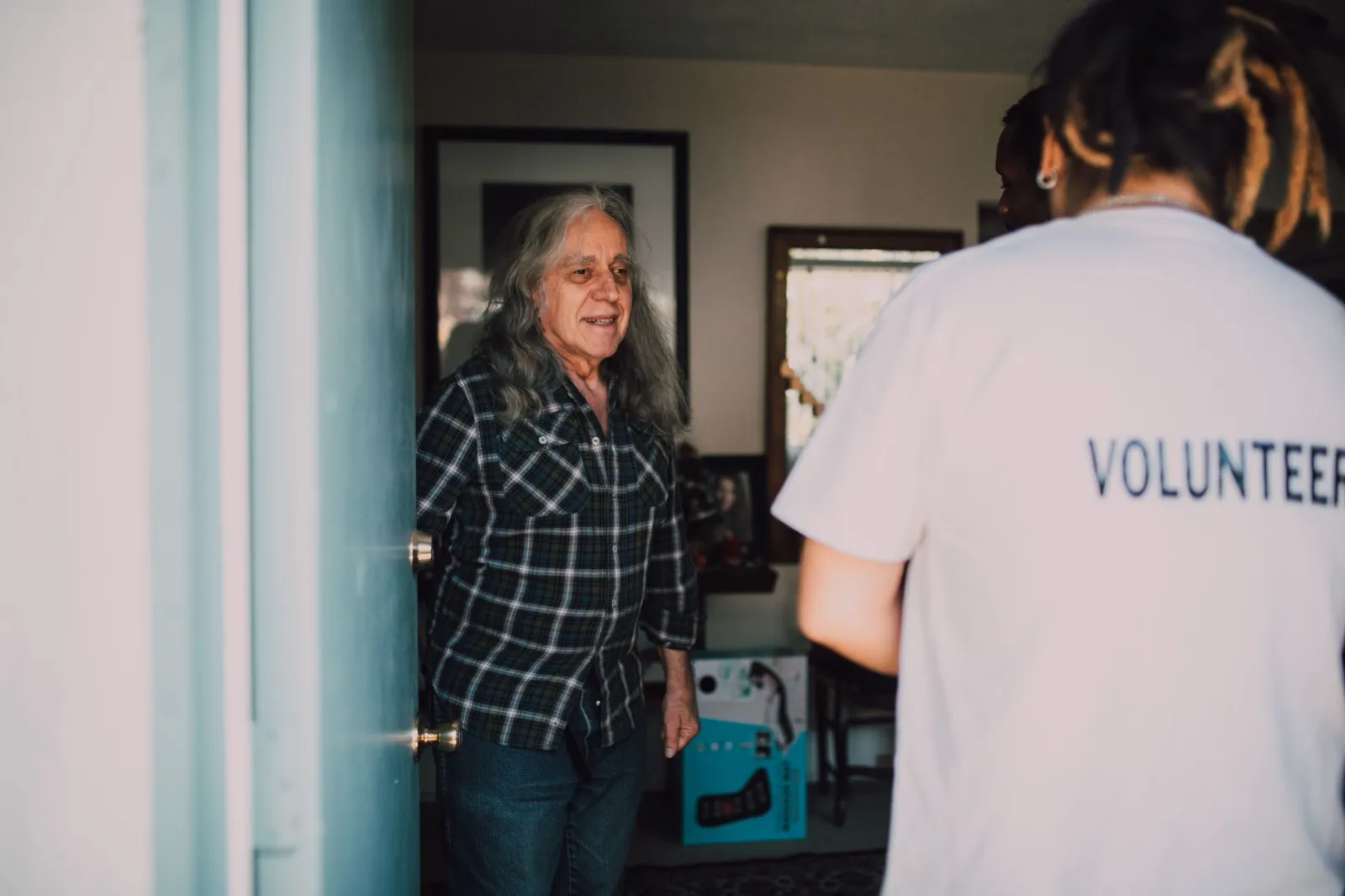
A nonprofit NEMT organization is a charity, usually a 501(c)(3), that gives rides to medical care. It can take tax-deductible donations and apply for grants a company cannot, such as traditional Section 5310 vehicle money. It still enrolls with Medicaid and brokers like any provider, at the same rates, with the same insurance and driver checks. No one owns it or can sell it.
- A 501(c)(3) can take tax-deductible gifts and apply for grants directly, but no one owns it and its assets stay with charity if it closes.
- The IRS fee is $600 for Form 1023. An LLC, a for-profit company, or a successor to a for-profit cannot use the $275 Form 1023-EZ.
- Traditional Section 5310 vehicle money can go only to private nonprofits and certain public bodies.
- Medicaid screens every officer and director, even unpaid ones, the way it screens a company's owners, and rates follow the service, not the tax status.
- Federal volunteer protection does not cover harm from driving, so volunteer drivers still need insurance, checks, and training.
A NEMT company is a business that bills Medicaid and brokers for rides. A nonprofit ride program does the same work under different rules. It can raise money a company cannot, but it gives up things most owners care about: profits, control, and the ability to sell. Whether that trade is worth it depends on where your money will come from.
What a nonprofit NEMT organization is
A nonprofit NEMT organization is a charity that gives rides to medical care, often to older adults, people with disabilities, and people with low incomes. It starts as a nonprofit corporation under your state’s law. Then it asks the IRS to recognize it as tax-exempt under section 501(c)(3). The two steps are separate, and the IRS notes that a 501(c)(3) may also have to register with one or more states to ask for donations or get state tax exemption.
The IRS sets four core rules for a 501(c)(3) (page reviewed June 28, 2026):
- Exempt purposes only. It is organized and operated exclusively for purposes such as charitable or educational ones. The IRS reads “charitable” to include relief of the poor, the distressed, or the underprivileged, and lessening the burdens of government. Your application has to show how your rides serve purposes like these.
- No private profit. None of its earnings may go to a private shareholder or individual.
- Limited lobbying. Influencing legislation may not be a substantial part of what it does.
- No campaigns. It may not campaign for or against any political candidate.
A nonprofit also has no owners. IRS Publication 557 (January 2025) says a 501(c)(3)’s assets must be permanently dedicated to an exempt purpose. If it closes, its assets go to another exempt purpose or to a government for a public purpose, never to the founders. You cannot sell a nonprofit ride program the way you can sell a NEMT business, and you cannot take its vans home when it shuts down.
What changes when your ride program is a nonprofit
| Area | A NEMT company | A 501(c)(3) nonprofit |
|---|---|---|
| Who owns it | Owners or members, who can sell their share | No owners. A board governs it, and its assets stay dedicated to charity. |
| Grants | Mostly as a paid contractor to a grantee | Can apply directly, including for traditional Section 5310 vehicle money |
| Donations | Not tax-deductible for donors | Deductible for donors under section 170 |
| Federal income tax | On profit | Exempt, except tax on unrelated business income. A Form 990-T is due at $1,000 or more of gross unrelated income. |
| Federal unemployment tax (FUTA) | Paid on wages | Exempt, though it still withholds income tax and pays social security and Medicare (Publication 15-A, 2026) |
| Yearly IRS filing | A business tax return | Form 990-N, 990-EZ, or 990 by size. Missing three years in a row revokes the exemption automatically. |
| Public records | Private | Its approved application and last three annual returns must be shown to anyone who asks |
| Money to founders | Profits and owner draws | Reasonable pay for real work only |
| SBA loans | Eligible | Not eligible for SBA business loans (13 CFR 120.110). A for-profit subsidiary can be. |
Three of these changes deserve a closer look.
Grants. Traditional Section 5310 money, the capital grants that buy vans for rides for older adults and people with disabilities, can go only to private nonprofits or to certain public bodies (49 U.S.C. 5310(b)(2)). A company can take part in 5310 work, but usually as a paid contractor. See the grants section below and the Section 5310 guide.
Pay. A nonprofit can pay you a reasonable salary for work you do. Publication 557’s sample articles of organization allow “reasonable compensation for services rendered.” What it cannot do is pay more than the work is worth to someone with substantial influence over it. Under 26 U.S.C. 4958, that person owes a tax of 25 percent of the excess benefit, and 200 percent if it is not corrected in time. A manager who knowingly approves it owes 10 percent, up to $20,000 per transaction.
Unrelated income. The IRS taxes income from a trade or business that is regularly carried on and not substantially related to the exempt purpose. Rides that carry out your charitable purpose are what the exemption is for. If you also run something unrelated, such as renting vans out for weddings, talk to a CPA about unrelated business income before you start.
Public charity or private foundation
The IRS classifies every new 501(c)(3) as a private foundation unless it qualifies as a public charity. Publication 557 (January 2025) gives two tests, and Medicaid money counts differently in each. Under the public support test in section 170(b)(1)(A)(vi), Medicaid payments are fees for services, not support. A group that lives almost entirely on fees, with little from donors or government grants, fails that test.
The other test, section 509(a)(2), does count fees from related services. It caps what counts from any one person or government agency each year at the greater of $5,000 or 1 percent of total support. For Medicaid, Publication 557 applies that cap to the payments for each patient, because the patient, not the agency, picks the provider. Have a CPA run both tests on your budget, including how broker payments count, before you choose a status on Form 1023.
What stays the same
Medicaid enrollment and screening
A nonprofit becomes a Medicaid provider the same way a company does. See how to become a Medicaid transportation provider. Tax-exempt status does not lighten the checks:
- Board members count as controlling persons. Federal rule 42 CFR 455.101 counts every officer and director of a corporation as a person with an ownership or control interest, and it defines managing employees to include any general manager or administrator who runs the day-to-day operation.
- Even unpaid ones. CMS’s Medicaid Provider Enrollment Compendium (last updated November 17, 2025) says a nonprofit generally has no owners, but every officer and director must be disclosed, however many there are and even if they serve without pay. Trustees count too.
- They are disclosed and screened. 42 CFR 455.104 requires the name, address, date of birth, and Social Security number of each of those people when you apply, when you sign the provider agreement, and when the state asks at revalidation.
- The enrollment fee has no charity exemption. 42 CFR 455.460 exempts individual physicians and practitioners, and providers already enrolled with Medicare or another state’s Medicaid program, not nonprofits. CMS names NEMT providers that bill Medicaid fee-for-service among those who pay it. The fee is $750 for applications in calendar year 2026.
Rates and broker contracts
Medicaid pays by the service and the billing code, and brokers pay from their own rate sheets. MTM Health’s Virginia handbook (approved August 10, 2026), for example, figures each trip’s payment from its Schedule A rate sheet for Virginia, based on miles driven, mode, and multiloading. Neither depends on tax status.
South Dakota shows how this works in practice. Its fee schedule (effective July 1, 2026) pays community transportation trips by code, such as $5.20 for an in-city one-way trip under A0120 and $7.80 outside the city with the TN modifier. It pays mileage to a rider, escort, volunteer driver, or nonprofit service organization at $0.70 a mile (rate effective December 1, 2025). A nonprofit van service billing A0120 gets the same trip rate as anyone else enrolled for that service. Mileage in a vehicle provided by a volunteer has its own code, A0080. Arizona’s fee-for-service rate for it is $0.44 a mile from October 1, 2026.
Insurance, drivers, and vehicles
Your vans, drivers, and insurance face the same broker and state rules. Two federal points trip up new nonprofits:
- The Volunteer Protection Act does not cover driving. 42 U.S.C. 14503 does not protect a volunteer from liability for harm caused while operating a vehicle for which the state requires a license or insurance. It also does not change the nonprofit’s own liability for harm to anyone.
- Rural transit money brings federal drug testing. FTA’s drug and alcohol testing rule, 49 CFR part 655, covers recipients, subrecipients, and contractors of Section 5311 rural funds (and of 5307 and 5309 funds). Section 5310 is not on that list, but your broker or state may require testing anyway. See NEMT driver drug testing.
Volunteer drivers are checked like paid ones. Virginia’s NEMT rules (updated May 26, 2026) describe volunteer drivers as people who use their own cars and take occasional trips, such as long-distance ones, in exchange for gas reimbursement. They must be at least 18, with two years of driving experience, a valid Virginia license, and a driving record no worse than minus 2 points. They also need a background check and drug screen, and full auto insurance that does not exclude carrying passengers under volunteer driver services or any other reimbursement. The broker must make sure each has an NPI and taxonomy code. For coverage limits, see NEMT insurance requirements.
A volunteer who drives for a charity without being paid back may be able to deduct 14 cents a mile, the IRS charitable rate for 2026. The business rate from July 1 to December 31, 2026 is 76 cents.
Where nonprofit status opens a door
In a few places, being a nonprofit decides which service you can offer or which permit you hold. Check your state guide and provider manual.
- South Dakota. Its Community Transportation manual (updated August 2026) says a community transportation provider must be a governmental entity, an enrolled secure medical transportation provider, or a nonprofit registered with the South Dakota Secretary of State. Providers must be domiciled in South Dakota or enrolled as a Medicaid transportation provider in their home state. Vehicles must be owned by or registered to the provider, with commercial or exempt South Dakota plates.
- Washington. The Utilities and Transportation Commission issues a permit to private nonprofit companies that give rides for pay to people with special transportation needs because of a disability, low income, or age (RCW 81.66 and WAC 480-31). The commission says complete applications usually take about eight days.
Grants and public funds a nonprofit can apply for
| Program | Who can receive it | What it pays for | What comes with it |
|---|---|---|---|
| Section 5310 (49 U.S.C. 5310) | At least 55 percent of each area’s money goes to traditional capital projects. That money may go only to private nonprofits, or to public bodies the state approves to coordinate services or that certify no nonprofit is available. | 80 percent of net capital costs, such as vans, and no more than 50 percent of net operating costs | The project must be in the local coordinated public transit and human services transportation plan |
| Section 5311 rural (49 U.S.C. 5311) | States pass funds to subrecipients, which include nonprofits | Public transportation in rural areas | FTA drug and alcohol testing under 49 CFR part 655 |
| Older Americans Act, Title III-B (42 U.S.C. 3030d) | Through the area agency on aging | Transportation for older adults to supportive and nutrition services | Riders may be asked for voluntary contributions, or an income-based cost share where the state allows one. No one can be denied a ride for not paying (45 CFR 1321.9). |
FTA apportioned $443,948,114 in Section 5310 money nationwide for fiscal year 2025, and those funds must be obligated by September 30, 2027 (Federal Register, September 15, 2025). The money reaches you through your state department of transportation or, in large urban areas, the designated recipient. Ask when its next call for projects opens.
Plan for the local share. On a van bought with 5310 money, you still pay the other 20 percent. The statute lets that share come from a cash surplus or depreciation reserve, from a service agreement with a state or local social service agency or a private social service organization, from new capital, or from another federal agency’s funds that may be spent on transportation (49 U.S.C. 5310(d)(3)).
Rules come with the money. Older Americans Act rules say suggested contributions are based on the actual cost of the service, and every rider must be told that giving is voluntary. The Section 5310 guide covers vehicle costs and state calendars, and grants for NEMT businesses covers rural USDA grants and the grant scams to avoid. For aging network rides, see area agency on aging transportation.
When a nonprofit makes sense, and when it does not
| A nonprofit may fit if | A company likely fits better if |
|---|---|
| You want to carry riders no program pays for, such as trips to the grocery store or senior center, funded by grants and donations | Nearly all your trips will be Medicaid broker trips, which pay the same either way |
| A church, senior center, or disability group is already behind the idea and can supply board members | You want to decide alone. A nonprofit answers to its board. |
| You plan to use volunteer drivers alongside paid ones | You want to build value you can sell or pass on |
| Your area needs vans that only 5310 grants will buy, often in rural counties | You need an SBA loan to buy vans or a business |
| Local donors and foundations will give to a charity but not to a company | You do not want your pay and finances open to the public |
There is also a middle path: keep your company and work with a nonprofit instead of becoming one. Section 5310 counts buying public transportation services as an eligible capital expense (49 U.S.C. 5310(b)(4)), so a grantee can pay a company to give its rides. See senior transportation for private-pay rides that sit next to NEMT.
Turning an existing NEMT company into a nonprofit
You cannot turn your company into a charity by relabeling it. The usual route is a new nonprofit corporation, and it starts from zero with the government and brokers:
- New identity. A new nonprofit corporation needs its own EIN, its own Type 2 NPI, its own Medicaid enrollment, and its own broker contracts. See LLC or corporation for NEMT for why a new tax ID restarts approvals, and how to get an NPI.
- The full IRS form. The Form 1023-EZ worksheet rules out any applicant organized as an LLC, formed as a for-profit, or that is a successor to a for-profit, meaning it took over substantially all of a for-profit’s assets or activities or was converted from one. The Form 1023 instructions treat a nonprofit as a successor if it took over another organization’s activities or 25 percent or more of the fair market value of its net assets, or was converted from a for-profit. Successors complete Schedule G.
- Arm’s-length deals. If the nonprofit buys your vans or rents your garage, price it at fair market value. The Form 1023 instructions say a person with substantial influence needs extra precautions, such as a conflict of interest policy and comparable prices from unrelated parties. Adopting a policy is not required for exemption, but the instructions include a sample one.
How to start a nonprofit NEMT organization, step by step
- Confirm the need and the money. Ask your state DOT about Section 5310 and 5311, your area agency on aging about Older Americans Act rides, and your brokers whether they are adding providers.
- Recruit a board. Pick people with no financial stake in the vans or contracts. Your state’s nonprofit corporation law sets the minimum number of directors.
- Incorporate as a nonprofit corporation. Your articles must limit the purposes to exempt ones and dedicate the assets to exempt purposes if the organization closes. Publication 557 has sample articles.
- Get an EIN. The IRS says to request one even with no employees, and it is free online.
- Adopt bylaws and a conflict of interest policy. Use the sample in the Form 1023 instructions as a starting point.
- File Form 1023 on Pay.gov. The fee is $600, or $275 for Form 1023-EZ if you qualify (Rev. Proc. 2026-5). Choose your public charity status with your CPA first. File within 27 months after the end of the month you formed, and your exemption can date back to the day you formed.
- Register with your state for charitable solicitation and any state tax exemption.
- Enroll with Medicaid and each broker. Unless you are already enrolled with Medicare or another state’s Medicaid program, expect the $750 application fee in 2026. Every officer and director is screened.
- Insure the vans and the volunteers, and train every driver to broker standards.
- File the right Form 990 every year. Form 990-N covers gross receipts normally $50,000 or less. Form 990-EZ or 990 applies under $200,000 in gross receipts and $500,000 in assets, and Form 990 above either line.
| Start-up item | Cost | Source |
|---|---|---|
| Form 1023 | $600 | Rev. Proc. 2026-5 |
| Form 1023-EZ, if eligible | $275 | Rev. Proc. 2026-5 |
| EIN | Free | IRS |
| Medicaid application fee, unless already enrolled with Medicare or another state | $750 in 2026 | Federal Register, December 3, 2025 |
| State incorporation and charity registration | Set by your state | Your secretary of state and attorney general |
A nonprofit takes more paperwork than an LLC and gives you less control. It is worth it when the grants, donors, and volunteers it opens will carry riders a company could never reach. For the company route, see how to start a NEMT business.
Frequently asked questions
Can a nonprofit NEMT organization bill Medicaid and brokers?
Yes. It enrolls as a Medicaid provider and gets credentialed by each broker like any company. Its officers and directors are disclosed and screened the way a company's owners are (42 CFR 455.101 and 455.104). In a few states nonprofit status opens a provider type: South Dakota allows only governments, enrolled secure medical transportation providers, and registered nonprofits to enroll for community transportation (manual updated August 2026).
Does a nonprofit get paid more per trip?
No. Medicaid fee schedules pay by the service and the billing code, and brokers pay from the rate sheet in their provider agreement. Tax-exempt status does not change either one. What a nonprofit can add is money a company cannot get, such as grants and tax-deductible donations, which can pay for vans or for rides Medicaid does not cover.
Can I pay myself a salary from a nonprofit NEMT organization?
Yes, a reasonable salary for work you actually do. None of the earnings may go to you as profit. If the organization pays someone with substantial influence over it more than the work is worth, federal law taxes that person 25 percent of the excess, and 200 percent if it is not corrected. Board members who knowingly approve it owe 10 percent, up to $20,000 per deal (26 U.S.C. 4958).
Can I convert my NEMT LLC into a nonprofit?
Not by simply relabeling it. The usual route is a new nonprofit corporation, which gets its own EIN, NPI, Medicaid enrollment, and broker contracts. If the nonprofit takes over your company's activities or 25 percent or more of its net assets, or is converted from it under state law, the IRS treats it as a successor. It must file the full Form 1023 with Schedule G, and any vans it buys from you should be priced at fair market value.
How much does it cost to get 501(c)(3) status?
The IRS user fee is $600 for Form 1023 and $275 for Form 1023-EZ under Rev. Proc. 2026-5. The EZ form is only for groups expecting $50,000 or less in yearly gross receipts with $250,000 or less in assets, so a nonprofit expecting more than $50,000 a year in ride income files Form 1023. The EIN is free. State incorporation and charity registration fees are separate.
Do volunteer drivers need insurance?
Yes. The federal Volunteer Protection Act does not shield a volunteer from harm caused while driving a vehicle that needs a license or insurance, and it does not limit the nonprofit's own liability. Virginia's NEMT rules (May 26, 2026) require volunteer drivers to carry full auto coverage that does not exclude carrying passengers, and to pass background and drug checks.
Can a nonprofit that lives on Medicaid trips be a public charity?
It can, but plan for it. IRS Publication 557 (January 2025) says Medicaid payments are fees for services and do not count as support under the section 170(b)(1)(A)(vi) test. The section 509(a)(2) test counts those fees, capped each year at the greater of $5,000 or 1 percent of total support, and Publication 557 applies that cap to the payments for each patient, not to the Medicaid agency as one payer. Gifts and grants help with both tests. Have a CPA run them on your budget before you file.
Official resources
- IRS: Application for recognition of exemption (Form 1023 and Form 1023-EZ)
- IRS: Publication 557, with sample articles of organization
- IRS: Instructions for Form 1023, with a sample conflict of interest policy
- IRS: Form 990 series, which return to file each year
- IRS: Get an employer identification number (free)
- FTA: Enhanced Mobility of Seniors and Individuals with Disabilities (Section 5310)
- FTA: Formula Grants for Rural Areas (Section 5311)
- U.S. Code: 49 U.S.C. 5310