Starting a business
Grants for NEMT Businesses in 2027: Which Programs Are Real and Who Qualifies
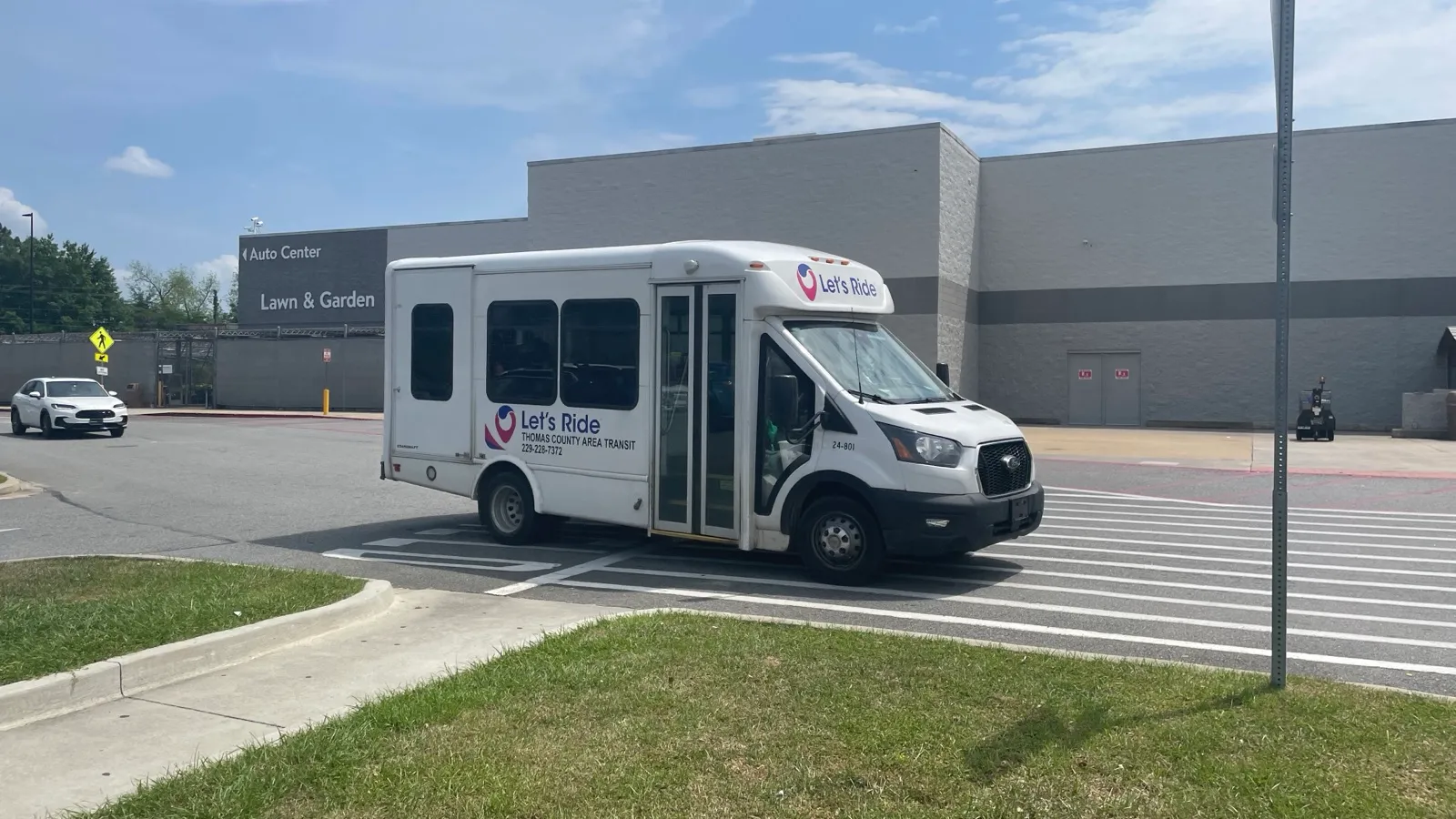

Few grants go straight to a for-profit NEMT company. SBA does not give grants to start or grow a business, and federal transit grants such as Section 5310 go to states, transit agencies, local governments, and nonprofits. Private companies usually reach that money as paid contractors to those grantees, through state and county ride programs, or by forming a nonprofit.
- SBA does not give grants to start or expand a business, and an offer of free government grant money that reaches out to you is a scam.
- Section 5310 and 5311 transit grants reach private companies mainly as paid contracts with the agencies and nonprofits that win them.
- Florida, Maryland, and local aging agencies run ride programs that hire private companies, so their contracts work like grant money.
- A nonprofit can apply for vehicle grants that a company cannot, but no one can take its profits.
- Training pay for new hires and tax breaks for accessibility are not grants, but they lower real costs.
Public grant money for rides is real, but it rarely goes to a company directly. It flows to states, transit agencies, counties, and nonprofits first. A for-profit company gets its share by being the one those grantees pay to drive.
Are there grants for a NEMT business?
Not the kind that lands in your bank account to start a company. SBA’s grants page says plainly that SBA does not provide grants for starting and expanding a business. Federal transit and aging grants go to public agencies and nonprofits. But buying rides is an eligible use of much of that money, and that is where a private company comes in.
| Program | Who gets the money | Can a for-profit NEMT company apply? | How a private company gets paid |
|---|---|---|---|
| SBA grants | Nonprofits, SBA resource partners, and educational organizations, plus SBIR and STTR research grants | No grants to start or expand a business | Not a source of ride money |
| FTA Section 5310 | States and designated recipients, then nonprofits, local governments, and operators of public transportation | Only as an operator of public transportation, for nontraditional projects | Contracts to run rides the grantee buys |
| FTA Section 5311 | States and tribes, then local governments, nonprofits, and operators of public transportation | As an operator of public transportation | Contracts with rural transit agencies |
| Older Americans Act, supportive services | States, then area agencies on aging | Not for the grant itself | Ride contracts with local aging agencies |
| Florida Transportation Disadvantaged program | A community transportation coordinator in each service area | Coordinators may hire private for-profit operators | Operator contracts |
| Maryland Medicaid transportation grants | Counties, municipal corporations, and nonprofits | Not for the grant itself | Contracts with each local program |
| USDA Community Facilities grants | Rural public bodies, community nonprofits, and tribes | No | Not a source for private companies |
| Louisiana per-vehicle payments | In-network NEMT providers in Medicaid health plans | Yes, as a credentialed provider | $500 per vehicle a month, up to $1,500, for July 1 through September 30, 2026 |
If you are searching for grants because cash is short, read how to start a NEMT business with no money and NEMT business loans next. They cover the costs you cannot skip and the money you can borrow.
Section 5310: rides for older adults and people with disabilities
Section 5310 is FTA’s formula program for transportation for older adults and people with disabilities when other service is unavailable, insufficient, or inappropriate. FTA apportioned $443,948,114 for fiscal year 2025. In rural and small urban areas, the state department of transportation hands out the money. In large urban areas over 200,000 people, a designated recipient chosen by the governor does. The money stays available for three federal fiscal years.
The federal share is up to 80 percent of capital costs and 50 percent of operating costs. The law requires at least 55 percent of each recipient’s money to go to traditional capital projects.
| Project type | Examples on FTA’s program page |
|---|---|
| Traditional | Buses and vans; wheelchair lifts, ramps, and securement devices; scheduling and routing systems; mobility management; non-emergency medical transportation; buying transportation services under a contract, lease, or other arrangement |
| Nontraditional | Travel training; volunteer driver programs; the extra cost of same-day or door-to-door service; vehicles for new accessible taxi, ride sharing, or vanpool programs; mobility management; non-emergency medical transportation |
Where a private company fits
FTA lists three kinds of subrecipients: private nonprofits, state or local government authorities, and operators of public transportation. FTA defines an operator of public transportation as an entity providing regular, continuing shared-ride service open to the general public or to a segment of it defined by age, disability, or low income. Operators are eligible only for nontraditional projects.
For most NEMT companies, the practical path is the contract. Because buying transportation services is an eligible capital project, a county, transit agency, or nonprofit that wins Section 5310 money can pay you to run the rides instead of buying its own vans.
The law also opens the door to planning. Every project must come from a locally developed coordinated public transit and human services transportation plan. The plan must be built with seniors, people with disabilities, and representatives of public, private, and nonprofit transportation and human services providers. Ask your state DOT or regional planning agency when its plan is next updated, and attend.
A state example: Wisconsin
Wisconsin DOT’s guidelines for its calendar year 2027 vehicle cycle show how the rules work in practice:
- Private nonprofits may apply for vehicles. A local public body may apply only if it certifies that no nonprofit is available and willing, or that it is the approved transportation coordinator for the area.
- WisDOT pays at most 80 percent of the price on its Human Service Vehicle procurement list. The grantee pays a cash match of at least 20 percent.
- Applicants need an active Unique Entity ID from SAM.gov when they apply.
- WisDOT holds a lien on each vehicle through its useful life. A grantee may let another organization run the vehicle only under a lease WisDOT approves.
- The federal fiscal year 2026 allocation is $2,522,264 for small urban areas and $2,644,944 for rural areas, with more for the Milwaukee, Madison, Green Bay, and Appleton areas.
Ask your state DOT whether a private operator can be the organization that runs a grantee’s van under such a lease. Section 5310 grants goes deeper into applications and calendars.
Section 5311: rural transit money
FTA’s Formula Grants for Rural Areas program (49 U.S.C. 5311) funds public transportation in areas under 50,000 people. FTA apportioned $956,643,454 for fiscal year 2025. Subrecipients may be state or local government authorities, nonprofits, and operators of public transportation or intercity bus service. Eligible activities include non-emergency medical transportation and buying public transportation services.
The federal share is up to 80 percent for capital, 50 percent for operating, and 80 percent for ADA paratransit service off fixed routes. Because buying services is eligible, a rural transit agency can pay a private company to run some of its trips.
Know one rule before you sign. FTA’s drug and alcohol testing rule, 49 CFR part 655, covers every contractor of a recipient or subrecipient of Section 5307, 5309, or 5311 money. Section 5310 is not on that list. Rural NEMT covers how these partners fit with long-distance Medicaid work.
State and local ride programs that hire private companies
Some grant-funded ride work comes through state programs with their own names.
- Florida. The Transportation Disadvantaged program runs through a community transportation coordinator in each service area. Florida law defines a transportation operator as a public, private for-profit, or private nonprofit entity the coordinator engages (2026 Florida Statutes, 427.011). The coordinator signs uniform contracts with performance standards and reviews every operator contract each year (427.0155). Ask your county’s coordinator how it adds operators. See Florida.
- Maryland. Medicaid rides are funded through grants to counties, municipal corporations, and nonprofits (COMAR 10.09.19.01). The state’s guide to the program, fiscal year 2020 edition, says most grantees contract with local transportation providers and others drive the rides themselves. You bid program by program. See Maryland.
- Local aging agencies. The Older Americans Act funds rides to supportive and nutrition services, including rides area agencies on aging provide in conjunction with local transportation providers and public transit agencies (42 U.S.C. 3030d). See area agency on aging transportation.
- Louisiana. Using American Rescue Plan Act money, Louisiana pays in-network NEMT providers in its Medicaid health plans $500 a month for each vehicle in use, up to $1,500 a month. A provider must be fully credentialed and run at least one round trip a day for a Medicaid member on at least 20 days of the prior month. The payment period CMS approved in July 2026 runs from July 1 through September 30, 2026. See Louisiana’s per-vehicle payments.
For bids posted by counties, transit agencies, and states, see government NEMT contracts.
Should you start a nonprofit to get grants?
A nonprofit can apply for money a company cannot. The trade is control of the profits. To be exempt under section 501(c)(3), an organization must be organized and operated exclusively for exempt purposes, and none of its earnings may benefit any private shareholder or individual. If it gives excess benefits to someone with substantial influence over it, the IRS can impose an excise tax on that person.
What a nonprofit opens up:
- Section 5310 vehicle grants as a subrecipient, as in Wisconsin, where nonprofits come first.
- USDA Community Facilities grants in rural areas. Eligible applicants are public bodies, nonprofits with significant ties to the local community, and federally recognized tribes. The grants support essential community facilities, including health services and community and social services, and the equipment needed to run them. The grant can pay up to 75 percent of a project in a community of 5,000 people or fewer where the median household income is below the higher of the poverty line or 60 percent of the state’s nonmetropolitan median household income. The share drops to 55, 35, or 15 percent in larger or higher-income communities. The applicant must show it cannot finance the project another way, and grant money cannot pay initial operating costs (7 CFR 3570.61 to 3570.63).
Nonprofit NEMT weighs the full trade-off.
Grant myths and scams
- “The government has grants to start your business.” SBA says it does not provide grants for starting and expanding a business. Its grants go to nonprofits, resource partners, and educational organizations, and its research grants go to companies doing scientific research and development.
- “We are calling about a grant you qualify for.” The FTC says the government will not contact you out of the blue about grants, by phone, text, email, or social media. Real grants require an application for a specific purpose. SBA adds that it only emails from addresses ending in @sba.gov.
- “Pay a fee or buy our grant list.” The FTC says never to pay an up-front fee or pay for a list. The full list of federal grants is free at Grants.gov. No government agency asks for payment in cash, by gift card, by wire transfer, or in cryptocurrency. Report scams at ReportFraud.ftc.gov.
- “Wheelchair van grants.” Grants for people are not grants for companies. The VA’s automobile allowance and adaptive equipment grants, for example, go to veterans with certain service-connected disabilities to buy or adapt their own vehicles.
- “Any small business can apply for the grants on Grants.gov.” Small businesses are one type of applicant there, but Grants.gov says each notice of funding opportunity defines who is eligible. Read the eligibility section before you spend time on an application.
Money that is not a grant but lowers your costs
- On-the-job training for new drivers. Through a local workforce board, a private employer can sign an on-the-job training contract for a participant in the Workforce Innovation and Opportunity Act program. The employer is typically reimbursed up to 50 percent of the trainee’s wage rate for the extra cost of training. The rate can rise to 75 percent in limited cases, and one factor is employer size, with an emphasis on small businesses (20 CFR 680.700 and 680.730). Ask your nearest American Job Center. See hire NEMT drivers.
- The barrier removal deduction. The IRS lets a business of any size deduct up to $15,000 a year for removing architectural and transportation barriers for people with disabilities and older adults (IRS page updated June 30, 2026). The rule covers vehicles that provide transportation to the public, but only the cost of removing an existing barrier. It excludes new or fully rebuilt vehicles and normal replacement of equipment (26 CFR 1.190-2). Adding a lift to a van you already own is the kind of cost to ask your tax preparer about.
- The Disabled Access Credit. Small businesses that earned $1 million or less or had no more than 30 full-time employees the year before can claim a credit for spending that gives people with disabilities access, on IRS Form 8826.
- Grants as loan equity. Under SBA’s SOP 50 10 8.1, effective October 1, 2026, a grant with no repayment or clawback terms during a 7(a) loan counts toward the 10 percent equity a start-up must bring.
How to go after grant-funded ride work, step by step
- Find who holds the money. For Section 5310 in rural and small urban areas and for Section 5311, that is your state DOT’s transit office. In a large urban area, ask the state DOT who the designated recipient is.
- Get your region’s coordinated plan. Read which needs it lists, and attend the next update meeting as a private provider.
- Make a list of grantees. Include the county transit system, senior centers, disability agencies, and nonprofits that drive older adults. Ask each one whether it buys rides from outside companies.
- Register in SAM.gov if you plan to apply as an operator of public transportation. Wisconsin, for one, requires a Unique Entity ID at application.
- Meet contract terms before you bid. Expect insurance at the agency’s limits and ride reports. Contracts funded by Section 5307 or 5311 also bring FTA drug and alcohol testing.
- Work the state programs. In Florida, call your community transportation coordinator. In Maryland, call the Medical Assistance transportation program in your county. Everywhere, call your area agency on aging.
- Watch the calendar. Grant cycles run a year or more ahead: Wisconsin uses federal fiscal year 2026 money for calendar year 2027 vehicles.
Frequently asked questions
Are there government grants to start a NEMT business?
Not from SBA. Its grants page says SBA does not provide grants for starting and expanding a business. It funds nonprofits, its resource partners, and educational organizations, plus research grants (SBIR and STTR) for companies doing scientific research and development. Grants.gov lists small businesses as one type of applicant, but each funding notice sets its own eligibility rules.
Can a for-profit NEMT company get Section 5310 money?
Usually as a contractor. FTA lists private nonprofits, state or local government authorities, and operators of public transportation as subrecipients. An operator of public transportation runs regular, continuing shared-ride service open to the public or to a group defined by age, disability, or low income, and it can receive funds only for nontraditional projects. A grantee can also buy rides from you, because acquiring transportation services under a contract is an eligible project.
Are there grants for wheelchair vans?
For public agencies and nonprofits, yes. Wisconsin's Section 5310 cycle for calendar year 2027 pays up to 80 percent of the price on the state's vehicle list, and only nonprofits or local public bodies may apply, with a 20 percent cash match. Grants for people are separate: the VA's automobile allowance and adaptive equipment grants go to veterans with certain service-connected disabilities, such as the loss of use of a hand or foot, for their own vehicles.
Should I start a nonprofit NEMT organization to get grants?
Only if you want to run a charity. IRS rules require a 501(c)(3) organization to be organized and operated exclusively for exempt purposes, and none of its earnings may benefit a private shareholder or individual. In return it can apply for grants a company cannot, such as Section 5310 vehicle grants in Wisconsin or USDA Community Facilities grants in rural areas.
How do I spot a NEMT grant scam?
The FTC says the government will not call, text, email, or message you out of the blue about a grant, and real grants always require an application for a specific purpose. Never pay a fee or pay for a list of grants: the full list of federal grants is free at Grants.gov. SBA says it only emails from addresses ending in @sba.gov. Report scams at ReportFraud.ftc.gov.
Does a grant count toward the down payment on an SBA loan?
It can. Under SBA's SOP 50 10 8.1, effective October 1, 2026, a grant with no repayment or clawback terms during the life of a 7(a) loan counts as equity. A start-up open a year or less needs equity of at least 10 percent of its total project costs, so a qualifying grant lowers the cash you must bring.
Official resources
- FTA: Section 5310 program page
- FTA: Section 5311 program page
- Grants.gov: Search federal grants
- SAM.gov: Register your entity and get a Unique Entity ID
- Florida Commission for the Transportation Disadvantaged
- DOL: American Job Centers
- IRS: Tax benefits for businesses who have employees with disabilities
- FTC: Government grant scams