Starting a business
NEMT Insurance Denied? Why Insurers Say No and How to Get Covered in 2027
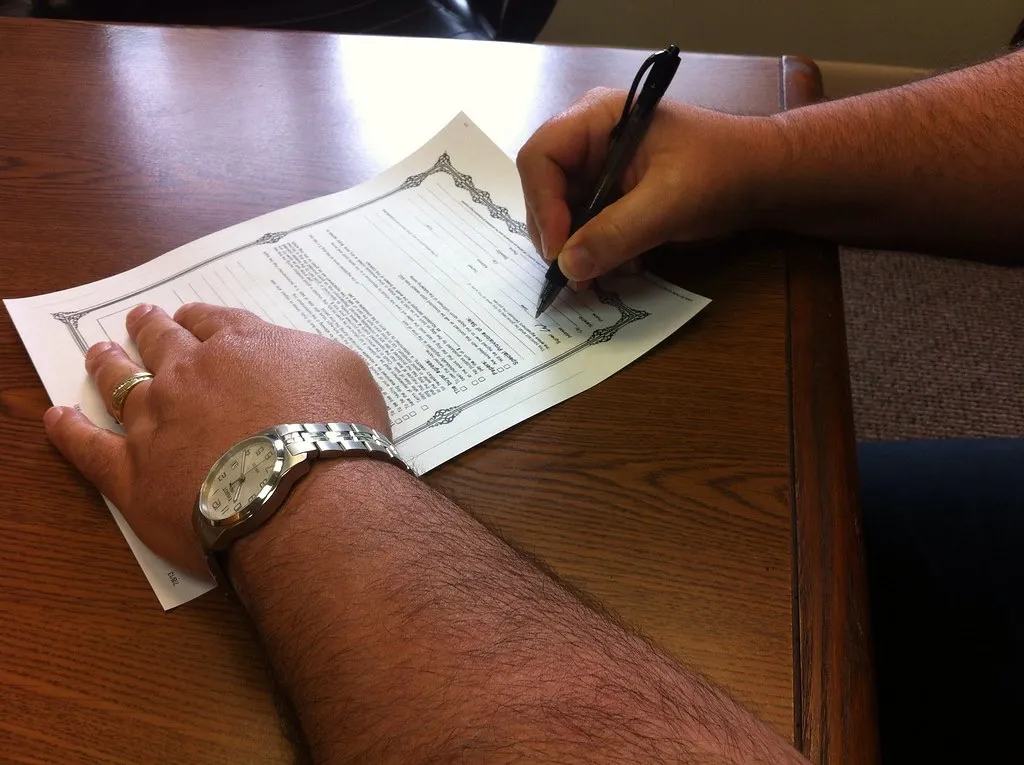
When NEMT insurance is denied, the usual reasons are a brand-new business, driver records, past claims, a lapse in coverage, or vehicles and trips that look high risk. Get the reason in writing, fix what the underwriter named, and apply through several agents. If licensed insurers still say no, surplus lines insurers and your state's auto and workers' comp plans of last resort come next.
- Standard insurers may turn down a business that just started, has had large losses, or looks high risk, so fix what the underwriter named first.
- Keep every declination in writing. California counts three before a surplus lines policy, and Florida's workers' comp plan needs two.
- State auto plans take applicants the market turns down, but check that the plan's highest limit meets your broker's minimum.
- Workers' comp has separate options: Texas sends employers to Texas Mutual, and Washington sells it only through the state fund.
- Never run a trip uninsured. MTM Health's standard agreement ends immediately if you fail to keep insurance.
A declined application is an underwriting decision about one file at one insurer. Most of what drives it can be changed. When it cannot, state law gives you other places to buy coverage, and this guide walks through them in the order you use them.
Why insurers turn down NEMT companies
NEMT is a hard account to place. The broker MTM Health wrote on January 9, 2024 that several carriers had left the NEMT insurance market entirely and that the ones still writing it had raised rates. Washington’s Medicaid agency told its legislature on December 1, 2024 that the cost of insurance, along with low or inconsistent trip volume, was the biggest barrier to expanding its stretcher van pilot.
State regulators spell out what makes an account hard to place. The California Department of Insurance’s commercial insurance guide (revised June 14, 2024) says a business may not find coverage in the standard market if it has had significant losses, does high-risk work with a greater chance of frequent or severe claims, or started recently. The Maryland Insurance Administration’s guide (July 2024) adds that driving records, claims history, and a lapse in coverage can each keep you from getting insured.
| Reason | What the underwriter sees | What you can change |
|---|---|---|
| A new business | No claims history of your own to price | Send a complete file: owner and driver experience, written procedures, and the contracts you hold |
| Driver records | Violations or crashes outside its driver rules. Maryland warns that your employees’ records can keep you from the insurer you want. | Pull every driver’s record before hiring, and keep flagged drivers off the schedule |
| Past claims | How often you had claims and how large they were | Loss runs from every past insurer, with what you changed after each claim |
| A lapse in coverage | Maryland says some insurers will not insure a vehicle that went uninsured while you owned it | Keep the old policy until the new one starts |
| Vehicles | Seating, lifts, stretchers, and age | Quote the exact van before you buy it |
| Where and how you run | Garaging address, service area, and the riders you carry | Give accurate garaging and radius, and list your trip types |
Seating changes the whole file. A vehicle designed for 16 or more people, driver included, is a commercial motor vehicle that needs a CDL (49 CFR 383.5). On for-hire interstate trips, a vehicle seating 16 or more needs $5 million in liability coverage, against $1.5 million for one seating 15 or fewer (49 CFR 387.33T). For how each factor moves your price once you are insured, see NEMT insurance cost.
One insurer’s no says little about the next one’s, because each insurer sets its own rules. The California guide notes that any one agent may represent a limited number of insurers, so it is normal to ask several agents for quotes.
First, find out exactly what happened
A declined application, a nonrenewal, and a cancellation are different events, and your rights differ.
A new application was declined. Ask your agent to get the underwriter’s reason in writing, along with the declination itself. Keep every one. Later steps can require them: California’s surplus lines rule and Florida’s workers’ comp plan both count written declinations.
Your current insurer will not renew. State law usually sets the notice and requires a reason. Here is how five states handle commercial policies as of September 2026:
| State | Nonrenewal notice | Must it give the reason? | Also worth knowing |
|---|---|---|---|
| California | 60 to 120 days before the policy ends (Insurance Code 678.1) | Yes | If the notice is late, the policy continues unchanged for 60 days after it is given |
| Florida | At least 45 days (627.4133) | Yes | Cancelling a commercial auto policy takes at least 45 days’ notice, or 10 days when the reason is nonpayment (627.7281) |
| New York | 60 to 120 days (Insurance Law 3426) | Yes, the specific reason | If the notice is late but before expiration, coverage continues on the old terms until 60 days after it is sent |
| Pennsylvania | At least 60 days (Act 86 of 1986) | Yes, with enough detail for you to correct the problem | Ask within 10 days and the insurer has 30 days to send at least three years of loss information |
| Texas | At least 60 days (Texas Department of Insurance) | Yes | If the notice is late, the policy stays active 61 days after notice. After 60 days in force, the insurer can cancel only for listed reasons such as fraud or nonpayment. |
These notice laws are written for policies from licensed insurers. California’s does not apply to surplus lines policies (Insurance Code 675.5), and New York’s does not apply to excess line policies, its term for them, so read the notice terms of any surplus lines policy you buy.
Pennsylvania’s standard is the one to ask for everywhere: the reason should tell you what to fix. Start shopping the day a nonrenewal notice arrives, and tell your brokers. Paratransit Services, a Washington Medicaid broker, requires its transportation subcontractors to report a cancellation or nonrenewal notice in writing within one business day (its posted requirements as of September 2026).
Build the file the next underwriter will ask for
A second application goes better when it answers the first insurer’s concern before anyone asks. Build one package and send the same one to every agent.
Loss runs from every insurer
A loss run is your claims history with one insurer: each policy, each claim, and what was paid. Ask each insurer from the last five years in writing. Several states set deadlines:
| State | Deadline after your request | What it covers |
|---|---|---|
| Florida | 15 calendar days after a written request (627.444) | Your last 5 years with that insurer. One statement a year is free. |
| Oregon | 15 calendar days (OAR 836-080-0810) | 5 years, or your whole time with that insurer if shorter |
| Illinois | 30 days (215 ILCS 5/143.10a) | The 3 previous policy years. The insurer also sends it with any cancellation or nonrenewal notice, except for nonpayment, misrepresentation, or fraud. |
| Pennsylvania | 30 days, if you ask within 10 days of a nonrenewal or midterm cancellation notice (Act 86) | At least 3 years, or your whole time with that insurer if shorter |
A brand-new company has no loss runs of its own. Say so plainly on the application.
Driver records
Pull a motor vehicle record for every driver, including yourself. MTM Health’s standard agreement already requires one covering the previous three years, renewed every year. If one driver’s record is what the underwriter flagged, ask whether the account can be written without that driver, and keep that driver off trips until it is. The driver background check guide covers the rest of the screening.
Vehicle list
List each van with its VIN, year, make, model, seating, garaging address, and any lift, ramp, or stretcher equipment. The Maryland guide suggests adding coverage for permanently attached items, so ask your agent how the policy treats a lift or ramp.
Written safety procedures
The NAIC says businesses with solid, documented safety practices may be seen as lower risk and charged lower premiums. Put yours on paper and attach them:
- Driver hiring standards, including the driving record you accept.
- Training records for defensive driving, passenger assistance (PASS), and wheelchair securement.
- A pre-trip inspection routine and a vehicle maintenance log.
- An incident report form and who reviews each report.
- Cameras or tracking, if you use them. See NEMT dash cameras.
Your contracts’ insurance rules
Give each agent the insurance section of every broker and facility contract you hold or plan to sign. MTM Health’s standard agreement (January 1, 2023 copy) asks for a $500,000 combined single limit on auto liability, $500,000 per occurrence in general liability, MTM as additional insured, and endorsements that give MTM notice of cancellation. Some brokers also set a floor on the insurer’s rating: Paratransit Services accepts admitted insurers rated B++, Class VII or better by AM Best and surplus lines insurers rated A-, Class VII or better. The NEMT insurance requirements guide lists what other states and brokers require.
Tell the truth on every form
Answer every question on the application, including any about past declinations and cancellations. In Florida, a misrepresentation or omission that is material to the risk can prevent recovery under the policy (627.409). Maryland treats a knowingly false statement on an insurance application as a fraudulent insurance act.
Where coverage comes from after a no
Work through these in order. Each step usually needs proof that the one before it did not work.
1. More licensed insurers, through more agents
Ask two or three commercial agents who place transportation risks to market your file. Check each agent’s license with your state insurance department before you share documents. In Texas, the Department of Insurance Help Line at 800-252-3439 confirms whether a company can legally sell insurance there.
2. Surplus lines insurers
A surplus lines insurer is not licensed in your state but is allowed to cover risks licensed insurers will not take. In California, you reach one only through a broker who holds a surplus line license from the state. The protection is thinner: in California, Florida, and Texas, surplus lines policies are outside the state guaranty fund that pays claims when an insurer fails.
| State | Before a surplus lines policy | What else to know |
|---|---|---|
| California | Three turned-down applications from licensed insurers, with written documentation (Department of Insurance guide) | Check that the insurer is on the state’s List of Approved Surplus Line Insurers. You sign a disclosure notice saying the policy comes from a surplus line insurer (Insurance Code 1764.1). |
| New York | The broker swears that after a diligent effort the coverage could not be bought from authorized insurers. Three declinations is the number the law sets (Insurance Law 2118). | The broker lists each declining insurer’s name, declination date, and NAIC code |
| Florida | You sign an acknowledgment that coverage may be available from licensed insurers (626.916). Since July 1, 2025, there is no longer a rule of three documented rejections (chapter 2025-145). | The rate cannot be lower than most licensed insurers charge for the same risk, and any agent fee must be itemized before you buy |
| Texas | The agent must first try to find a Texas-licensed insurer | The Department of Insurance says surplus lines insurers do not sell auto liability in Texas |
Before you bind, check the insurer against your broker’s rules, such as the A- rating floor above.
3. Your state’s auto insurance plan
When licensed insurers will not write your auto liability, several states run a plan of last resort for applicants the regular market turns down. You apply through an insurance agent, so ask if yours is certified or appointed for the plan.
| State | Plan | What it offers, as of September 2026 |
|---|---|---|
| Texas | Texas Automobile Insurance Plan Association (TAIPA), 866-321-9154 | Only the state minimum limits, 30/60/25, and no physical damage coverage. You must have been turned down by two insurers in the last 60 days. The Department of Insurance calls it the only option if no licensed insurer will sell you auto liability. Commercial rates rise 4.9 percent overall for new and renewal policies starting November 1, 2026. |
| Maryland | Maryland Automobile Insurance Fund (Maryland Auto), 800-492-7120 | Auto liability for Maryland business owners who cannot get commercial auto insurance in the private market (Maryland Insurance Administration, July 2024). Its commercial page lists combined single limits of $500,000, $750,000, and $1 million for eligible vehicles. |
| Louisiana | Louisiana Automobile Insurance Plan | A residual market for private and commercial vehicles. Its commercial procedure can appoint servicing carriers to issue policies (R.S. 22:1475). |
| Delaware | Delaware Automobile Insurance Plan | Private passenger or commercial policies for applicants declined in the voluntary market, through an agent |
| Massachusetts | Commonwealth Automobile Reinsurers | Commercial liability and physical damage coverage for applicants the voluntary market will not take. Its manual has a public transportation section for vehicles used as public livery (effective March 1, 2026), placed through appointed Exclusive Representative Producers. |
A plan that keeps your van legal on the road can still fall short of a broker contract. TAIPA sells only the Texas minimum of $30,000 per person, $60,000 per accident, and $25,000 for property damage (Department of Insurance, December 2025), while MTM Health’s standard agreement asks for a $500,000 combined single limit. In other states, ask the plan agent for its highest limit and the endorsements it can add, then send that to your broker’s credentialing team before you apply.
4. Workers’ comp when no one will write it
Workers’ comp has its own markets of last resort. Here is where to go in six states:
| State | Where to go |
|---|---|
| Texas | Texas Mutual Insurance Company, created by the legislature in 1991 as a last resort for employers who cannot find coverage. 800-859-5995 (Department of Insurance, November 2024). |
| Florida | Florida Workers’ Compensation Joint Underwriting Association. Eligibility includes documented rejection by at least two insurers, and applications that arrive 45 days before the start date go through its market assistance plan, which helps place employers with insurers (627.311). |
| Maryland | Chesapeake Employers Insurance Company, 800-264-4943, which may be able to cover you when the private market will not (Maryland Insurance Administration, July 2024) |
| Georgia | The Assigned Risk Plan, administered by NCCI, 1-800-622-4123. Georgia has no state fund. |
| Mississippi | The Workers Compensation Assigned Risk Pool, listed by the state insurance department as a market of last resort |
| Washington | The L&I state fund only, unless you are a certified self-insured employer. Private workers’ comp is not allowed. |
Workers’ comp for NEMT explains when you must carry it and how it is priced.
Mistakes that turn one no into several
- Running trips while you are uninsured. MTM Health’s standard agreement requires insurance at all times and ends immediately if you fail to keep it.
- Letting the old policy end before the new one starts. Maryland’s regulator says a lapse can raise your next premium and lead some insurers to refuse you.
- Leaving a driver, a van, or a claim off the application. It can cost you the claim payment later, as Florida’s statute shows.
- Moving broker trips onto a personal auto policy. Maryland’s guide warns that many personal policies exclude business liability claims. See using your own vehicle for NEMT and livery vehicle.
- Buying the van before you have a quote on it. Maryland’s guide says premiums are linked to the type of vehicle, so check the insurance rate before you choose.
From declined to covered, step by step
- Get the reason and the declination in writing from your agent.
- Order loss runs from every insurer of the last five years, in writing.
- Pull a fresh driving record for every driver, and decide what to do about any record the underwriter flagged.
- Fix the named problem and write down what you changed: a driver taken off the schedule, a new procedure, a different vehicle.
- Collect the insurance section of every broker and facility contract you hold or want.
- Apply through two or three licensed agents with one complete package.
- Keep every written declination. You may need them for surplus lines or a state plan.
- If licensed insurers all decline, ask about surplus lines, and about your state’s auto plan for auto liability.
- Arrange workers’ comp through your state’s last resort if the private market will not write it.
- Before you bind, have each broker confirm the quote meets its limits, endorsements, and rating rules.
- Bind, then send certificates of insurance and finish broker credentialing before your first trip.
- Build a clean record and shop again at renewal. California’s guide notes that premiums come down as your loss experience improves.
Start this well before you need coverage. Loss runs, underwriting, and a state plan’s review each add time, and brokers want your certificates at signing: MTM Health’s agreement asks for them when you sign and at every renewal. If you are still setting up the company, fit these steps into your startup plan, and if you plan to run stretcher vans, read how to start a stretcher transportation business first.
Frequently asked questions
Why was my NEMT insurance application denied?
Ask your agent to get the underwriter's reason in writing, because each reason has a different fix. The California Department of Insurance says a business may not find coverage in the standard market if it has had significant losses, does high-risk work, or started recently. Maryland's insurance regulator adds driving records, claims history, and any lapse in coverage.
Can a brand-new NEMT company get insurance?
Yes, but expect more work. A new company has no claims history of its own, and California's regulator lists a recent start as a reason the standard market may say no. Apply through two or three agents who place transportation risks, send one complete package with driver records and written procedures, and be ready to use a surplus lines insurer or your state's auto plan if licensed insurers decline.
How many declinations do I need before a surplus lines policy?
It depends on your state. California's insurance department says three turned-down applications from licensed insurers, with written proof. In New York, the broker swears it could not place you with authorized insurers, and three declinations is the number the law sets. Florida dropped its three-rejection rule on July 1, 2025, and instead has you sign a notice that coverage may be available from licensed insurers. Texas says surplus lines insurers do not sell auto liability there.
Is there a state program that has to insure my vans?
Several states run an auto insurance plan for applicants the regular market turns down, and you apply through an insurance agent. Examples are TAIPA in Texas, Maryland Auto, the Louisiana Automobile Insurance Plan, the Delaware Automobile Insurance Plan, and Commonwealth Automobile Reinsurers in Massachusetts. Compare the plan's highest limit with your broker's minimum before you count on it: TAIPA sells only the Texas minimum of 30/60/25.
What if no one will sell me workers' comp?
Go to your state's last resort. Texas points employers to Texas Mutual, Florida's joint underwriting association requires documented rejections from at least two insurers, Maryland points to Chesapeake Employers, and Georgia's assigned risk plan is run by NCCI at 1-800-622-4123. In Washington you buy from the state fund at L&I, because private workers' comp is not allowed there.
Do I have to tell a new insurer that another one turned me down?
If the application asks, answer it truthfully and completely. In Florida, a misrepresentation or omission that is material to the risk can prevent recovery under the policy. Maryland treats a knowingly false statement on an insurance application as a fraudulent insurance act. A policy that does not pay after a crash leaves you worse off than a hard quote.
How long does it take to get covered after a denial?
Longer than a first quote, so start early. Loss runs alone can take up to 15 calendar days in Florida and Oregon and 30 days in Illinois. Florida's workers' comp plan sends applications that arrive 45 days before the start date through its market assistance plan. Have coverage in place before a broker credentialing date, never after.
Official resources
- NAIC: Find your state insurance department
- California Department of Insurance: Commercial Insurance Guide
- Maryland Insurance Administration: A business owners guide to commercial insurance
- Texas Department of Insurance: Surplus lines insurance guide
- Texas Automobile Insurance Plan Association (TAIPA)
- Maryland Auto Insurance: Commercial auto insurance
- Commonwealth Automobile Reinsurers (Massachusetts)
- Texas Department of Insurance: Workers' compensation insurance guide
- Georgia State Board of Workers' Compensation: Insurance FAQs
- Washington L&I: Workers' comp accounts