Industry news
DOT Requires Directly Observed Urine Tests When a Required Oral Fluid Test Cannot Be Done
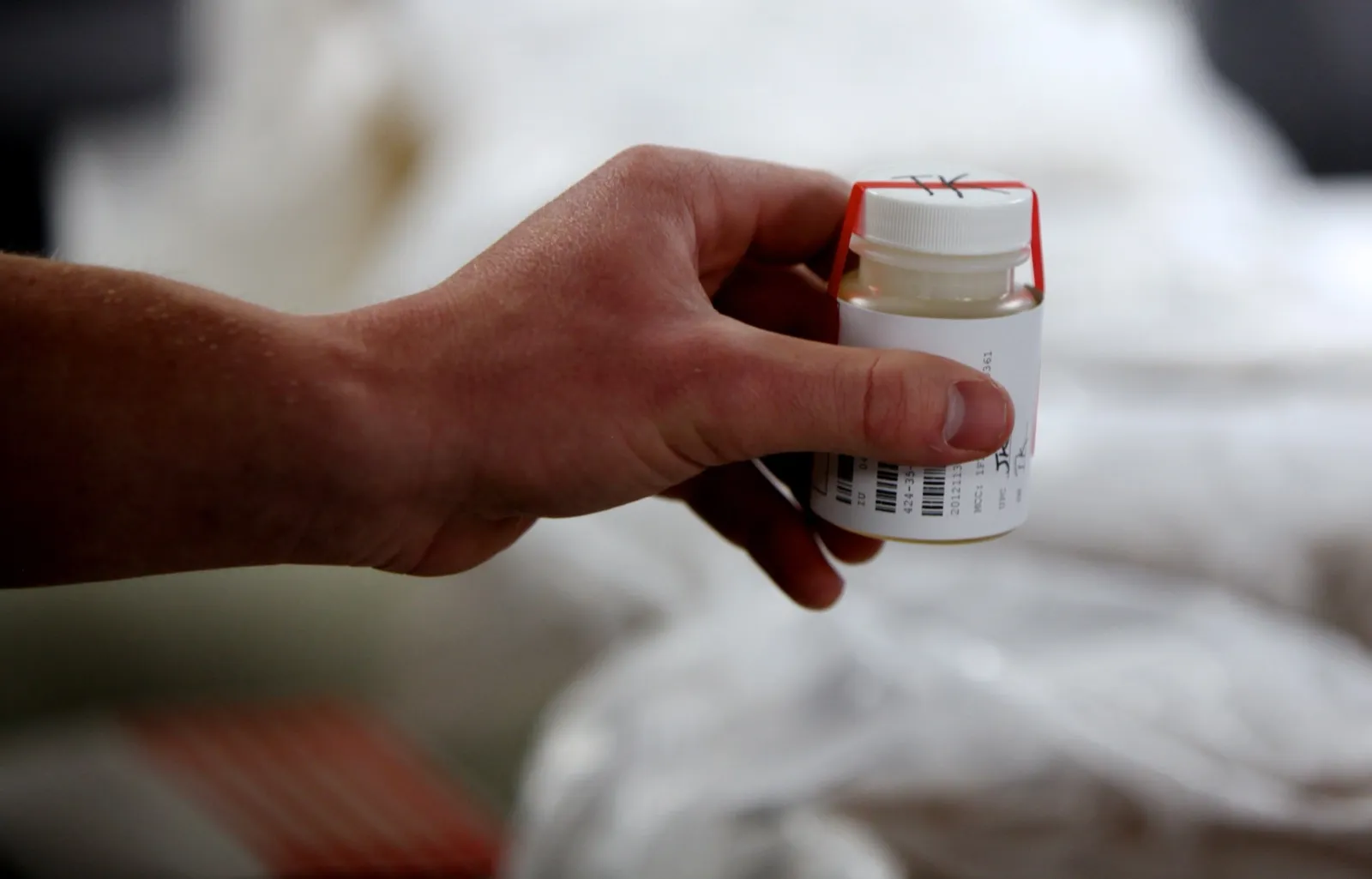

The U.S. Department of Transportation (DOT) published a final rule on May 11, 2026 that took effect on June 10, 2026. It requires a directly observed urine collection in the cases where DOT’s testing procedures call for an oral fluid test that cannot yet be done. No DOT employer can use oral fluid yet: the September 1, 2026 list from the Department of Health and Human Services (HHS) shows no lab certified for oral fluid drug testing. For NEMT companies, the rule matters only where DOT testing applies: drivers who need a CDL, and companies that work under contract for a transit agency funded by certain federal transit grants.
What the rule changed
| Item | Detail |
|---|---|
| Rule | Procedures for Transportation Workplace Drug and Alcohol Testing Programs, 91 FR 25507, docket DOT-OST-2021-0093 |
| Published | May 11, 2026 |
| Effective | June 10, 2026 |
| Main change | If oral fluid testing is not yet available and no observer of the employee’s sex is at the collection site, the collector calls the employer’s designated employer representative (DER). The DER either arranges for a same-sex observer to be there or sends the employee to another site the employer accepts, for a directly observed urine collection |
| New collector step | When a urine specimen is out of temperature range or shows signs of tampering, the collector follows the employer’s standing order, or calls the DER, on which collection to do next |
| When oral fluid can be used | Only once HHS has certified at least two oral fluid labs, and the site has a qualified oral fluid collector and a conforming device |
| When the stopgap ends | After HHS announces the second certified oral fluid lab, employers get an 18-month grace period to set up. DOT will publish a Federal Register notice with the start and end dates |
| Wording | “Gender” becomes “sex” in 49 CFR 40.67, 40.69, and 40.145 |
| Cost | DOT expects no increase in testing costs and calls the rule not significant |
Why DOT made the change
DOT’s May 2, 2023 rule, effective June 1, 2023, added oral fluid testing as an option next to urine. In a few observed collections, such as when a required observer could not easily be provided, that rule required oral fluid. But an oral fluid test needs two HHS-certified labs: one for the primary specimen and a different one for the split specimen. HHS has certified none, so the 2023 requirement could not be met. DOT proposed the fix on December 9, 2024 and revised it in a supplemental proposal on October 1, 2025. The final rule keeps doing what collection sites were already doing, which is observed urine collections.
When a DOT urine collection must be observed
The rule did not change the list of cases that call for direct observation. Under 49 CFR 40.67, as amended:
| Situation | Who acts |
|---|---|
| Return-to-duty or follow-up test | The employer always orders it observed |
| Lab reports the specimen invalid, and the medical review officer (MRO) finds no adequate medical reason | The employer orders an immediate observed collection, with no advance notice |
| A positive, adulterated, or substituted result is cancelled because the split specimen could not be tested | The employer |
| A negative-dilute result with creatinine from 2 to 5 mg/dL, where the MRO directs a second collection | The employer |
| Specimen temperature outside 90 to 100 degrees F (32 to 38 degrees C) | The collector, at once |
| Signs of tampering in the specimen, or items or conduct showing an attempt to tamper | The collector, at once |
| An observed collection was required but missed | The employer orders an immediate recollection |
The observer must be the same sex as the employee and does not have to be a qualified collector. The observer watches the urine go from the employee’s body into the container, after the employee shows there is no prosthetic device. Declining an observed collection is a refusal to test (49 CFR 40.191). A refusal carries the same consequences as a violation of the DOT agency’s rules, and no arbitration or state court can overturn them. For CDL drivers, the employer reports the refusal to the FMCSA Clearinghouse by the close of the third business day (49 CFR 382.705).
Which NEMT drivers it covers
| Your drivers | Does this rule apply? |
|---|---|
| Drive a vehicle that needs a CDL, such as one designed for 16 or more people including the driver | Yes. FMCSA testing under 49 CFR part 382 must follow the part 40 procedures (49 CFR 382.105) |
| Drive or dispatch vehicles under contract for a transit agency funded under 49 U.S.C. 5307, 5309, or 5311 | Yes. FTA testing under 49 CFR part 655 follows part 40 (49 CFR 655.3 and 655.51) |
| Drive sedans, minivans, or wheelchair vans with no CDL and no transit contract | No. Your broker and state rules set your testing, and you may not give those drivers a DOT test (49 CFR 40.13(h)) |
The full breakdown, including broker rules for non-DOT drivers, is in NEMT driver drug testing. For transit contract work, see ADA paratransit contractor, and for the CDL line, see do NEMT drivers need a CDL.
What DOT-covered employers should do now
- Make your DER reachable during collection hours. The collector now calls the DER when no same-sex observer is on site, and after a temperature or tampering problem when you have no standing order.
- Give your collection site a standing order. For temperature and tampering cases under 49 CFR 40.65, tell the site which collection to do. Until oral fluid is available, that is a directly observed urine collection.
- Line up a backup site. The DER may need to send a driver elsewhere for an observed collection, so know a nearby site that has male and female observers.
- Tell your drivers the rules. Return-to-duty and follow-up tests are always observed. Refusing observation counts as a refusal to test.
- Check your written policy. DOT says it does not expect widespread changes to company policies. If yours promises oral fluid for observed collections, update it. Our drug and alcohol policy template can help.
- Watch for the oral fluid notice. HHS posts its list of certified labs in the Federal Register each month. DOT will list certified oral fluid labs on its Office of Drug and Alcohol Policy and Compliance website.
A separate DOT proposal from September 2, 2025 would add fentanyl to the drug panel. As of September 30, 2026, no final rule had appeared, so it remains a proposal. See the DOT fentanyl testing proposal.
Key dates
| Date | What happened |
|---|---|
| May 2, 2023 | DOT adds oral fluid testing as an option, effective June 1, 2023 |
| October 10, 2023 | HHS’s revised oral fluid testing guidelines take effect |
| December 9, 2024 | DOT proposes observed urine collections when oral fluid is unavailable |
| October 1, 2025 | DOT publishes a supplemental proposal |
| May 11, 2026 | Final rule published |
| June 10, 2026 | Final rule takes effect |
| September 1, 2026 | HHS’s monthly list still shows no lab certified for oral fluid |
Who to contact
- DOT Office of Drug and Alcohol Policy and Compliance: Bohdan Baczara, Deputy Director, 202-366-3784
- Your collection site, MRO, or consortium: for standing orders and backup observers