Operations
How to Reduce NEMT Fuel Costs in 2027: Every Saving Ranked by Size
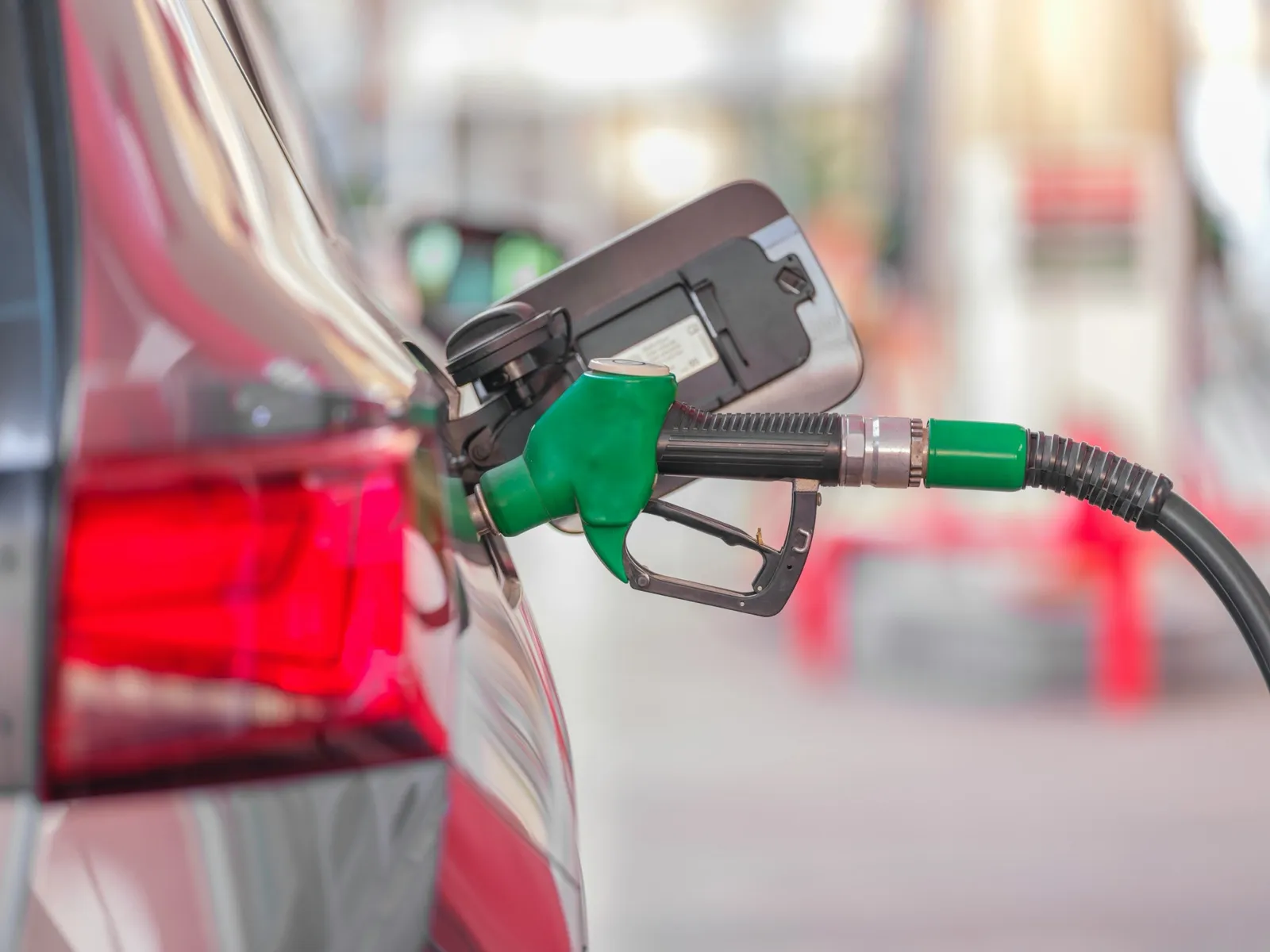
To reduce NEMT fuel costs, cut miles first: empty miles between trips burn fuel Medicaid generally does not pay for. Then turn the engine off when no rider is aboard, use a fuel card that buys only the grade your van needs, fix driving habits and tire pressure, and choose a hybrid minivan at replacement. At $4.50 a gallon and 15 miles per gallon, every mile burns 30 cents.
- Fuel cost per mile = price per gallon ÷ miles per gallon. At $4.50 and 15 miles per gallon, every mile costs 30 cents, paid or not.
- Empty miles are the biggest lever you control today: 20 fewer a day saves the example van $132 a month in fuel alone.
- An idling van burns a quarter to a half gallon an hour. Turn it off when no rider is aboard, and never at the rider's expense.
- Premium cost $1.017 a gallon more than regular in the week of September 28, 2026. A fuel card that blocks it saves the example van $203 a month.
- Over 3,000 miles at $4.50 a gallon, a hybrid minivan rated 36 in the city burns $335 a month less fuel than a V6 minivan rated 19.
Fuel is the bill that moves every week while your pay per trip stays put. You cannot change the pump price, but you can change how many gallons each van burns and what goes into the tank. This guide ranks each saving by what it is worth on one van, at September 2026 prices, so you can start with the biggest.
What fuel costs a NEMT van right now
For the week of September 28, 2026, regular gasoline averaged $4.465 a gallon across the U.S., $1.347 more than a year earlier. On-highway diesel averaged $6.382, $2.628 more than a year earlier (EIA, released September 29, 2026). By region, regular ran from $3.924 on the Gulf Coast to $5.724 on the West Coast, and California averaged $6.189.
One formula turns the pump price into a cost you can plan with:
Fuel cost per mile = price per gallon ÷ miles per gallon
This guide uses one example van throughout: 3,000 miles a month at 15 miles per gallon and $4.50 a gallon. It burns 200 gallons, or $900 a month, and every mile costs 30 cents. These are round example numbers, the same ones the fuel cost calculator opens with. Put your own in there first.
Compare that 30 cents with what a mile pays. Arizona’s fee-for-service rate for a loaded wheelchair van mile (S0209) is $1.54 in the Phoenix and Tucson metro areas, effective October 1, 2026. Fuel takes about a fifth of that mile. On an empty mile, fuel takes 30 cents out of nothing.
Fuel savings ranked by size
Here is what each lever is worth on the example van. The percentages come from FuelEconomy.gov, the prices from EIA. The daily miles and hours are example numbers, so scale them to your own.
| Rank | What you change | When | Saved a month on the example van |
|---|---|---|---|
| 1 | Next van: a hybrid minivan rated 36 in the city instead of a V6 rated 19 | At replacement | $335.53 |
| 2 | Block premium fuel in a van built for regular | This week | $203.40 |
| 3 | Drive 20 fewer empty miles a day, 22 days a month | This month | $132.00 |
| 4 | Calmer driving that lifts miles per gallon 3% to 10% | Over a few weeks | $26.21 to $81.82 |
| 5 | Cut idling by one hour a day | This week | $24.75 to $49.50 |
| 6 | Slow down 5 to 10 mph on highways, if 1,000 of the miles are highway | This week | $19.63 to $36.84 |
| 7 | Pay 10 cents less a gallon | Every fill | $20.00 |
| 8 | Use the motor oil grade the manual calls for | Next oil change | $8.91 to $17.65 |
| 9 | Take 100 pounds of loose gear out of the van | Today | Up to $8.91, less in a heavy van |
| 10 | Keep tires at the door-jamb pressure | Weekly check | $5.37 on average, up to $26.21 |
The premium row only saves money if it is happening, so check your fuel card statements. The empty-mile row can be much larger. In the example in NEMT route planning, zoning and chaining one van’s legs cut its empty miles from 66 to 18 a day, which is $316.80 of fuel a month at 30 cents a mile over 22 days. Multiply every row by the number of vans you run.
For the percentage rows, the math is: monthly fuel × (1 − 1 ÷ (1 + the improvement)). A 10% gain in miles per gallon saves $900 × (1 − 1 ÷ 1.10) = $81.82.
1. Cut the empty miles first
CMS says miles driven with no Medicaid member in the vehicle generally cannot be paid, and that includes the drive back after a no-show. States may build the cost into their rates instead (SMD 23-006, September 28, 2023). Either way, your base rate has to carry the fuel for every deadhead mile.
At 30 cents a mile, 20 empty miles a day is $6 of fuel a day, or $132 over 22 working days. Fuel is only part of it. Driver time and wear make each empty mile cost far more, which the deadhead miles cost calculator adds up.
- Measure each van’s empty-mile share. Take the odometer at the start and end of each shift, subtract the loaded miles on your trip records, and divide by the total.
- Park vans near their first pickups. The drive out in the morning and back at night repeats every day.
- Chain legs. Put each drop-off near the next pickup, and pick up a rider at the same clinic where you just dropped one off.
- Keep the engine warm. FuelEconomy.gov says several short trips from a cold start can use twice as much fuel as one longer trip covering the same distance. A chained run keeps the engine at its efficient temperature.
- Share rides where your payer pays for them. See NEMT multiloading for how states pay a shared van.
- Take offers that fit your routes. A long empty drive to a short trip burns fuel every time it runs.
The full method, with zones and return legs, is in NEMT route planning.
2. Stop idling when no rider is aboard
FuelEconomy.gov says idling burns a quarter to a half gallon an hour, depending on engine size and air conditioning. A restart uses about 10 seconds of fuel. As long as the engine is started about 10 times a day or fewer, any shutdown longer than one minute saves money. Drive at least 5 miles between starts so the battery recharges.
An hour of idling a day costs the example van $24.75 to $49.50 a month. Long dialysis and clinic waits are where it adds up. The wait time cost calculator prices the rest of a wait.
The rider comes first. MTM Health’s Virginia handbook (approved August 10, 2026) requires air conditioning to cool the cabin to about 68°F and heat to warm it to about 74°F, measured from the rear. Its infraction system counts a complaint about broken heat or air conditioning as a 2-point vehicle safety issue. So write the rule this way:
- Engine off when the van is empty and parked for more than a minute.
- Engine on when a rider is aboard and needs heat or cooling.
- No long warm-ups. FuelEconomy.gov says most makers recommend driving off gently after about 30 seconds, and the engine warms faster while driving.
- Cool by driving. Air out a hot van with the windows first, then turn on the air conditioning once you are moving. Most systems cool faster while driving.
- Set the air no colder than riders need. In very hot weather, air conditioning can cut a gas vehicle’s mileage by more than 25%, most of all on short trips.
- Park in the shade or use a sunshade so the cabin heats up less.
Local law may already limit idling. In New York City, idling longer than three minutes, or more than one minute next to a school or park, is illegal. The city’s exception for equipment the engine powers does not cover a heater or air conditioner run for cabin comfort. The Department of Energy’s Alternative Fuels Data Center lists state idle reduction laws.
For vans that must sit with riders in cold weather, the Department of Energy describes add-on equipment. Air heaters warm the cabin on a small fraction of the fuel that idling uses. Auxiliary power and power management systems run heat and accessories from the battery with the engine off.
3. Control what goes into the tank
A fuel card protects you from waste you never see. The federal fleet program is a useful model. GSA issues fleet cards to specific vehicles, not people. Drivers must buy regular self-service unleaded at the lowest-price station unless the vehicle needs another fuel. Premium and full-service fueling are not allowed unless required, convenience store purchases are never allowed, and each card has transaction limits by vehicle type.
Set up your own cards the same way:
| Control | What it stops |
|---|---|
| One card per van | Fills for the wrong vehicle or a personal car |
| A PIN for each driver | Fills no one can trace to a person |
| An odometer entry at every fill | Guesswork on miles per gallon, and fills on days the van did not run |
| Regular fuel only, unless the van needs another | Premium in a van built for 87 octane |
| Fuel-only purchases | Snacks, drinks, and other store items |
| A limit per fill sized to the tank | More gallons than the tank holds |
Grade matters most. FuelEconomy.gov says most gasoline vehicles are designed for 87 octane, and higher octane gives little to no benefit under normal driving. In the week of September 28, 2026, premium averaged $5.482 a gallon and regular $4.465, a gap of $1.017 (EIA). On the example van’s 200 gallons, that is $203.40 a month.
Price matters too. Every 10 cents off a gallon saves the example van $20 a month. Tell drivers which stations on their routes are cheapest, and fill on the way, not on a special trip.
Once a month, compare each van’s gallons, miles, and fills. A van whose miles per gallon drops while its twin holds steady needs a look, and so does a fill larger than the tank.
4. Drive for fuel
FuelEconomy.gov says aggressive driving, meaning speeding, fast starts, and hard braking, can lower gas mileage by roughly 15% to 30% at highway speeds and 10% to 40% in stop-and-go traffic. NEMT runs are mostly stop-and-go, and calm driving is also gentler on a rider in a wheelchair.
- Watch the feedback. Driver feedback devices help the average driver improve fuel economy by about 3%, and drivers who use them to save fuel by about 10%, according to FuelEconomy.gov. If your vans carry telematics, review its hard braking and fast start reports with each driver.
- Hold highway speed down. Mileage usually drops fast above 50 mph. At a $4.47 pump price, FuelEconomy.gov says each 5 mph over 50 is like paying about 31 cents more a gallon, and slowing 5 to 10 mph saves 7% to 14%.
- Use cruise control on the highway. Holding a steady speed saves gas in most cases.
- Empty the van. An extra 100 pounds cuts mileage by about 1% in a 3,200-pound car, and by less in a heavier van. Keep the gear the broker requires and take out the rest.
Build fuel habits into training and ride-alongs. See NEMT driver training.
5. Keep each van in fuel shape
FuelEconomy.gov gives these numbers for routine care:
| Task | Effect on fuel |
|---|---|
| Tires at the pressure on the door jamb sticker, not the maximum on the sidewall | 0.6% better on average, up to 3%. Mileage drops about 0.2% for each 1 psi drop in average pressure. |
| The motor oil grade the manual calls for | 1% to 2% better. Look for “Energy Conserving” on the oil’s API symbol. |
| A check engine light | Have it inspected. It can be as small as a loose gas cap or a problem that lowers fuel economy. |
| A clogged air filter | No change in miles per gallon on modern fuel-injected engines, only in acceleration |
Check pressure with a gauge instead of waiting for the dash light. Federal rules only require the tire pressure warning to come on once a tire is 25% below the recommended pressure (49 CFR 571.138), well after mileage starts to slip. Check more often in winter, because pressure falls as the air gets colder.
Cold weather costs fuel in other ways too. In city driving, a gasoline vehicle gets roughly 15% fewer miles per gallon at 20°F than at 77°F, and up to 24% fewer on short trips of 3 to 4 miles. Hybrids lose about 30% to 34%. Parking in a garage helps the engine and cabin start warmer.
Add these checks to your vehicle inspection checklist. The NEMT vehicle maintenance guide covers schedules for high-mileage vans.
6. Choose the next van for fuel
Vehicle choice is the biggest saving per van, but you only get it when you buy. EPA city ratings fit NEMT best, because most trips are short with many stops.
| 2026 vehicle, as built | City | Fuel for 3,000 miles at $4.50 |
|---|---|---|
| Kia Carnival, 3.5 L V6 | 18 | $750.00 |
| Chrysler Pacifica, Chrysler Voyager, or Honda Odyssey, V6 | 19 | $710.53 |
| Chrysler Pacifica Hybrid (plug-in), on gasoline only | 29 | $465.52 |
| Kia Carnival Hybrid | 34 | $397.06 |
| Toyota Sienna hybrid, all-wheel drive | 35 | $385.71 |
| Toyota Sienna hybrid, front-wheel drive | 36 | $375.00 |
Ratings come from FuelEconomy.gov and apply to the vehicle before a ramp or lift is added. The V6 against the front-wheel-drive hybrid is $335.53 a month, or $4,026.36 a year, for the same miles.
If you already run a mixed fleet, give the longest routes to the van with the best miles per gallon. Moving 1,000 miles a month from a van rated 18 in the city to one rated 36 cuts that fuel from $250 to $125 at $4.50 a gallon. Ask your converter which models it builds ramps on, and weigh the price gap in wheelchair van cost.
New full-size vans have no EPA rating. Cargo vans with a gross vehicle weight rating over 8,500 pounds and passenger vans rated at 10,000 pounds or more are exempt from testing, and FuelEconomy.gov lists no 2026 Ford Transit, Chevrolet Express, GMC Savana, Ram ProMaster, or Mercedes-Benz Sprinter. Your own fill-up log is the only number for those. The trade-offs are in minivan vs full-size wheelchair van.
Two more points before you buy:
- Diesel costs more per gallon. In the week of September 28, 2026, diesel cost about 43% more than regular ($6.382 ÷ $4.465). A diesel van needs about 43% more miles per gallon to match a gas van’s fuel cost per mile. EIA’s September 9, 2026 outlook said low diesel inventories are pushing diesel prices up, most of all in the fall and winter.
- The federal credit is gone. The IRS commercial clean vehicle credit is not available for vehicles acquired after September 30, 2025.
Can you pass fuel costs on?
Mostly not on Medicaid work. Fee schedules and broker agreements pay set rates, which change when the state or broker changes them. Under 42 CFR 447.15, you accept the Medicaid payment, plus any cost sharing the state plan requires, as payment in full, so you cannot add a fuel charge to the member.
Minnesota is the exception. Its statute adjusts fee-for-service NEMT mileage rates on the first day of each quarter in which EIA’s gasoline price is above $3.00 a gallon: 1% up or down for every 10 cents, using EIA’s average price of all grades in Minnesota. A separate rule makes managed care plans include a fuel adjustment in NEMT rates when fuel is above $3 a gallon. The fee-for-service adjustment was set to end July 1, 2026, and the managed care rule January 1, 2027. A law signed May 27, 2026 (Laws 2026, chapter 121, article 3, sections 27 and 62) keeps both until the state’s new NEMT administrator starts.
In other states, raise fuel when your broker or health plan agreement comes up for renewal, and bring your cost per mile.
On private-pay rides and facility contracts you set the price. The fuel cost calculator shows how to write a fuel clause tied to EIA’s weekly price.
Fuel is also a tax deduction. The IRS raised its business standard mileage rate from 72.5 cents to 76 cents a mile on July 1, 2026, citing recent increases in the price of fuel (Announcement 2026-11). If you own or lease five or more cars or vans used for business at the same time, you cannot use the standard rate for any of them, and you deduct actual expenses, gas included, instead (Publication 463). See NEMT business taxes.
A monthly fuel review, step by step
- Pull each van’s fuel card statement and its start and end odometer readings for the month.
- Work out miles per gallon for each van: miles driven ÷ gallons bought.
- Work out fuel cost per mile: fuel spent ÷ miles driven.
- Work out the empty-mile share: empty miles ÷ total miles, from your trip records.
- Look for outliers: premium fills, fills larger than the tank, fills on days off, or a van far below its twin.
- Pick one change from the ranked table and check the same numbers next month.
For next year’s budget, EIA’s September 9, 2026 outlook forecast regular gasoline at $3.35 a gallon and diesel at $4.40 on average for 2027. The week of September 28, 2026 was still at $4.465 and $6.382. EIA updates the outlook every month, next on October 6, 2026, so plan with a range of prices rather than one.
Frequently asked questions
What is the biggest way to cut NEMT fuel costs?
Drive fewer empty miles. Medicaid generally does not pay for miles with no rider aboard, including the drive back after a no-show (CMS SMD 23-006, September 28, 2023), so each one is pure cost. At $4.50 a gallon and 15 miles per gallon, cutting 20 empty miles a day saves about $132 a month per van. Replacing a V6 minivan with a hybrid saves more per van, but only when you buy the next vehicle.
Should NEMT drivers turn the engine off while waiting?
Yes, when no rider is aboard and the wait is longer than a minute. FuelEconomy.gov says idling burns a quarter to a half gallon an hour, a restart uses about 10 seconds of fuel, and any shutdown over one minute saves money if the engine is started about 10 times a day or fewer. Keep riders comfortable first: MTM Health's Virginia handbook (approved August 10, 2026) requires cabin air conditioning to about 68°F and heat to about 74°F.
Do fuel cards save money for a small NEMT company?
The savings come from control more than discounts. A card issued to each van, with a driver PIN, an odometer entry at every fill, fuel-only purchases, and a limit sized to the tank, stops premium fuel, snacks, and fills for personal cars. The odometer entries also let you work out miles per gallon for every van. The federal fleet program works the same way: its cards belong to a vehicle, not a person.
Is a hybrid minivan worth it for NEMT?
On fuel alone it can be. EPA rates the 2026 front-wheel-drive Toyota Sienna hybrid at 36 miles per gallon in the city, against 19 for the Chrysler Pacifica, Chrysler Voyager, and Honda Odyssey V6. Over 3,000 miles a month at $4.50 a gallon that is $335.53 a month less fuel. Hybrids lose more mileage in cold weather, and the federal commercial clean vehicle credit ended for vehicles acquired after September 30, 2025.
Can I get the federal fuel tax back on NEMT fuel?
Usually not. IRS Publication 510 (December 2025) allows fuel tax credits or refunds for buses only when the bus is available to the general public and runs scheduled regular routes, or seats at least 20 adults on other trips. It says vans used for van-pooling or taxi service do not qualify. As of January 2026, federal tax was 18.4 cents a gallon on gasoline and 24.4 cents on diesel (EIA).
Will Medicaid pay more when gas prices go up?
Usually not right away. Fee schedules and broker agreements pay set rates, and under 42 CFR 447.15 you accept the Medicaid payment as payment in full, so you cannot add a fuel charge to the member. Minnesota is an exception: its statute raises fee-for-service NEMT mileage rates 1% for every 10 cents that EIA's Minnesota gasoline price sits above $3.00, adjusted each quarter, and requires managed care plans to include a fuel adjustment. Both last until its new NEMT administrator starts.
Does premium gas improve mileage in a wheelchair van?
Not if the owner's manual calls for regular. FuelEconomy.gov says most gasoline vehicles are designed for 87 octane. Higher octane may help slightly under heavy loads in hot weather, but under normal driving it gives little to no benefit, and the extra cost is typically higher than any fuel savings. Premium averaged $5.482 a gallon and regular $4.465 in the week of September 28, 2026 (EIA), so premium in a regular-fuel van wastes about $1 a gallon.
Official resources
- EIA: Weekly gasoline and diesel prices by region, state, and city
- FuelEconomy.gov: Find and compare vehicle fuel economy
- FuelEconomy.gov: My MPG, a free fill-up tracker
- FuelEconomy.gov: Gas mileage tips
- Alternative Fuels Data Center: State and local idle reduction laws
- IRS: Publication 463, Travel, Gift, and Car Expenses