Industry news
CMS Proposes a Medicare-Based Cap on Targeted Medicaid Payments, Naming NEMT Providers
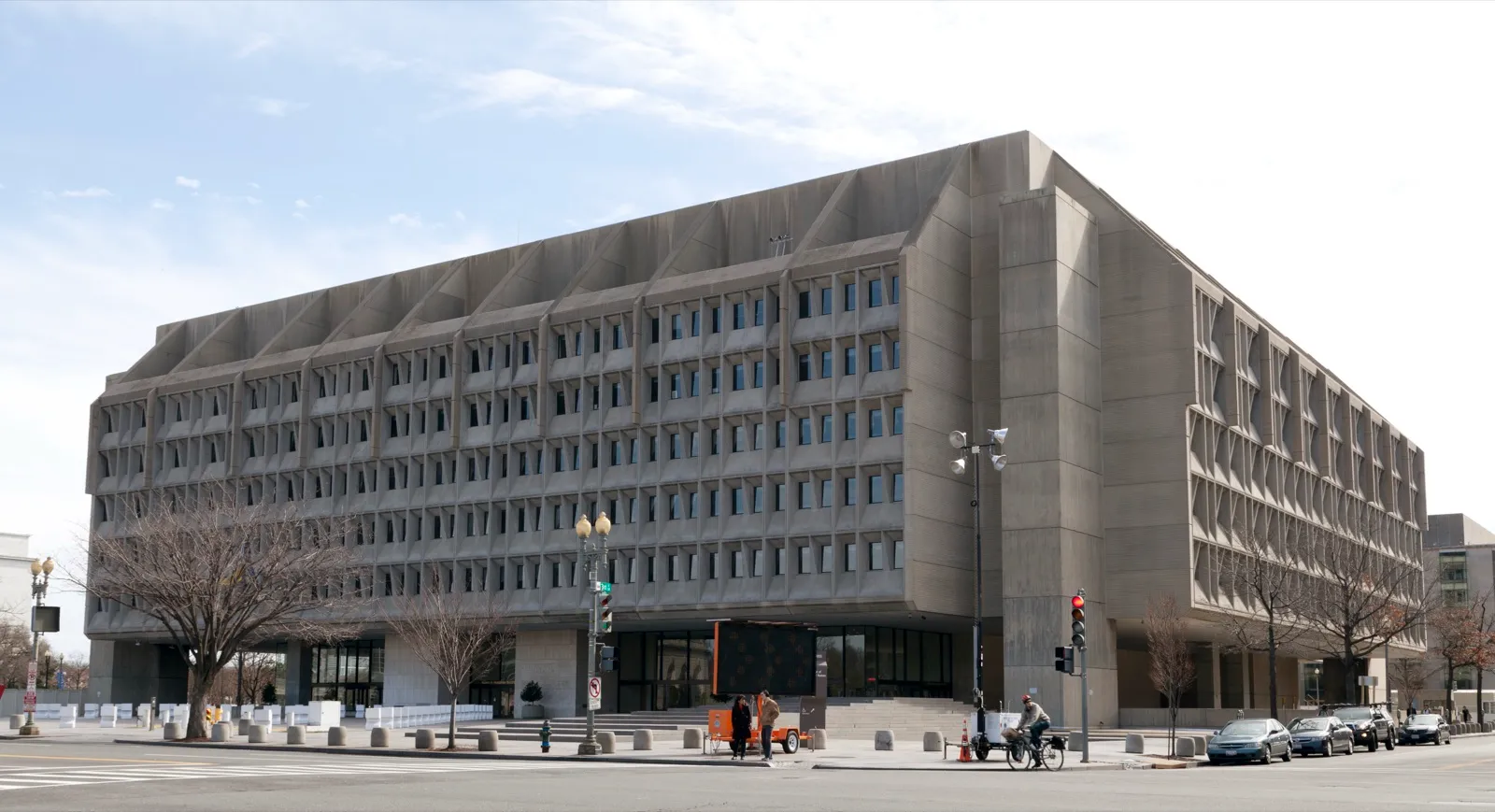

On May 22, 2026, the Centers for Medicare & Medicaid Services (CMS) proposed a rule that would cap Medicaid fee-for-service payments that states target to some providers but not others. The proposal names non-emergency medical transportation (NEMT) providers as covered, along with ground and air ambulance providers. Comments closed on July 21, 2026. As of September 30, 2026, no final rule had appeared in the Federal Register, so nothing has changed yet. Standard fee schedule rates paid to every company in a state or county would not be capped.
What CMS proposed
| Item | Detail |
|---|---|
| Rule | CMS-2449-P, 91 FR 30400, published May 22, 2026 |
| Status on September 30, 2026 | Proposed only. No final rule in the Federal Register |
| Comments | Closed July 21, 2026, in docket CMS-2026-1916 on regulations.gov |
| New federal rule | 42 CFR 447.381, “Targeted Medicaid payment limit” |
| Who it names | Physicians, dentists, and other licensed practitioners, plus providers such as ground ambulance, air ambulance, and NEMT providers, clinics, and certified community behavioral health clinics |
| The cap | Total Medicaid payment to one provider for a service could not exceed 100 percent of the Medicare rate in a state that expanded Medicaid, or 110 percent in a state that did not |
| Deadline for states | A state plan amendment that complies, effective no later than the start of the first state fiscal year that begins on or after January 1, 2029 |
| Managed care part | Separate caps on state directed payments through health plans, for every service, from the first rating period that begins on or after January 1, 2029 |
A state that misses the deadline could lose federal matching funds on the part of its payments above the cap. CMS could also disapprove a state plan amendment that proposes to exceed it.
What makes a payment “targeted”
A payment is targeted when it is not available to every provider furnishing the same Medicaid service. CMS’s own example is an enhanced fee schedule for physicians employed by an academic medical center. For transportation, CMS says states often target payments to government-owned or government-operated entities, such as a county fire station, which fund the state’s share with an intergovernmental transfer.
The cap would not apply in these cases:
- Uniform rates. The rate is the same for all providers of the service in the state, or in a county, parish, borough, or municipality named in the state plan. A state could not draw a special district just to make a targeted rate look uniform. CMS says county rates also give states room to pay rural providers more.
- Rates already under another federal limit. An example is the existing upper payment limits on hospital and nursing facility services.
- No reasonable Medicare equivalent. The state must still show, if CMS asks, that the payment is economic and efficient.
- Payments reconciled to actual cost. The state must show the same thing on request.
Today states commonly cap these targeted payments with an average commercial rate (ACR) calculation. The proposal says CMS no longer believes the ACR is an economic and efficient limit.
How the cap would reach NEMT
For transportation with a Medicare equivalent, the limit would be the Medicare ambulance fee schedule rate for that calendar year. Medicare covers ambulance rides only when other ways of traveling are contraindicated (42 CFR 410.40). So for wheelchair van and car rides, the question is whether a reasonable Medicare equivalent exists at all. CMS said it expects the no-equivalent exception to arise mostly for services Medicare does not cover, such as personal care, and that it will scrutinize those claims closely. It considered, but did not propose, a cap of 200 percent of the state’s base fee-for-service payment for those cases, and asked for comments.
CMS’s own numbers show how small NEMT’s share is:
| Measure | Amount | Where CMS reports it |
|---|---|---|
| NEMT fee-for-service base payments, federal fiscal year 2024 | $2.25 billion | Table 24, page 30455 |
| NEMT fee-for-service supplemental payments, fiscal year 2024 | $0.08 billion | Table 24, page 30455 |
| NEMT supplemental payments set by an average commercial rate, fiscal year 2024 | Almost $80 million from two states to 256 providers | Page 30431 |
| Largest state’s NEMT supplemental payment | $58.2 million to 144 providers, about $404,166 each | Page 30431 |
| Assumed cut to NEMT supplemental payments | 5 percent (low), 11 percent (medium), 17 percent (high) | Table 26, page 30455 |
CMS does not name the two states. It estimates the fee-for-service part of the rule would lower combined federal and state Medicaid spending by $2.44 billion from 2029 through 2035, in 2026 dollars, across physicians, other practitioners, and NEMT.
The managed care part
States can also direct health plans to pay certain providers in a set way, such as a minimum fee schedule or a uniform increase. These are called state directed payments. CMS says states have used them for transportation providers, among others. Congress capped some of these payments for hospitals, nursing facilities, and academic medical centers in section 71116 of Public Law 119-21, signed July 4, 2025.
The proposal would extend the cap to every service from the first rating period starting on or after January 1, 2029. The cap would be 100 or 110 percent of the published Medicare rate. Where Medicare publishes no rate for the service, the cap would be 100 percent of the state plan approved rate. Supplemental payments do not count toward that rate. So where Medicare publishes no rate for a NEMT service, a directed payment could not lift health plan pay above the state’s own approved rate. See managed care organization for how plans fit in.
What NEMT companies should do now
- Check how you are paid. If you get the same fee schedule rate as every other company in your state or county, the fee-for-service cap as proposed would not apply to that rate.
- Ask about any extra payment. If you get an add-on, a supplemental payment, or an enhanced rate that only some companies get, ask your state Medicaid agency’s rate-setting office if it would count as targeted under proposed 42 CFR 447.381.
- Plan for 2029, not today. Nothing changes until CMS publishes a final rule. Under the proposal, a state with a July 1 fiscal year would have until September 30, 2029 to file an amendment effective July 1, 2029.
- Watch for a final rule that differs. CMS asked for comments on shorter or longer transitions (6 months, 1 year, or 2 years), a midway limit of 200 percent of Medicare, and a 10 percent a year phase-down over 10 years.
- Watch your state’s plan amendments. A state that cuts a targeted rate must file a state plan amendment. Federal rules require public notice before a significant change in how rates are set, except when the change is made to conform to Medicare methods or levels of payment (42 CFR 447.205). A cut made to meet a Medicare-based cap may fall under that exception, so do not wait for a public notice.
Your base rate is the number to plan around. Compare it with other states in NEMT reimbursement rates by state, and see how to get a NEMT rate increase for making the case to your state. For one state’s directed payments to NEMT companies, see Louisiana’s per-vehicle NEMT payments.
Key dates
| Date | What happened |
|---|---|
| June 6, 2025 | A presidential memorandum directs HHS to keep Medicaid rates from exceeding Medicare’s, where the law allows |
| July 4, 2025 | Public Law 119-21 caps some state directed payments for hospitals, nursing facilities, and academic medical centers |
| February 2, 2026 | CMS sends states preliminary guidance on those caps |
| May 22, 2026 | CMS publishes proposed rule CMS-2449-P |
| July 21, 2026 | Comment period closes |
| January 1, 2029 | Proposed start of caps on every state directed payment, and the date that sets each state’s fee-for-service deadline |
Who to contact
- CMS, Medicaid fee-for-service payments: Jocelyn Velez, 410-786-2367
- CMS, Medicaid managed care: John Giles, 410-786-5545
- Your state Medicaid agency’s rate-setting office: for whether a payment you receive is targeted