Billing
NEMT Rate Increases in 2027: How Medicaid Rates Go Up and How to Push for One
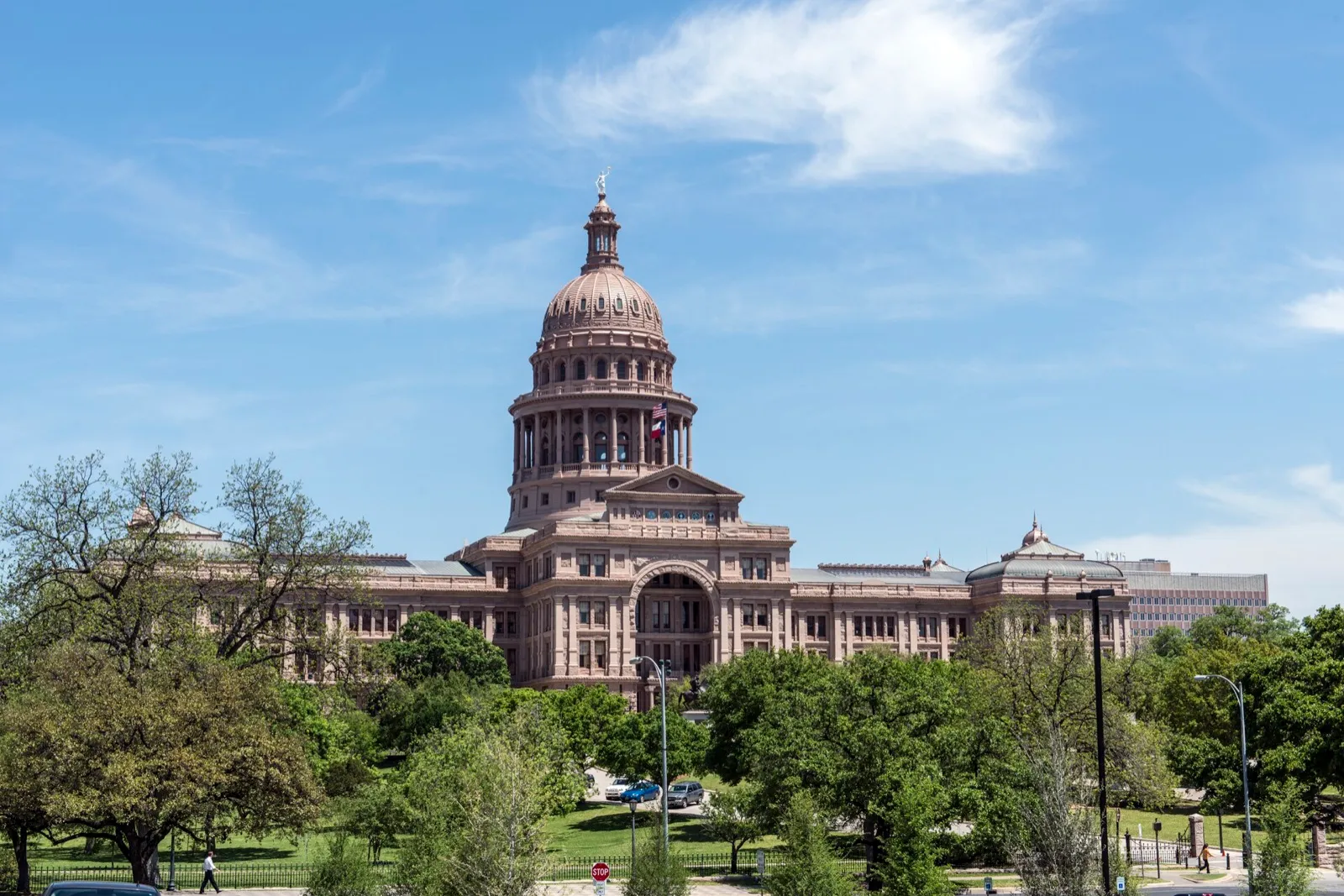
A NEMT rate increase comes from whoever sets your rate. For fee-for-service Medicaid trips, the state raises its fee schedule through the budget, a public notice, and a state plan amendment approved by CMS. Broker and health plan rates change by contract or by state order. Providers win increases by bringing cost and access numbers to those comment windows and to the legislature.
- Fee-for-service rates move with the state budget, and a significant change needs a public notice and a state plan amendment approved by CMS.
- Broker and health plan rates follow your contract, but a state can set a floor or order plans to pay a minimum fee schedule.
- Comment windows are short. Arizona gave 31 days in 2026, and Texas took written comments until 5 p.m. on the day of its hearing.
- The strongest case pairs your cost per trip with proof that riders are missing rides, plus what nearby states pay.
- Push together through legislators and the Medicaid agency, never by refusing trips as a group.
A rate usually reaches you as a line on a remittance. The decision behind it runs on a calendar, and at several points the state has to ask the public before it acts. This guide shows who sets each kind of rate, how an increase moves from a state budget to your payment, and where you can speak up.
Who sets your NEMT rate
Your rate depends on who pays the trip. The same van can carry riders under three or four different rates in one day.
| Who pays the trip | Who sets your rate | What moves it | A 2026 example |
|---|---|---|---|
| State Medicaid, fee-for-service | The Medicaid agency, within the budget the legislature passes | A rate review, a budget increase, or a new law, then a state plan amendment | Texas raised its demand response rate about 4.5 percent on September 1, 2026 |
| A health plan | Your agreement with the plan or its broker | The contract, or a state order for plans to pay a minimum fee schedule | Indiana told its plans to mirror its 2026 fee schedule by January 1, 2026 |
| A broker | Your provider agreement | Negotiation at signing or renewal, or a state floor | Louisiana brokers must pay at least the state’s published fee-for-service rate unless you agree otherwise |
| A state law | The legislature | A bill plus the money to pay for it | Louisiana’s Act 969 sets a minimum of $14.50 a trip and $2.10 a mile, once it is funded |
Two federal standards sit behind all of them. Medicaid payments must be sufficient to enlist enough providers so that care is available to members at least as much as to the general population (42 CFR 447.204). And CMS says states that use brokers are still responsible for access. They may direct brokers to use specific provider payment methods, and they are expected to make sure a broker does not pay so little that local providers refuse to take part (SMD 23-006, September 28, 2023).
In broker states, your rate also depends on what the state pays the broker. In Kentucky, each regional broker is paid a fixed amount per member per month. An actuary for the Medicaid agency sets it from past claims, adjusted for enrollment, trend, and reimbursement rate updates reported by the Kentucky Transportation Cabinet, which sets the rates brokers pay providers. The agency and the Cabinet walked lawmakers through that model on November 5, 2025. For current rates in 11 states, see NEMT reimbursement rates by state.
How a Medicaid rate increase happens
For fee-for-service trips, an increase usually passes through six steps. Knowing which step your state is on tells you who to talk to.
1. The money goes into the state budget
Medicaid is paid jointly. When a state covers NEMT as a medical service, the federal government pays the state’s regular matching rate and the state pays the rest. For October 1, 2026 through September 30, 2027, the federal share is 68.14 percent in Louisiana, 63.81 percent in Arizona, 58.54 percent in Texas, and 50 percent in New York. So in Louisiana, each state dollar added to NEMT rates brings in about $2.14 of federal money. When a state runs NEMT as an administrative activity instead, the federal match is 50 percent (SMD 23-006).
A rate law without money does nothing. Louisiana’s Act 969 of 2026 takes effect only when an act of the legislature with a specific appropriation for it takes effect.
2. The agency proposes new rates
Each state has its own rhythm. Texas reviews the Medicaid rates for all acute care services every two years, and the review can raise, cut, or hold each rate. For services Medicare does not price, its methods include the median or mean of Medicaid fees in 14 states: the 10 most populous and the 4 that border Texas. It can also set access-based fees to encourage provider participation. Arizona updates its fee-for-service rates each October 1 and posted its 2026 proposal on July 24. Indiana set its 2026 transportation rates from Medicare’s.
3. The state posts a public notice
Before a significant change in how it sets payment rates takes effect, the state must publish a notice (42 CFR 447.205). The notice must describe the change, estimate the change in yearly spending, explain why, give an address for written comments, and list any public hearings. It can run in a state register, a major newspaper, or a clearly titled page on the Medicaid agency’s website. No notice is needed when a change only follows Medicare’s methods or levels, or is required by a court order.
4. CMS reviews the state plan amendment
The state then files a state plan amendment. CMS has 90 days to approve it, deny it, or ask for more information. If it asks, a new 90 days starts when the state answers (42 CFR 430.16). An amendment that raises payment amounts can take effect no earlier than the first day of the quarter in which the state submits it (42 CFR 430.20). Louisiana submitted amendment 24-0017, which set up a higher level of care service for NEMT providers, on December 27, 2024. CMS approved it on March 24, 2025, effective back to October 20, 2024, a date in the quarter the state submitted it. Approved amendments are posted on Medicaid.gov.
5. The new rate is posted
By July 1, 2026, every state had to publish its fee-for-service rates on a public website linked from the Medicaid agency’s site. It must update them within one month of CMS approval or the effective date, whichever is later (42 CFR 447.203).
6. Payers apply it
Retroactive changes come back to you as adjustments. When Texas made a Medical Transportation Program rate update from its May 26, 2026 hearing effective back to January 1, 2026, its claims administrator said it would find and reprocess affected claims, and any adjustments would appear on future Remittance and Status reports. Our guide to reading a remittance advice shows where they appear.
Here is how two 2026 increases moved through those steps:
| Step | Arizona, rates for October 1, 2026 | Texas, demand response rates for September 1, 2026 |
|---|---|---|
| Proposal posted | July 24, 2026, citing 42 CFR 447.205 | Briefing packet for a May 26, 2026 public hearing |
| Comments due | 5 p.m. on August 24, 2026, to FFSRates@azahcccs.gov | 5 p.m. on May 26, 2026, to PFDAcuteCare@hhs.texas.gov, or testimony at the hearing |
| What changed | Rural mileage (S0215 with the TN modifier) rose from $1.53 to $1.63 a mile | T2003 rose about 4.5 percent in urban, suburban, and rural areas |
| In effect | October 1, 2026 | Dates of service from September 1, 2026 |
Recent NEMT rate changes and what drove them
| State | Change | Effective | What drove it |
|---|---|---|---|
| Texas | T2003: urban $32.38 to $33.83, suburban $59.64 to $62.31, rural $76.22 to $79.63 | September 1, 2026 | The biennial calendar fee review and public rate hearing |
| Arizona | Rural mileage (S0215 with TN) $1.53 to $1.63 a mile. The urban wheelchair van base stayed at $11.15, the rate on every schedule since at least October 1, 2020. | October 1, 2026 | The yearly update. AHCCCS cited dirt roads, long distances, and a lack of providers in rural areas. |
| North Dakota | 2.0 percent inflationary increase on fee schedule codes | July 1, 2026 | A legislative mandate |
| Indiana | Transportation rates set to 100 percent of the January 1, 2025 Medicare rates, with health plans told to match | January 1, 2026 | A fee schedule update based on Medicare’s prior-year rates |
| Louisiana | A minimum of $14.50 per trip and $2.10 per mile, including wheelchair trips, plus a method for shared rides | Only once funded. The health department then has 90 days to file a state plan amendment. | Act 969 (HB 1028), which became law without the governor’s signature on June 25, 2026 |
| North Carolina | A 3 percent cut from October 1, 2025, reversed back to that date | Claims from December 17, 2025 pay the September 30, 2025 rates, and earlier trips are reprocessed | The state cited a funding shortfall, then reversed the cut after court rulings |
Louisiana shows how much a minimum can matter. As of September 2026, its posted schedule, effective October 1, 2025, still pays $13.50 a trip plus $1.10 a mile for ambulatory rides, and $21.50 plus $1.30 a mile for wheelchair van rides, rates dated January 1, 2022. A 10-mile ambulatory trip pays $13.50 + (10 × $1.10) = $24.50 today. At Act 969’s minimum it would pay at least $14.50 + (10 × $2.10) = $35.50. Because Louisiana’s manual makes the fee-for-service rate the floor for broker payments unless the provider agreement says otherwise, a funded minimum would raise that floor too.
North Carolina shows the other direction. The state said the October 1, 2025 cuts were needed to keep Medicaid solvent without enough money from the General Assembly. On December 10, 2025 it said court rulings required it to restore September 30, 2025 rates. The North Carolina rate cut report has the correction steps.
Where the public comment windows are
| Window | When it opens | How you take part |
|---|---|---|
| Rate change notice | Before any significant change in rate methods takes effect | Send written comments to the address in the notice, and attend any hearing it lists (42 CFR 447.205) |
| Public rate hearing | Where state law requires one. Texas holds them under Human Resources Code 32.0282. | Testify in person or online, or send written comments by the deadline |
| Proposed rules | When rates or methods are set by rule | Comment on the proposed rule. Act 969 directs Louisiana’s health department to adopt its minimum rates by rule. |
| Medicaid Advisory Committee | At least two meetings open to the public each year, with a dedicated time for public comment and 30 days’ notice (42 CFR 431.12) | Sign up for public comment and bring your numbers |
| Legislative budget and oversight hearings | During budget writing and interim oversight | Testify or meet members. Kentucky’s Budget Review Subcommittee on Health and Family Services heard a Medicaid NEMT presentation on November 5, 2025. |
| Access complaints | Any time | States must keep ongoing ways for providers to report access problems and a record of how they responded (42 CFR 447.203(c)(4)) |
| Proposed rate cuts | Before the state files the amendment | Before filing, the state must consider input from providers on how the cut would affect access (42 CFR 447.204) |
Access reports carry weight. When a state finds an access problem, it must submit a corrective action plan within 90 days, the fix should come within 12 months, and raising payment rates is one of the remedies the rule names (42 CFR 447.203).
How to make the case for a higher rate
- Learn your state’s calendar. Find when the budget is written, when the agency reviews rates, and where it posts notices. Medicaid.gov’s state overviews link to each agency. Sign up for its provider bulletins.
- Price your trips. Work out your cost per trip for each level of service, your loaded and empty miles, and your wait time. The cost per mile calculator and NEMT cost per trip show how.
- Show costs rising with official numbers. The IRS business mileage rate was 67 cents in 2024 and 76 cents from July 1, 2026, a 13 percent rise, and the IRS tied the mid-2026 change to recent increases in the price of fuel. Arizona’s urban wheelchair van base rate did not move over those years. CMS says a state setting payment for unloaded miles or wait time may rely on existing rate structures such as the IRS mileage rate.
- Document missed rides. Count trips you turned back, riders who waited, and areas with no wheelchair or stretcher provider. Report them through the state’s access channels so they land in the record the state must keep.
- Compare nearby states. For services Medicare does not price, one of Texas’s methods looks at Medicaid fees in 14 states. Use the tables in NEMT reimbursement rates by state, each with its effective date.
- Ask for a method, not only a number. A one-time increase fades. Indiana set its 2026 rates from Medicare’s, and North Dakota adds an inflationary increase set by the legislature. Until recently, Minnesota’s statute raised or lowered its per-mile rate 1 percent for every 10 cents that gasoline cost above $3.00 a gallon. That clause expired on July 1, 2026 for fee-for-service and expires January 1, 2027 for managed care.
- Make the rural case where it applies. CMS strongly encourages states to recognize rural providers’ costs and says they may set higher base rates or pay supplemental payments. Our rural NEMT guide has the deadhead math.
- Show what it costs the state. Multiply the trips affected by the increase, then take out the federal share. A small state cost is easier to fund.
- Put it in writing and show up. File comments inside each window, testify at hearings, and meet your legislators before the budget session starts.
Working together without breaking antitrust law
Owners carry more weight as a group, through a state association or a coalition. The FTC says a trade association may represent its members before legislatures and government agencies. See NEMT associations for how provider groups organize.
There are two lines never to cross. Do not agree with competitors on the prices you will accept. And do not agree to stop taking trips until rates rise. The FTC says an agreement among competitors not to offer services at prevailing prices, as a way to force a higher price, raises antitrust concerns. The FTC successfully challenged trial lawyers who agreed to stop representing poor criminal defendants for the District of Columbia until it raised their fees, and the Supreme Court upheld that ruling in 1990. Each company may decide alone that a rate is too low.
Courts are rarely the answer. In Armstrong v. Exceptional Child Center (2015), the Supreme Court held that Medicaid providers cannot sue for an injunction to force a state to comply with the federal law that rates be sufficient to enlist enough providers. The remedy Congress provided is HHS withholding federal funds. The budget and the comment windows are where rates actually change.
When a broker or health plan sets your rate
When a health plan or broker pays the trip, your rate follows your contract. The state still has levers:
- Minimum fee schedules for plans. Federal rules let a state require its health plans to pay a minimum fee schedule based on state plan rates, or a uniform dollar or percentage increase (42 CFR 438.6(c)). Indiana’s bulletin of November 6, 2025 told its plans to mirror the 2026 fee schedule.
- Broker floors. Louisiana’s manual sets the published fee-for-service rate as the minimum a broker pays, unless the broker and provider agree otherwise in the provider agreement. Read that clause before you sign.
- State direction to brokers. CMS says states may direct brokers to use specific provider payment methods.
When your state’s rates rise, ask your broker in writing whether and when it will pass the increase through. For the rest of the conversation, see how to negotiate NEMT broker rates.
After an increase takes effect
- Read the effective date. Note whether it applies to dates of service or to claims paid, and whether it reaches back.
- Watch your remittances. Retroactive increases arrive as adjustments on later payments. Match each one to the trips it covers.
- Update your rate sheet and the charge you bill, so your claims show the new amounts. The free NEMT rate sheet keeps each payer’s rate in one place.
- Check every payer. A state increase may not reach your broker or plan rate on the same day, or at all.
- Mark the next review. Texas reviews these rates every two years, so start collecting numbers for the next one now.
Frequently asked questions
How often do NEMT rates go up?
There is no national schedule, and each state sets its own. Texas reviews its acute care rates, NEMT included, every two years, and raised its demand response rate about 4.5 percent on September 1, 2026. North Dakota added a 2.0 percent inflationary increase on July 1, 2026 under a legislative mandate. Arizona updates on October 1 each year, yet its urban wheelchair van base rate has been $11.15 on every schedule since at least October 1, 2020.
How long does a Medicaid rate increase take?
Plan on months. The state must publish notice before the change takes effect, and CMS has 90 days to act on a state plan amendment. If it asks for more information, a new 90 days starts when the state answers. An increase can take effect no earlier than the first day of the quarter in which the state submits it. Louisiana submitted amendment 24-0017 on December 27, 2024, and CMS approved it on March 24, 2025, effective back to October 20, 2024.
Can NEMT providers sue the state over low Medicaid rates?
Generally not under the federal rule that rates must be enough to attract providers. In Armstrong v. Exceptional Child Center (2015), the Supreme Court held that Medicaid providers cannot sue for an injunction requiring a state to comply with that rule, section 30(A) of the Medicaid Act. Enforcement belongs to HHS, which can withhold federal funds. That leaves the budget, rate notices, and advocacy as the practical routes.
Can providers refuse trips together until rates go up?
No. The FTC says an agreement among competitors not to offer services at prevailing prices, as a way to force a higher price, raises antitrust concerns, and it has challenged groups that did it. Deciding alone that a rate is too low for your company is fine. Joint work belongs before legislators and agencies: the FTC says a trade association may represent its members there.
Does a state rate increase raise what my broker pays?
Only if your contract or state rules tie them together. Louisiana requires brokers to pay at least the published fee-for-service rate in effect on the date of service, unless the provider agreement says otherwise. Indiana told its health plans to mirror its 2026 fee schedule by January 1, 2026. Elsewhere, ask your broker in writing whether it will pass the increase through, and when.
Where do I send comments on a proposed NEMT rate?
To the address in the state's notice. Federal rule 42 CFR 447.205 requires the notice to give an address for written comments and any hearing dates. Arizona took comments on its October 1, 2026 rates at FFSRates@azahcccs.gov until August 24, 2026. Texas took written comments for its May 26, 2026 rate hearing at PFDAcuteCare@hhs.texas.gov until 5 p.m. that day.
Official resources
- Medicaid.gov: State overviews (find your state Medicaid agency)
- Medicaid.gov: Search approved state plan amendments
- eCFR: 42 CFR 447.205, Public notice of rate changes
- eCFR: 42 CFR 431.12, Medicaid Advisory Committee public meetings
- CMS: Medicaid Transportation Coverage Guide (SMD 23-006)
- AHCCCS: Public notices, including proposed rates
- Texas HHSC Provider Finance: Rate hearing packets
- FTC: Spotlight on trade associations