Starting a business
General Liability vs Commercial Auto for NEMT: Which Policy Pays When a Rider Is Hurt
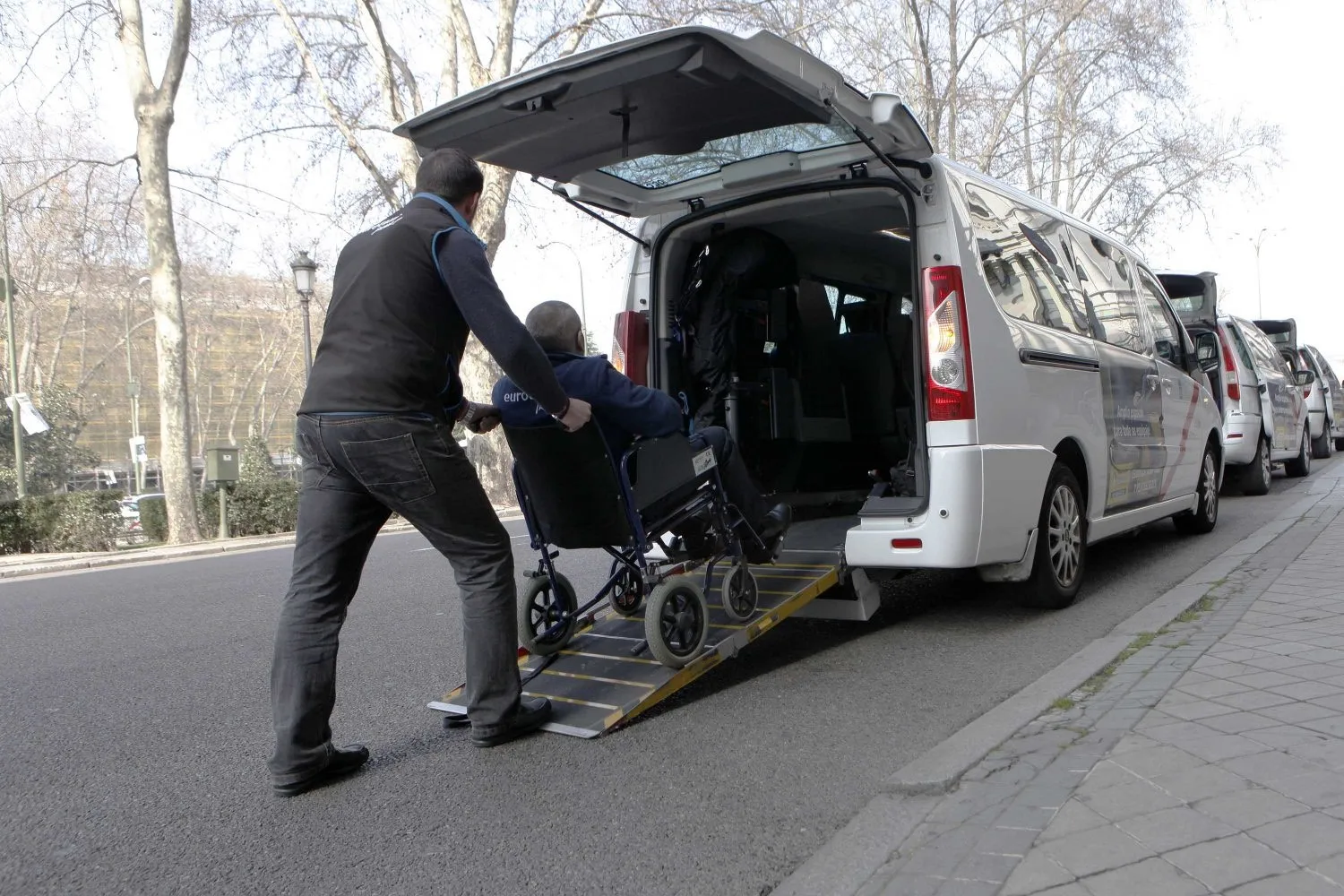
.jpg)
Overview
Commercial auto pays for injuries from owning, maintaining, or using your van, which under the standard forms usually includes its lift or ramp. General liability pays for the rest of your business, such as an escort inside a clinic or a fall in your office, and it excludes your vans, loading and unloading included. The walk from curb to door falls between them, so get your agent's answer in writing.
- Commercial auto answers for the van: driving, braking, and the lift or ramp bolted to it.
- General liability answers for the business: escorts inside a building, your office, and broker indemnity for claims that do not involve a van.
- The general liability form excludes any auto you own, and its definition of auto includes attached equipment, such as a lift bolted to the van.
- Both standard forms exclude damage to a rider's wheelchair in your care, and injuries to your own employees.
- The curb-to-door walk is the gray zone. Ask your agent which policy answers it and keep the reply.
Brokers such as MTM Health require both a commercial auto policy and a general liability policy, and a hurt rider’s claim lands on one of them. Which one depends on where the rider was when it happened, and a ride passes through several places: the van, the lift, the sidewalk, the clinic. This page follows one ride and shows where each policy answers, using two standard insurance forms. For what you can be sued for in the first place, see NEMT liability. For the limits brokers and states require, see NEMT insurance requirements.
What each policy is built to cover
The examples here use two standard forms published by the Insurance Services Office (ISO), which the County of Sonoma posts: the business auto form CA 00 01 10 13 and the general liability form CG 00 01 04 13. Your policy may use another edition or add endorsements that change the wording, so read your own declarations and endorsements next to this page.
- Commercial auto. The business auto form pays what you legally must pay because of bodily injury or property damage caused by an accident and resulting from the ownership, maintenance, or use of a covered auto. The insurer also has the duty to defend you. Which vans count as covered autos depends on the symbols on your declarations.
- General liability. The general liability form pays what you become legally obligated to pay because of bodily injury or property damage caused by an occurrence. California’s Department of Insurance (Commercial Insurance Guide, revised June 14, 2024) describes its premises coverage as injury from a condition on your premises or from your operations in progress, on or away from your premises.
The two forms are written to meet, not to overlap. The general liability form excludes injury arising out of the ownership, maintenance, use, or entrustment to others of any auto you own, operate, rent, or borrow. It says use includes operation and loading or unloading. The exclusion applies even when a claim blames your hiring, training, or supervision of the driver, as long as the event involved the van. Under this wording, a lawyer cannot move a crash claim onto your general liability policy by calling it negligent hiring.
One ride, step by step: which policy answers
Take a wheelchair rider booked door-to-door from home to a clinic. CareOregon’s provider manual (version 1.3, February 2024) describes that service level as escorting the member from the door of the pickup location to the vehicle, then to the waiting area at the destination. Here is how the standard forms divide the trip.
| Moment on the ride | The policy that usually answers | Why |
|---|---|---|
| Driving, braking, a crash | Commercial auto | Injury from the use of the van |
| Riding the lift or ramp | Commercial auto | A lift bolted to the van is part of the auto |
| Securing the wheelchair inside | Commercial auto | The general liability form counts loading and unloading as use |
| The walk from the curb to the door | Depends on wording and court rulings | Neither form names it |
| Inside the clinic, at the desk | General liability | Your operation away from your premises, with the van parked |
| Your office, garage, or yard | General liability, unless a van causes it | Premises coverage, with autos still excluded |
In the van
A crash, a hard stop that throws a rider forward, or a driver who pulls away before the belt is fastened: all of these come from the use of the van, and the business auto form answers them. The same form gives the insurer the right and duty to defend you against the suit.
On the lift or ramp
The general liability form defines an auto as a land motor vehicle designed for travel on public roads, including any attached machinery or equipment. A platform lift bolted into the side door is attached equipment, so an injury on it most likely falls under the general liability auto exclusion. The business auto form points the same way. Its mechanical device exclusion (exclusion 8) removes injury from moving property with a mechanical device other than a hand truck, unless the device is attached to the covered auto. For how to keep riders safe on the lift, see preventing rider falls.
At the curb and on the sidewalk
This is where the line blurs. The general liability form defines loading or unloading as the handling of property: from the place it is accepted for movement into the auto, while it is in the auto, and while it is moved from the auto to the place it is finally delivered. Moving it with a device that is not attached to the auto, other than a hand truck, does not count. A wheelchair is property, but the rider in it is a person, and neither form says whether walking a rider from the van to the clinic door is use of the van.
That answer comes from your policy’s exact wording and from court decisions in your state. If two different insurers wrote your auto and general liability policies, ask both how they would treat a rider who trips on the sidewalk halfway to the door.
Through the door and inside
Once the driver is escorting a rider inside a building, the van is parked and the work is your operation. That points to general liability. The duties can go well past the door. CareOregon’s manual has hand-to-hand drivers check the member in at the appointment, and it says hospital discharges include going to the nurse’s station on the member’s unit with a full escort. A rider who falls in a hospital corridor during that escort points to your general liability policy, not your auto policy. See hand-to-hand transport and hospital discharge rides.
In your office and garage
A visitor who trips over a cord in your dispatch office is a general liability claim, under the premises coverage. A van in your garage is still an auto, though. The general liability exclusion reaches the ownership and maintenance of the van, not only driving it, so an injury the van itself causes in your yard goes back to commercial auto.
What your broker contract adds to both policies
Broker agreements make you promise to pay for claims against the broker, and that promise needs coverage of its own. MTM Health’s standard agreement, in the January 1, 2023 version Pennsylvania posts, shows how far it reaches:
- Indemnity (section 10.A). You defend, indemnify, and hold harmless MTM and its client against claims arising from your performance or nonperformance of any service, including attorney’s fees, penalties, and liquidated damages.
- General liability (section 9.C). At least $500,000 per occurrence and $500,000 aggregate, with broad form contractual liability coverage.
- Commercial auto (section 9.C). At least a $500,000 combined single limit for any and all vehicles used under the agreement.
- Loading and unloading (section 9.E). Broad form coverage must include loading and unloading, and contractual liabilities.
- Insurance does not cap the promise (sections 9.C and 10.C). The minimums do not limit your indemnity, and MTM does not warrant that they are enough.
WellTrans’s Indiana agreement (revised October 16, 2025) asks for general liability of $1,000,000 per incident, broad form and occurrence based, including contractual liabilities. Your certificate must describe the business as for hire transportation and confirm that the general liability policy covers contractual liabilities. Vans need the greater of the local taxi ordinance amount or $1,500,000 per accident, written as Any Auto or symbols 2, 8, and 9. You also indemnify WellTrans, the State of Indiana, and its Family and Social Services Administration against claims arising from your services.
Here is how the standard forms answer an indemnity promise. Both exclude liability you take on by contract, except liability assumed in an insured contract: the part of a business contract where you assume someone else’s tort liability for injury to a third party. On the general liability form, that give-back does not reach autos. Its auto exclusion restores contract coverage only for aircraft and watercraft. So when a rider hurt in your van sues the broker too, look to your auto policy for the indemnity: the business auto form covers liability assumed under an insured contract and makes that coverage primary. Neither form covers the penalties or liquidated damages MTM’s clause also reaches, because an insured contract covers only someone else’s tort liability for injury or damage. MTM and WellTrans also require the broker as an additional insured on both policies.
Gaps neither policy fills
Some losses fall outside both standard forms, and each of them can happen on a NEMT ride.
- A rider’s wheelchair or walker. The business auto form excludes damage to property owned or transported by you, or in your care, custody, or control. The general liability form excludes personal property in your care, custody, or control. A power chair damaged on your lift or in your van can fall under both. See the care, custody, or control exclusion.
- Your own employees. Both forms exclude bodily injury to your employees arising out of their employment. A driver who hurts a back pushing a chair up a ramp is a workers’ comp claim.
- Medical bills regardless of fault. The general liability form’s medical payments coverage pays reasonable medical expenses for accidents on your premises or because of your operations, reported within one year. It does not pay for anything the main coverage excludes, so van injuries are out. The business auto form refers to a separate medical payments endorsement. See medical payments coverage.
- Abuse and professional claims. WellTrans’s Indiana agreement requires general liability that covers sexual abuse and molestation without sub-limits, and $1,000,000 of professional liability for providers that run wheelchair vehicles. Ask whether your policies include either. See abuse and molestation coverage.
- Claims above your limits. California’s Department of Insurance describes a commercial umbrella as covering losses above the limits of the liability policies under it, including commercial auto and general liability. See commercial umbrella insurance.
Questions to put to your agent in writing
An email answer from your agent is worth more than a phone call when a claim arrives two years later. Send these with your broker agreements attached:
- The lift. If a rider falls from my lift or ramp, which policy defends me, and does any endorsement on either policy change that?
- The sidewalk. If my driver is walking a rider from the van to the clinic door and the rider falls, which policy answers? If the two policies come from different insurers, have both confirmed it?
- Inside the building. If my driver is escorting a hospital discharge to the nurse’s station, which policy answers a fall in the hallway?
- The broker’s promise. Does my auto policy treat my broker indemnity as an insured contract, and does my general liability policy include contractual liability for everything else?
- The broker’s wording. Do my policies meet MTM’s section 9.E, broad form coverage that includes loading and unloading, or the equivalent clause in my other contracts?
- Riders’ equipment. If a driver damages a rider’s power wheelchair, how would that claim be paid?
- Medical payments. Does my business auto policy carry a medical payments endorsement, and for how much?
Keep the replies with your certificates of insurance. When you add a broker, a facility contract, or a new service level such as hand-to-hand, ask again, because new duties can move a moment of the ride from one policy to the other.
Frequently asked questions
Does general liability insurance cover my NEMT vans?
No. The standard general liability form, CG 00 01 04 13, excludes injury arising out of the ownership, maintenance, use, or entrustment to others of any auto you own, operate, rent, or borrow. It says use includes operation and loading or unloading. The exclusion holds even when a lawsuit blames your hiring, training, or supervision, as long as the van was involved. Your vans need commercial auto coverage.
Which policy pays if a rider falls off my wheelchair lift?
Usually commercial auto. The general liability form defines an auto to include any attached machinery or equipment, so a lift bolted to the van counts as part of the auto and falls under its auto exclusion. The business auto form excludes injury from moving property with a mechanical device only when the device is not attached to the covered auto. Confirm with your agent that your policy has no endorsement that changes this.
Which policy pays if a rider falls inside the clinic during an escort?
Usually general liability. California's Department of Insurance describes premises liability as covering injury from a condition on your premises or from your operations in progress, on or away from your premises. A driver walking a door-to-door or hand-to-hand rider to the waiting room is your operation, with the van parked outside. If the fall ties back to the van, the auto policy may answer instead, so ask your agent.
Is a rider's power wheelchair covered if my driver damages it?
Often not by either standard form. The business auto form excludes damage to property owned or transported by you or in your care, custody, or control. The general liability form excludes personal property in your care, custody, or control. A rider's chair on your lift or tied down in your van fits both. Ask your agent how such a claim would be paid before it happens.
Does general liability medical payments coverage pay for a rider hurt in my van?
No. Medical payments under the general liability form pays reasonable medical expenses regardless of fault for accidents on your premises or because of your operations, when they are reported within one year. It does not pay for anything excluded under the main liability coverage, and that includes injuries from your autos. Medical payments for van riders comes from an endorsement on the business auto policy.
Do I need both policies if I only have one van?
Yes, if you work for a broker. MTM Health's standard agreement, in the January 1, 2023 version Pennsylvania posts, requires general liability of $500,000 per occurrence and auto liability of $500,000 combined single limit. WellTrans's Indiana agreement, revised October 16, 2025, requires at least $1,500,000 per accident on vans and $1,000,000 general liability. Even with one van, the escorts your drivers do inside buildings are risks the auto policy does not cover.