Brokers
Federal Rules for NEMT Brokers: What the Law Requires and What Providers Can Hold a Broker To
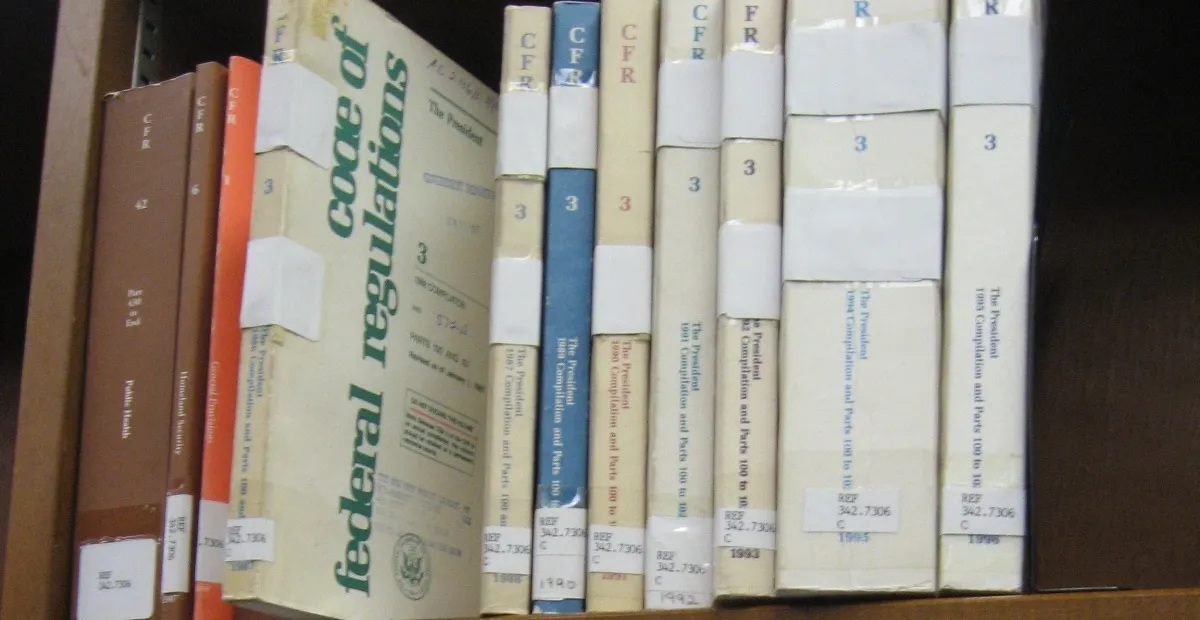

Federal NEMT broker requirements come from section 1902(a)(70) of the Social Security Act and 42 CFR 440.170(a)(4). A state broker must win a competitive bid, monitor access and complaints, keep rides timely with qualified drivers, and face regular state audits. It may not give rides or send trips to companies it has a financial tie to, with narrow exceptions, and providers may not pay it for trips.
- The federal broker rule has four parts: a competitive bid, oversight of access and complaints, regular state audits, and a written contract with conflict of interest limits.
- A state broker may not give rides or send trips to a company it or a close relative has a financial tie to, except in narrow cases the state documents.
- Providers may never pay a broker in cash, gifts, rebates, or free services to get trips.
- Most of what you can hold a broker to, such as how fast it pays, is written in the state contract and your provider agreement, not in federal law.
- A broker paid a fixed amount per member as a NEMT-only plan also falls under parts of the managed care rules, including a written reason when it turns a provider away.
A broker sits between you and the Medicaid money for most trips you run. Federal law sets only a short list of rules for it, and most of your day-to-day protection comes from the state’s contract with the broker and your own provider agreement. Knowing which rule lives where tells you what to ask for, and who to call when a broker falls short.
Where the federal NEMT broker rules come from
Every state must ensure necessary transportation to and from providers, and describe how in its state plan (42 CFR 431.53). A broker is one way to do it. The rules for brokers came in layers:
| Source | Date | What it does |
|---|---|---|
| Deficit Reduction Act of 2005, section 6083 | Signed February 8, 2006 | Added section 1902(a)(70) to the Social Security Act, letting a state run a broker program under its state plan without a waiver |
| CMS letter SMDL #06-009 | March 31, 2006 | Told states brokers must be chosen by competitive procurement and broker contracts must be approved by CMS |
| Consolidated Appropriations Act, 2021, section 209 | December 27, 2020 | Wrote the ride guarantee into law, added minimum provider and driver standards in section 1902(a)(87), and let states consult providers when they set up a broker program |
| CMS Medicaid Transportation Coverage Guide, SMD 23-006 | September 28, 2023 | CMS’s full guide, with sections on broker bids, conflicts, government brokers, and broker payments to providers |
| 42 CFR 440.170(a)(4) | Last amended October 2, 2024 | The federal broker rule itself: bidding, oversight, audits, and conflict of interest |
The broker option lets a state skip three usual Medicaid rules: the benefit does not have to work the same way statewide, members do not get free choice of any qualified provider, and services do not have to match for every group. That is why a broker can limit which companies get trips.
Which rules apply depends on how your state hired its broker
The same company can be a broker in one state and a health plan’s ride vendor in another, and different federal rules apply to each.
| How the state set it up | Main federal rules | Example |
|---|---|---|
| State plan broker | Section 1902(a)(70) and 42 CFR 440.170(a)(4) | Wisconsin’s NEMT manager, whose 2021 provider notice cites section 1902(a)(70) |
| NEMT-only plan paid a fixed amount per member (a NEMT prepaid ambulatory health plan) | Selected managed care rules listed in 42 CFR 438.9 | Arkansas’s regional brokers, which Pennsylvania’s June 25, 2026 study describes as prepaid ambulatory health plans under a waiver in place since 1998 |
| A health plan’s ride vendor | The plan’s managed care contract. The plan stays responsible, and the subcontract must spell out delegated duties (42 CFR 438.230). | Blue Cross and Blue Shield of Texas moves its Medicaid rides from Modivcare to MTM Health on October 1, 2026 |
| Rides run as an administrative activity | 50 percent administrative match. Free choice of provider does not apply. | Most Pennsylvania counties, which claim the 50 percent administrative match |
Money explains why states care. A state plan broker’s costs are matched at the state’s regular federal medical assistance rate, not the 50 percent administrative rate. Pennsylvania’s study estimated an effective 60.2 percent match for a broker, against the 50 percent its county-run program gets.
The setup also changes the conflict rule below. It is a condition of the state plan broker option, and waiver programs can differ. Pennsylvania’s study says Arkansas’s waiver lets its regional brokers give trips directly, and Arkansas’s June 19, 2026 bid for Region G lets the winner work as the sole provider. How states run NEMT shows which model your state uses.
The four duties in the federal NEMT broker rule
Under 42 CFR 440.170(a)(4)(i), a state may contract with a broker that meets four conditions.
| Federal duty | What the rule says | What it means for you |
|---|---|---|
| 1. Competitive bid | Selected through bidding consistent with 2 CFR 200.317 through 200.327, based on experience, performance, references, resources, qualifications, and costs | The state posts a public solicitation before each new contract. See how NEMT broker RFPs work. |
| 2. Oversight procedures | Monitors member access and complaints, keeps rides timely, and makes sure transport staff are licensed, qualified, competent, and courteous | The broker credentials your drivers, checks your vehicles, tracks on-time rides, and handles complaints about you |
| 3. Regular state audits | The state audits the broker for quality, timeliness, and members’ access to care | Audit findings flow down. The broker checks your trip records to prove its own compliance. |
| 4. Written contract | The contract carries the conflict of interest rules and makes the broker liable for the full cost of any prohibited referral | If the broker sends trips to a company it has a tie to, the broker pays for those trips |
The oversight duty is why credentialing and audits never stop. See NEMT broker credentialing and how to pass a NEMT broker audit.
States do not always get the audit duty right. The HHS Office of Inspector General found on July 5, 2016 that New Jersey did not adequately oversee its broker, and estimated that 2,538,674 claims totaling $64.7 million did not meet contract and state requirements. On August 4, 2017, it found the same for Oklahoma, where 42 of 100 sampled claims failed and the broker paid an estimated $6.9 million for improper claims. In both reports it told the state to write contract terms that let it recover money from the broker. On May 28, 2026, the Inspector General announced a new audit series on whether selected states met Medicaid payment requirements for NEMT.
The conflict of interest rule
The broker’s contract must bar the broker from giving rides itself, or referring or subcontracting trips to a transportation company it has a financial relationship with (42 CFR 440.170(a)(4)(ii)). The bar covers the broker’s contractors, owners, investors, board, corporate officers, and employees. It also applies when an immediate family member has the tie: a spouse, parent, child, sibling, step or in-law relative, grandparent, grandchild, or the spouse of a grandparent or grandchild (42 CFR 411.351).
A financial relationship means any ownership or investment interest, such as stock, partnership shares, LLC membership, or a loan secured by the company’s property or revenue, or any compensation arrangement (42 CFR 411.354).
There are four exceptions, and each needs documentation:
| Exception | When it applies |
|---|---|
| Rural area | The trip is in a rural area, meaning outside a metropolitan statistical area (42 CFR 412.62(f)), and no other Medicaid or qualified provider is available |
| Specialized rides | The ride is so specialized that no other available provider can do it |
| Too few providers | Other available providers are not enough to meet the need |
| Government broker | Pay does not exceed the broker’s actual costs as a separate unit with separate books, each ride is documented as the most appropriate and lowest cost option, and Medicaid pays no more than the public fare for fixed route transit and no more than other state human services agencies pay for paratransit |
CMS says a state that wants one of the first three exceptions must submit a state plan amendment with precise, up-to-date data for each county where it applies. It also says the state should make the broker use its own vehicles only for trips no contracted provider can take (SMD 23-006, September 28, 2023).
States apply the rule in their own words. Georgia’s NEMT manual, version dated July 1, 2026, says the broker shall not itself be a provider of transportation, but requires it to keep backup “shooter vans” for times when the scheduled provider is unavailable or no qualified provider exists. Colorado’s HB26-1328, in effect July 1, 2026, bars its broker from operating, owning, or controlling any NEMT provider in Colorado. See Colorado’s new NEMT law.
If you see a broker’s own vehicles taking trips your company is credentialed and available for, ask your state Medicaid agency whether it approved an exception for your county.
Federal rules that bind you as a provider
Some federal broker rules point at you, not the broker.
- No payments for trips. A transportation provider may not offer or pay any remuneration, including a kickback, rebate, cash, gift, or service in kind, to a broker to influence referrals or subcontracts (42 CFR 440.170(a)(4)(ii)(C)).
- Minimum provider and driver standards. For services on or after December 27, 2021, section 1902(a)(87) requires states to ensure each provider and driver is not excluded from federal health programs or on the OIG exclusion list, each driver has a valid license, and each provider has a process for drug law violations and for sharing each driver’s driving history with the state. Public transit authorities are exempt. See NEMT driver requirements.
- No billing the rider for the balance. Medicaid providers must accept Medicaid’s payment, plus any copay the state plan sets, as payment in full (42 CFR 447.15). CMS lists the ban on billing members for the balance among the rules for every transportation provider, and South Carolina’s 2026 draft contract makes brokers write it into provider agreements.
- No federal money for no-shows. Federal matching funds do not pay for a trip when the member does not show up, or when the provider does not show up (SMD 23-006). States may build no-show costs into their rates. Georgia’s manual requires its broker to pay the provider for the “A” leg of the trip when a member fails to board within the pickup window.
What you can hold a NEMT broker to
Federal law gives you a few protections directly. State contracts, state manuals, and your agreement add most of the rest.
| Protection | Where it comes from | What to do |
|---|---|---|
| No withholding needed rides, and no costlier or less appropriate ride for financial gain | 42 CFR 440.170(a)(4)(ii)(D) | Report patterns to the state Medicaid agency |
| Pay high enough that local providers take part | SMD 23-006 (September 28, 2023). CMS’s July 12, 2021 bulletin adds that NEMT payments must be enough to enlist enough providers. | Give the state and its advisory groups your cost per trip |
| A written reason if you are turned away | 42 CFR 438.12 for NEMT-only plans paid per member. South Carolina’s 2026 draft contract for its broker. | Ask for the reason in writing |
| A documented credentialing process | 42 CFR 438.214 for NEMT-only plans. South Carolina’s draft requires recredentialing at least yearly and timelines for reviewing a complete application. | Ask for the policy and the expected timeline |
| Timely payment | State contracts. South Carolina’s draft: at least weekly, with undisputed invoices paid within 30 calendar days. Georgia: within 15 business days unless your agreement says otherwise. | Put the payment terms in your agreement and keep an aging list |
| A review before you are cut off | Georgia’s manual (July 1, 2026) gives a provider 15 calendar days from a written termination notice to ask the broker, the state, or both to review the decision | Request the review in writing inside the deadline |
| An agreement that survives the broker | Georgia’s manual (July 1, 2026) and South Carolina’s draft pass agreements to the state on the same terms if the broker defaults | Keep signed copies of every agreement |
| A dispute process | Georgia requires appeal and dispute resolution terms in every service agreement. South Carolina’s draft requires dispute resolution procedures. | Use it first, in writing |
| State law extras | Colorado’s HB26-1328: software at no cost, no limits on your number of vehicles, sole authority over driver scheduling and dispatch, and published trip assignment rules | Know your state’s statute |
Broker payment terms and dispute steps are in how to bill NEMT brokers and how to negotiate better rates.
What federal rules do not promise you
Knowing the gaps saves time.
- No federal rate. Nothing in federal law sets what a broker pays per trip or per mile. South Carolina’s 2026 draft contract lets its broker negotiate with each provider and not follow the state fee schedule, as long as the rate is written into the agreement.
- No guaranteed network spot. A NEMT-only plan does not have to contract with more providers than it needs (42 CFR 438.12(b)).
- No federal fair hearing for providers. The Medicaid fair hearing right belongs to applicants and members (42 CFR 431.220). Provider disputes go through your agreement’s process and the state.
- No federal floor on how much goes to rides. Health plan rates must be set so the plan would reasonably spend at least 85 percent of what it is paid on care (the medical loss ratio), but that standard does not apply to NEMT-only plans (42 CFR 438.9 leaves out 42 CFR 438.4(b)(9)). Some states set their own limits in the contract. Delaware capped broker administrative fees at 15 percent in its 2025 bid, and Arkansas’s 2026 bid makes the broker pay back the difference if its ride spending falls below 95 percent of the actuary’s target.
How to raise a broker problem, step by step
- Find the rule. Check your provider agreement, the state NEMT manual, and the state’s contract with the broker. Some states post the draft contract with the bid, as South Carolina did on June 26, 2026.
- Write to the broker’s provider relations team. Give trip IDs, dates, amounts, and the exact rule you are relying on.
- Use the dispute process in your agreement. Meet every deadline in it.
- Escalate to the state Medicaid agency’s NEMT program office. Send your paper trail. Federal rules make the state responsible for overseeing its broker.
- Speak at public meetings. Some states run open NEMT advisory meetings where providers can raise program problems.
- Report fraud to the right place. Requests for kickbacks, self-dealing, or billing for rides that never happened go to the HHS Office of Inspector General hotline or your state’s Medicaid Fraud Control Unit.
Our guide on how to escalate a problem with a NEMT broker covers each step in detail, and what a NEMT broker is explains the broker’s day-to-day role.
Frequently asked questions
Can a NEMT broker own vans and give rides itself?
Generally not under the state plan broker option. The contract must bar the broker, its owners, officers, and employees from giving rides, unless the state documents a rural area with no other qualified provider, rides too specialized for anyone else, or too few providers, or the broker is a government agency meeting cost rules. Georgia requires its broker to keep backup vans, used only when the scheduled provider is unavailable or no qualified provider exists.
Does a broker have to accept my company into its network?
No federal rule makes a broker sign every qualified provider. A broker paid as a NEMT-only health plan need not contract beyond the number it needs, but it must give you written notice of the reason if it turns you away (42 CFR 438.12). South Carolina's 2026 draft broker contract has the same written-reason rule. Ask for the reason in writing and for the broker's credentialing policy.
Does federal law set how much a broker must pay me?
No. Federal rules set no rate for trips a broker pays. CMS expects states to make sure a broker does not pay so little that local providers will not join (SMD 23-006, September 28, 2023), and states must keep NEMT payments high enough to enlist enough providers. Your rate comes from your agreement. South Carolina's 2026 draft contract lets its broker negotiate rates with each provider.
Can I give a broker a gift or a fee to get more trips?
No. Under 42 CFR 440.170(a)(4)(ii)(C), a transportation provider may not offer or pay any remuneration, including a kickback, rebate, cash, gift, or free service, to a broker to influence which trips it gets. If anyone at a broker asks you for payment in exchange for trips, report it to your state Medicaid agency or the HHS Office of Inspector General hotline.
Who enforces the federal broker rules?
Your state Medicaid agency, first. Federal rules require it to audit and oversee its broker regularly, and CMS says the state keeps ultimate responsibility for access, complaints, and timely rides. CMS reviews the state plan and must approve contracts with NEMT-only plans paid per member. The HHS Office of Inspector General audits states, and it found in 2016 and 2017 that New Jersey and Oklahoma did not adequately oversee their brokers.
Do these rules apply to a health plan's ride vendor?
Mostly the managed care rules apply there. A Medicaid health plan that hands rides to a vendor stays fully responsible for its own state contract, and the subcontract must spell out the duties it delegates and let the state and federal auditors inspect records (42 CFR 438.230). Your agreement is with the vendor, so read it for pay terms, credentialing, and disputes.
What happens to my agreement if the broker fails?
Federal rules do not say, but many state contracts do. Georgia's NEMT manual, version dated July 1, 2026, requires every broker service agreement to pass to the state or its agent if the broker defaults, with the same terms and rates. South Carolina's 2026 draft contract has a similar clause. Keep a signed copy of every agreement you hold.
Official resources
- eCFR: 42 CFR 440.170, the federal NEMT broker rule
- CMS: Medicaid Transportation Coverage Guide (SMD 23-006), broker sections
- CMS: Bulletin on the 2021 federal NEMT provider and driver requirements
- eCFR: 42 CFR 438.9, managed care rules for NEMT-only plans
- HHS OIG: List of Excluded Individuals and Entities
- HHS OIG: Report fraud, waste, and abuse