Growth
TNC Access for All Program (2027): How a California Wheelchair Van Company Gets Funded
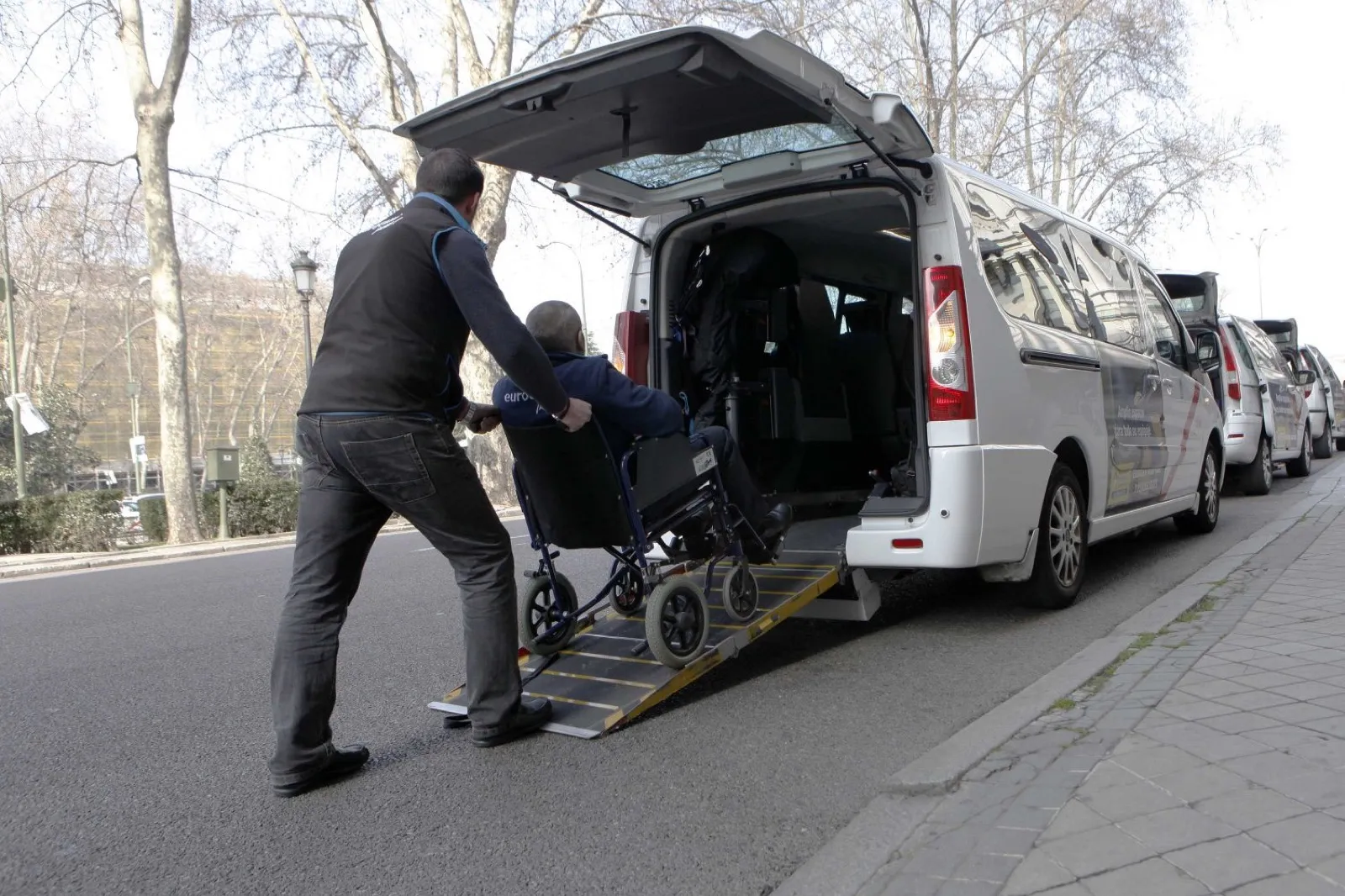
.jpg)
Overview
The TNC Access for All program is a California fund that pays local companies and agencies to run on-demand wheelchair accessible rides. Ride-hailing trips carry a 10 cent fee, and local transportation agencies, or a statewide administrator, award the money through competitive calls. For the 2026-27 funding year the state has about $24.3 million, and a company qualifies with a CPUC permit or matching safety records.
- Ride-hailing companies collect 10 cents a trip, and what they do not spend on their own wheelchair service funds local providers in that county.
- For 2026-27, 16 local agencies run the program in 20 counties, and a statewide administrator covers the other 38.
- A company without a CPUC permit can apply if it documents background checks, charter-party insurance, drug testing, and state registration.
- Awards are paid as grants or reimbursements for listed costs, such as vans, fuel, driver wages, and fare subsidies.
- Access for All rides are not limited to medical trips, so check the CPUC medical exemption for every van you put in the program.
How the TNC Access for All program works
California’s Legislature created the program with SB 1376 in 2018, now Public Utilities Code 5440.5, and the California Public Utilities Commission (CPUC) runs it. The goal is more on-demand rides in wheelchair accessible vehicles (WAVs) for people with disabilities. The law set a floor of 5 cents per trip, and CPUC Decision 19-06-033 set the fee at 10 cents on every completed ride-hailing trip starting July 1, 2019.
A transportation network company, the law’s name for a ride-hailing company, can keep part of the fee by spending the same amount improving its own WAV service in a county. Whatever it does not claim goes to the CPUC’s Access Fund. The fees from each county stay in that county, so the money available depends on how many ride-hailing trips start there and how much the companies claim back.
Local agencies hand the money out. Since Decision 20-03-007, county transportation commissions, regional planning agencies, and metropolitan planning organizations can serve as Local Access Fund Administrators, and Decision 23-02-024 added public transit agencies for counties where no planning agency applies. Each one picks access providers through a competitive call. In counties with no local administrator, a statewide administrator does the job. The CPUC awarded that contract to GCAP Services on February 24, 2025.
AB 1532, an urgency law signed October 1, 2025, extended the program to January 1, 2032. It had been set to end January 1, 2026.
The CPUC’s program rules (version 1.7, July 2026) describe access providers as companies or agencies that can offer WAV service like a ride-hailing app but need money to do it. A wheelchair van company with open hours on its schedule fits that description. For how Medi-Cal rides work in the same vans, see the California state guide.
Who runs it in your county
For the 2026-27 funding year, 16 local administrators cover 20 counties, and the statewide administrator covers the other 38. The CPUC’s notice lists about $24.3 million statewide, based on fund balances as of June 30, 2025. Amounts below are the notice’s estimates, rounded to the dollar.
| County | Administrator | Estimated 2026-27 funds |
|---|---|---|
| Alameda | Alameda County Transportation Commission | $1,710,243 |
| Contra Costa | Contra Costa Transportation Authority | $648,383 |
| Fresno | Fresno Council of Governments | $274,879 |
| Kern | Kern Council of Governments | $487,416 |
| Los Angeles | LA Metro | $1,991,908 |
| Marin | Metropolitan Transportation Commission | $235,649 |
| Monterey | Transportation Agency for Monterey County | $120,510 |
| Napa | Metropolitan Transportation Commission | $152,609 |
| Sacramento | Sacramento Regional Transit District | $928,326 |
| San Diego | SANDAG | $3,256,645 |
| San Francisco | San Francisco Municipal Transportation Agency | $1,373 |
| San Joaquin | San Joaquin Regional Transit District | $180,708 |
| San Luis Obispo | San Luis Obispo Council of Governments | $89,319 |
| San Mateo | Metropolitan Transportation Commission | $862,036 |
| Santa Barbara | Santa Barbara County Association of Governments | $215,612 |
| Santa Clara | Metropolitan Transportation Commission | $3,420,050 |
| Santa Cruz | Santa Cruz County Regional Transportation Commission | $81,262 |
| Solano | Solano Transportation Authority | $151,784 |
| Sonoma | Metropolitan Transportation Commission | $318,999 |
| Ventura | Ventura County Transportation Commission | $204,580 |
Some of the biggest pots sit with the statewide administrator: Orange County at about $4,763,761, Riverside at $1,637,931, and San Bernardino at $1,569,181. Its Cycle 5 awards for calendar year 2026, announced February 18, 2026, came to about $15.4 million in 15 agreements with 8 organizations across 9 counties. The awards ranged from $5,666 to $3,125,969, and each figure includes a 15% administrative cost. That call opened October 1, 2025 and closed November 12, 2025. Applications go through the online portal linked from cpucsafa.org, with a separate application for each county you want to serve, and funded providers send monthly invoices for reimbursement.
Who can be an access provider
You qualify in one of two ways under Decisions 21-03-005 and 21-11-004. Either you hold a CPUC-issued permit before you apply, or you are a carrier without one that documents all of these:
- Background checks that meet or exceed what the CPUC requires of ride-hailing drivers.
- Insurance at least equal to what General Order 115 requires of charter-party carriers. As amended March 21, 2024, that is $750,000 for a vehicle seating 8 or fewer counting the driver, $1,500,000 for 9 to 15, and $5,000,000 for 16 or more.
- A controlled substance and alcohol testing program you are enrolled in.
- Articles of incorporation filed with the California Secretary of State. Government agencies are exempt.
- A CHP 362 Motor Carrier Profile and a CA number from the California Highway Patrol. The CPUC’s provider page says this applies to carriers running a bus or modified limousine, but the Safety Protocol Declaration Form lists it for every provider, so ask your administrator.
You must also run, or contract for, on-demand WAV service, which the rules define as any service that does not follow a fixed route or schedule. Administrators must favor providers that can fill a request within 24 hours. LA Metro’s FY 2025 call and SANDAG’s Cycle 2 call both set a tighter bar, defining on-demand as filling a request within 12 hours.
The safety declaration
Every provider signs the CPUC’s Safety Protocol Declaration Form (version 1.2, updated April 2026) under penalty of perjury. On top of the items above, it requires:
- Driver training on transporting people with disabilities within the past three years, covering sensitivity, passenger assistance, equipment use, door-to-door service, and safety procedures.
- Vehicle inspection within the past year, confirming each WAV meets the ADA Accessibility Specifications for Transportation Vehicles, including the 19-point safety inspection used in charter-party and ride-hailing permits.
- The International Symbol of Accessibility on the passenger-side door below the handle and on the rear, right side above the bumper.
- Records of all this, kept for five years after the program’s January 1, 2032 end date.
Check the medical exemption first
A van used only for medical rides needs no CPUC permit, under the medical exemption in Public Utilities Code 5353(i). The CPUC applies it vehicle by vehicle and says a vehicle used even occasionally for non-medical paid passengers should be evaluated, because it may lose the exemption, even for its medical trips. Access for All pays for on-demand rides like the ones ride-hailing apps give, and the rules do not limit them to medical trips.
The CPUC’s exemption page does count wheelchair and gurney rides as medical transportation even when a trip has no medical purpose, as long as the van is set up and used for medical transport. A van that carries only wheelchair riders may fit that. A van that also carries other riders to errands or events for pay may not. Before you put a van in the program, list who it will carry, then get a charter-party permit for it or ask CPUC licensing staff for a formal opinion. The California TCP permit guide covers that permit.
How access providers get paid
Each administrator chooses whether to run a grant program or a reimbursement program. Under the CPUC rules (version 1.7), a provider has one year from its contract to use the funds, contracts can run up to five years in total, and at least 85% of each county’s award must go to providers. Unused money goes back to the administrator within 30 days after the contract ends.
The rules list the costs the fund can pay:
- Vehicles. Buying, leasing, or renting WAVs, rental subsidies for drivers, inspections, maintenance, fuel, and cleaning.
- Partnerships. Fees to a transportation partner, vehicle subsidies, and consultants.
- Drivers. Recruiting, onboarding, training, and incentives.
- Operations. Marketing, technology, community outreach, and wages, salaries, and benefits for staff other than maintenance staff.
- Fares. Ride fare subsidies, which lower what the rider pays.
The fund cannot pay for any trip a ride-hailing company already pays you for, and you must disclose whether you are or were a service provider for one.
Two county solicitations side by side
LA Metro and SANDAG both reimburse costs already incurred, but their calls differed in size and structure.
| Term | LA Metro FY 2025 | SANDAG Cycle 2 |
|---|---|---|
| Money offered | $5,855,760, with 5% held for appeals | $2,337,633 |
| Request size | Up to the full amount | $100,000 to $2,337,633 |
| Local match | Not required | Not required, but it earns points |
| Payment | Reimbursement with ride reports | Reimbursement, invoiced quarterly |
| Time to spend | 12 months | 12 months from the notice to proceed |
| Who may apply | Public agencies, nonprofits, and private companies | Permitted carriers, documented non-permitted carriers, and some ride-hailing companies |
LA Metro’s invoices, typically monthly or quarterly, come with operating reports for each month: rides given, rides booked, cancellations and no-shows, on-time rate, average travel time, and call counts. Applications for that round were due April 21, 2025, and needed at least 70 of 100 points to be funded. SANDAG wants a progress report with every quarterly invoice, due 30 days after the quarter ends, and gives 15 points for safety and 10 for serving riders without a smartphone or internet.
What past awards paid for
LA Metro’s fiscal 2023 awards totaled $7,865,833 across five recipients. A taxi cooperative was awarded $3,201,660 to buy 36 WAVs, the City of Santa Clarita $208,400 for one more WAV, and three providers operating assistance to run WAV service. In fiscal 2024, a single provider received the whole $1,584,814.
In San Diego, five applicants asked for $10,876,118 in Cycle 2, and all $2,337,633 went to one applicant, Facilitating Access to Coordinated Transportation. The board approved it January 24, 2025, with service starting in December 2025. Ventura County’s program shows the rider side. The commission contracts with Ventura Transit System for countywide WAV rides 24 hours a day, and the rider pays $2.50 a mile with no other fees. For setting a per-mile fare that riders pay themselves, see private pay NEMT.
The 2026-27 calendar and reporting
The CPUC’s Cycle 6 calendar, in the July 2026 program rules, sets these dates for 2026 money:
- September 30, 2026. The CPUC sends funds to local administrators.
- July 1, 2027. Each administrator must select providers, sign contracts, and commit the money.
- June 30, 2028. The 2026 money must be paid out to providers.
The CPUC’s provider page says providers are selected by July 1 each year. Calls open before then on each agency’s own schedule. The Metropolitan Transportation Commission, new as administrator for Marin, Napa, San Mateo, Santa Clara, and Sonoma, says application details for its Cycle 6 call will come in fall 2026 and its programs will not start service until 2027.
Once funded, you report to your administrator every quarter, by October 30, January 30, April 30, and July 30. Reports cover:
- WAVs in operation, by hour of the day and day of the week.
- Trips requested, completed, not accepted, cancelled by the rider or driver, and no-shows.
- Response times for each tenth of completed trips, split into the time to accept a request and the time from acceptance to arrival.
- Outreach to disability communities, driver training, vehicle inspections, and complaints by type.
- Money spent, by eligible cost, and the terms of each contract.
How to apply, step by step
- Find your administrator. Use the table above, or the statewide administrator if your county is not listed. The CPUC provider page lists each agency’s contact.
- Confirm you are eligible. Hold a CPUC permit, or gather the background check, insurance, drug testing, Secretary of State, and CHP records for the non-permitted path.
- Settle the exemption question for every van you will use, before you sign anything.
- Pull your numbers. Count your WAVs by hour, your trip requests, and your response times for the past four quarters. A first-year applicant can give a narrative and estimates instead.
- Write the proposal around the scoring. Show how you will cut response times, add WAV hours, reach disability groups, and take requests from riders without a smartphone.
- Build the budget from the eligible cost list, and line up insurance certificates. SANDAG will not sign a grant agreement until its insurance requirements are met.
- Track every cost from day one. Reimbursement programs pay only for documented costs after the notice to proceed, and quarterly reports are due 30 days after each quarter.
Frequently asked questions
What is the TNC Access for All program?
It is a California Public Utilities Commission program created by SB 1376 (2018) under Public Utilities Code 5440.5. Ride-hailing companies collect a 10 cent fee on each trip. What they do not spend improving their own wheelchair accessible service goes into the Access Fund, which county transportation agencies award to providers of on-demand wheelchair accessible rides.
Can a NEMT company apply without a CPUC permit?
Yes. Under Decision 21-11-004, a carrier without a CPUC permit is eligible if it documents background checks at least as strict as rideshare drivers get, insurance equal to General Order 115 charter-party levels, a drug and alcohol testing program, Secretary of State registration, and a CHP carrier profile where it applies. It signs the CPUC Safety Protocol Declaration Form under penalty of perjury.
How much Access for All money is available in 2026-27?
The CPUC notice for the 2026-27 funding year lists about $24.3 million statewide, based on fund balances as of June 30, 2025. Each county keeps the fees its own trips produced, so the amounts vary widely: about $4.76 million for Orange County, $3.42 million for Santa Clara, and $204,580 for Ventura.
How do access providers get paid?
Each administrator chooses a grant or a reimbursement program, and the money must be spent within one year of the contract. LA Metro and SANDAG both reimburse costs already incurred, with invoices and progress reports. Eligible costs include buying or leasing vans, maintenance, fuel, driver wages, recruiting and training, marketing, and ride fare subsidies.
When does the Access for All program end?
AB 1532, signed October 1, 2025, extended the program until January 1, 2032. Before that law, it was set to end January 1, 2026. Providers must keep their safety records for five years after the program's end date.
Can a company that drives for a rideshare app also be an access provider?
Yes, but the Access Fund cannot pay for trips a ride-hailing company already pays you for. Under the CPUC program rules (version 1.7, July 2026), you must tell the administrator whether you are or were a service provider for one, and show that the grant money will not cover those trips.