Industry news
CMS Rule Sets Medicaid Work Requirements by January 2027: What It Means for NEMT Rides
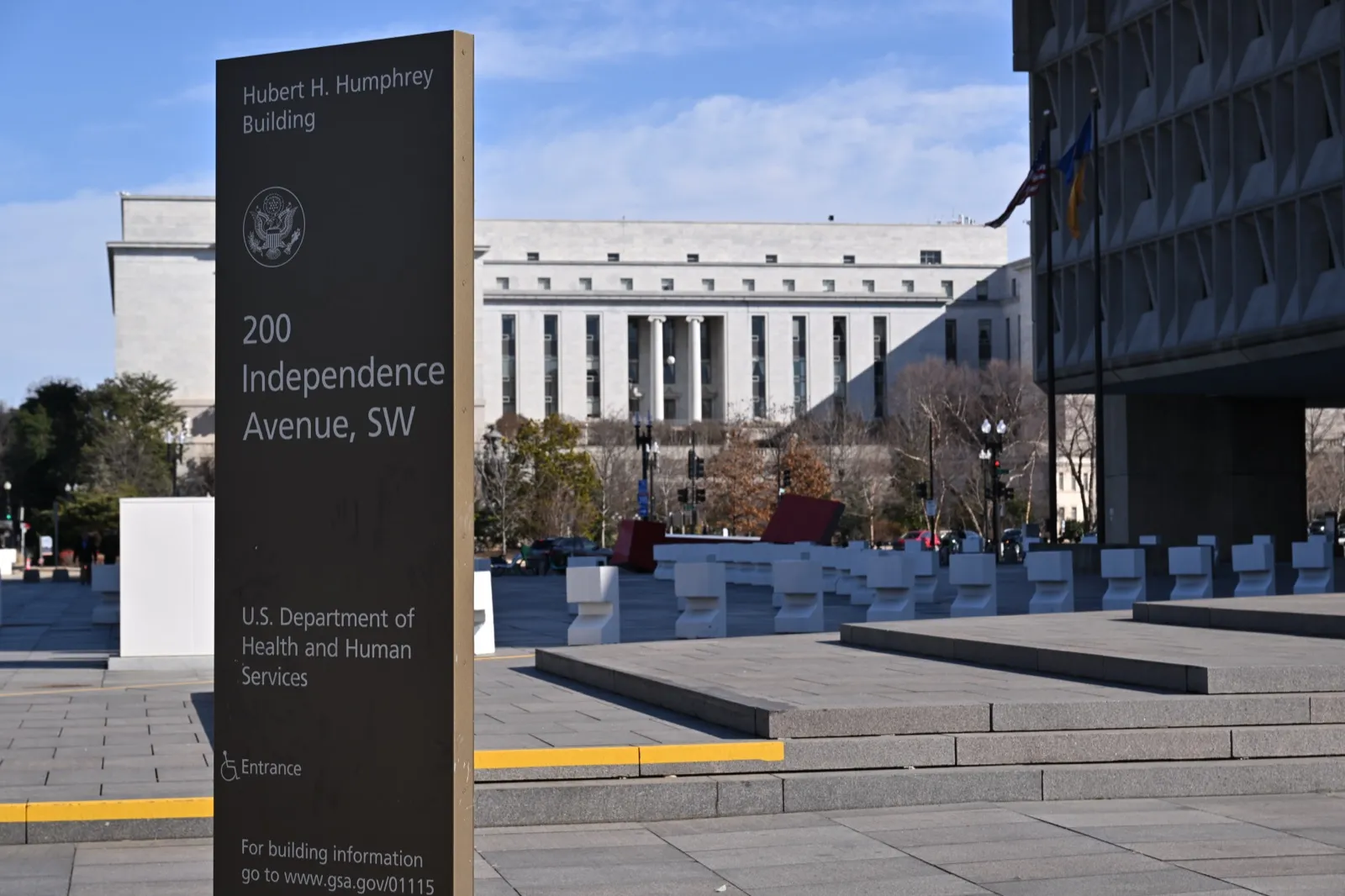

On June 3, 2026, the Centers for Medicare & Medicaid Services (CMS) published an interim final rule that tells states how to run the Medicaid work requirement Congress passed in Public Law 119-21, signed July 4, 2025. The rule took effect July 31, 2026. States must apply it to Medicaid coverage starting no later than January 1, 2027. Some NEMT riders will lose coverage under it, and rides for them will stop.
Key dates
| Date | What happens |
|---|---|
| July 4, 2025 | Public Law 119-21 adds the work requirement to the Social Security Act |
| May 1, 2026 | Nebraska starts its work requirement early |
| June 3, 2026 | CMS publishes the interim final rule, CMS-2454-IFC |
| July 29, 2026 | A federal court declines to pause the rule while a states’ lawsuit goes on |
| July 31, 2026 | The rule takes effect, and the public comment period closes |
| September 1, 2026 | Illinois dates its notice to members who may have to meet the rule |
| September 8, 2026 | CMS posts its medical frailty guidance for states |
| January 1, 2027 | Latest start date for any state without a CMS-approved delay, and six-month renewals begin for expansion adults |
| December 31, 2028 | Last day a good faith delay from CMS can run |
What the rule requires
The rule covers adults ages 19 to 64 in the Medicaid expansion group, or in a waiver that covers the same group. It does not cover people who are pregnant or who have Medicare Part A or Part B. As of May 2026, CMS counted 43 states and the District of Columbia that cover these adults and must follow the rule. The territories are not included.
A rider meets the requirement for a month by doing any one of these:
| Way to qualify | What counts |
|---|---|
| Work | At least 80 hours, paid, unpaid, or for goods and services |
| Community service | At least 80 hours with a public or nonprofit program that tracks hours |
| Work program | At least 80 hours in an approved job training program, such as one run under the federal Workforce Innovation and Opportunity Act |
| School | Enrolled at least half time |
| Mix of the above | Any combination that adds up to 80 hours |
| Income | At least 80 times the federal minimum wage, which is $580 a month in 2026 |
| Seasonal work | A seasonal worker whose average income over the past 6 months is at least $580 a month |
States check at two points. New applicants must show 1 to 3 months of activity before the month they apply, as the state chooses. People already enrolled must show at least one month between renewals, and states may check more often. Current members are first checked at their first renewal on or after their state’s start date.
States must check their own data first, such as payroll records, before asking a member for anything. If a state still cannot confirm a person qualifies, it must send a notice of noncompliance and give 30 calendar days to respond. The notice counts as received 5 days after its date. Coverage continues during that time. If the person does not show they qualify, the state must first check every other way they could be eligible. Coverage then ends no later than the end of the month after the 30 days run out. Anyone who loses coverage can reapply.
Who does not have to meet it
Many regular NEMT riders fall outside the rule or are counted as meeting it:
| Group | How the rule treats them |
|---|---|
| Riders 65 and older, and children under 19 | Not covered by the rule |
| Riders with Medicare Part A or Part B | Not covered, or counted as meeting it |
| Pregnant and postpartum riders | Excluded |
| Medically frail riders | Excluded when the condition significantly impairs their ability to meet the rule. This includes people who are blind or disabled, people with a disabling mental disorder, people with a physical, intellectual, or developmental disability that significantly limits daily activities, people with a substance use disorder who have been in recovery less than 5 years, and people with a serious or complex medical condition. Each state keeps its own list of conditions. |
| People in drug or alcohol treatment programs | Excluded |
| Parents and caregivers | Excluded if they care for a child 13 or younger or a person with a disability |
| Former foster youth under 26 | Excluded |
| American Indians and Alaska Natives | Excluded |
| Veterans rated 100 percent disabled | Excluded |
| People who meet TANF work rules, or who are in a SNAP household and not exempt from SNAP work rules | Excluded |
| People released from jail or prison | Counted as meeting it for 3 months after release |
States must try to confirm these exclusions from their own data first, including claims and encounter data from the past 12 months. In a slide deck for states posted September 8, 2026, CMS listed end-stage renal disease (ICD-10 code N18.6) among example diagnoses a state could use to exclude a person from claims data alone. If your state uses that example, many dialysis riders will not have to report hours. Once verified, a state must recheck medical frailty at least every 12 months.
States may also grant short-term hardship exceptions. These cover hospital or nursing facility stays, federally declared disasters, and counties with unemployment at or above 8 percent or 1.5 times the national rate, whichever is lower. They also cover people who must travel outside their community for an extended time for care for a serious or complex condition. For that travel exception, CMS said states may find their process for approving NEMT meals, lodging, and attendants helpful.
What it means for NEMT rides
The rule does not change the federal NEMT benefit in 42 CFR 431.53 and 440.170. A rider who keeps coverage keeps the same ride benefit. NEMT still covers rides to covered medical care, so the rule adds no rides to jobs, classes, or volunteer work.
The change is in who stays covered. In fiscal year 2025, about 20 million people were in the Medicaid adult group. CMS projects Medicaid enrollment will be 2.3 million lower in fiscal year 2027, and 3.1 to 3.3 million lower in later years. CMS estimates 12 percent of adults subject to the rule will not meet it. It also estimates 7 percent of those who do qualify will lose coverage for paperwork reasons, such as a missed notice or missing documents.
Losses will build up during 2027 rather than all at once on January 1. Members are checked at renewal, and each gets 30 days to respond. Starting with renewals scheduled on or after January 1, 2027, Public Law 119-21 also moves expansion adults to renewals every six months. See six-month Medicaid renewals. States may start before January 2027. A state that shows a good faith effort can get a delay from CMS. CMS approves up to 6 months at first and may extend it, but no delay can run past December 31, 2028.
Will a court stop it
On June 29, 2026, 24 attorneys general and two governors, led by California, Massachusetts, and New Jersey, sued in federal court in Massachusetts (Commonwealth of Massachusetts v. Oz, No. 1:26-cv-12962). They challenge parts of the rule, not the law Congress passed. Their main target is the rule’s narrower reading of who counts as medically frail, including the 12-month limit on the claims a state checks for it.
On July 29, 2026, Judge Richard G. Stearns denied their request for a preliminary injunction, without prejudice. He said he would set a fast schedule so the merits are fully briefed before January 1, 2027. If that schedule slips past December 31, 2026 through no fault of the states, and CMS does not push back the start date, the states may ask again. As of September 28, 2026, the rule is in effect.
What NEMT providers should do now
- Check eligibility for every trip. Standing orders booked weeks ahead can outlast a rider’s coverage. Use your state’s or broker’s tool on the day of service. See Medicaid eligibility verification.
- Ask your brokers how they will handle it. Find out how a broker treats a trip for a member who lost coverage after the trip was booked.
- Look at who you drive. Count how many regular riders are working-age adults without Medicare. Those trips carry the most risk. Our guide to payer mix shows how to spread that risk.
- Point riders to their notice. States must tell affected members 3 months before their start date, plus the 1 to 3 months they look back at new applicants, so 4 to 6 months ahead. Illinois, for example, dated its notice to affected members September 1, 2026. If a rider mentions a letter from Medicaid about work hours, tell them to read it and call the number on it. A rider who gets a notice of noncompliance has 30 days to respond.
- Tell your drivers it may affect them. A driver on Medicaid who works 80 hours a month for you, or earns at least $580 a month in 2026, meets the rule. States can use payroll data to confirm it.
- Watch your state’s start date. Your state Medicaid agency will announce when it starts and which options it picked. CMS posts its guidance for states on the Medicaid.gov community engagement page.
For how this fits with other changes coming in 2027, see NEMT industry trends.